


11 min read


Contents
Why Settling for a Rental Could Cost You More Than You Think
Choose the wrong route and you risk showing up in a baggy, ill-fitting jacket that photographs poorly and feels unfamiliar all night. A rental gives you one evening; a purchase gives you ownership. Rental tuxedos rarely fit well off the rack, arriving as a boxy cut with no personal adjustments, while buying lets you tailor the jacket and hem the trousers to your exact stance. Many rental packages land between $150 and $250 for a 24-hour window, so a tuxedo you own at the same price, starting at $199.90, stays in your wardrobe for prom, weddings, and holiday galas instead of vanishing the next morning.
The cost compounds when you have more than one event. If prom is in April and a cousin's wedding is in June, renting twice may cost more than buying once. Rental inventory also runs thin late in the season, leaving you with a dated lapel width or a shiny fabric because that was all that was left. A tuxedo you own becomes a personal asset: you learn your preferred lapel and your ideal trouser break, you never start from scratch again, and there is no deadline to rush back to a store the morning after on four hours of sleep.
How to Choose a Tuxedo Under $200 That Looks Anything But Cheap
Scrolling through options can feel overwhelming. Some are too shiny, some too boxy, some look like a costume from a school play. A step-by-step path clears the noise so you end up with a tuxedo that fits your occasion and your frame.
Step 1: Pinpoint the dress code
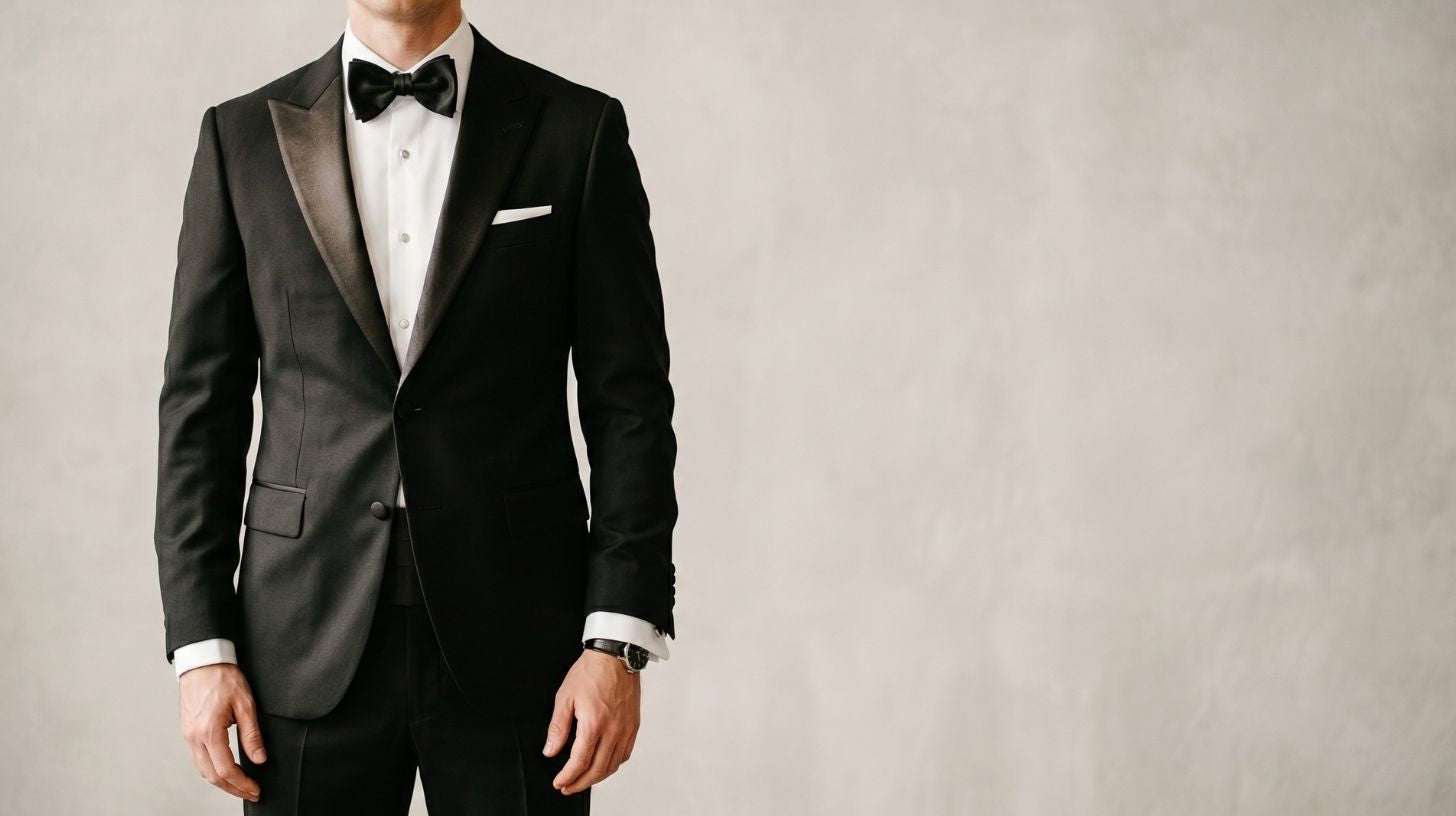
Black-tie means a dinner jacket with satin lapels and a matching trouser stripe. Creative black-tie may allow a velvet jacket or midnight blue. Knowing this narrows your search before you look at a price tag. If you are unsure, a classic black peak-lapel tuxedo covers every formal situation.
Step 2: Pick the right fit for your body
Forget the size on the label and ask how you want the jacket to shape your shoulders and chest. SAYKI tuxedos come in four distinct fits, detailed in the next section, and each solves a different problem.
Step 3: Know which fabric says quality without shouting
Look for a wool-polyester blend, ideally with at least 50% wool. It drapes better, resists wrinkles, and never gives off the synthetic sheen that screams rental. All-polyester tuxedos cost less but look glossy under a camera flash, so avoid them if you can.
Step 4: Zero in on the lapel and jacket details
Satin-faced lapels are the defining mark of a tuxedo. A peak lapel adds height and authority and flatters most faces. A shawl collar reads smoother and works beautifully for rounder faces or creative events. Check that the lapel satin matches the trouser stripe; mismatched shades cheapen the look.
Step 5: Check the construction, not just the price
At under $200 you will not get a full canvas, but look for a half-canvas or at least a well-shaped fused chest piece that gives the jacket structure. Press the fabric gently near the shoulder; if it rebounds smoothly, it will hold its shape through dancing and sitting.
Step 6: Verify the trouser details
The trousers should have a clean satin stripe down the outseam. Decide between a flat front (cleaner, more modern) or a single pleat (more room). Check that the waistband sits at your natural waist, not your hips; a tuxedo trouser worn too low distorts the silhouette.
Step 7: Factor in the tailor time
Every tuxedo, regardless of price, needs at least a trouser hem and a sleeve adjustment if the arms are too long. Budget about $30 to $60 and leave a week for alterations. A well-hemmed trouser with a slight break instantly makes a $200 tuxedo look far more expensive.
Step 8: Pick a shirt that completes the black-tie grammar
A black or midnight-blue tuxedo wants a white dress shirt with a wing or turn-down collar and a marcella or subtly pleated bib. French cuffs are non-negotiable, since cufflinks are the one piece of jewelry the dress code expects. Our guide to the best French cuff shirt for a tuxedo covers the details.
Step 9: Treat accessories as part of the budget
A silk bow tie (self-tie if you can learn it), black patent leather or well-polished oxfords, and a cummerbund or waistcoat to cover the waist add roughly $50 to $80 total and complete the language of the outfit.
Step 10: Trust the buy-vs-rent logic
If buying and tailoring lands under $250 and you have two or more events in the next two years, ownership wins. Tuxedos starting at $199.90 cost the same as a rental but stay in your closet, ready whenever an invitation arrives.
The Four Fits That Fit Real Men
Forget a single "modern" cut that works for one body and no others. SAYKI tuxedos come in four fits:
- Slim Fit: narrows through the torso and sleeves, ideal for lean builds that want a modern, tapered profile.
- Regular Fit: a straight, classic cut that skims the body without clinging, working for most frames.
- Dynamic Fit: an athletic shape with more room through the chest and shoulders, tapered at the waist, built for a broader upper body without a boxy line.
- Comfort Fit: generous through the middle, best if you prioritize ease of movement or carry weight around the midsection and still want structure.
Editor's Picks
Own Your Black-Tie, Don't Rent It
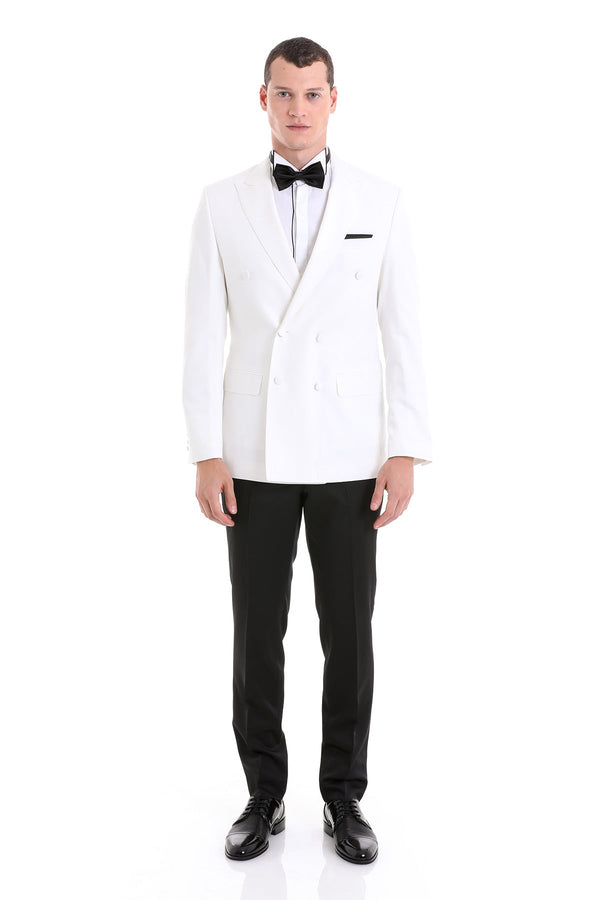
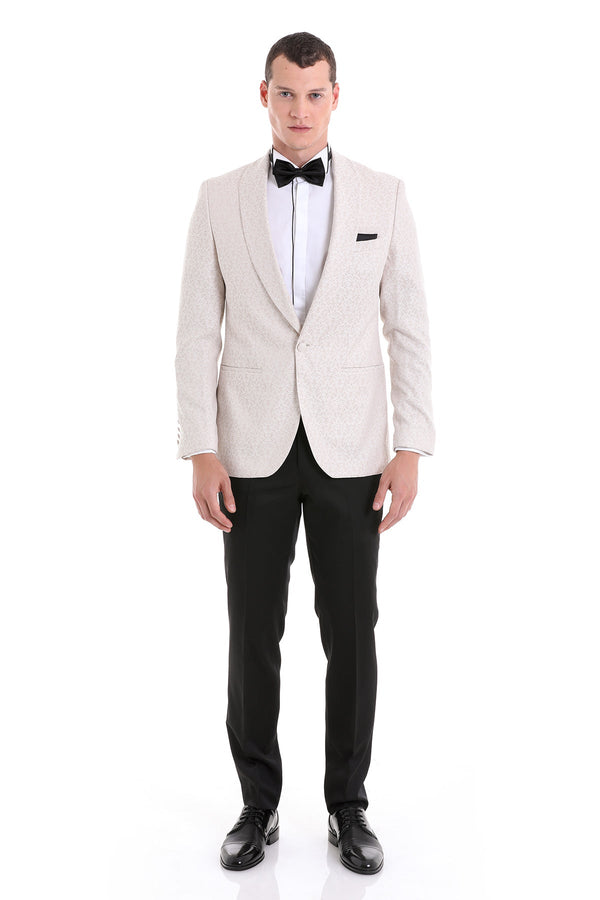
Tuxedos cut in four fits, built to keep and re-wear for every event ahead, starting at $199.90.
Shop TuxedosThe Buy-vs-Rent Math at a Glance
The comparison is simple once the numbers sit side by side. A rental costs you again for every event; a purchase costs once and stays yours.
Rent
$150 to $250, every time
- Generic off-the-rack fit
- Return deadline and late fees
- Picked-over late-season stock
- Nothing to keep
Buy
From $199.90, once
- Tailored to your body
- No deadlines, ever
- Your choice of style and timing
- Yours for every future event
Tuxedo Shopping Mistakes That Can Ruin Your Look
- A shiny polyester jacket. Full polyester glares under lights. A wool blend reflects light with class, not costume-shop gloss.
- A long necktie with a tuxedo. A tuxedo calls for a bow tie. A skinny necktie breaks the black-tie language.
- Mismatched satin. The lapel facing and trouser stripe must be the same shade. Mismatched satin is a dead giveaway of a rushed purchase.
- Default sleeve length. About a quarter to half an inch of shirt cuff should show when your arms rest. Sleeves that swallow the cuff hide the crisp white layer.
- Skipping the waist covering. A cummerbund or low-cut waistcoat breaks the white triangle of shirt below the jacket button and keeps the silhouette sharp.
- Matte oxfords instead of patent leather. Black patent or highly polished calfskin mirrors the satin accents. Dull leather lowers the formality.
- Skipping a real fit test. The shoulders must sit flat without divots and the jacket must button without pulling. If the shoulders fit, a tailor handles the rest.
- Buying too late. Order at least three weeks out to allow for shipping, trying on, and tailoring.
- Ignoring the trouser break. Stacked fabric at the shoe shortens the leg line. A clean half-break keeps the trousers elegant.
- Treating it as a one-time costume. A timeless cut in a breathable fabric belongs in your closet, ready for the next invitation.
How to Keep Your Tuxedo Looking Impeccable for Years
A few care habits protect your investment. Spot-clean small marks immediately with a damp cloth and a dab of mild soap, blotting rather than rubbing. Dry clean only when necessary, every four to five wears, since over-cleaning strips natural oils from wool and dulls the lapel satin. Hang the jacket on a wide, contoured wooden hanger inside a breathable garment bag, never plastic, and brush it with a soft clothes brush after each wear. Steam rather than press, because an iron can crush the lapel edge and leave a shine. Fold the trousers at the crease over a hanger bar, give the jacket breathing room so the lapels keep their roll, and have a tailor re-press the lapel roll if it ever flattens.
Where to Find a Tuxedo Under $200 That Looks Tailored, Not Rented
Searching for a tuxedo at a rental price that fits well and uses decent fabric can feel like hunting for something that does not exist. SAYKI makes it simple. The brand was founded in 1924 and has crafted menswear for more than a century, with its US flagship at 375 Madison Avenue in New York anchoring nine stores across New York, New Jersey, Illinois, Maryland, Massachusetts, Virginia, and Pennsylvania. What matters most for a tuxedo buyer is that all tuxedos start at $199.90, the same as what many rental shops charge for a 24-hour loan, and the four fits, Slim, Regular, Dynamic, and Comfort, cover real bodies rather than one template. Find the location nearest you through our store locator, feel the fabric, and try the fits side by side.
Frequently Asked Questions
Is it worth buying a tuxedo instead of renting one?
Yes, especially with more than one formal event a year. A rental often costs $150 to $250 for a single use, while you can buy a quality tuxedo starting at $199.90 and keep it. After two wears, buying almost always costs less, and you get a garment tailored to your body rather than a generic rental fit.
What is the difference between a tuxedo and a suit for prom?
A tuxedo has satin details, a satin-faced lapel and a satin stripe down the trouser, worn with a bow tie and often a cummerbund or waistcoat. A suit lacks those accents and pairs with a necktie. For a black-tie prom, a tuxedo is expected; for a semi-formal prom, a dark suit works perfectly.
How much should a decent tuxedo cost?
A decent tuxedo starts around $199.90 and can run to $500 for better fabric blends and half-canvas construction. At the lower end, look for a wool-polyester blend rather than full polyester, and budget an extra $30 to $60 for tailoring. That total still beats multiple rental bills.
Does SAYKI offer tuxedos at the same price as renting?
Yes. SAYKI tuxedos start at $199.90, directly comparable to what most rental shops charge for a 24-hour loan. You can buy a tuxedo you own for the cost of a single rental, making the buy-at-rental-prices approach practical for proms, weddings, and galas.
What is the difference between a dinner jacket and a tuxedo?
In modern American usage they refer to the same garment, a formal jacket with satin lapels worn for black-tie. "Dinner jacket" is more common in British English, "tuxedo" in American. The style rules are identical: satin-faced lapels, a bow tie, and formal trousers with a satin stripe.
How do I know if a tuxedo fits properly?
Check the shoulders first: the seam should sit exactly at the edge of your shoulder with no overhang or divot. Buttoned, there should be no pulling, and you should slide a flat hand inside the closed front. The sleeve should show about a quarter inch of shirt cuff, and the trousers should graze the shoe with a slight break. If the shoulders fit, a tailor can adjust nearly everything else.
Can I wear a tuxedo to a wedding if I am not in the wedding party?
You can, but check the invitation first. If it says black-tie, a tuxedo is expected for all guests. If it says formal or cocktail, a dark suit is usually safer and avoids outshining the wedding party. When in doubt, ask the couple or go with a sharp navy suit.