


You are counting down to prom, scrolling through photos of tuxedos you will wear once, then hand back. The rental counter makes it easy, but deep down you know that stiff, baggy jacket never looked right on anyone. You want to walk in feeling like yourself, not like a borrowed mannequin, and you are starting to wonder if buying a tuxedo actually makes more sense.

What this guide covers
Your Prom Tuxedo Should Not End Up in a Rental Bag
Here is what every prom shopper needs to know before pulling out a credit card or reserving a rental:
- A tuxedo you own fits better than any rental ever will, and you will wear it again for weddings, galas, and formal nights.
- Buying starts at $199.90, the same price as a typical U.S. tuxedo rental, but you keep the jacket, trousers, and bow tie.
- Four fits exist for a reason: Slim Fit hugs the body, Regular Fit offers a straight classic line, Dynamic Fit adds room in the shoulders and chest, and Comfort Fit gives a relaxed modern shape without looking sloppy.
- Black is not your only option: midnight blue photographs richer under dance-floor lights, and charcoal gives you a sharp alternative that stands out without screaming.
- Time is your secret weapon: two to three weeks of lead time lets you try on fits, get the trousers hemmed, and break in the shoes.
- The accessories matter more than you think: a crisp white shirt, a proper satin bow tie, and black patent or polished oxfords turn a good tux into a great look.
If you are a high school student shopping for prom, or a parent helping a teenager pull it together, this guide is built for you. By the end, you will know which tuxedo makes you feel sharp, how to avoid the rental traps, and exactly what to do when you walk into a store. For the full foundation on fit, fabric, and price, our Complete Tuxedo Buying Guide for Men is a useful starting point.
Rental Tuxedos Look Fine in the Dark. Here Is What They Cost You in the Light
Renting a tuxedo for prom is like paying full price for a meal you do not get to finish. You hand over $200 or more, wear a jacket that has been on a dozen other bodies, and return it before the night even feels over. The real risk is not the money you spend; it is the blunt-shouldered, long-sleeve, polyester anonymity that shows up in every photo, every hug, every slow dance.
- You stand in a prom group shot and the jacket pulls across your back. A rental cannot be altered to your shoulders. A bought tuxedo, especially one in Dynamic Fit or Comfort Fit, gives you room to move without the fabric fighting you.
- Your date's dress is navy and you match by accident. Rentals rarely offer midnight blue. Having your own tux means choosing a color that works for you, not just what is left on the rack.
- You sweat on the dance floor and the rental smells like last week's dry cleaning chemicals. When you own the tux, you control the care. A quick air-out and gentle spot clean keeps it fresh for the next event.
- The rental trousers have a 32-inch inseam and you are all torso. Buying lets you hem them to the exact break over your shoes, so you are not tripping on the dance floor.
- The bow tie is pre-tied and feels like a clip-on confession. Buying a self-tie bow tie, or learning the skill, tells everyone you cared enough to do it right.
- You pay $220 for a rental and have nothing to show Monday morning. Tuxedos starting at $199.90 put you in the same spend bracket but leave a garment in your closet for the next wedding or formal invite.
- You wear the rental jacket to after-prom and feel like you stole it. Your own tux feels like a second skin after a few wears, and you will reach for it willingly when the next semi-formal rolls around.
- You match accessories last-minute and end up with a red tie that clashes with your date's pink dress. Owning the tux lets you build a small accessory kit over time: a black satin bow tie, a classic white pocket square, simple cufflinks.
The math is straightforward: the same night, the same $199, one version ends up in a drop box, the other hangs in your closet waiting for the next big occasion. That is a return ticket to confidence, not just for prom, but for every formal event that comes after.
How to Pick a Prom Tuxedo You Will Actually Want to Wear Again
Choosing a tux at seventeen or eighteen can feel like being handed a menu in a language you barely speak. Shawl collar versus peak lapel, flat front versus pleated, Slim Fit versus Comfort Fit, the terms pile up fast. The trick is to treat this like a decision you will use more than once, not a costume you ditch at midnight.
Step 1: Lock in your timeline
Start at least three weeks before prom night. That gives you a full week to try on fits and compare colors, a second week for tailoring (hemming trousers, adjusting sleeve length), and a final week to collect the tux, practice the bow tie, and break in the shoes. If you are down to the last five days, you can still buy off the rack and get emergency hems, but you will have fewer fit options.
Step 2: Decide on a realistic budget
Know that a full tuxedo, jacket and trousers, starts at $199.90, not including the shirt and shoes. Factor in another $60 to $100 for a crisp white dress shirt, a self-tie bow tie, and a set of simple cufflinks. If you go to $299, you get a wider choice of colors and premium fabrics. Write the number down before you walk into a store so you are not swayed by add-ons.
Step 3: Confirm, tuxedo or suit?
A tuxedo has satin lapel facings, a satin stripe down the trouser leg, and is traditionally worn with a bow tie. A suit has no satin and works with a necktie. For prom, a tux is the stronger choice if the dress code says "black tie" or "formal." If your prom is semi-formal, a dark suit in navy or charcoal works just as well, and you will wear it to job interviews and graduation.
Step 4: Pick the fit that matches your build
This is where most prom shoppers freeze. Start by asking yourself a few quick questions: Do you have an athletic build with broader shoulders? Does your frame lean slim and straight? Are you still in a growth spurt? The answers point you to one of four fits:
- Slim Fit: cut closer through the chest, arms, and waist. Best if you have a lean build and want a modern, sharp silhouette.
- Regular Fit: a straight, classic cut that does not squeeze or billow. Works for most body types and gives you room to move comfortably.
- Dynamic Fit: shaped like a trim fit but with extra ease in the shoulders and back, built for an athletic or broader upper body that does not want to feel restricted when you raise your arm.
- Comfort Fit: a relaxed modern shape with more room overall. Good if you prefer ease over a snug silhouette or are still growing and want the jacket to last a couple of years.
If you are between fits, size up and let a tailor take in the waist. It is easier to remove fabric than to add it.
Step 5: Choose your color and lapel
Black is the safe route and always looks correct under flash photography. Midnight blue is the insider's pick: it looks black from a distance, but under prom lights it shows deep navy tones that photograph beautifully. Charcoal gray works if you are leaning toward a suit instead of a full tux and want something you will wear again. For lapels, a shawl collar (a smooth, rounded satin face) feels more classic and retro; a peak lapel points upward and gives a sharper, more powerful look. Both are standard on tuxedos; just avoid notch lapels on a tux, since those belong on suits.
Step 6: Gather the supporting pieces
You will need a white French-cuff dress shirt (a pointed or wing collar, though wing collars only work with bow ties and expert starching), a black satin bow tie you can tie yourself, black dress socks that go over the calf, and black patent leather or well-polished oxford shoes. Add a white pocket square folded straight across. No necklace chains over the shirt, and no belt with a tuxedo trouser that has adjustable side tabs.
Step 7: Try it on, and move around
Put on the full outfit, including the shoes, and test your range. Raise your arms as if you are waving to a friend across the room. Sit down and cross your legs. Give someone a hug. The jacket should not pull open, the shoulders should not pop up, and the trousers should not bunch around your ankles. If anything feels tight or loose, mark it for the tailor.
Step 8: Allow time for alterations
At minimum, hem the trousers so they barely touch the top of your shoe, with no pooling. If the jacket sleeves need shortening, make sure the tailor does it from the shoulder on a tuxedo with functional buttons. Most minor tweaks take a few days and cost less than two pizzas; the result is a fit that looks made for you. Checking these eight boxes puts you in a tux that moves with your body, photographs like you intended, and hangs in your closet Monday morning ready for the next big night. If you want a broader prom rundown, our guide to the best tuxedo for prom night covers colors, fit, and budget in more depth.
Slim Fit
Lean and modern
- Closer through chest and waist
- Sharp silhouette for slim frames
- Less room when you raise your arms
Dynamic Fit
Built for athletic builds
- Trim cut, extra shoulder room
- Moves with broader upper bodies
- No pulling when you reach
Editor's Picks
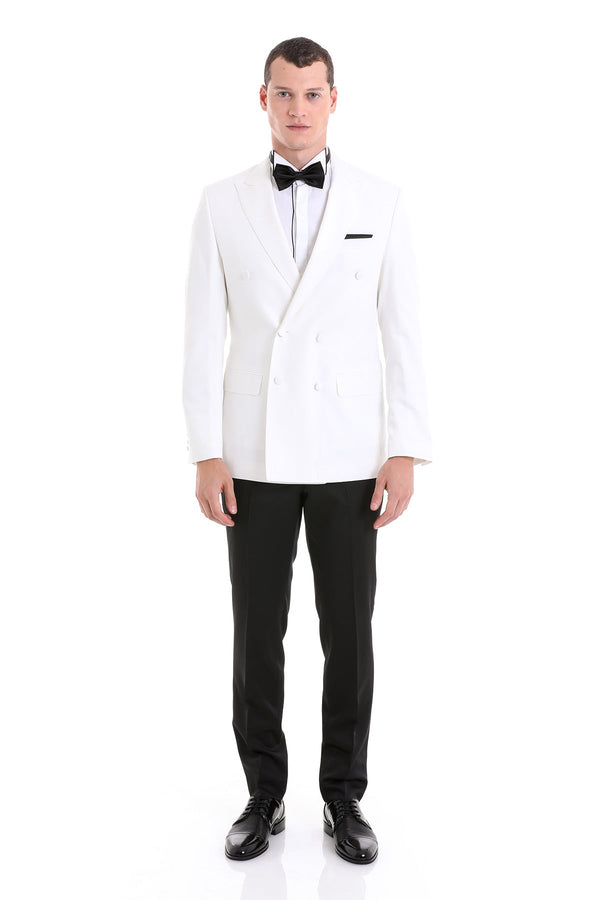

Own Your Prom Tuxedo, Wear It for Years
Photo-ready tuxedos in four fits, starting at $199.90, the same as renting. Built to fit a younger frame and last.
Shop Prom TuxedosProm Tuxedo Mistakes You Will See in Every Photo
It is easy to get things wrong because prom shopping happens in a rush between finals, ticket deadlines, and last-minute accessory buys. The mistakes that show up in photos years later are almost always ones you can sidestep now with a short checklist.
- Wearing a jacket two sizes too large because "you will grow into it." An oversized jacket drowns your shoulders and shortens your legs. Buy a fit that matches your body today and use the returns policy if you genuinely need a different size next year.
- Choosing a notch-lapel jacket with satin, which is neither a tux nor a suit. A proper tuxedo has either a peak lapel or a shawl lapel, both faced in satin. A notch lapel with satin is a rental hybrid; avoid it.
- Wearing a necktie with a tuxedo. A tux demands a bow tie, period. If you prefer a necktie, switch to a dark suit and skip the satin altogether.
- Buying shiny polyester rental-look fabric even though you are buying new. Look for wool-blend or fine worsted fabrics that breathe and drape. The mirror should not reflect a spotlight back at you.
- Leaving the trouser inseam so long you step on the hem. Hem the trousers to a half-break or no-break so they barely graze the shoe laces. No one should see fabric puddling at your ankle.
- Going matchy-matchy with your date's dress. A black or midnight blue tux works with any color dress. A red cummerbund or tie that matches her coral gown ends up looking like a prom theme, not personal style.
- Wearing white gym socks with black dress shoes. Over-the-calf black dress socks vanish into the shoe line and stay up when you sit. It is a tiny detail that makes the whole look cleaner.
- Waiting until three days before prom to start looking. You will end up with whatever fits off the rack, likely in a size that is close but not right. Those extra two weeks let you get the exact fit tailored.
Sidestepping these mistakes does not mean memorizing a rulebook; it means walking into prom with the quiet confidence that you did not just wing it, and that the tux looks like you meant it.
How to Keep Your Tuxedo Ready for the Next Big Event
When you buy a tux instead of renting it, you want that investment to look just as sharp at a future wedding or graduation as it does at prom. The care takes a few thoughtful habits that double the life of the garment.
- Hang it on a wide, contoured wooden or padded hanger right after wearing. Narrow wire hangers distort the shoulder shape and leave dimples that are hard to steam out. A proper hanger holds the jacket's structure intact.
- Brush the jacket after each wear with a soft clothes brush. This lifts dust, dander, and light surface grime before it settles into the fibers, reducing how often the tux needs dry cleaning.
- Spot-clean small marks instead of sending the whole tux to the cleaners. Dab the spot with a damp white cloth and mild soap, then air-dry. Reserve dry cleaning for full stains or once every 10 to 12 wears, because the chemicals degrade natural fibers over time.
- Store in a breathable cotton garment bag, never plastic. Plastic traps humidity and leads to mildew or yellowing. A cotton bag lets the wool breathe and keeps moths out during summer months.
- Keep the trousers folded over the hanger bar or hung by the waistband clips. Do not hang them from the cuffs; gravity can pull the crease out and stretch the fabric.
- Steam wrinkles away instead of ironing. A handheld steamer relaxes the fibers without crushing the lapel facings. If you must iron, use a pressing cloth and low heat, avoiding the satin details directly.
Five minutes of care after you unzip the garment bag keeps the tux looking sharper for years longer than the money you paid, and that is the quiet payoff of owning instead of renting.
Where to Find a Prom Tuxedo That Fits and Lasts
For a prom shopper, the challenge is not just picking a tuxedo, it is finding one that fits a teenage frame, looks premium, and does not require a rental-level gamble with a $200 price tag. That is where SAYKI enters the picture. As the U.S. arm of a family company founded in 1924, SAYKI brings more than 100 years of tailoring know-how to fits that actually work for modern men.
The brand's tuxedos start at $199.90, which lines up directly with the national average for a prom rental. The difference is you walk out owning the tux, and it is built from decent wool-blend cloth, not rental-grade polyester. Fits run from Slim Fit (trim and modern) to Regular Fit (classic straight), Dynamic Fit (extra room in the shoulders for athletic builds), and Comfort Fit (a relaxed silhouette with room to move). No matter how tall you are or how broad your shoulders look in a football jersey, there is a cut that will not fight you.
With nine physical stores across the U.S., you can try on tuxedos in person. The flagship at 375 Madison Avenue in New York City sits in the heart of Manhattan; additional full-price and outlet locations stretch across New Jersey, Illinois, Maryland, Massachusetts, Virginia, and Pennsylvania. You can find your nearest one on the SAYKI store locator, and if a store is not nearby, the online experience delivers the same fits with a straightforward return policy so you can try it on at home. The same buy-over-rent logic holds at any age, as our guide for men over 50 shows. You get a tuxedo that costs the same as renting, fits like you borrowed nothing, and opens a closet full of future formal events.
Frequently Asked Questions
What is the difference between a tuxedo and a suit for prom?
A tuxedo has satin on the lapels, buttons, and a stripe down the trouser leg, and is traditionally worn with a bow tie. A suit has no satin detailing and is worn with a necktie. For prom, if the invitation says "black tie" or "formal," a tux is the standard. If it says "semi-formal," a dark navy or charcoal suit works perfectly and can be worn again for interviews and graduations.
Is it actually worth buying a tuxedo instead of renting one for prom?
Yes, if you will attend at least one more formal event in the next few years, such as a wedding, a college gala, or a New Year's party. Tuxedos starting at $199.90 put you at the same price as a rental, but you keep the garment. Over two or three wears, the cost per use drops below any rental, and the fit improves because the tux is tailored to your body, not pulled from a generic pool.
What color tuxedo should a teenager wear to prom?
Black is the fail-safe choice; it photographs crisply and never looks dated. Midnight blue is an elegant alternative that reads as black under dim light but reveals a deep navy hue in photos, giving your look dimension. Charcoal can work if you are opting for a suit rather than a tux. Skip bright colors or white dinner jackets unless you are attending a theme-specific event; classic dark tones keep the focus on you.
How should a tuxedo jacket fit on a teenager?
The shoulder seam should sit exactly at the edge of your natural shoulder, with no overhang and no pulling. The jacket should button without straining, and when you raise your arms, the collar should not gap away from your neck. Sleeves should end just above the wrist bone, showing a half-inch of shirt cuff. The body should skim your torso without hugging it. For athletic or broader builds, Dynamic Fit gives extra shoulder room; for a lean frame, Slim Fit works well.
How far in advance should I start looking for a prom tuxedo?
Start three weeks before prom night. Week one: try on fits and choose your color. Week two: get the tux tailored, hemming trousers and adjusting sleeve length. Week three: pick up the finished tux, practice tying the bow tie, and wear the shoes indoors to break them in. Even with two weeks, you can manage by prioritizing a store with an in-house tailor or quick turnaround alterations.
Does SAYKI have a store near me that carries prom tuxedos?
SAYKI has nine U.S. locations. In New York City, the flagship is at 375 Madison Avenue, New York, NY 10017. Additional stores include Garden State Plaza in Paramus NJ, Westfield Montgomery Mall in Bethesda MD, Fashion Centre at Pentagon City in Arlington VA, King of Prussia Mall in PA, and outlets in Central Valley NY, Rosemont IL, Wrentham MA, and Leesburg VA. Each carries the full tuxedo range in Slim, Regular, Dynamic, and Comfort fits. You can also order online and try on at home with free returns.
What is Dynamic Fit and how does it compare to Slim Fit for a prom tuxedo?
Dynamic Fit is shaped like a trim cut but adds extra room through the shoulders, chest, and upper back, designed for athletic builds that need movement without the jacket pulling. Slim Fit tapers more aggressively from chest to waist and works best on lean or slender frames. If you are active, have broader shoulders, or simply do not want to feel restricted when you raise your arms for a photo, Dynamic Fit is the safer choice for prom.