


18 min read


You are standing at the back of the aisle, all eyes on you, and you want to feel like the best version of yourself, not like you borrowed a costume at the last minute. This guide is for grooms who need a tuxedo that looks clean, fits right, and does not drain the wedding budget. It is not about fashion rules from a magazine; it is about making one smart choice that lets you focus entirely on the day.
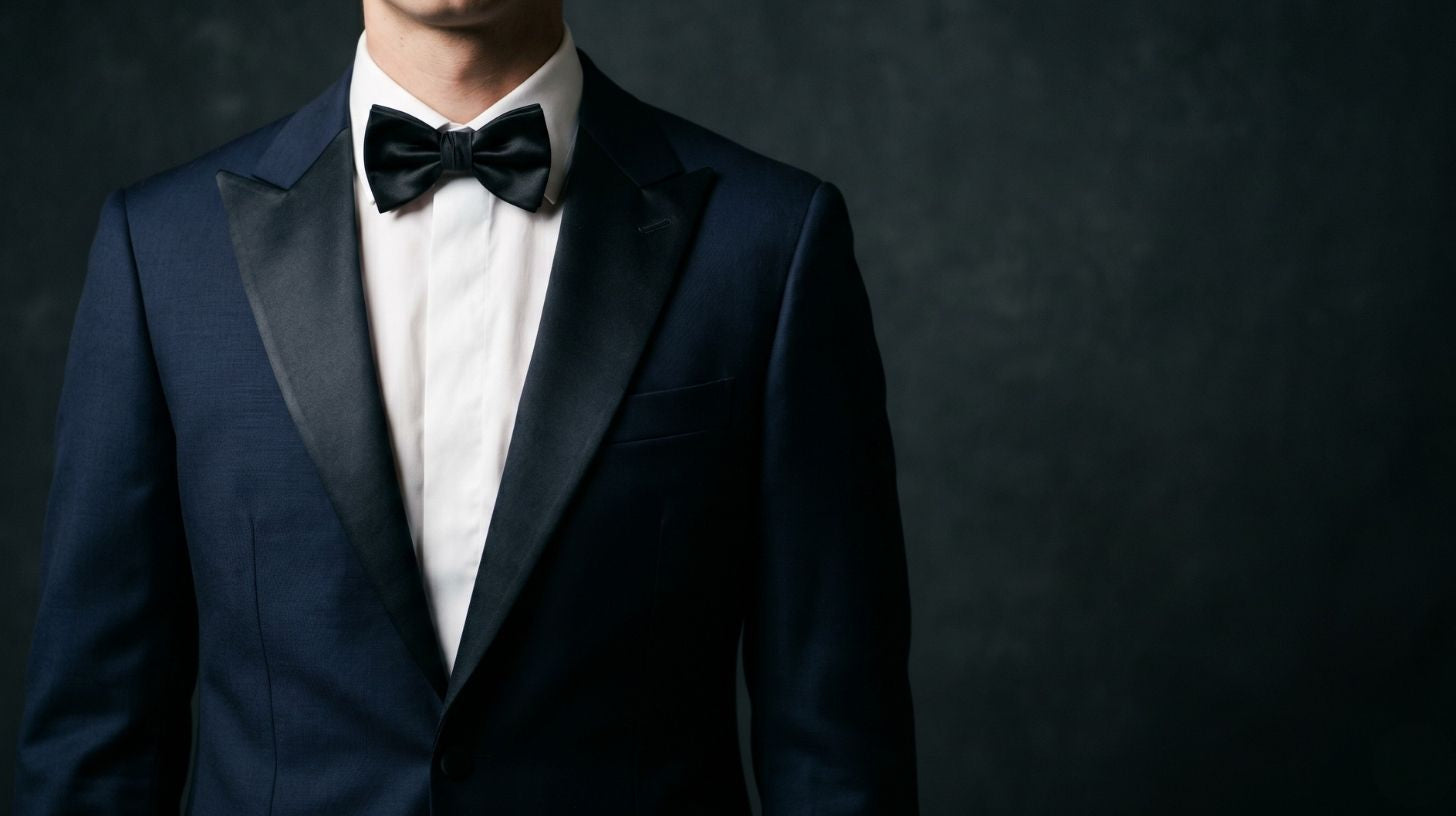
What this guide covers
Your Wedding Tuxedo: What Every Groom Should Know Before Walking Down the Aisle
- If you are deciding between renting and buying, know that you can own a full tuxedo for what rental shops charge, then wear it again for anniversary dinners or formal events years later.
- If you have never shopped for a tux before, you will learn exactly what lapel, shirt, and shoe combinations make sense for your wedding's formality, season, and time of day.
- If you want to avoid a shiny, boxy prom-tux look, we will show you how a modern cut (Slim Fit, Regular Fit, or Dynamic Fit) changes the entire silhouette without feeling restrictive.
- If you are on a short timeline, the buying-versus-renting math actually works in your favor, because a well-fitting off-the-rack tux needs minimal alterations, not weeks of tailoring.
- If you worry about color, you will walk away knowing whether black, midnight navy, or even a subtle burgundy dinner jacket fits your wedding vision and re-wear plans.
- If you are the groom who is "not the suit guy," the step-by-step guide below flattens the learning curve and gets you in and out of a store confident.
This is most useful for a groom who wants to look polished and feel comfortable, whether the ceremony is in a ballroom, a garden, or a city hall, and who would rather own something than rent a pancake-flat jacket for the same price. By the end, you will be able to walk into any store, or shop online, name the tuxedo shape that works for your body type, and check the details that make wedding photos look like you hired a stylist. For the full foundation before you shop, our Complete Tuxedo Buying Guide for Men walks through every fundamental.
Why Getting Your Groom Tuxedo Wrong Can Cost More Than Money
Most men only realize the stakes when they see the photos. A tux that pulls at the buttons, sleeves that cover your thumbs, or a jacket that shines under flash photography will distract from everything else, and unlike a rental, a poorly chosen purchase sits in your closet as a reminder. The good news is that these are all avoidable with a handful of practical checkpoints.
- You rent a tux for $200 and return it Monday morning with nothing to show for it. A quality wool-blend tux starts at $199.90 and stays in your wardrobe for every black-tie invitation down the road. Owning at the same price means every wear after the first cuts your cost per event in half.
- You order based on your usual shirt size and end up with a chest-too-tight jacket that ruins your posture. Tuxedo sizing is cut to accommodate a dress shirt, so you must try a size up from your casual jacket. Use the store's suiting size guide, not your hoodie size.
- You pick a trendy shawl collar for a daytime garden ceremony and the formality gap shows immediately. Shawl collars read naturally after 5 p.m. and in very formal settings. For an afternoon wedding, a peak or subtle notch lapel keeps you from looking like you escaped a gala.
- You wear a pre-tied bow tie that tilts all night. Learning to tie a real one takes three practice tries and stays stiff. Invest twenty minutes before the rehearsal dinner and your collar looks sharp from every angle.
- You ignore the trouser break and trip over your hem during the first dance. A clean, slight break or a modern no-break hem keeps the line crisp. Make sure the tailor marks the trouser length with the shoes you will actually wear.
- You go full shiny (glossy tux, satin-stripe pants, patent loafers, cummerbund) and the effect feels like an eighties prom. Modern grooms keep the satin to the lapel and trouser stripe, then ground the look with matte accessories. One shiny element is enough.
- You skip a vest or cummerbund and the untucked dress shirt peeks out between jacket and waistband. A low-profile waistcoat in the same fabric hides the transition and makes sitting more comfortable. A $39.90 to $49.90 waistcoat is far less distracting than a gap.
- You assume black is the only acceptable groom color, so midnight navy feels like a risk. Navy photographs richer than black under warm indoor light and separates you from the groomsmen subtly. Both colors are classic; the choice depends on your skin tone and the room's lighting.
A tux that fits your shoulders and matches the day's formality does not just photograph better, it lets you stand up straight, breathe, and focus on your partner instead of your sleeves. Getting these details right is the simplest confidence move a groom can make in the final weeks before the wedding.
A Step-by-Step Guide to Finding Your Perfect Groom Tuxedo
Walk into a suit department and you face an unspoken wall of terms, price tags, and hangtags that can make a guy want to walk right back out. The following steps turn that confusion into a straightforward checklist you can run through alone or with a friend who gives useful feedback.
Step 1: Lock in the formality level first
Before you touch a fabric, write down the time of day, the venue, and the dress code word-for-word from the invitation. A daytime vineyard ceremony calls for a lighter-weight tux in midnight blue or even a cream dinner jacket; an evening ballroom black-tie affair expects a black wool tux with subtle satin details. Starting here eliminates three-quarters of the rack and keeps you from falling for a velvet jacket meant for a winter gala when your wedding is in July. If this is your very first tuxedo, our guide on choosing your first tuxedo covers the basics in plain terms.
Step 2: Find your jacket silhouette, not just your size
The number on the label (38, 40, 42) is just the starting point. The silhouette is what shows in photos. SAYKI cuts tuxedos in four distinct fits, and each solves a different body puzzle.
- Slim Fit: Tapers through the chest and waist with higher armholes. Best for an athletic or lean build that wants a clean, modern line. Try this first if your off-the-rack shirts always billow at the back.
- Regular Fit: A straight, classic cut with enough room to move freely. This works for most body types and layers comfortably over a vest. If you hate feeling constricted, start here.
- Dynamic Fit: Broader in the shoulders and chest, then slightly tapered at the waist. Built for guys who lift and need room through the back without sacrificing shape. If your jackets often pull across the upper back, this is your likely match.
- Comfort Fit: A fuller cut with more ease through the torso and sleeves. It sits naturally on broader frames and does not cling. This is where you land if you value all-day comfort over a razor-sharp silhouette, still neat, never baggy.
If you are unsure, ask yourself: when I button the jacket and raise my arms to shake hands, does the shoulder seam dig in or do the lapels bow out? The right fit answers both with a no.
Step 3: Choose the lapel that matches the mood
The lapel sets the tone more than color. A peak lapel points upward and widens the shoulder visually, ideal for grooms who want a more formal, structured presence. A shawl collar curves smoothly and reads as pure black-tie elegance, best for evening weddings. A notch lapel is the least formal and rarely belongs on a tuxedo, but can work for a smart daytime look if the fabric stays matte. Hold up a jacket and imagine it against your groomsmen's suits; the lapel style should feel connected, not identical.
Step 4: Pants, check the rise and the break, not just the waist
Tuxedo trousers are meant to sit higher than jeans. A natural-waist rise sits near your belly button and creates a longer leg line; mid-rise is the more familiar modern position. Try both while sitting down. Then decide on the hem: a slight break (the fabric folds just above the shoe) is timeless, while a no-break cut grazes the top of the shoe for a sharper look. Make these decisions wearing the shoes you will wear at the ceremony, period.
Step 5: Build the rest of the outfit from the neck down
Start with a crisp white dress shirt in a spread or semi-spread collar, enough structure to hold a bow tie but not so aggressive it points to the ceiling. Add a self-tie bow tie and buy one extra to keep in a pocket. For the midsection, a low-profile waistcoat in the same fabric bridges the shirt and pants cleanly; a cummerbund works for true black-tie but can look dated if you do not commit fully. For shoes, a well-polished black cap-toe oxford with no broguing. No belt: your tuxedo trousers should have side adjusters or be worn with suspenders.
Step 6: Know the price anchor and why it matters
The mental hurdle for many grooms is spending "wedding money" on a garment they will only wear once. But when tuxedos start at $199.90, the same price as rental chains, the math flips. At that number, even a single re-wear for an anniversary or a New Year's Eve party makes it cheaper than renting twice. Walk into any store with that $199.90 number in your head, and you can immediately judge whether a $600 option is worth it to you. For most grooms, a well-built $199.90 tux passes every test.
Step 7: Try it on with a critical friend and move around
When you try the full outfit, do not just stand at attention. Sit in a chair, lean forward to tie a shoe, raise your arms to hug someone, and walk ten full strides. The jacket should not bunch behind the collar or pull across the back button. The trousers should stay at your waist. If anything feels off, note it. Small alterations like taking in the waist or shortening sleeves are normal, but a shoulder that does not sit cleanly is a no-go.
Step 8: Buy, do not rent, unless you genuinely want to rent
If you land on a tux that fits this checklist and falls near that $199.90 mark, you have solved both the wedding-day problem and a future-you problem. You will own a piece you can pull out for any black-tie event, a partner's work gala, or even a fancy date night. Rental tuxes rarely fit this well, and returning one late because you are on your honeymoon is an unnecessary headache. Once you have walked through these steps, the tuxedo decision stops feeling like a gamble and starts feeling like the simplest part of the planning. If you are still weighing whether to own one at all, our breakdown of the best tuxedo for black-tie events covers the wider dress code.
Daytime wedding
Lighter, softer formality
- Midnight blue or cream jacket
- Peak or subtle notch lapel
- Lighter-weight fabric
Evening wedding
Full black-tie expectation
- Black wool tux, satin details
- Shawl or peak lapel
- Self-tie bow and waist covering
Editor's Picks
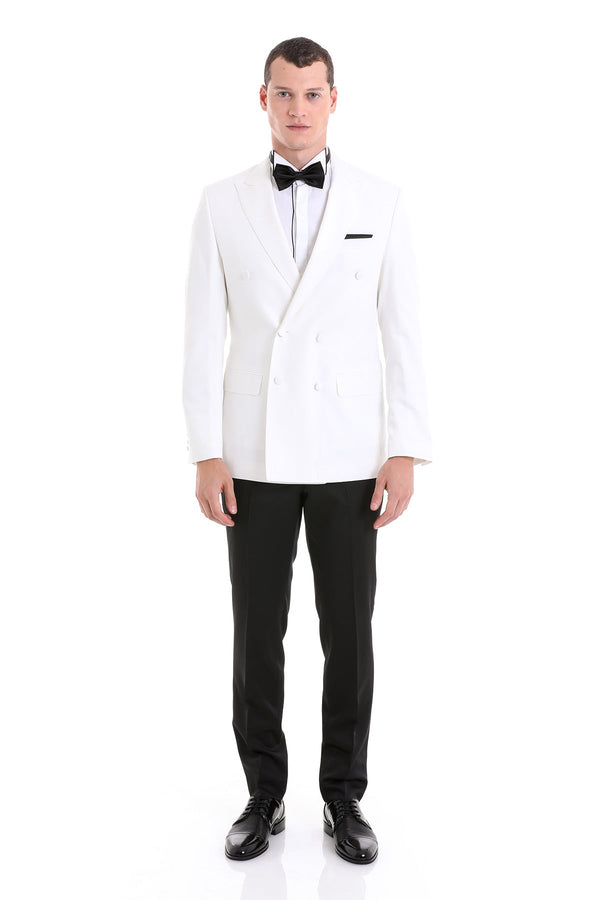
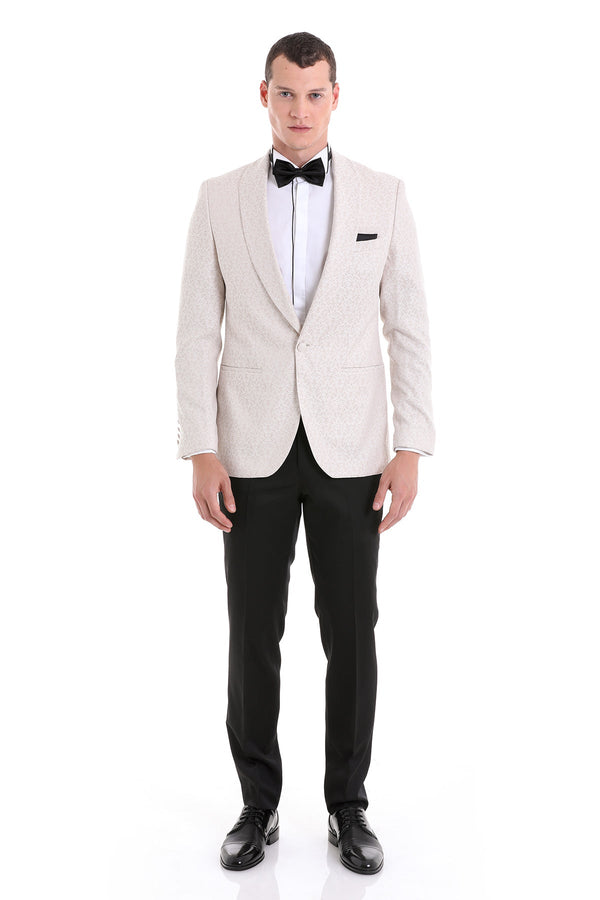
Look Like the Groom, Not the Rental
Wool-blend tuxedos in four fits, starting at $199.90, the same as renting. Own the day and every event after it.
Shop Groom TuxedosTuxedo Mistakes That Show Up in Every Wedding Photo
It is surprisingly easy to miss these details when you are standing in a mirror focused on whether the jacket looks "good enough." Stepping back to check a few specific points turns a near miss into a sharp, intentional fit.
- Wearing a dress shirt with a too-short collar that disappears under the jacket. The collar should peek out about a quarter inch behind the lapel. A collar that vanishes makes the neck look bare even with a bow tie. Always try the shirt and jacket together.
- Keeping the jacket buttoned while sitting. The moment you sit, undo the button. A buttoned tux jacket pulls at the front and bulges over the trousers. Unbuttoned, it drapes naturally and keeps your shirt and waistcoat visible.
- Choosing a black shirt with a black tux for a "modern" look. Under flash photography, all-black-on-black reads as a shapeless void. A white shirt reflects light and defines your jawline. For a tonal twist, consider a midnight navy tux with a white shirt.
- Leaving the tag stitching on the sleeves for the big day. Those white X-threads on the cuffs are meant to be removed. They signal a brand-new jacket you never tailored. Take them off and double-check with a seam ripper before the rehearsal.
- Using a belt with tuxedo trousers that are cut for suspenders. Most tux pants lack belt loops on purpose. A belt breaks the clean line. Use side adjusters or suspenders to keep the trousers at the right height without bulk.
- Picking a lapel pin or boutonniere that weighs down the jacket. A heavy flower pin pulls the lapel and distorts the chest line. Go light: a single small bloom or a fabric pin that does not drag.
- Ignoring sleeve length while moving. The jacket sleeve should end where your wrist flexes and show about a quarter to half inch of shirt cuff. When you extend your arm to hold a ring, the shirt cuff should still show. If it does not, the sleeves are too long.
Every one of these fixes is small enough to handle in a final fitting, and each one removes a potential distraction from the moment. Knowing them ahead of time means you can spend the morning of your wedding not thinking about your clothes at all.
How to Keep Your Groom Tuxedo Looking Sharp Long After the Last Dance
You protected your investment, $199.90 that bought a tux you own instead of renting, so letting it collect dust in a faded dry-cleaning bag is the fastest way to undo that. A few simple habits extend its life and keep it ready for the next formal invite.
- Hang the tux on a wide, contoured wooden hanger right after wearing it. A shaped hanger supports the shoulders and prevents creases from setting. Wire or thin plastic hangers push the shoulder pads out of alignment over time.
- Spot-clean small marks and air out the jacket instead of dry cleaning after every wear. Dry cleaning's heat and chemicals degrade the wool and satin lapel. Between wearings, brush the jacket with a soft garment brush and hang it in a well-ventilated space.
- Use a breathable garment bag, not plastic. Plastic traps moisture and encourages mildew; a cotton or muslin bag lets the wool breathe while protecting it from light. Store the tux in a cool, dry closet away from direct sunlight to prevent fading.
- Fold trousers along the creases and lay them flat for long storage. Hanging trousers by the cuffs can stretch the fabric at the trim. If you must hang them, use clip hangers with padded grips and align the crease carefully.
- Attend to small repairs immediately. A loose button, a snagged satin stripe, or a tiny seam tear grows into a larger problem if ignored. For anything beyond reattaching a button, take the tux to a tailor who handles formalwear.
These steps take just a few minutes after the wedding, and they mean your tux will look nearly new for your anniversary dinner in five years. The goal is a garment you reach for happily, not one you dread pulling from the back of the closet.
Where to Find a Groom Tuxedo That Costs the Same as Renting
The biggest friction grooms face is dropping a significant sum on a garment they think they will use once, or settling for a rental that never really fits. SAYKI removes both problems by offering tuxedos that start at $199.90, the same as national rental prices, built with the experience of a family-owned menswear house that has been making suits and formalwear since 1924. Three generations of expertise mean the patterns, fabrication, and sizing are grounded in more than 100 years of practical tailoring knowledge, not fast-fashion trends.
Every SAYKI tuxedo is designed in four proven fits (Slim Fit, Regular Fit, Dynamic Fit, and Comfort Fit) so you are not squeezed into one body type's idea of a groom. The collections skip shiny polyester and instead use wool blends with real satin lapels, and jackets are cut to move with you. Because the price point lives at $199.90, buying a tux becomes the logical choice for any groom who has a single future event that calls for black tie, and most men do.
If you want to try on the fits in person, SAYKI's U.S. flagship opened in 2016 at 375 Madison Avenue, New York, NY 10017, and there are nine stores across New York, New Jersey, Illinois, Maryland, Massachusetts, Virginia, and Pennsylvania, including full-price and outlet locations. You can find your nearest one on the SAYKI store locator, and the team can walk you through the checklist above.
Frequently Asked Questions
What is the difference between a tuxedo and a suit for a groom?
A tuxedo traditionally features satin on the lapel, buttons, and trouser side stripe, while a suit does not. For a groom, a tuxedo signals a higher level of formality and works best at black-tie or evening weddings. If your ceremony is during the day or has a less formal dress code, a dark suit may be the smarter choice, but when the invitation says black tie, the tux is expected and the satin details help you stand apart.
Is it worth buying a tuxedo instead of renting one?
Yes, especially when tuxedos start at $199.90, the same price as a rental from most U.S. chains. When you buy, you can tailor the fit to your body, avoid wear from previous renters, and keep the garment for future occasions. Even wearing it twice cuts your cost per event below a single rental. For a groom who will attend at least one more formal event in the next three to five years, the numbers clearly favor buying.
What color tuxedo is best for a groom?
Black and midnight navy are the two most reliable choices, and both photograph beautifully. Black reads as the most formal and works for any evening black-tie wedding; midnight navy looks slightly softer under warm candlelight and can be a subtle way to stand out from groomsmen in black. Consider the venue lighting and your skin tone: if you look washed out against pure black in natural light, midnight navy may be the better fit.
How should a tuxedo jacket fit properly?
The shoulder seam should sit at the edge of your shoulder bone, not drooping down your arm or pushing into your neck. The jacket should button without pulling at the chest, with room to slide a flat hand between your shirt and jacket. Sleeves end at the wrist bone and show about a quarter inch of shirt cuff, and the back lies flat without horizontal creases. When in doubt, prioritize shoulder fit; a tailor can adjust most other areas easily.
What is the difference between Slim Fit and Regular Fit tuxedos?
Slim Fit tapers through the chest and waist with narrower sleeves and higher armholes, creating a closer-to-the-body silhouette that suits lean and athletic builds. Regular Fit offers a straighter cut with more room through the torso and arms, a safer starting point for most body types and more comfortable for all-day wear. Neither is better overall; the right one lets you move freely while keeping the jacket's shape when buttoned.
Where can a groom buy a tuxedo for under $200?
You can buy a properly constructed wool-blend tuxedo for under $200 at SAYKI, where suits and tuxedos start at $199.90 in four distinct fits. This price matches U.S. rental rates, so you own a garment you can wear repeatedly. You will find these tuxedos at SAYKI's nine physical stores across NY, NJ, IL, MD, MA, VA, and PA, as well as online.
How should I store my tuxedo after the wedding to keep its shape?
Hang it on a wide wooden hanger shaped for shoulders, cover it with a breathable garment bag, and avoid plastic that locks in moisture. Do not dry clean after every wear; spot-clean minor marks and air it out, dry cleaning only when necessary to protect the wool. For long-term storage, fold trousers along the crease and lay them flat, and keep the tux in a cool, dark closet away from direct sun.