


14 min read


Contents
A Tuxedo That Works for More Than One Night
Here is the short version of what makes this jacket different and why it might fit your life.
- Know what makes a tuxedo convertible: detachable satin lapels or collar facings let you switch from formal to business casual in seconds.
- Stop paying for single-night rentals: owning starts at $199.90, the same price as many prom and wedding rentals.
- Dress it up by attaching the satin peak or shawl lapel and adding a bow tie and stud set.
- Dress it down by removing the satin to reveal a standard notch lapel blazer, paired with a dress shirt and no tie, or even dark denim as we explain in Can You Wear a Tuxedo Jacket with Jeans?
- Match the fit to your body using Slim, Regular, Dynamic, or Comfort Fit, and always try the jacket on with both lapel setups.
- Plan for climate by choosing a year-round wool blend that will not make you sweat at a summer wedding or freeze at a winter gala.
- Check that the conversion looks authentic: no visible seams, no mismatched fabric, the lapel should lie flat after switching.
If you are a young professional juggling multiple dress codes, a father of the groom who needs to look sharp for both the rehearsal dinner and the boardroom, or a student tired of throwing money at a rental tux every year, this page will help you make a confident, long-term decision. By the end you will know whether a convertible tuxedo fits your life and exactly how to buy, wear, and maintain it. For the broader fundamentals of fit, fabric, and price, our Complete Tuxedo Buying Guide for Men is the place to start.
Why Renting Again Will Cost You More Than Owning
Every time you rent a tuxedo you pay for a garment you wear for six hours and return. No matter how well it fits, you start from scratch next time. A convertible removes that recurring bill and the stress of last-minute fittings. It also saves you from the worst case: realizing the rented lapel style does not match the dress code, or that it is the wrong size, right before your event.
- You have three formal events in one year. Renting each time might cost $450 or more, while one convertible from SAYKI starts at $199.90 and you own it.
- You are invited to a black-tie wedding and a business-casual reception the same month. Remove the satin lapel, swap the trousers, and you are ready for both without buying two jackets.
- Your prom tux is only needed once, but if it is convertible you can wear the same jacket to college interviews, networking events, and family dinners for years.
- Rental fits rarely match your body perfectly. Owning means a tailor adjusts the jacket once and you keep that fit across all your dress codes.
- You are in a group photo where everyone wears a slightly different rental tux. An owned convertible with a satin lapel looks cohesive, intentional, and more expensive.
- You accidentally wear a notch-lapel tux to a black-tie event. With a convertible you always attach the correct formal lapel, no guesswork.
- Your interview is tomorrow and your only suit is too casual. Convert the jacket to a suit-like blazer and you instantly meet the dress code.
- You want to travel light for a destination wedding. One jacket covers the ceremony, cocktail hour, and a dinner out, saving space and ironing.
Getting this right means you never again pay for clothing you do not keep, and you always have the right lapel for the room. It is not about fashion. It is about your money staying in your pocket.
Your Step-by-Step Guide to Choosing a Convertible Tuxedo
The choice feels overwhelming because you are not just picking a tuxedo. You are picking a jacket that has to look authentic in two different worlds. Break it into these eight steps and you will shop with clear criteria, not just hope.
Step 1: Nail Down the Dress Codes You'll Really Face
Write down every event in the next 12 months: black-tie wedding, prom, gala, interview, business-casual office, dinner date. If your calendar has both formal evening events and smart-casual daytime events, a convertible is the direct answer. If you only attend one black-tie event every two years, a classic one-lapel tux might be enough. For a head-to-head on that exact trade-off, see Convertible Tuxedo vs Classic Tuxedo: Which Should You Buy?.
Step 2: Pick the Primary Lapel Style Based on Formality
Your convertible lapel determines the jacket's highest dress code. A shawl collar is the most classic black-tie look, best for strict formal weddings and galas, and usually reveals a clean notch lapel underneath. A peak lapel is slightly bolder, widely accepted for proms and less rigid black tie, revealing a sharp notch lapel blazer in suit mode. Some convertibles start with a notch lapel and overlay a satin shawl or peak, great for maximum business-suit versatility.
Shawl collar
Most formal. Strict black-tie weddings and galas. Reveals a notch lapel when the satin comes off.
Peak lapel
Bolder. Proms and black-tie-optional events. Becomes a sharp notch-lapel blazer in suit mode.
Notch base with overlay
Maximum versatility. The base suit jacket is your daily workhorse, with a satin peak or shawl added for formal nights.
Step 3: Understand the Converter System
Not all convertibles work the same way. Common systems include hidden snaps, magnetic strips, or button-on facings. You want a system that lies completely flat with no visible bumps in suit mode. When trying on, run your hand over the chest and check side mirrors; any puckering defeats the purpose. A quality convertible uses matching fabric underlay and a satin piece shaped exactly to the lapel's edge.
Step 4: Choose a Fit That Moves With You
Fit determines whether you look polished or borrowed. Slim Fit sits closer with narrower sleeves, ideal for athletic or lean builds and modern proms. Regular Fit skims the body without clinging and suits a broad range of builds through a long wedding. Dynamic Fit is tailored with some stretch for men who want a fitted look but need to toast, dance, and sit freely. Comfort Fit gives more room through the chest and midsection. Always try the jacket in both suit and tux mode, since the added satin can change how the shoulders pull.
Step 5: Choose a Year-Round Fabric Weight
Since you will wear this across seasons, aim for a medium-weight wool or wool blend that breathes in spring and layers under an overcoat in winter. Lightweight tropical wool works in a warm climate but can look out of place at a winter black-tie event. Half or butterfly linings give structure without overheating.
Step 6: Coordinate Your Trousers and Shirt
In tuxedo mode you need trousers with a satin side stripe to match the lapel. In suit mode you can wear the same trousers if the stripe is subtle, but ideally you will have a plain pair in a matching color. A white wing-collar or turndown shirt works for black tie; a spread-collar shirt in light blue or white works for business.
Step 7: Test the Conversion Before You Commit
At a SAYKI store, ask to see the lapel attachment up close. Put the jacket on with the satin piece, then remove it and put the jacket back on. Check that the lapels fold naturally, the roll line stays sharp, and the chest canvas does not bow. If shopping online, do this test immediately at home and read the return policy.
Step 8: Budget for Minor Alterations
Sleeve length and waist suppression can make a $200 jacket look like a $700 one. Even if it feels almost right off the rack, a tailor can adjust the sleeves so a quarter-inch of shirt cuff shows. Bring the shirt you will actually wear. Alterations usually add $20 to $50 but turn a good purchase into a great one.
Editor's Picks
Buy Once, Cover Every Dress Code
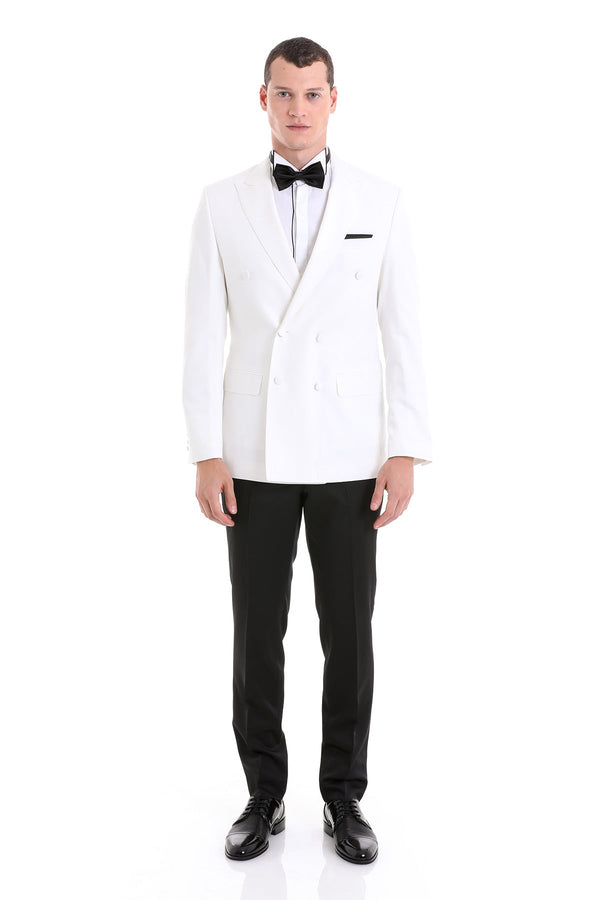
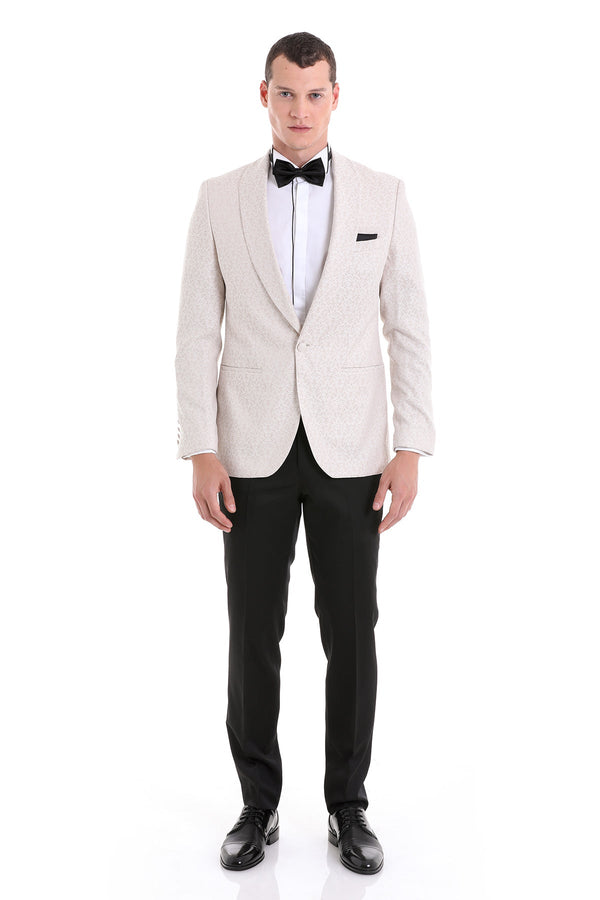
A convertible tuxedo from SAYKI starts at $199.90 and replaces multiple rentals plus a separate suit, all in four tailored fits.
Shop TuxedosConvertible Tuxedo Mistakes That Stick Out in Photos
It is easy to focus on the clever two-in-one idea and overlook small details that make the whole thing look cheap. These are the slip-ups men most often regret after seeing the pictures.
- Leaving the satin lapel on for a job interview. A shiny satin peak at a company meeting screams that you misread the dress code. Always remove the formal piece when you are not at a black-tie or black-tie-optional event.
- Wearing a pre-tied bow tie in a wrong position. Pre-tied bows look stiff. A self-tie bow adjusts naturally and sits correctly against the satin lapel without gaps.
- Not pressing the satin after storage. Satin wrinkles easily and catches light harshly in flash photos. Steam or press it on low before every formal wear.
- Pairing the suit-mode jacket with formal satin-stripe trousers. The stripe gives away the tux origin and confuses the outfit. Keep a pair of flat-front trousers for business and casual use.
- Assuming the lapel attachment is invisible from all angles. Check the jacket from the side and back; some systems create a ridge that ruins the silhouette under venue lighting.
- Wearing a vest or cummerbund that does not align with the lapel change. If the satin lapel is wide, a narrow cummerbund looks mismatched. Proportion matters.
- Buying without testing the suit look with a tie. The notch lapel underlay might be too slim for a tie, creating a cluttered neckline. Bring a tie to the fitting.
- Ignoring cuff buttons and buttonholes. If the cuffs are covered in satin or nonfunctional, they can look odd with a business shirt. Make sure they look appropriate out of black tie.
Knowing what can go wrong does not make you nervous. It gives you the checklist that separates a smart investment from a closet mistake. Nail these details and you are the guy who looks effortlessly put together, no matter which lapel you wear.
How to Keep Your Convertible Tuxedo Looking Sharp for Years
You want this jacket to survive seasons of proms, weddings, and interviews without losing its shape or the satin's luster. A little consistent care protects the money you spent and the look you rely on.
- Store the detachable lapel pieces flat in a breathable bag, separate from the jacket. The jacket's weight can crease the satin permanently if they are left attached on a hanger.
- Dry clean the jacket only when stains or odors build up, not after every wear. Excessive cleaning weakens the wool and fades the satin. Spot-clean small marks with a damp cloth and mild soap.
- Use a wide, contoured wooden hanger that fills the shoulders. Wire hangers distort the shoulder pads and ruin the fit, which matters because the conversion relies on clean shoulder lines.
- Steam the jacket after every wear to release wrinkles and kill odor-causing bacteria. A handheld steamer is gentle on the wool and the satin facing. Never iron directly on satin; place a cotton cloth between.
- Rotate wears. A day between uses lets the fibers recover their shape and stretch, which doubles the lifespan.
- Check the attachment mechanism for loose threads or magnets each season. A quick inspection and a needle and thread prevent a lapel popping off at an event.
Ten minutes of care after each wear keeps the jacket looking exactly like it did when you first tried it on, a small habit with a payoff that spans years of events.
SAYKI: Finding Your Convertible Tuxedo at a 100-Year-Old Menswear Brand
Most men who walk into a SAYKI store for the first time are surprised they can buy a convertible tuxedo that fits well and starts at the same price as a weekend rental. The family behind SAYKI has crafted menswear since 1924, over a century of understanding how a jacket should sit on your shoulders and move when you do. That heritage means the convertible systems are not gimmicks; the satin lapel integrates seamlessly, and the jacket still looks like a legitimate suit without it.
Headquartered on Madison Avenue since opening the U.S. flagship at 375 Madison Ave, New York, NY 10017 in 2016, SAYKI now has nine stores across New York, New Jersey, Illinois, Maryland, Massachusetts, Virginia, and Pennsylvania. You can try on convertible styles in Slim, Regular, Dynamic, or Comfort Fit and have alterations done on-site so the jacket fits both modes before you leave. With suits and tuxedos starting at $199.90, the math is simple: one purchase replaces multiple rentals and a separate suit.
From the Fashion Outlets of Chicago in Rosemont to Westfield Montgomery Mall in Bethesda and the Arlington store near Pentagon City, plus outlet locations like Woodbury Commons and Leesburg Premium Outlets, you can walk in with the steps from this guide and a team that has been fitting men for decades will help you confirm lapel placement and fit without pressure. Find the nearest one on our store locator.
Frequently Asked Questions
What exactly is a convertible tuxedo?
A convertible tuxedo is a jacket designed with interchangeable or detachable lapel facings. It usually arrives with a satin shawl or peak lapel piece that attaches to a notch lapel base, transforming the jacket from a formal tuxedo into a business-appropriate blazer. The conversion uses hidden snaps, magnets, or button plackets so no stitching or hardware shows. At SAYKI, convertible options start at $199.90 in Slim, Regular, Dynamic, and Comfort fits.
Can I really wear a convertible tuxedo as a regular suit?
Yes, that is the core promise. Remove the satin lapel, switch from satin-stripe trousers to flat-front dress pants, and swap the bow tie for a necktie, and you have a sharp suit for interviews, client meetings, and smart-casual dinners. The base notch lapel must be fully finished with no visible attachment points, so test the suit look with a tie when you try one on.
Is a convertible tuxedo appropriate for a black-tie wedding?
Yes, provided you attach the formal satin lapel, preferably a shawl or peak style, and pair it with a self-tie bow tie, a stud-set shirt, and black leather oxfords. The jacket follows the same construction rules as a standard tuxedo. If the invitation says black tie optional, you can also wear it in suit mode with a dark tie for a less formal look.
How do I convert the jacket without damaging the satin lapels?
Handle the satin by its edges, not the shiny surface, to avoid fingerprints and oil. If the attachment uses snaps, align them and press with even pressure, never yank. When removing, lift gently from the edge closest to the collar and work down. Store the detached lapel flat in a fabric pouch, and test the conversion in good light a few days before your event.
Is buying a convertible tuxedo cheaper than renting for multiple events?
Definitely. One SAYKI convertible starts at $199.90, roughly one or two standard rentals. If you attend prom, a wedding, and a gala in the same year, renting could cost $450 to $600. With a convertible you own the jacket for life and gain a suit too, with no rental fees, late charges, or size shortages.
What lapel style works best for a convertible tuxedo?
It depends on your most formal event. A shawl collar signals classic black tie, while a peak lapel gives a modern edge and is widely accepted at proms and black-tie-optional weddings. Both reveal a notch lapel for suit mode. If your calendar leans more business than black tie, prioritize a convertible that starts as a sharp notch-lapel blazer with a satin overlay.
How should I care for the detachable satin lapels?
Satin is delicate. Spot-clean with a slightly damp, lint-free cloth and a tiny dab of mild soap. Never scrub. Steam wrinkles from six inches away, moving the steamer constantly, and let the lapel dry flat. Avoid dry cleaning the satin more than once a year, since repeated chemicals dull its sheen.