


14 min read


You have a prom date circled on the calendar, a wedding invitation on the mantel, or a black-tie gala on the horizon, and now a rental quote is staring back at you. The number looks manageable until you add the damage waiver, the late-return penalty, and the fact that after the last dance you hand back something you will never see again. That is the moment the question hits: is renting a tuxedo just throwing money away?
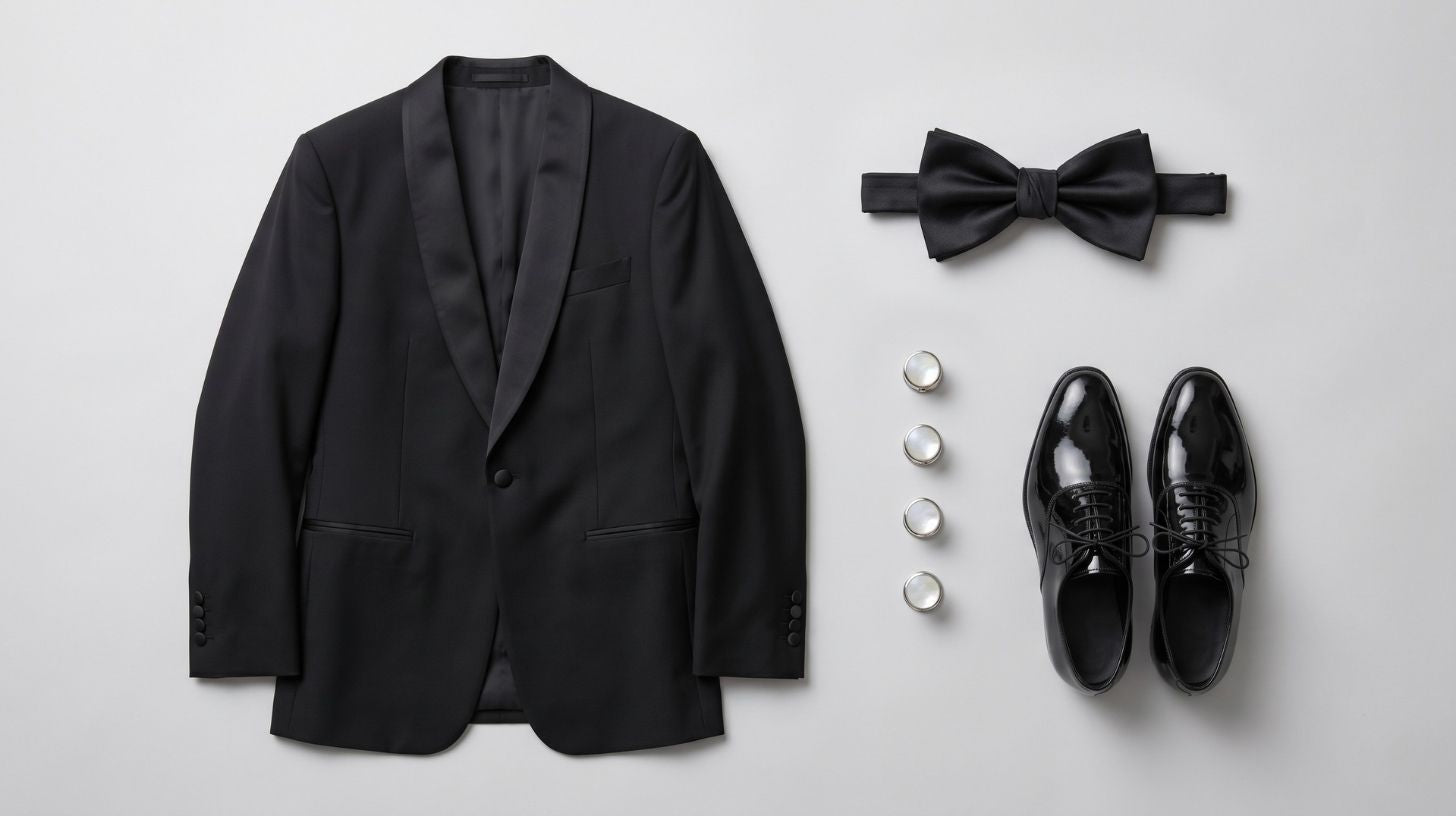
What this guide covers
The average U.S. tuxedo rental lands between $150 and $250 after fees. For that same price you can buy a tuxedo you keep forever, and the math only gets better the second time you wear it. A rental fits only as well as a hurried in-store pinning allows, while a tux you own can be tailored to your exact shoulders, waist, and sleeve length. For the long-form version of this decision, our Complete Tuxedo Buying Guide for Men covers what to look for before you commit.
The Hidden Costs of Renting a Tuxedo and the Long-Term Win of Owning One
Renting feels like the safe, low-stakes move, until you realize you spent $200 for a single evening and your only souvenir is a blurry photo where the jacket pulls across the shoulders. The real risk is the quiet accumulation of repeat rentals that double or triple your spending over a few years. When you own, your money becomes an asset you reach for again and again.
- You pay for a single-use item every time. That $220 prom rental vanishes the moment you return it. A $199.90 tux worn to prom in May and a cousin's wedding in October already costs less per wear, and it keeps dropping with every future event.
- Hidden fees prey on a busy schedule. Late returns, missing studs, or a small stain can add $30 to $75. Ownership erases that clock, since you clean the tux on your own timeline.
- Rental alterations are guesswork, not craftsmanship. A clerk can pin sleeves but cannot reshape a jacket through the shoulders or adjust the trouser rise. A bought tux taken to a tailor becomes an extension of your frame.
- Your second event renews the whole financial conversation. With a rental you pull out your wallet again. Own it, and the only expense is a light press, turning that second wear into a free pass.
- Fabric quality is invisible on a rental rack. Rental tuxedos are built to survive dry-cleaning chemicals, not to breathe on a dance floor. A purchased wool-blend tux moves with you and resists sheen.
- Fit choices are severely limited in rental programs. A generic slim or classic option ignores athletic calves, a drop waist, or broader shoulders. Ownership opens up Slim Fit, Regular Fit, Dynamic Fit, and Comfort Fit.
- The cannot-afford-to-buy idea is a myth. When a tuxedo starts at $199.90, the same as a rental, the price barrier disappears the moment you stop renting the same dollar amount.
1 rental
$150-250, kept nothing
2 rentals
$400+, still kept nothing
1 purchase
$199.90, yours to keep
When you stack the real rental total against the lifetime value of a tux you can wear ten times over five years, the decision stops feeling like a risk and starts looking like the only sensible move.
How to Choose a Tuxedo Worth Owning
The biggest hurdle to buying a tux is usually not the money, it is the uncertainty. You are not sure you will wear it again, or you think a bought tux will look too formal for anything else. Here is how to remove that doubt one step at a time.
Step 1: Map your next two years of formal events
List the occasions you can already see: prom, a sibling's wedding, an office gala, a New Year's Eve party. If you can count even two events where a tuxedo fits, buying already wins on cost. One rental might cost $200, and two push you past $400. The same $199.90 tuxedo gets you through both and still hangs in your closet.
Step 2: Pick a color that works past the first event
Black and midnight navy are the two power players for versatility. A black tux stands at every black-tie affair, and the jacket pairs with dark jeans and a rollneck for date night. Midnight navy photographs richly and separates you from a sea of black lapels. Skip bold colors on a first purchase and save the burgundy dinner jacket for year three.
Step 3: Choose a lapel that fits your frame
A peak lapel draws the eye upward and adds structure for taller or broader-shouldered men, while a shawl collar reads as timeless and works on leaner builds. Notch lapels are rare on tuxedos and can lean businesslike. We compare the two formal options closely in Notch vs Shawl Lapel Tuxedo: How to Pick the Right Style if you want a deeper look.
Step 4: Match the fit to your body, not a label
This is where rentals fail most men. SAYKI offers four cuts for a reason: Slim Fit for lean frames, Regular Fit for most builds, Dynamic Fit for an athletic shape with room through the chest, and Comfort Fit for a relaxed feel without losing polish. Try all four and notice where the jacket pulls or the trousers bunch, since those are the signals a tailor fixes.
Step 5: Set a budget that is already on the table
You already knew you were about to drop $200 on a rental. Tuxedos at SAYKI start at $199.90, right in that window. You do not need to stretch to $500 to own a well-made tux, and the second wear turns it into a bargain.
Step 6: Factor in simple alterations
Off-the-rack does not mean off-the-body. Most bought tuxedos need two small tweaks, sleeve length and trouser hem, around $25 to $50 at a local tailor. That one-time expense turns the tux into a custom-looking piece, while a rental alteration is a temporary pin you return with the garment.
Step 7: Do a quick check before you buy
Standing in front of a mirror, run through three questions:
Quick check before you buy
✓ Can I see myself wearing the jacket with dark jeans and a polo? A yes multiplies its value.
✓ Does the fabric feel substantial but not stiff? It should have a light give, not a cardboard crinkle.
✓ If my event were tomorrow, would I feel steady? Steady means it fits, the color matches my shoes, and I know where the pocket square goes.
Step 8: Try it on in real life or use a detailed size guide
If you are near a store, from Madison Avenue in New York to King of Prussia in Pennsylvania, walk in and let a style advisor pair you with the right fit. If you shop online, measure your chest, waist, and inseam with a cloth tape and match the brand's chart. Do not guess your jacket size from your office shirt size, since those numbers differ across brands.
Once you have run through these steps, the rental counter will feel like an old habit you are finally ready to drop.
Editor's Picks
Stop Renting the Same $200 Twice
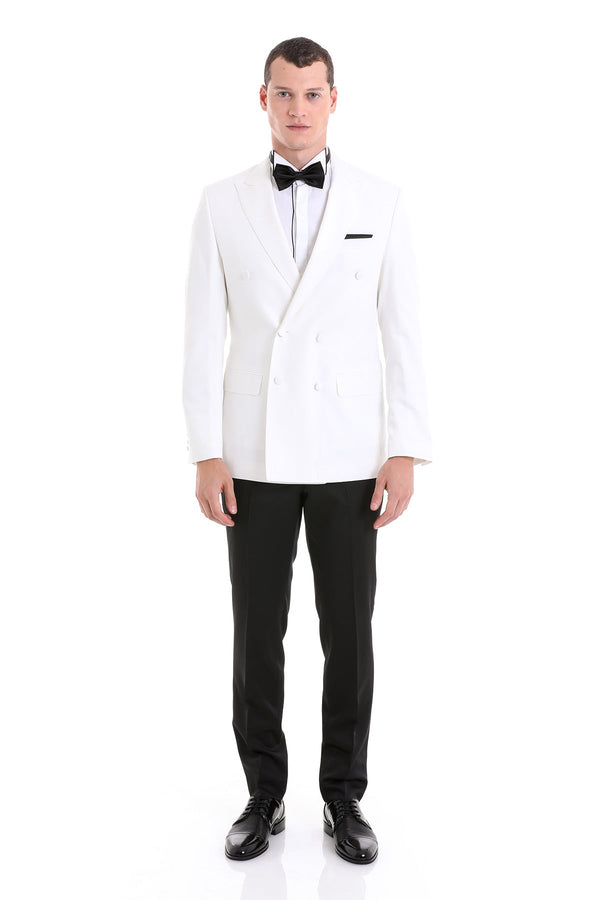
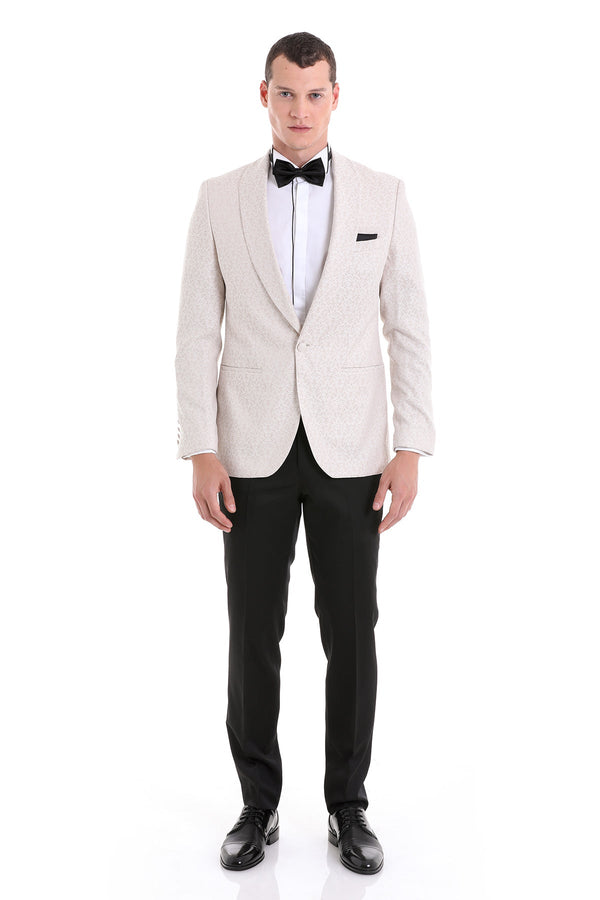
SAYKI tuxedos start at $199.90, right in the rental window, but this one stays yours. Try four fits in store and own a tux for every formal night ahead.
Shop TuxedosTuxedo Rental Mistakes That Cost More Than You Think
Rental companies count on you overlooking a few details. The system is built for their speed, not your comfort. Here is what often goes wrong, and how owning sidesteps each pitfall.
- Relying on rental-shop alterations that cannot be undone. A clerk might pin your trousers, but if they are still too long you are stuck. Ownership gives you a tailor who can re-cut the hem and adjust the taper.
- Ignoring the pickup-and-return time trap. A typical rental is picked up Thursday or Friday and returned by Monday morning, carving extra trips into a packed weekend. A tux in your closet eliminates the errand.
- Assuming a rental shoe package is a good deal. Rental patent shoes are often stiff and forced into a standard width. Well-polished Oxfords you own serve you far better.
- Planning your look around what is available, not what suits you. A rental shop might have three vest colors and one cummerbund. When you own, the look becomes yours, not the inventory's.
- Forgetting a rental jacket cannot stand alone. A purchased wool-blend tux jacket can be worn open with a crisp shirt at a rehearsal dinner, while rentals are not designed to be seen without the full formal team.
- Treating one-size-fits-all rental sizing as truth. A rental 40R is a loose approximation with no Dynamic Fit for an athletic build or Comfort Fit for a broader midsection, and the photos remember it.
- Running the numbers wrong. At $199.90 for a full tuxedo, one extra event puts you in profit, and two makes the rental path a missed opportunity.
Every mistake here is fixable with one shift in mindset: you stop treating formalwear like a temporary favor and start treating it as a quiet tool that works for you. If you are gearing up for your first formal night, How to Wear a Tuxedo for the First Time walks through the details that make it feel natural.
How to Care for a Tuxedo So It Pays You Back Every Time
You made the smart move and bought your tuxedo. Now protect it so it outlasts the rental cycle by a decade and looks sharper at your fifth event than a rented one does at its first.
- Brush, do not dry clean, after every wear. A stiff clothes brush removes dust and lint. Reserve dry cleaning for visible stains or once or twice a year, since over-cleaning dulls the sheen and shortens the canvas life.
- Use a wide-shouldered wooden hanger. The thin wire hanger from the shop deforms the shoulders, while a contoured wooden hanger lets the fabric drape as cut.
- Store inside a breathable garment bag, never plastic. Plastic traps moisture and causes musty smells. A cotton or muslin bag allows airflow while keeping dust off.
- Let the tuxedo rest between events. Hang it in a ventilated room for 24 hours before returning it to the closet so body moisture evaporates naturally.
- Spot-clean small stains right away. Blot, do not rub, a splash of champagne with a damp clean cloth to keep it from setting.
- Rotate the tuxedo with other formal pieces. Giving the jacket and trousers a break reduces fiber stress and preserves the crispness of the lapels.
- Keep trousers on a clip hanger by the cuffs. Clipped at the hem, the trouser hangs straight and avoids creases across the knee.
A few minutes of care after each wear means your tux looks as precise at your tenth event as it did at your first, the kind of return a rental will never give you.
SAYKI: A Century of Menswear Know-How, and Tuxedos That Start at What You Would Pay for a Rental
If the rental math already bothers you, SAYKI exists to settle the debate. You can buy a well-made tuxedo starting at $199.90, right in line with the average U.S. rental, except you keep it. We are the U.S. arm of Hatemoğlu, a family-run company founded in 1924 with over 100 years of tailoring expertise passed down across three generations. That heritage means every jacket is cut with a respect for fit that a rental counter cannot replicate.
Our tuxedos come in four fits, Slim Fit, Regular Fit, Dynamic Fit, and Comfort Fit, because a prom-goer with a swimmer's frame needs a different cut than a best man who lifts or an office professional who wants to move freely through a long gala. You can try them at our flagship at 375 Madison Ave, New York, NY 10017, or at any of our nine locations across NY, NJ, IL, MD, MA, VA, and PA. Find the closest one on our store locator.
When you choose to buy instead of rent, you are not just saving a second rental fee down the road. You are investing in a garment you can wear to prom, then again next fall for a wedding, and even dress down with a cashmere rollneck for a winter dinner.
Frequently Asked Questions
Is it worth buying a tuxedo instead of renting one?
Yes, for anyone who will wear it at least twice in the next few years, buying almost always saves money. A single rental hovers between $150 and $250 after fees. A tuxedo you own at $199.90 breaks even on the first wear and becomes pure value on the second, plus you get a precision fit through a tailor that a rental cannot offer.
Is it cheaper to buy or rent a suit for prom?
Buying wins when the entry price matches a rental. With SAYKI suits starting at $199.90, you can own a full suit for what you would spend on a prom rental, with no late-return stress and a suit you can wear to interviews and weddings later. If you rent for $200 and need a suit next year, you are out another $200, while ownership stops that cycle.
How much does a good men's suit cost?
A solid wool-blend suit can start at $199.90, the same as many rental packages. You do not need to spend $600 or more for a suit that fits and holds its shape. Look for floating chest canvas and reinforced seams, and prioritize fit over label, since at that price the quality comes from tailoring it to your body.
Where can I buy a suit for under $200?
SAYKI offers suits and tuxedos starting at $199.90 through its website and across its nine U.S. stores, including the flagship at 375 Madison Ave in New York and locations in Paramus, Bethesda, Arlington, King of Prussia, and several premium outlets. Each store carries Slim Fit, Regular Fit, Dynamic Fit, and Comfort Fit so you can match a cut to your build.
Should I wear a tuxedo or a suit to prom?
A tuxedo is the traditional choice for a formal prom, especially for black-tie optional or if you want to stand out in photos. If your prom is semi-formal and you plan to reuse the outfit, a dark navy or charcoal suit is a sharper long-term buy. Match the outfit to the vibe of your night, knowing either can be owned for the price of a rental.
What is the difference between a tuxedo and a suit for prom?
A tuxedo features satin-faced lapels, satin-covered buttons, and often a stripe down the trouser leg, designed for formal evenings with a bow tie and a pleated-front shirt. A suit lacks those satin details and works with a tie or open collar for a less ceremonial look. A well-fitted tux signals you dressed for the occasion, while a suit works beautifully with a crisp white shirt and leather shoes.
How do I store a suit properly to keep its shape?
Hang the jacket on a wide, contoured wooden hanger so the shoulders stay full and the chest canvas does not distort. Clip trousers at the cuffs and hang them by the hem, not folded over a bar, to keep the crease sharp. Cover everything with a breathable cotton garment bag and store in a cool, dry closet away from sunlight.