


Contents
Your First Suit, Tuxedo, or Blazer, Where to Start
- Know the difference between a suit and a tuxedo, one mistake with lapels or satin can make you stand out for the wrong reason.
- Pick a fit that works with your body, not against it, Slim Fit, Regular Fit, Dynamic Fit, and Comfort Fit each solve a different shape, and the wrong one will pull across your shoulders or leave you swimming in fabric.
- Spend your money once, a suit you own that starts at $199.90 costs the same as a rental but stays in your closet for years.
- Focus on the jacket first, shoulders and chest are the hardest parts to alter, so get those right before you worry about pants length.
- Build a simple, repeatable outfit, one navy suit and a white dress shirt can handle interviews, weddings, and dinner events for a decade.
- Take care of it like an investment, cheap dry cleaning can ruin a jacket faster than wearing it, and how you store it between wears makes the difference between a three-year lifespan and a ten-year one.
If you are a guy who has never felt fully confident picking out formal clothes, or you just want to stop guessing, this guide is written for you. By the time you finish, you will know exactly what to look for, how it should fit, and how to leave the store with something that actually earns the money you spent on it.
Why Getting Formal Wear Right Matters More Than You Think
Showing up in something that fits poorly or does not match the dress code can shift the whole tone of your day, people remember the guy who looked uncomfortable, and the photos from that wedding or prom never let you forget it. On the other side, a well-chosen suit or tuxedo makes you feel calmer, sit taller, and participate in the event instead of worrying about your clothes.
- You show up to a wedding in a tuxedo when the invite says "cocktail attire", you will look like you misread the room. A dark suit with a crisp shirt is almost always safer for daytime or outdoor weddings, while a tuxedo stays in rotation for black-tie events after 6 p.m.
- You buy a jacket that pinches across the back because you thought all slim fits are the same, a Dynamic Fit or Comfort Fit might give your shoulders the room they need while still tapering at the waist, so you avoid the permanent wrinkle between your shoulder blades.
- You rent a tux for prom and spend $200 on something that fits you like a costume, when you buy starting at $199.90, you own a tuxedo that is altered to your body, and you can wear it again for a gala, a wedding, or next year's event.
- You wear a jacket with sleeves that cover your shirt cuffs, the rule is about a quarter inch of shirt cuff showing, and getting it right makes you look intentional rather than like you borrowed a jacket.
- You skip the dress shoes and wear square-toed loafers, formal wear lives or dies on the details, and the wrong shoes pull a $500 suit down to rental-level fast. Black oxfords or derbies are the minimum.
- You buy a three-piece suit for a summer outdoor wedding, a light wool or linen blend two-piece will keep you cooler and look more appropriate, even if the suit costs less than the vest you thought you needed.
- You assume "formal" means a black suit with a black shirt, that look rarely photographs well and reads outdated. A mid-gray or navy suit with a white or light blue shirt is the modern standard that works in almost every formal room.
When the garment you own fits and the dress code is clear, your morning of the event stops being stressful and starts being just another day with a better outfit, and that is the whole point.
How to Choose Your First Suit or Tuxedo: A Step-by-Step Guide
Walking into a store or scrolling online without a plan is how you end up with something that hangs in the closet unworn. This guide breaks the decision into manageable pieces, so you can shop with a clear head and recognize the right piece when you see it.
Step 1: Name the Occasion and Time of Day
Formal wear is not universal. A job interview at 10 a.m. calls for a suit, never a tuxedo. A prom at 7 p.m. with a black-tie dress code is tuxedo territory. Weddings can go either way depending on invitation wording and time. Start by asking: What time does the event start? Is it indoors or outdoors? Does the invite say black-tie, cocktail, or business formal? That answer dictates whether you need a dark suit, a tuxedo, or a blazer with dress trousers.
Step 2: Decide Between a Suit and a Tuxedo
A tuxedo has satin details, usually on the lapel, pocket trim, and a stripe down the pants. It is meant for evening events and pairs with a formal shirt and bow tie. A suit has no satin and can go from daytime weddings to business meetings to dinner dates. If you need one piece of formal clothing for multiple occasions, start with a navy or charcoal suit. If your event is prom or a gala and the invitation says black-tie, go with a tuxedo. You can buy a tux that costs what you would pay to rent one, starting at $199.90, so owning it is not the financial stretch it used to be.
Step 3: Get Clear on Fit
The four fits at your disposal, Slim Fit, Regular Fit, Dynamic Fit, and Comfort Fit, solve different body types and preferences. Do not pick one based on the label alone; let the mirror decide.
- Slim Fit hugs the body more closely and works best if you have a lean build and want a modern, tapered silhouette.
- Regular Fit gives a classic straight cut with room to move, ideal for average to athletic builds and most office settings.
- Dynamic Fit is cut for guys with broader shoulders and a trimmer waist; the jacket shape follows athletic proportions without pulling at the upper back.
- Comfort Fit prioritizes ease and movement with more room through the chest and midsection, without looking oversized.
Step 4: Choose a Color That Pulls Double Duty
As a beginner, stick with navy or charcoal. Navy suits read warm and approachable and work for nearly any daytime event, from job interviews to summer weddings. Charcoal is slightly more formal and is the safest choice for serious business settings, funerals, and evening functions where you cannot wear a tuxedo. Avoid black suits for your first purchase, they are harder to dress down and can look stark in daylight. Light gray and tan are useful later but less versatile for an all-purpose first step.
Step 5: Check the Fabric and Season
Wool is the gold standard for its drape and breathability. A lightweight wool or wool blend will keep you comfortable in all but the hottest outdoor ceremonies. For summer-only events, a linen-blend suit breathes better but wrinkles faster. For winter, a heavier wool with a flannel finish adds warmth and substance. Hold the fabric under light, if you can see your hand behind it easily, the weave is thin and may wear out faster. A solid midweight wool in a year-round weight is the safest multi-season bet.
Step 6: Focus on Jacket Shoulders and Chest First
Sleeves can be shortened. Waist can be taken in. But shoulders and chest are the hardest and most expensive parts to alter, so they must fit correctly off the rack. The seam of the shoulder should sit at the edge of your shoulder bone, not droop onto your upper arm. When buttoned, the jacket should close without pulling into an X-shaped crease. If the shoulders fit but the waist is roomy, a tailor can fix it easily. If the shoulders are too tight or too wide, move to a different size or fit entirely.
Step 7: Do the Sleeve and Trouser Length Test
Stand with arms relaxed at your sides. The jacket sleeve should hit right at the wrist bone, revealing a quarter to half inch of shirt cuff. Trousers should break once across the top of your shoe, a slight fold in the fabric, not a puddle. For a no-break modern look, hem trousers to graze the shoe with no fold. If you are wearing a tuxedo, the trouser hem usually sits at a similar length, and the satin stripe should run straight without twisting.
Step 8: Try It On with the Right Shoes and Shirt
Never try on a suit or tux in sneakers or a t-shirt. Bring or ask for a dress shirt and shoes that match the event. The trouser length changes depending on heel height, and the jacket drape looks different over a proper collared shirt. Rolling the shoulders forward and sitting down in the fitting room reveals whether the back stays comfortable and the seat of the pants does not pull tight. Move like you will move at the event, the garment should never restrict you.
Step 9: Make a Decision Without Overthinking
If the shoulders fit, the color works for your main events, and you can move freely, you have found your piece. Waiting for a mythical "perfect" suit often leads to last-minute purchases that fit worse. With options starting at $199.90, you can own something that fits today and refine your taste over time.
You now know enough to walk into a store, narrow the rack to three or four pieces, and feel the difference between a "maybe" and a "yes."
Editor's Picks

Your First Suit, Done Right
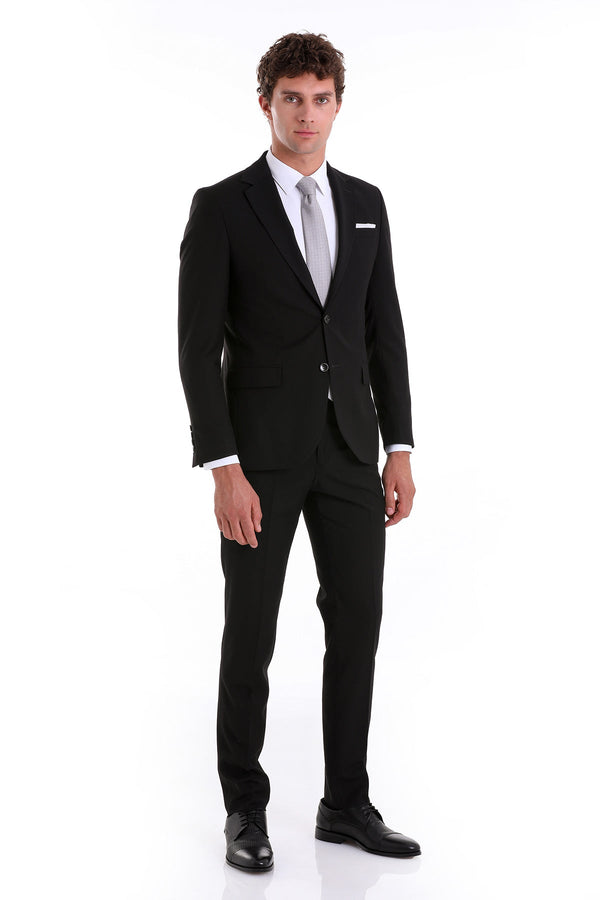
Navy and charcoal suits in four fits, beginner-friendly and built to last, starting at $199.90.
Shop SuitsCommon Formal Wear Mistakes Beginners Make (and How to Avoid Them)
Mistakes usually come from good intentions, trying to dress up too much, not enough, or simply following advice meant for a different body type. Spotting them early saves you from spending money on something that never leaves the closet.
- Buying a tuxedo for a daytime outdoor wedding. Tuxedos are evening pieces. Wearing satin lapels under the afternoon sun feels overdressed and reads as confused about dress codes. Fix: Choose a light-to-midweight suit in navy or gray for any ceremony that starts before 5 p.m.
- Assuming Slim Fit is the "right" modern fit for everyone. If you have an athletic build or carry weight around your middle, a Slim Fit jacket will pull across your chest and waist, creating permanent stress lines. Fix: Try a Dynamic Fit or Comfort Fit that respects your proportions and still looks sharp.
- Keeping the jacket buttoned while sitting. It strains the fabric and distorts the shape over time. Fix: Unbutton the jacket the moment you sit down; button it back when you stand. This one habit extends the life of the garment noticeably.
- Wearing a pre-tied bow tie with a tuxedo. It announces that the tie came with the rental package. A self-tied bow tie, even slightly imperfect, looks more authentic and signals personal effort. Fix: Spend ten minutes learning to tie a bow tie; it is easier than a necktie once you learn the steps.
- Ignoring vent style and getting a jacket that bunches when you move. A single vent can pucker when you put hands in pockets. Double vents lie flatter and move better. Fix: When trying on, reach forward as if shaking hands, if the jacket rises up your back, consider a double-vent option.
- Matching a black suit with a black shirt for a "formal" look. That combination tends to read as nightlife or prom cliché, and it photographs poorly. Fix: A white or light blue shirt creates contrast and draws attention to your face, which is where you want it.
- Treating a blazer like a suit jacket and wearing mismatched trousers that are too close in color. A navy blazer with navy trousers that do not match exactly looks like a failed suit. Fix: Pair a blazer with contrasting trousers, gray, tan, or olive, so the intention is clear.
- Skipping the tailor because you assume off-the-rack fit is good enough. Most men need sleeves shortened or trousers hemmed. Small adjustments add up fast and change how the whole silhouette reads. Fix: Budget $20 to $40 for basic tailoring and wear the clothes to the tailor with the shoes you plan to use.
Every one of these pitfalls is avoidable once you know they exist, and knowing them turns an anxious shopping trip into a quiet confidence that carries you through the door.
How to Keep Your Suit or Tuxedo Looking Sharp for Years
The suit or tux you just bought can serve you reliably through dozens of events, but only if you treat it like something that deserves care instead of something you toss over a chair at midnight. A few simple habits protect its color, shape, and longevity.
- Brush it after every wear, use a soft garment brush to remove dust and surface particles before they settle into the weave. This reduces dry cleaning trips and keeps the fabric fresh.
- Dry clean sparingly, no more than once or twice a season, or when there is a visible stain. Over-cleaning breaks down wool fibers and can cause sheen and weak spots.
- Steam instead of iron, hanging the garment in a steamy bathroom or using a handheld steamer releases wrinkles without pressing harsh creases into the wool. If you must iron, use a press cloth and low heat.
- Store on a broad-shouldered wooden hanger, wire hangers or narrow plastic ones distort the shoulder pads and ruin the jacket's shape. A substantial hanger supports the garment the way your body would.
- Give it at least a day between wears, wool needs time to recover its shape and let moisture evaporate. Wearing the same suit two days in a row accelerates bagging at the elbows and knees.
- Rotate your shoes and use shoe trees, the trousers and jacket depend on the footwear doing its part. Polished, rested shoes complete the formal picture and prevent the sloppy contrast of a sharp suit with scuffed soles.
- Travel with the jacket inside out and folded loosely, if you must pack it, turn the jacket inside out, fold it gently along the natural seam, and wrap it in tissue paper to minimize creasing. Upon arrival, hang it immediately and steam lightly.
A few minutes of attention after each event keeps the investment alive far longer than its price tag suggests, and you will notice the difference every time you pull it from the closet.
Where to Find Approachable Formal Wear: SAYKI Since 1924
When you are buying your first suit or tuxedo, the last thing you need is a pushy sales floor or prices that force you to choose between rent and own. SAYKI has spent more than a century making that decision easier, suits and tuxedos start at $199.90, exactly what you would pay to rent something that never truly fits you.
The company was founded in 1924 as part of the Hatemoğlu family business, and today it operates nine U.S. stores, from the flagship at 375 Madison Ave in New York City to locations across New Jersey, Illinois, Maryland, Massachusetts, Virginia, and Pennsylvania. That long history means the tailoring and fabric sourcing are not experiments; they are refined over generations.
You can try all four fits, Slim Fit, Regular Fit, Dynamic Fit, and Comfort Fit, in one visit and feel the difference in the shoulders, chest, and seat before you commit. Rather than guessing online, walking into a store lets you get the jacket shoulders right and have the trousers hemmed while you wait. The buy-at-rental-prices model means that paying $199.90 for a tuxedo for prom or a suit for a wedding is not a future hope; it is how the racks are set up every day.
Use our store locator to find the nearest location, whether you are near the New York flagship, the Garden State Plaza store in Paramus, or the Fashion Outlets of Chicago. Each store is staffed by people who can answer the beginner questions covered in this guide without making you feel like a beginner.
Frequently Asked Questions
A tuxedo features satin details on the lapels, buttons, pocket trim, and trouser outseam, and it is traditionally worn with a formal white shirt, black bow tie, and patent leather shoes. A suit has no satin and can pair with a wide range of tie and shoe combinations. For proms where the dress code says black-tie, a tuxedo is expected. In many cases, however, prom rules are flexible, a dark navy or charcoal suit with a sharp tie can look just as intentional, especially if you are buying on a budget. If you want something you can rewear for future formal events, a suit often offers more versatility than a tuxedo. Either way, owning your outfit starting at $199.90 removes the awkward fit issues of a rental.
The safest choice is a navy or charcoal suit, a white or light blue dress shirt, a tie that complements the color palette of the wedding without matching the groomsmen, and well-polished leather dress shoes. Check the invitation, "black-tie" means a tuxedo, "cocktail" or "formal" typically means a dark suit, and "beach formal" calls for lighter fabrics and colors. Avoid wearing a dress shirt without a tie if the couple expects a more dressed-up crowd; a tie shows you made the effort. If the ceremony is outdoors and starts before 5 p.m., a tuxedo looks out of place. A midweight wool suit in navy will work for almost any wedding that is not black-tie and will serve you well in the years after.
Slim Fit suits are cut closer to the body with narrower sleeves, higher armholes, and a tapered waist and trouser leg. They create a modern, lean silhouette but can be restrictive if you have broader shoulders or a fuller chest. Regular Fit suits offer a straighter cut with more room through the chest, midsection, and thighs, providing a classic look that moves easily. Neither is "better", the right one depends on your body type and how you want to feel. If you try a Slim Fit jacket and the button pulls into an X shape, step up to a Regular Fit or test a Dynamic Fit, which balances broad shoulders with a tapered waist.
A quality suit that fits well and uses decent materials can start around $200 and still last for years with proper care. For example, suits and tuxedos at SAYKI start at $199.90, which is comparable to many rental fees. As you move into the $400 to $700 range, you typically see more hand-finishing and higher-grade wools, but a beginner can walk into a room with confidence at the entry-level price point as long as the fit is dialed in. The most important investment is not the sticker price but the tailoring and the fabric's resilience, a well-chosen $200 suit often outperforms a poorly fitted $800 one.
Buying often costs the same as renting when suits start at $199.90. A rental might run $150 to $200 but must be returned, may fit off-the-rack in a limited range, and cannot be tailored to your body. When you buy, you own a suit that you can wear to graduation parties, college interviews, and future weddings. Over the span of just two formal events, the purchase more than pays for itself. For prom specifically, buying also means you skip the last-minute pickup lines and the worry about damaging a rental.
The shoulder seam should end exactly where your shoulder bone ends, no drooping, no tight pull. When buttoned, the jacket should close smoothly without forming an X-shaped crease across your stomach. Sleeves should show a quarter to half inch of shirt cuff. The jacket length should cover the curve of your seat without going past your knuckles when your arms hang straight. You should be able to slide a flat hand under the lapels when the jacket is buttoned, snug but not restrictive. If the shoulders fit and the length is right, a tailor can adjust almost everything else.
Limit dry cleaning to once or twice a season, or only when there is a visible stain or odor you cannot otherwise remove. Frequent dry cleaning degrades the wool fibers and can make the fabric shiny and brittle. Between wears, brush the suit with a garment brush, hang it on a wooden hanger to air out, and use a steamer to release wrinkles. Spot-clean small stains with a damp cloth and mild soap rather than sending the whole garment to the cleaners. Most suits can be worn many times before they truly need chemical cleaning.