


11 min read


The peacoat and the trench coat are two of menswear's most enduring outerwear styles, but they serve very different purposes. One keeps you warm through harsh winter months; the other shields you from wind and rain during transitional seasons. This guide breaks down the key differences between them, explains when to wear each, and shows you how to style both with confidence.
Contents
What Is a Peacoat?
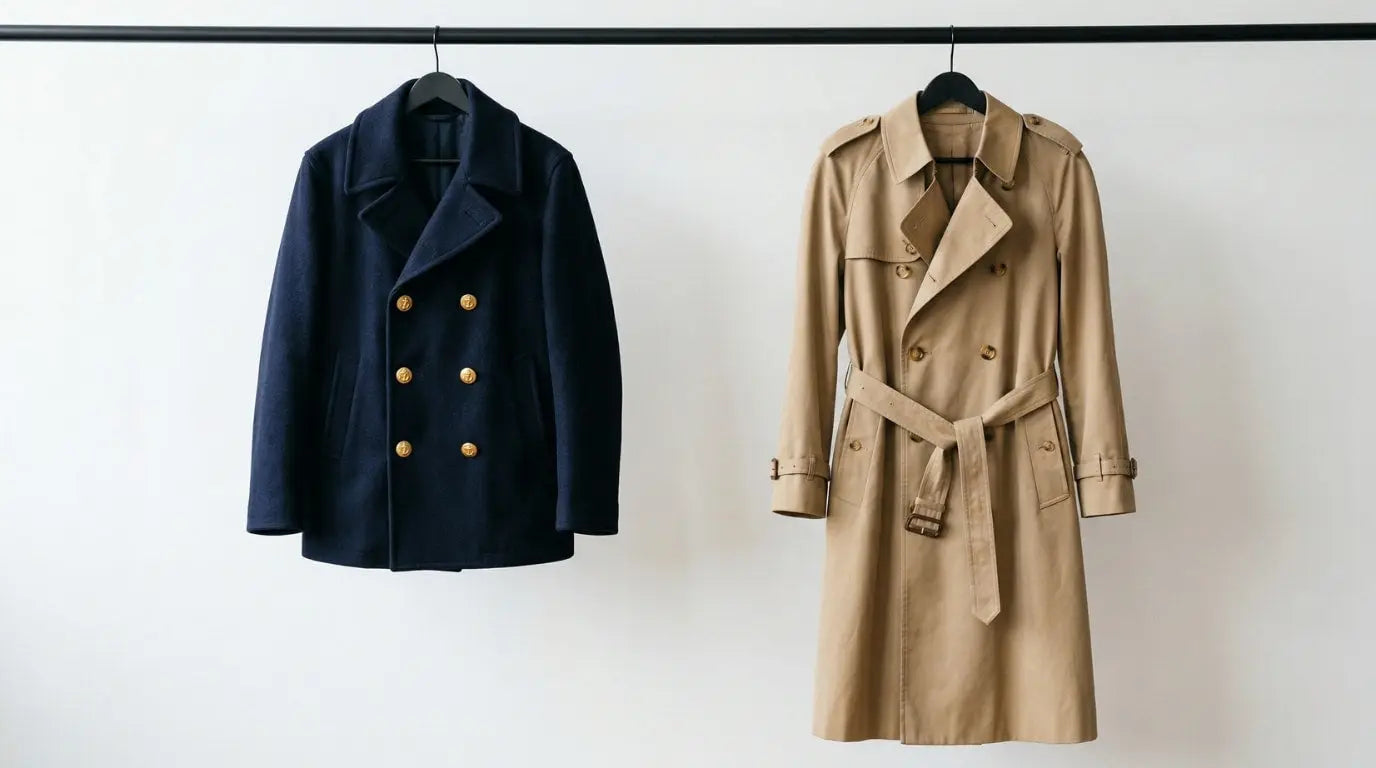
The peacoat is a short, double-breasted wool coat that originated with European navies in the 18th century. Its name likely comes from the Dutch word "pij," which referred to the coarse woolen fabric used in its construction. Sailors across Dutch, British, and American fleets wore peacoats on deck to stay warm in cold, wet conditions at sea.
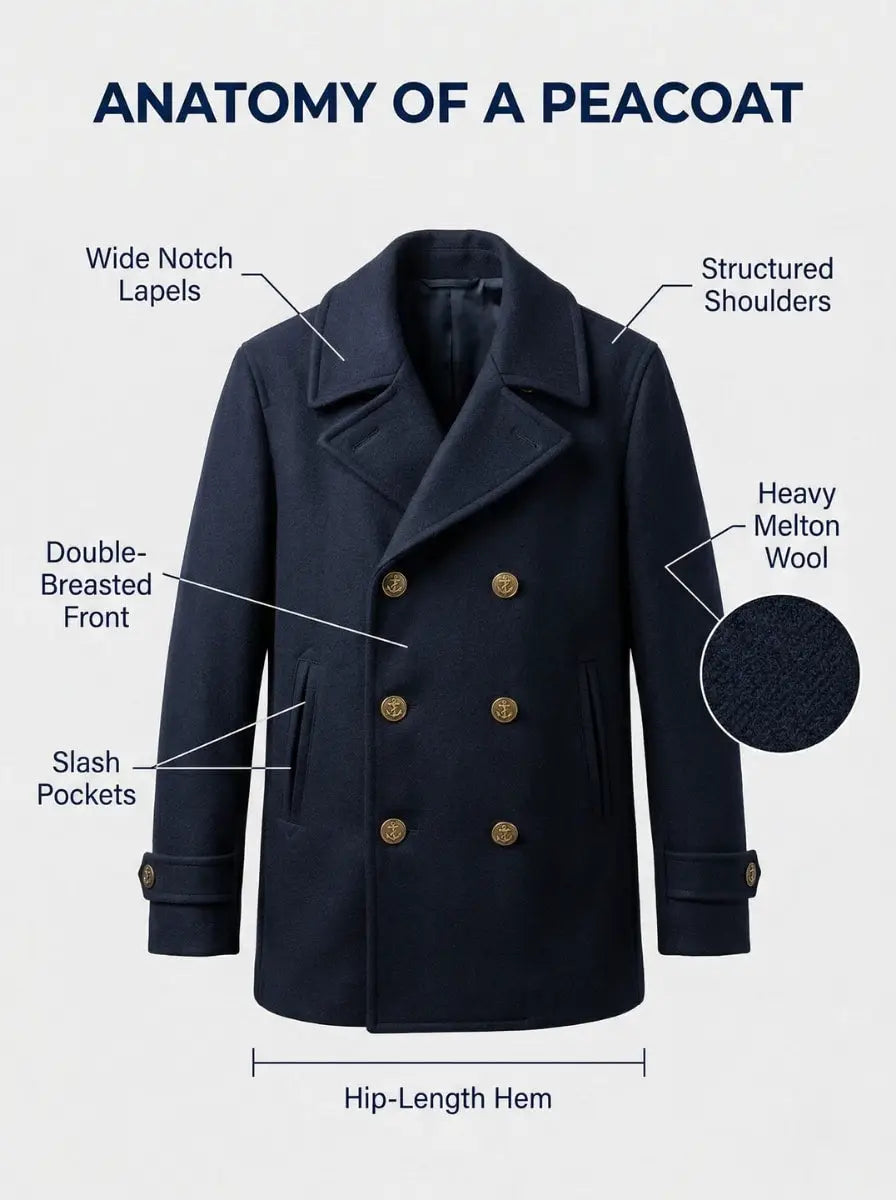
The classic peacoat sits at hip length - short enough for easy movement but long enough to cover the torso. It features wide lapels, a double-breasted front with large buttons, and vertical slash pockets. The heavy wool fabric provides substantial insulation, making it one of the warmest coats you can own. Traditional peacoats are navy blue, a nod to their naval heritage, though modern versions come in charcoal, black, camel, and other neutral tones.
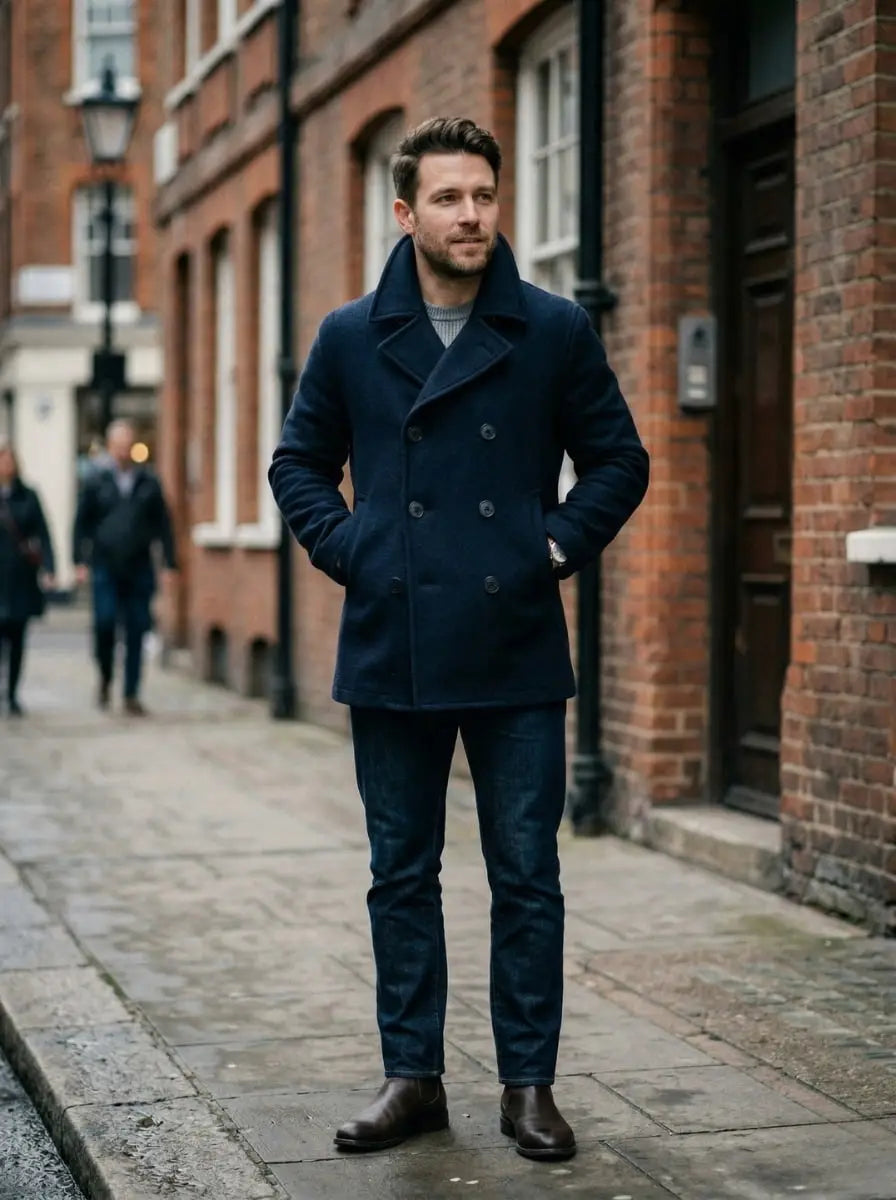
What makes a peacoat so appealing is its structure. The thick wool adds natural bulk to the shoulders and chest, creating a strong, masculine silhouette. For men with slimmer builds, a peacoat fills out the upper body in a way that other outerwear styles simply cannot. The tailored cut through the waist keeps the shape clean rather than boxy, and the hip-length hem makes it easy to pair with everything from jeans to dress trousers.
What Is a Trench Coat?
The trench coat was developed for British military officers during World War I as protection against the mud and rain of the Western Front. Thomas Burberry is widely credited with creating the gabardine fabric - a tightly woven, water-resistant cotton twill - that made the original trench coat both breathable and weatherproof. Unlike rubberized raincoats that trapped heat and moisture, gabardine kept soldiers dry without overheating.
A trench coat is immediately recognizable by its length, which typically falls to the knee or just below. It features a double-breasted front, broad lapels, a belted waist, shoulder epaulettes, a rear vent, and a storm flap over the right shoulder designed to channel rainwater away from the body. The cuffs often have buckled straps, and the collar can be turned up for extra wind protection. Traditionally, trench coats come in khaki, tan, or stone colors, though navy, black, and olive versions are common today.
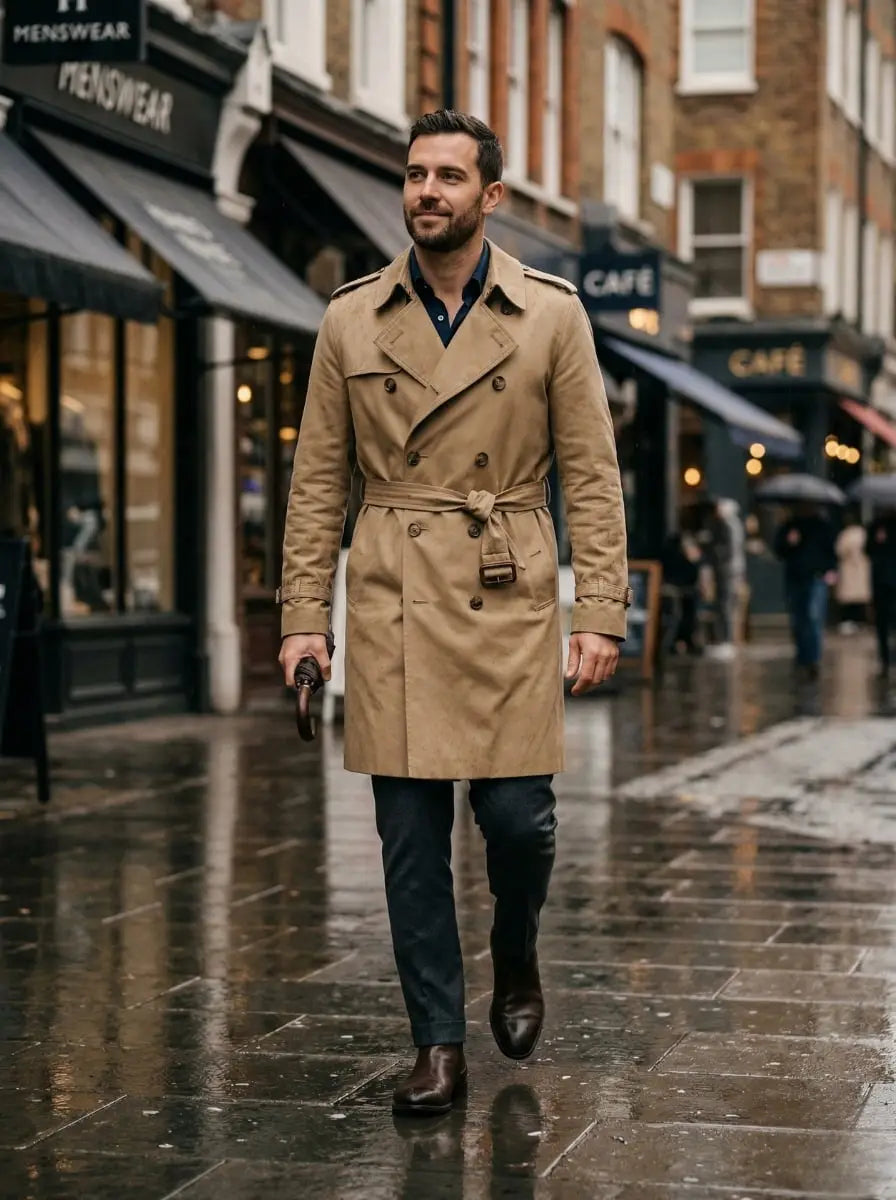
Where the peacoat provides warmth through heavy fabric, the trench coat works as a shield against wind and rain. It is lighter in weight, which makes it more comfortable for layering over suits and blazers without adding excess bulk. The belted waist creates a streamlined silhouette that can have a slimming effect, particularly on stockier builds.
Key Differences: Peacoat vs. Trench Coat
Both coats share military roots and a double-breasted front, but that is where the similarities end. Their differences in fabric, length, purpose, and construction make each coat suited to distinct conditions and outfits.
← Scroll horizontally to see full comparison →
| Feature | Peacoat | Trench Coat |
|---|---|---|
| Origin | European navies, 18th century | British military, World War I |
| Primary Fabric | Heavy wool or wool blends | Gabardine cotton or cotton blends |
| Length | Hip to upper thigh | Knee-length or below |
| Weight | Heavy, substantial | Lighter, layerable |
| Weather Strength | Cold temperatures, moderate wind | Rain, wind, light cold |
| Belt | No belt | Belted at the waist |
| Pockets | Vertical slash pockets | Buttoned flap pockets, accessible from inside and outside |
| Collar | Wide lapels, lies flat | Turn-down collar, can be raised for wind protection |
| Traditional Color | Navy blue | Khaki or tan |
| Best Season | Late fall through winter | Spring and early fall |
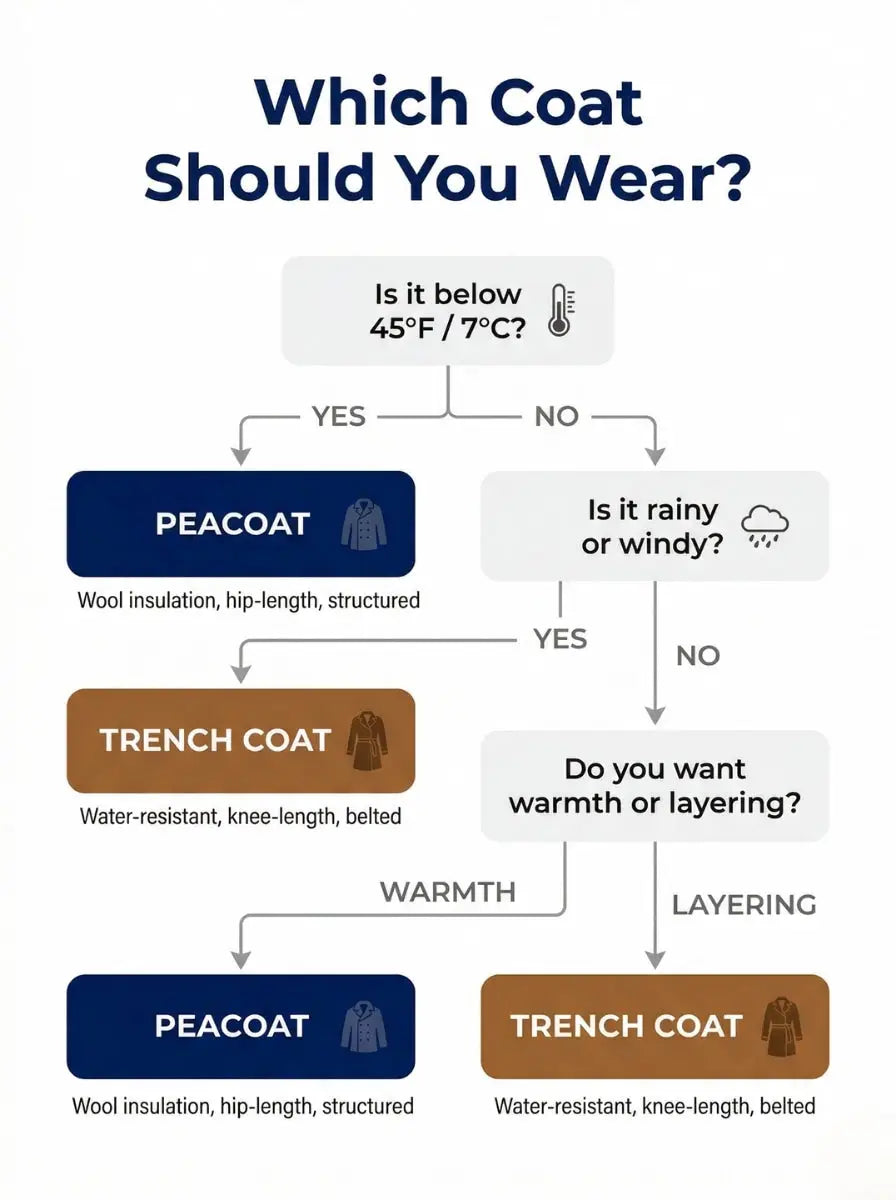
The most fundamental difference is function. A peacoat is built for warmth; a trench coat is built for weather protection. This distinction guides when and how you wear each one. In temperatures below 45 degrees Fahrenheit, the peacoat's thick wool construction will keep you comfortable. When the forecast calls for rain or wind but temperatures are milder - roughly 40 to 65 degrees - the trench coat's water-resistant fabric and longer coverage make it the better choice.
When to Wear Each Coat
Choosing between a peacoat and a trench coat comes down to three factors: temperature, weather conditions, and the dress code of the occasion.
When the Peacoat Wins
Reach for a peacoat when cold is the primary concern. The heavy wool fabric makes it the stronger option for winter commutes, football games, outdoor holiday markets, and any event where you will be spending time in freezing or near-freezing temperatures. The structured, shorter length works well for both casual and semi-formal settings. A peacoat over a suit looks sharp at a winter business lunch. A peacoat over a crewneck sweater and jeans fits perfectly for weekend errands in cold weather.
When the Trench Coat Wins
A trench coat is at its best during transitional seasons - the kind of spring or fall days where the morning starts cool and drizzly but warms up by afternoon. Its lighter weight makes it ideal for layering over office attire without feeling restricted, and the water-resistant fabric means you can walk through rain without getting soaked. The trench coat also excels at formal and professional settings. Its clean lines and longer silhouette pair naturally with suits, tailored trousers, and polished shoes.
Styling Tips for Peacoats
The peacoat's shorter, structured silhouette makes it one of the most versatile outerwear pieces in a man's wardrobe. It bridges the gap between casual and dressed-up with very little effort.
With Tailored Clothing
A navy or charcoal peacoat over a suit creates a polished winter look without the formality of a full-length overcoat. Choose a peacoat that fits cleanly through the shoulders and allows enough room through the chest to button comfortably over a suit jacket. Dark neutrals work best here - navy over a grey suit, charcoal over a navy suit. Keep accessories simple: a wool scarf and leather gloves complete the outfit without overdoing it.
With Smart Casual Outfits
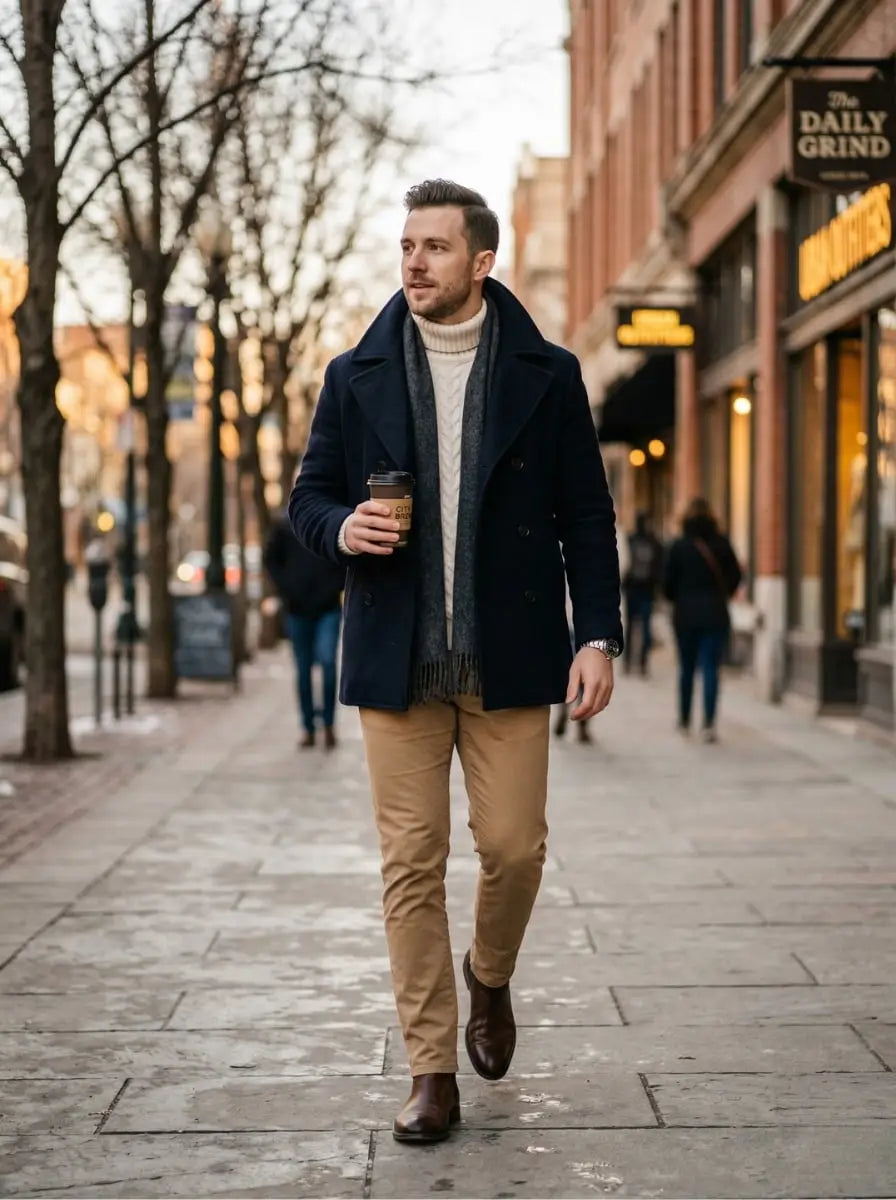
For a smart casual approach, layer a peacoat over a crewneck or turtleneck sweater with chinos and leather boots. This combination works for everything from dinner reservations to weekend city walks. The peacoat's structured shoulders and clean lines give the outfit more polish than a parka or puffer jacket would. Navy remains the most flexible color choice, but a camel or grey peacoat adds variety if you already own a dark option.
With Casual Wear
Even in fully casual settings, a peacoat lifts the outfit a notch above a regular jacket. Jeans, a henley or flannel shirt, and boots make a solid base. The peacoat replaces what might otherwise be a bomber or field jacket and adds a bit of refinement. Unbutton the coat and leave the collar relaxed for a more laid-back feel.
Styling Tips for Trench Coats
The trench coat carries more visual weight than a peacoat because of its length, belt, and details. Wearing one well means balancing those elements so the coat enhances the outfit underneath rather than overwhelming it.
With Business Attire
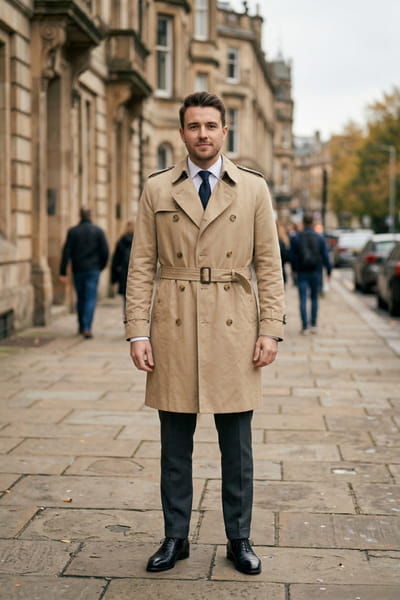
The trench coat is a natural companion for professional outfits. A tan or navy trench over a dark suit reads as polished and intentional. Belt the coat to create a clean waistline, and make sure the hem falls below the suit jacket underneath. Avoid overly bulky layers below the trench - it should drape smoothly, not bunch. Black or dark brown oxford shoes anchor the look.
With Blazers and Separates
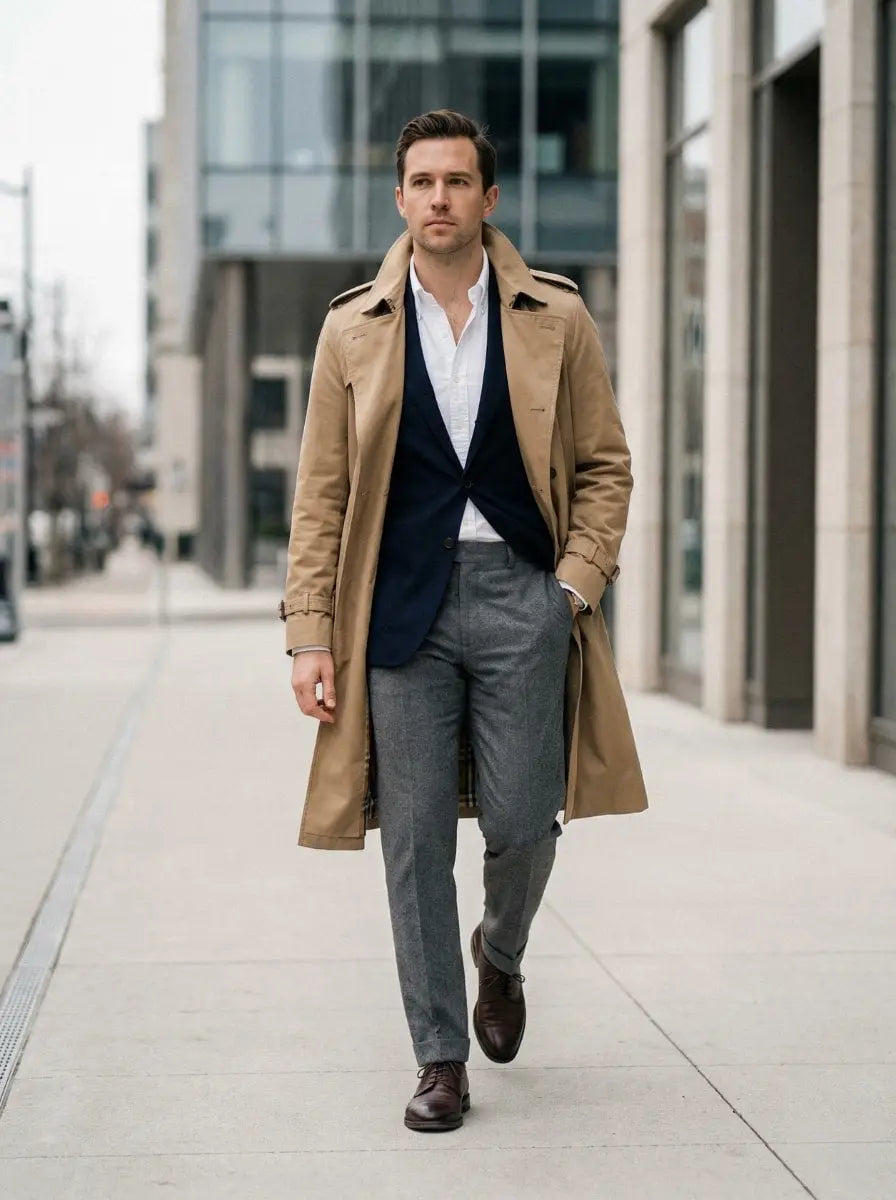
A trench coat layered over a blazer, open-collar shirt, and tailored trousers works well for creative offices, dinner dates, and evening events. Leave the trench open in these settings to show the layers underneath. The contrast between a structured blazer and the flowing lines of the trench creates visual interest. A navy trench over a brown or tan blazer makes for a strong color combination.
With Casual Outfits
Wearing a trench coat casually takes a lighter touch. Pair it with a simple crewneck, slim jeans, and clean sneakers or chelsea boots. Keep the belt tied loosely or tucked behind the coat rather than cinched tight. A casual trench look works best in darker colors like navy, olive, or black - tan can feel too formal when paired with very relaxed clothing. The key is to let the trench add a layer of polish without creating a mismatch between the coat's formality and the rest of the outfit.
← Scroll horizontally to see full spectrum →



Seasonal Considerations & Fabrics
Your choice of fabric determines how well each coat performs in specific weather conditions. Understanding what to look for helps you get the most out of your outerwear investment.
Choosing the Right Fabric Quality
For peacoats, prioritize pure wool or wool-cashmere blends. Avoid peacoats made entirely from polyester or nylon - they pill quickly, lack the insulating properties of natural fibers, and lose their shape after a season or two. A well-made Melton wool peacoat is an investment piece that ages well and holds its structure over years of wear.
For trench coats, gabardine cotton remains the best option. Cotton-polyester blends are common in modern versions and can offer good wrinkle resistance for travel. Some premium trench coats use a waxed cotton that develops a natural patina over time, though these tend to be heavier than gabardine. Whatever the blend, check that the fabric feels tightly woven between your fingers - loose weaves lose their water resistance quickly.
Find Your Perfect Coat
Browse our outerwear collection for peacoats, trench coats, and other cold-weather essentials built with quality fabrics and timeless design.
Shop OuterwearCan you wear a trench coat casually?
Yes, a trench coat works well in casual settings when you style it thoughtfully. Pair it with jeans, a simple T-shirt or crewneck sweater, and sneakers or chelsea boots. Choose a darker color like navy or olive rather than the classic tan, which leans more formal. Leave the belt tied loosely or tucked behind the coat, and keep the coat open to show the relaxed layers underneath. The trench adds structure and polish to an otherwise simple outfit without looking overdressed.
Is a peacoat warm enough for winter?
A good-quality wool peacoat is one of the warmest outerwear options available. The dense Melton wool used in traditional peacoats provides strong insulation against cold and wind, making it suitable for temperatures well below freezing when layered properly. For the harshest winter days, wear a wool sweater or thermal layer underneath. Keep in mind that the peacoat's hip-length cut leaves your legs exposed, so pair it with heavier trousers or wool-blend pants in extreme cold. For subzero conditions or heavy snowfall, a full-length overcoat or insulated parka may be a better primary choice.
Do you need to size up for layering?
It depends on the coat and what you plan to wear underneath. A peacoat should fit comfortably over a sweater or sport coat without pulling at the buttons - if you regularly layer with thicker garments, sizing up by one may be a good idea. Try the coat on over the heaviest layer you intend to wear and check that your arms move freely and the buttons close without strain. For trench coats, the fit is generally more forgiving because the design is naturally roomier. Most men can wear their standard size in a trench coat and still have space for a blazer or light jacket underneath.