


13 min read


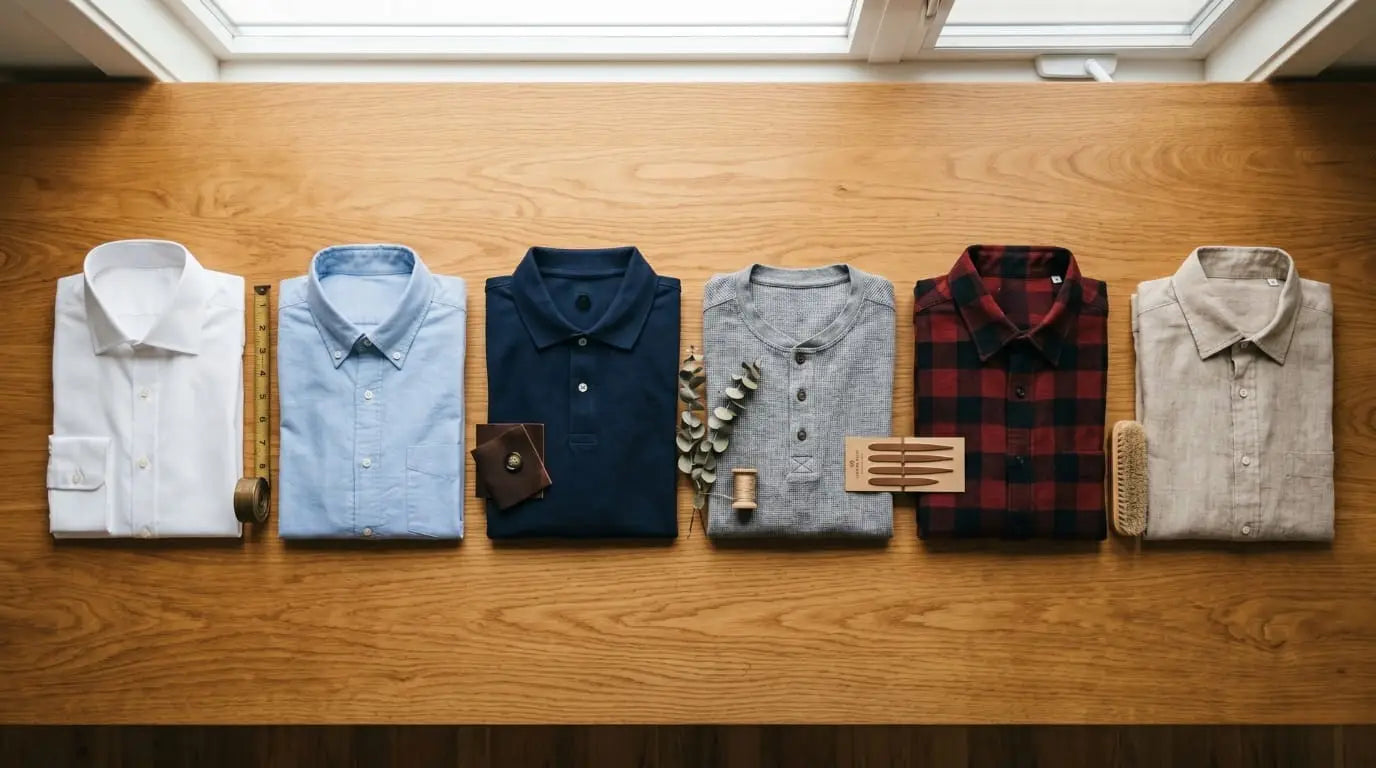
The right shirt does more work than almost any other piece in a man's wardrobe. It can carry a full suit at a black-tie dinner, anchor a blazer at the office, or stand alone with chinos on a Saturday afternoon. This guide walks through the ten shirts every man should know how to wear, plus the fabrics, fit, and care details that separate a sharp wardrobe from a sloppy one.
Contents
Classic Dress Shirt

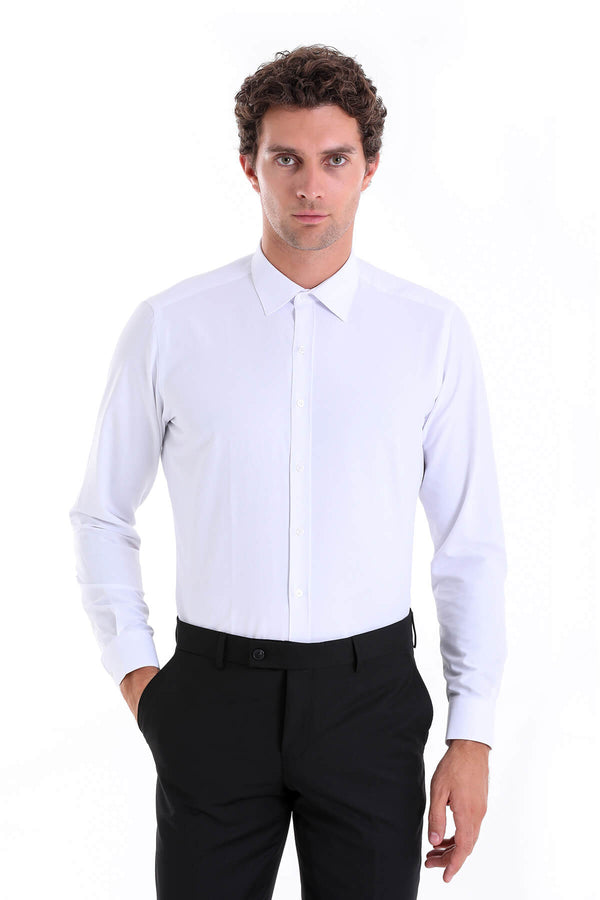
The classic dress shirt is the foundation of formal menswear. Cut from smooth cotton like poplin, twill, or broadcloth, it sits cleanly under a suit, holds a tie knot in place, and gives the rest of an outfit something solid to build on. The defining features are a stiff collar that stays sharp, a placket down the front, and either a barrel cuff or French cuff at the wrist for cufflinks.
White and light blue are the two colors every man should own first. They go with every suit color, work for interviews and weddings, and read as polished without trying too hard. Once those are covered, soft pinks, deeper blues, and subtle stripes give you variety without straying from the classics. Look for a shirt with a yoke that sits flat across the shoulders, a chest that doesn't pull when you move, and a sleeve length that reaches the base of your thumb when your arms hang at your sides.
For an organized look at the full range of formal options, our collection of dress shirts includes both barrel-cuff and French-cuff styles in the colors and patterns that make a wardrobe feel complete.
Oxford Button-Down

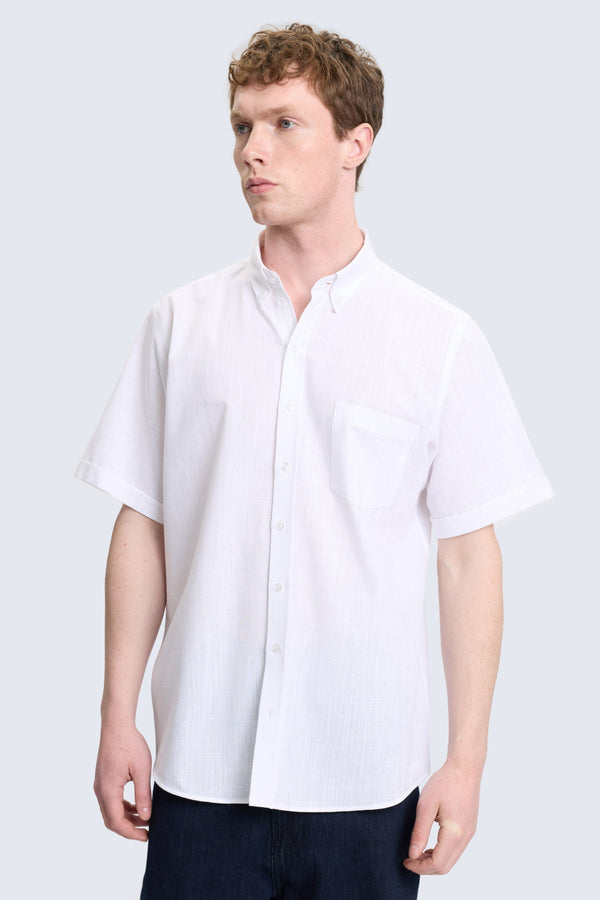
If you can only own one shirt that does it all, make it an Oxford button-down. The fabric is a cotton basketweave that has more texture and weight than dress shirt cloth, which gives it a slightly relaxed feel even at its dressiest. The collar buttons fasten the points of the collar to the body of the shirt, a detail invented for polo players in the 1890s so flapping collars wouldn't get in the way during a match.
This is the shirt that works under a navy blazer at the office, with chinos on the weekend, and even with a knit tie at a casual wedding. White, light blue, and pink stripes are the iconic colors, but a soft blue Oxford in particular gets better with every wash. Pair it with a suit only when the suit itself is on the relaxed end, like an unstructured cotton or wool blend, since the texture of the fabric reads as more casual than smooth poplin.
SAYKI's range of button down shirts covers the essential Oxford weights and colors, plus heavier brushed versions for cooler months.
Polo Shirt

The polo shirt sits exactly between a T-shirt and a button-up. It has a knit collar, a short placket with two or three buttons, and short sleeves with a small ribbed cuff. It's the answer when a T-shirt feels too underdressed but a long-sleeve shirt feels like overkill, which makes it the workhorse of warm-weather smart casual.
Two construction styles dominate. Pique cotton has a textured waffle surface, holds its shape well, and is the more polished option. Jersey or interlock cotton is smoother and softer, with a slightly more relaxed drape. For a real men's wardrobe, both have a place. A pique polo in navy, white, or olive works under a blazer for summer business casual. A softer jersey polo handles weekend errands and travel without a wrinkle.
A few rules worth keeping. Never pop the collar. Never button the top button all the way. And the sleeves should end somewhere around mid-bicep, not flapping past the elbow. SAYKI's polo shirts are cut to keep the body trim without restricting movement, which is exactly the balance you want.
Henley & T-Shirt

Henleys and T-shirts are the most casual end of the shirt spectrum, but that doesn't mean they should be afterthoughts. A well-fitted T-shirt in heavyweight cotton looks intentional. A thin, baggy one looks like an undershirt that escaped.
For T-shirts, the crew neck is the default and works for almost every body type. V-necks should be shallow, never plunging. The sleeves should hit roughly at mid-bicep with no flapping fabric, and the body should be long enough to tuck in but short enough that it doesn't bunch when you don't.
The Henley is a T-shirt with a short button placket, usually two to four buttons, and no collar. It traces back to the rowing town of Henley-on-Thames in England, where it was the standard rower's uniform in the 19th century. Today it earns its place by adding a bit of structure and detail to a casual outfit. A Henley in heavy waffle-knit cotton works under a flannel shirt or a leather jacket. A lighter cotton Henley pairs well with chinos for a put-together summer look that still feels relaxed. Stick to solid colors like white, gray, navy, and olive, and avoid anything with a logo on the chest.
Flannel & Chambray Shirts
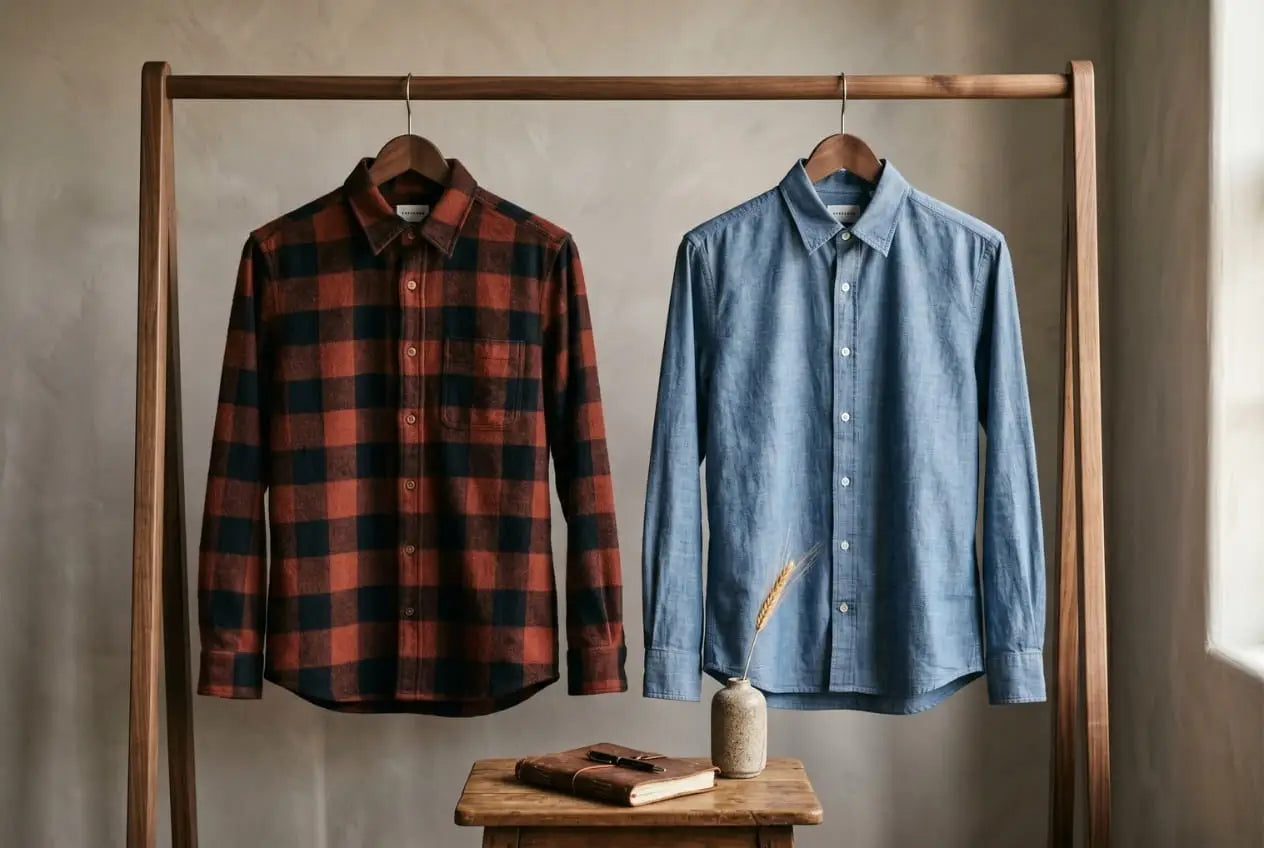
Flannel and chambray are the two cotton shirts that bring real personality to casual outfits, and they sit at opposite ends of the weight spectrum.
Flannel is a brushed cotton, sometimes wool-blended, with a soft fuzzy surface that traps warmth. The classic flannel pattern is a buffalo check or tartan plaid, often in deep reds, greens, navy, or charcoal. It's the right shirt for cool weather, layered over a Henley or T-shirt, paired with dark jeans or wool trousers. Worn open as an overshirt, it doubles as a light jacket for fall walks and coffee runs. Solid-color flannels in gray or olive are an underrated alternative for guys who want the warmth without the lumberjack look.
Chambray, on the other hand, is a lightweight plain-weave cotton that resembles denim from a distance but feels far softer and breathes much better. The trick is that it dresses up better than denim. A chambray shirt with chinos and brown leather shoes works for smart casual offices, weekend dinners, and even some dress-down weddings. It also layers well under a knit sweater or an unstructured blazer when the weather cools.
Linen & Seersucker Shirts

When summer hits, cotton stops doing the job alone. Linen and seersucker are the two warm-weather fabrics that earn their keep by actually keeping you cool, and they each carry a different vibe.
Linen is woven from flax and breathes better than almost any other shirt fabric. It wrinkles, but in a way that looks intentional rather than sloppy if the shirt is well cut. White linen with rolled sleeves and a pair of light chinos is the classic Mediterranean summer outfit, and it works for everything from a beach lunch to an outdoor wedding. Pale colors like sand, sky blue, and soft sage all sit beautifully against a tan. Heavier linens hold a cleaner shape if you want a more polished look.
SAYKI's collection of linen shirts includes the warm-weather essentials in colors that work for both casual weekends and dressed-up summer events.
Seersucker is a puckered cotton that stays slightly off your skin thanks to its textured weave, which is why it feels cooler than smooth cotton in humid weather. The classic version is blue and white striped, originally a hot-weather staple in the American South. A seersucker shirt in pale blue or pink stripes pairs well with white chinos for a relaxed summer look that feels distinctive without being costumey.
Editor's Picks
Common Collar Types
The collar is what changes a shirt's character more than any other detail. The same fabric in two different collar styles can read as boardroom-formal or weekend-casual. These are the four collars that show up most often in a real menswear wardrobe.
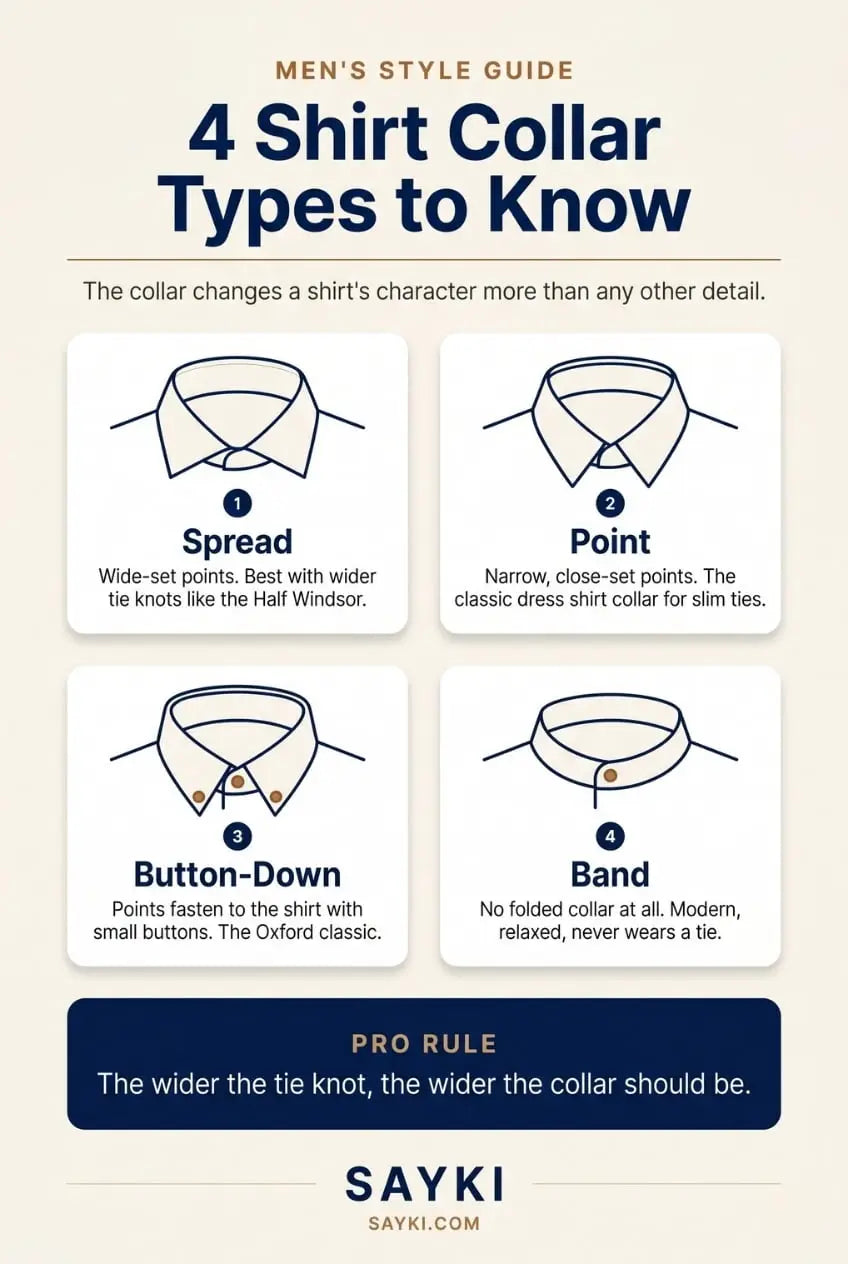
One quick rule for matching collar to outfit: the wider the tie knot, the wider the collar should be. A spread collar with a thin knit tie looks unbalanced, just as a point collar with a fat Windsor knot does. When in doubt, the point collar is the safest match for almost any tie width.
Casual vs. Formal Shirts
The difference between a casual shirt and a formal one comes down to four details: fabric, collar, cuff, and finish. A formal shirt is built from smooth, fine-weave cotton, has a stiff structured collar, has clean barrel or French cuffs, and sits crisply against the chest. A casual shirt uses textured or brushed fabric, has a softer collar, often skips the placket, and drapes more loosely.
The placement on the formality scale also depends on color and pattern. Solid white and pale solids read as the most formal. Subtle stripes and small checks are middle ground. Bold plaids, large prints, and washed colors all push a shirt toward casual. Construction details add to the picture. Pleats at the back yoke, gussets at the side seam, and split tails at the hem are all signs of a shirt designed to be tucked in and worn dressed up.
SAYKI's button up shirts span both ends of this scale, from sharp poplins for the office to washed cottons for the weekend.
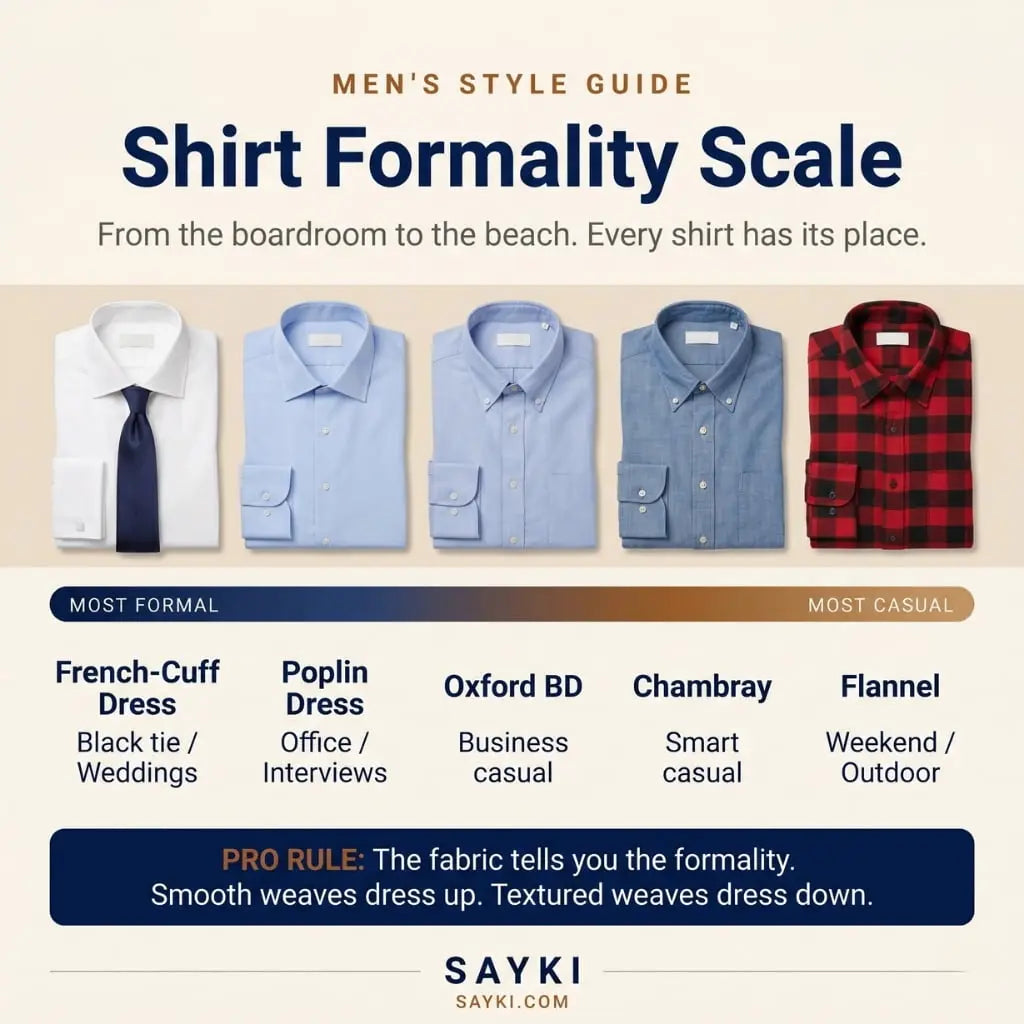
For tucking decisions, a useful rule is the shirttail itself. Curved shirttails with a longer back panel are designed to be tucked in and look strange untucked. Straight, even hems are made to be worn loose. If a shirt looks like it has a shape between the two, it's a casual shirt and can go either way depending on the rest of the fit.
Where things get blurry is the middle ground of casual shirts that work with both jeans and dress trousers. An Oxford button-down in pale blue, a chambray shirt with mother-of-pearl buttons, or a fine-gauge linen in a solid color can all swing in either direction depending on what you pair them with.
Shirt Fabrics & How to Care for Them
Fabric does more than determine how a shirt feels on your skin. It sets how the shirt drapes, how often you'll iron it, how it holds up after fifty washes, and where you can wear it without looking out of place. The table below shows the fabrics that matter most, where each one belongs, and how to care for it so it lasts.
← Scroll horizontally to see full table →
| Fabric | Texture & Feel | Best For | Formality | Care Tip |
|---|---|---|---|---|
| Poplin | Smooth, tightly woven cotton with a slight sheen | Office, interviews, formal events | Formal | Wash cold, hang dry, iron while slightly damp |
| Twill | Diagonal weave, soft hand, natural drape | Office shirts that wrinkle less | Formal | Wash cold, tumble dry low, light ironing |
| Oxford Cloth | Basketweave with visible texture, softens with washing | Business casual, weekends, everyday | Smart Casual | Wash cold, hang dry to keep collar shape |
| Chambray | Plain-weave with colored warp, soft like washed denim | Smart casual offices, weekend dinners | Smart Casual | Wash inside out cold, expect indigo bleed early on |
| Linen | Cool, breathable, lightweight with natural slubs | Summer events, beach lunches, vacations | Smart Casual | Gentle cycle, no dryer, embrace the wrinkles |
| Seersucker | Puckered surface that holds itself off the skin | Hot, humid weather, summer events | Smart Casual | Wash cold, never iron - flat ironing kills the texture |
| Pique Cotton | Waffle-textured knit, holds shape better than jersey | Polo shirts, warm-weather smart casual | Smart Casual | Wash cold inside out, never iron the collar |
| Flannel | Brushed cotton or cotton-wool, soft and warm | Fall and winter casual, layering | Casual | Wash inside out cold, fabric shaver for pilling |
One detail that gets ignored too often is fabric weight. A 2-ply 100s cotton dress shirt feels noticeably finer than a basic single-ply, and the finer fabric also drapes better and lasts longer. For Oxford and casual shirts, look for weights between 4 and 7 ounces per square yard. Anything lighter starts to feel cheap. Anything heavier becomes too warm for year-round wear.
One small rule that saves a lot of shirts: button the top button before you put a shirt on a hanger. The collar holds its shape and the placket lays flat, so the shirt is ready to wear next time without re-ironing.
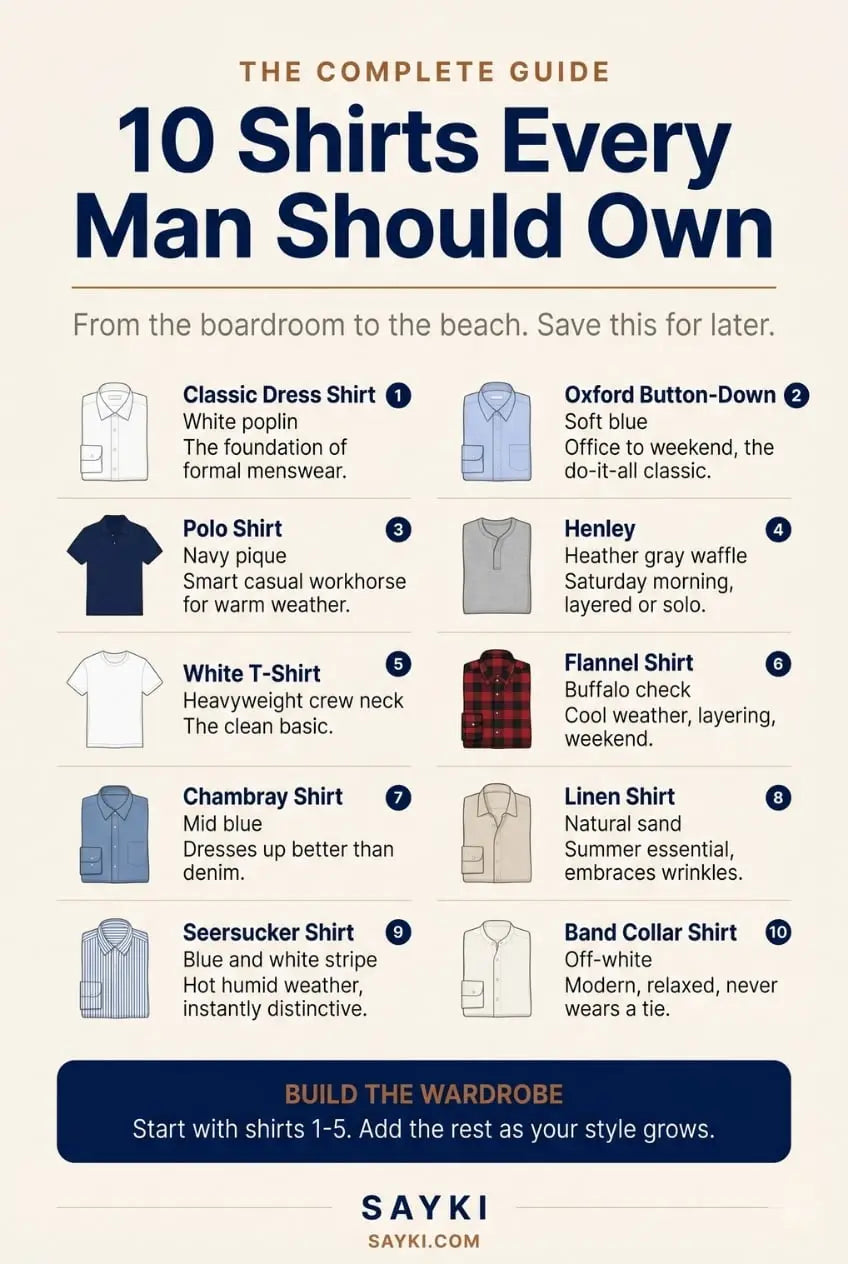
If you've made it this far, here's the entire guide in one place. Save it for the next time you're rebuilding your shirt drawer.
Build Your Shirt Wardrobe
From sharp dress shirts for the office to soft linens for summer weekends, SAYKI's collection covers every style a man needs.
Shop All ShirtsAre band collar shirts trendy?
Band collar shirts (sometimes called mandarin or grandad collar shirts) have moved past being a passing trend and settled into the menswear rotation as a real alternative to traditional collared shirts. They first appeared in mainstream Western menswear in the late 19th century as a base for detachable collars, and the version we wear today carries those same clean lines without the formality. They look strong with a casual blazer, with chinos, or layered under a knit cardigan, and they work especially well for guys who don't enjoy wearing a tie. The one thing to watch is fit. Without a structured collar to break up the neckline, a band collar shirt needs to fit well at the shoulders and chest or it can look shapeless.
Which shirts should every man own?
A solid starter wardrobe needs five shirts that cover every situation. First, a white poplin dress shirt for formal events and interviews. Second, a light blue Oxford button-down for the office and most casual settings. Third, a navy or white pique polo for warm-weather smart casual. Fourth, a chambray shirt for weekend dressing and travel. Fifth, a linen shirt in white or sand for summer. Once those five are in rotation, the next additions are a flannel for fall and winter, a French-cuff dress shirt for black-tie events, and a Henley in heavyweight cotton for layering. With this set, you'll have an answer for any dress code from a job interview to a beach wedding.