


13 min read


You are a few weeks from the ceremony and one question keeps coming up in every planning conversation: suit or tuxedo? This guide was written for that exact moment — the moment you need a clear, no-regret answer without drowning in outdated rules or sales pitches. By the time you finish, you will know exactly which garment belongs on your shoulders and how to walk into your wedding day feeling like yourself, only sharper.
In This Guide
Why Picking the Wrong Look Costs More Than You Think
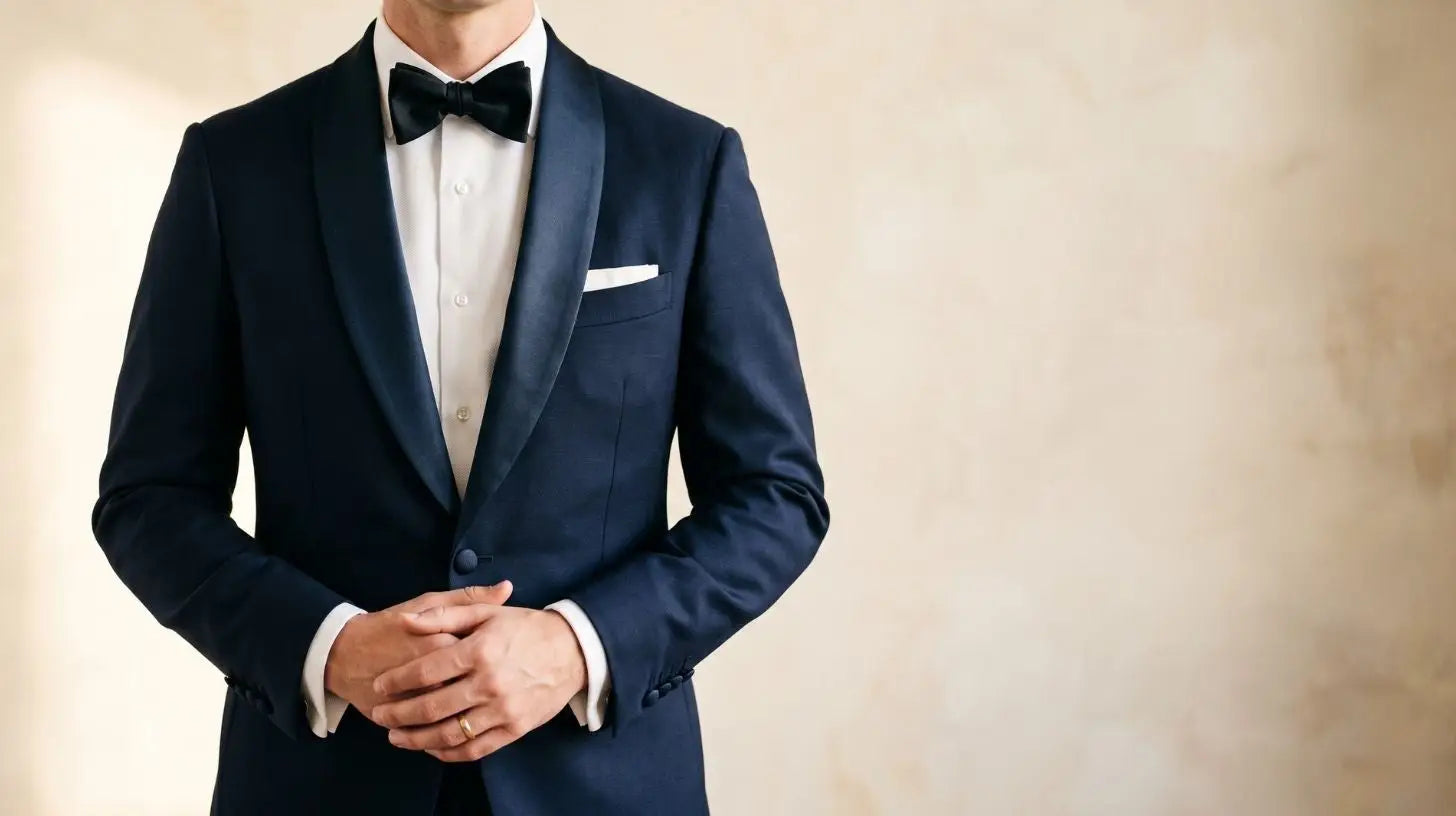
Choose poorly and you risk standing out for the wrong reasons — a rented tux that fits like a box, a suit that reads "office" when everyone else is in evening wear, or a mismatch that dates your photos faster than any hairstyle could. Getting it right gives you comfort, confidence, and a garment you will actually wear again.
- You show up in a black tuxedo to a sunny garden wedding. The heaviness clashes with the setting. A light grey or tan suit works far better for outdoor daytime ceremonies — or at least a midnight blue tuxedo if the evening still calls for formality.
- You rent a tuxedo that fits poorly. Baggy sleeves, drooping shoulders, and lifeless fabric that wrinkles in the car ride over. Buy a well-fitted one for as little as $199.90 and you have a piece tailored to your body with no return deadline.
- Your groomsmen show up in mismatched looks. Group portraits turn into a patchwork of shades and lapels. Lock in a core decision early: all tuxedos or all suits, from a brand that offers consistent fits across sizes.
- You wear a suit to a black-tie evening wedding. You will feel noticeably underdressed the moment you see other men in dinner jackets. If the invitation says "black tie," the tuxedo is non-negotiable.
- You spend $200 on a rental you will never see again. At the same price point, owning your outfit means you keep a versatile garment for future galas, date nights, and anniversaries.
- You pick a super-slim fit that will not let you move. Sitting, dancing, and hugging all become stiff. Dynamic Fit or Comfort Fit gives a clean silhouette without sacrificing range of motion.
- You ignore the weather. A heavy three-piece wool tux in July heat is a problem. Look for lightweight wool blends and unlined jackets for warm-weather weddings.
How to Choose Between a Suit and a Tuxedo: An 8-Step Decision Path
The decision breaks down into a few straightforward questions. Answer them in order and the right look becomes obvious. For a broader overview of tuxedo construction and lapel options, see our Complete Tuxedo Buying Guide for Men.
Step 1: Read the dress code — and if it is missing, use the venue
"Black tie" demands a tuxedo. "Black tie optional" or "formal" lean heavily toward a tuxedo but a dark suit can pass if styled intentionally. "Cocktail attire" or "semi-formal" open the door to a well-cut suit. No code? Let the venue guide you: an evening ballroom or historic mansion calls for a tuxedo; a beach, barn, or garden tilts toward a suit.
Step 2: Look at the clock — time of day changes everything
Traditional etiquette holds that tuxedos belong after 5 p.m. A morning or afternoon ceremony almost always calls for a suit, regardless of how formal the venue is. If you are getting married at noon in a vineyard, a well-tailored suit in navy or gray will feel far more natural than a shiny tux.
Step 3: Align with the bride's vision — but stay true to yourself
A full ball gown suggests a tuxedo. A sleek, minimalist wedding dress can pair with either, depending on the overall vibe. Share a few images of potential looks to check whether the aesthetics match. That said, you still need to feel like you. If a tuxedo feels like a costume, a sharp suit with a waistcoat can achieve the same level of polish without the discomfort.
Step 4: Compare buying vs renting honestly
Renting appears cheap until you see the total: $150 to $250 for one night, with a pre-worn garment altered for someone else. Buying a tuxedo or suit for the same $199.90 means you get a brand-new piece, fitted to you, that you can wear to future weddings, charity events, and holiday parties. If you will put it on at least twice, buying already wins financially. For a full cost breakdown, our SAYKI Tuxedo Review: Fit, Price, and Ownership vs Renting runs the numbers in detail.
Step 5: Find the right fit
Even the most expensive fabric fails if the cut fights your frame. SAYKI offers four fits: Slim Fit hugs the body cleanly for a lean, fashion-forward look; Regular Fit gives a classic, comfortable shape ideal for most builds; Dynamic Fit adds space in the shoulders, chest, and thighs while tapering to a sharp finish — the answer for athletic frames; Comfort Fit is the most relaxed option for those who prioritize all-day movement. Try on at least two fits and you will quickly feel which one makes you stand taller.
Step 6: Choose your color and fabric intentionally
For tuxedos, midnight blue or black. Midnight blue photographs richer under artificial light and flatters more skin tones. For suits, navy and charcoal are the sharpest wedding choices; light grey or tan works for daytime spring and summer ceremonies. Fabric weight matters: lightweight Super 110s wool breathes for warm weather, while heavier flannel suits fall and winter weddings.
Step 7: Lock in the accessories that define the look
A tuxedo requires a bow tie, patent leather shoes, and often studs or a covered placket — never a belt. A suit allows a long tie, leather oxfords, and a vest. For lapel guidance, our Shawl Lapel vs Peak Lapel Tuxedo: How to Choose the Right One covers every scenario a groom faces. Match your metal tones (cufflinks, watch) to your wedding band for a seamless finish.
Step 8: Give yourself breathing room
Order groomswear at least six to eight weeks before the wedding. This buffer leaves time for minor alterations — sleeves shortened, waist taken in — and avoids last-minute panic. The day will be busy enough; your outfit should be ready to go.
Groom's Groomswear Order Timeline
8 weeks out — Make the call
Decide suit or tuxedo, color, and fit. Visit a SAYKI store to try at least two fits side by side before committing.
6 weeks out — Place the order
Order the jacket and trousers. Share the same store and style with groomsmen so they can match within the same week.
3 weeks out — Alterations
Take the jacket and trousers to a local tailor. Standard tweaks: sleeve length, trouser hem, waist suppression. Budget $30 to $70.
1 week out — Full dress rehearsal
Put the entire look on: jacket, shirt, trousers, shoes, bow tie. Walk around. Sit down. Raise your arms. Catch anything that needs a final tweak while there is still time.
Editor's Picks
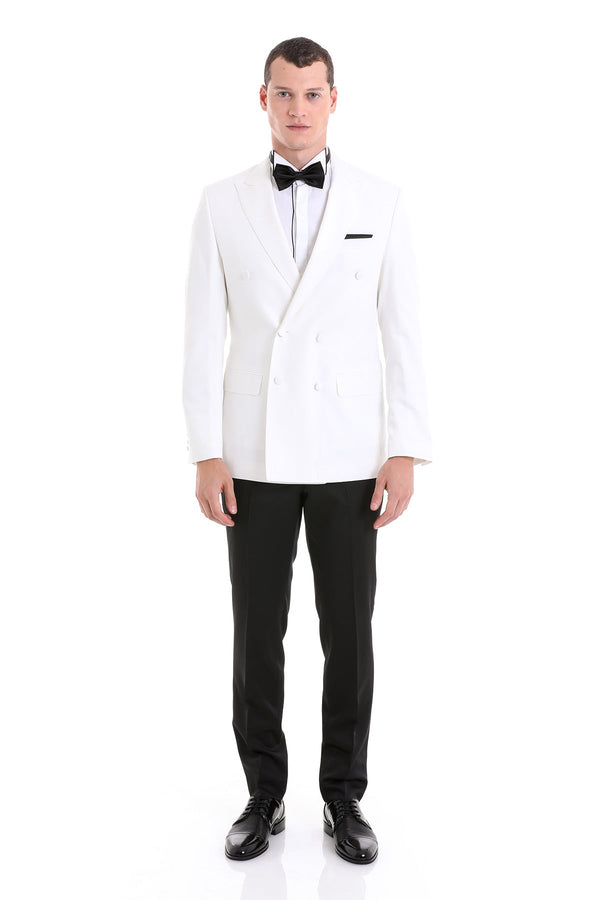
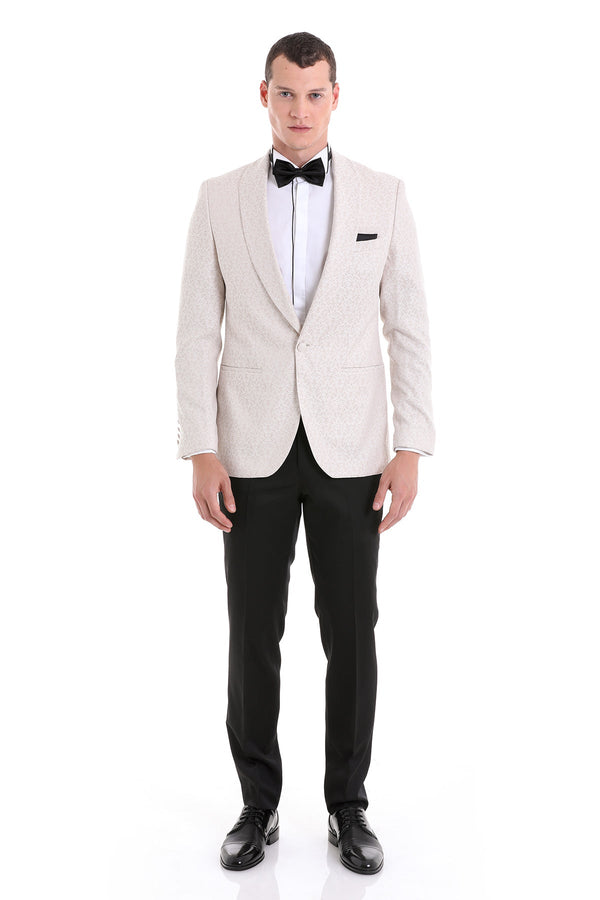
Own Your Wedding Look for the Price of a Rental
Suits and tuxedos from $199.90 in Slim, Regular, Dynamic, and Comfort Fit. Nine U.S. stores where you can try both options before the big day.
Shop TuxedosGroomswear Mistakes That Stick Out in Every Photograph
These slip-ups are surprisingly common, often because the advice grooms get is either too vague or stuck in the wrong decade. Spotting them early keeps your wedding album looking intentional.
- Wearing a necktie with a tuxedo. A tuxedo shirt's wing or spread collar is designed for a bow tie. A necktie breaks the formal front line that the bow tie completes — never swap it out.
- Choosing a notch-lapel tuxedo. True tuxedos feature a peak lapel or a shawl collar. A notch lapel belongs on a suit and makes a tuxedo look like a rental mistake.
- Ignoring the bride's dress formality. If she is walking down the aisle in a cathedral-length train, a suit risks reading as business attire next to her gown. Let her dress set the tone.
- Wearing brand-new patent shoes without breaking them in. Stiff soles cause blisters before the first dance. Wear them around the house with dress socks for a few evenings to soften the leather.
- Buying a suit that is too large "to play it safe." An oversized jacket with extended shoulders makes you look smaller, not more comfortable. Use the fit guide and trust your measurements.
- Renting a vest that does not share the tuxedo's satin facing. Under flash photography, mismatched sheens jump out. Owning the full set eliminates the guesswork.
- Ordering everything two weeks before the wedding. Rushed shipping and no time for alterations guarantee a fit that is never quite right. Early planning pays off visibly in every photo.
How to Keep Your Wedding Suit or Tuxedo Sharp for Decades
Your wedding outfit is the garment you will want to pull out on anniversaries and milestone nights for years to come. A little care after the big day preserves its crisp silhouette and deep color.
- Use a wide, contoured wooden hanger from day one. Wire hangers stretch the shoulder pads and create dimples. A cedar hanger also repels moths and absorbs moisture.
- Brush the jacket after each wear with a soft garment brush. Surface dust and particles act like sandpaper on wool fibers over time. A quick brush removes them in seconds before you hang it up.
- Spot-clean small marks immediately. Dab with a damp cloth and a drop of mild soap — never rub. For oil-based stains, take it to a professional cleaner who specializes in formalwear.
- Dry clean only once or twice a year. Excessive chemicals fade color and weaken fabric. Instead, air the jacket in a steamy bathroom between cleanings to release wrinkles and refresh the fibers.
- Store in a breathable cotton garment bag. Plastic bags trap humidity and cause yellowing, especially on satin lapels. Keep the closet cool and dark.
- Fold trousers along their permanent crease with acid-free tissue paper. This prevents deep-set wrinkles during long storage. Re-press only when needed, using a press cloth over wool.
A Groom's Tuxedo or Suit You Own — for Less Than a Rental Fee
SAYKI was built to break the trade-off that forces grooms to choose between a $200 rental that fits "okay" and a bespoke garment that is out of reach. The story started in 1924, when Hatemoğlu began crafting menswear with the kind of hands-on detail that gets passed down through generations. Today, as a third-generation family company, SAYKI carries that expertise to nine U.S. stores with a design philosophy that keeps quality high and prices honest.
Every suit and tuxedo starts at $199.90 — in line with what a typical rental costs — yet you walk out with something that belongs to you, in Slim Fit, Regular Fit, Dynamic Fit, or Comfort Fit. Because there is no return date, you can alter the garment to your exact proportions and keep it for the next wedding, gala, or dinner where you want to show up looking like you mean it. Find your nearest location at our store locator.
Frequently asked questions
Should the groom wear a tuxedo or a suit?
It comes down to the wedding's formality and timing. For a black-tie evening event, a tuxedo is the expected choice and creates the most cohesive look with a formal bridal gown. For daytime ceremonies, cocktail-attire weddings, or relaxed venues, a dark suit in navy or charcoal is fully appropriate and often more practical. When in doubt, let the invitation's dress code make the call.
Can the groom wear a suit instead of a tuxedo if the wedding is formal but not black tie?
Yes. A well-tailored suit in a darker shade, worn with a crisp white shirt, a subtle tie, and polished shoes, holds its own at a formal evening wedding that is not strictly black tie. Add a matching waistcoat and a silk tie to elevate it further. Just avoid satin details on a suit — those elements belong exclusively to a tuxedo.
Is it worth buying a tuxedo instead of renting it?
For most grooms, yes. Renting typically costs $150 to $250 for one night; buying an entry-level tuxedo starts at the same $199.90 — and you keep it forever. You can tailor the fit to your body, skip return trips, and wear it to other formal events. If you put it on even one more time, buying already saves you money and guarantees a better silhouette than any multi-wear rental.
What color tuxedo is best for a wedding?
Midnight blue is the top recommendation — it photographs deeper and richer than black under both natural and artificial light and flatters a wide range of skin tones. Black remains timeless for ultra-traditional evening affairs. If wearing a suit, navy and charcoal are the strongest choices for most seasons. Avoid light-colored tuxedos unless the event is a themed summer gathering.
How far in advance should the groom order his suit or tuxedo?
At least six to eight weeks before the wedding date. This window accounts for shipping, try-on time, and any minor alterations a local tailor might need. Ordering earlier also removes the pressure of rush fees and last-minute compromises. If coordinating with groomsmen in different cities, give them the same deadline so every piece arrives with room to spare.
What fit should a groom choose for his tuxedo or suit?
It depends on your body type and how you want to move on the day. Slim Fit suits lean, modern builds. Regular Fit is the safe, classic choice for most men. Dynamic Fit works best for athletic builds with broader shoulders and thighs. Comfort Fit gives generous ease for those who prioritize movement. Try two fits side by side — you will feel the right one immediately.
Where can I try on a SAYKI tuxedo or suit before I commit?
SAYKI operates nine stores across the U.S., including the flagship at 375 Madison Ave, New York, NY 10017, plus locations in Paramus NJ, Central Valley NY, Rosemont IL, Bethesda MD, Wrentham MA, Leesburg VA, Arlington VA, and King of Prussia PA. Each store carries the full range of fits so you can judge the cut in person before the wedding day.