


13 min read


Suspenders are one of the most underrated accessories in menswear. They hold your trousers in place better than a belt, create a cleaner silhouette under a jacket, and add a layer of personal style that most men overlook. This guide walks you through everything you need to know about wearing suspenders with a suit - from choosing the right type to styling them for both formal and casual settings.
The History of Suspenders
Suspenders - called "braces" in British English - have been part of men's wardrobes since the early 18th century. The first versions were simple ribbon or cloth strips that buttoned onto the waistband and looped over the shoulders. They were purely functional, designed to keep trousers in position before waistbands were tailored to fit snugly on their own.
By the mid-1800s, suspenders had become the standard way to hold up trousers. Albert Thurston, a London-based maker, began producing high-quality braces in 1820 and remains one of the best-known names in the category today. In the United States, suspenders were everyday essentials for working men, businessmen, and politicians alike. Presidents from Abraham Lincoln to Franklin Roosevelt wore them daily.
The belt began to overtake suspenders in popularity during the 1920s and 1930s as trouser designs shifted toward fitted waistbands with belt loops. By the mid-20th century, belts had become the default. Suspenders didn't disappear, though. They held on in formal menswear, in workwear (where heavy-duty models kept tool-loaded pants from sagging), and among style-conscious dressers who appreciated the cleaner fit they provided.
The 1980s brought a brief mainstream revival, thanks in part to Wall Street culture and films that featured suspenders as power-dressing symbols. That association faded, but what remained was a growing appreciation for suspenders as a practical and stylish alternative to the belt. Today, they show up at weddings, in professional settings, and in everyday outfits worn by men who simply prefer the way they look and feel.
Types of Suspenders & Materials
Not all suspenders are built the same. The two main decisions are how the suspenders attach to your trousers and what the straps are made from. These choices determine both the look and the level of formality.
Attachment: Button-On vs. Clip-On
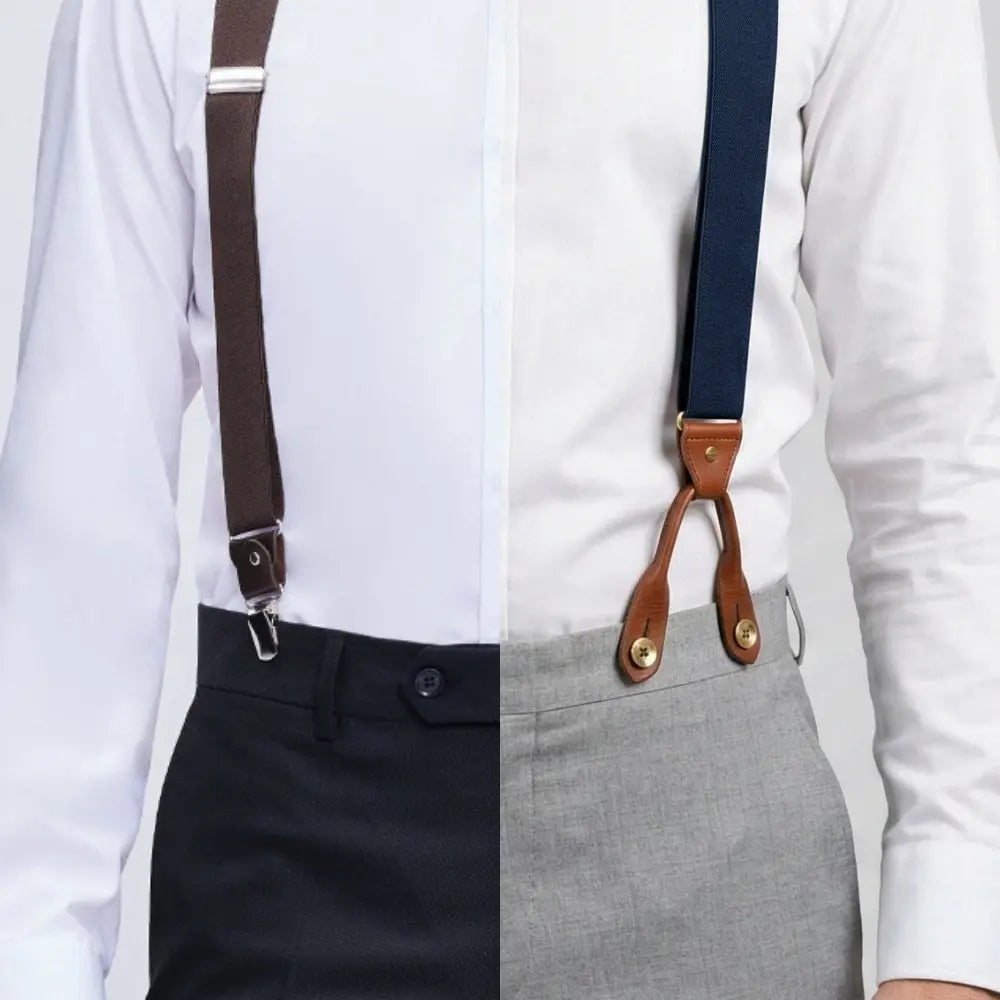
Button-on suspenders fasten to buttons sewn inside the trouser waistband using leather tabs with buttonholes. This is the traditional method and produces the cleanest, most secure result. The leather tabs lie flat, nothing shifts or slides during the day, and the connection is invisible from the outside. Button-on is the standard for suits, formal events, and professional settings.
Clip-on suspenders use metal or plastic clips that grip the top edge of the waistband. They work with any pair of trousers without modifications, making them the more convenient option. The trade-off is that clips can mark or damage delicate fabrics, and they occasionally lose their grip under tension. For casual wear, workwear, and everyday use, clip-ons are perfectly practical.
Material: Elastic, Silk, and Leather
Woven elastic is the most common suspender material. It stretches with your movement, comes in every color and pattern imaginable, and works across the full range of formality levels. Boxcloth (a tightly woven, non-stretch ribbon) and silk are reserved for formal and black-tie settings - they look refined but offer less give. Leather suspenders bring texture and a rugged character that pairs well with earth tones, rustic weddings, and heritage-inspired outfits. Full-grain leather ages beautifully over time but has no stretch, so fit and adjustment matter more.
Back Style: Y-Back vs. X-Back
The two most common back configurations are the Y-back and the X-back. A Y-back has two front straps that converge into a single strap at the center of the back. This is the more traditional and formal option - it sits neatly under a jacket and distributes tension evenly. An X-back crosses the straps in the middle of the back, creating four separate attachment points. X-backs tend to stay in place better on broader shoulders but look slightly more casual. For suits, a Y-back is the standard choice.
Width Matters
Suspender width typically ranges from about 3/4 inch to 2 inches. Narrow suspenders (around 1 inch) work best with formal and slim-cut suits - they look proportional with slimmer lapels and a streamlined silhouette. Wider suspenders (1.5 to 2 inches) suit heavier trousers, workwear, and more casual outfits. A good middle ground for most suit-wearing situations is about 1.25 inches.
How to Wear Suspenders with a Suit
Wearing suspenders with a suit is straightforward once you understand a few ground rules. The goal is a clean, balanced look where the suspenders support the trousers without drawing attention to themselves in the wrong way.
The most important rule is also the simplest: never wear a belt and suspenders at the same time. They do the same job, and doubling up signals confusion rather than style. Remove the belt entirely. If your suit trousers have belt loops, that's fine - many men wear suspenders with looped trousers, though dedicated suspender trousers without loops give a cleaner look.
Always tuck your shirt in fully. Suspenders sit flat against the shirt fabric, so wrinkles, bunching, or an untucked hem will show through and ruin the effect. Well-pressed dress shirts with a smooth front are the foundation for any suspender look.
In formal and professional settings, your suspenders should stay hidden under your suit jacket. They're doing structural work, not performing. At more relaxed events - an outdoor wedding reception, a summer party, a casual dinner - removing the jacket and showing the braces is part of the appeal. This is where color coordination pays off: your suspenders are now visible alongside your tie, so they should complement each other in tone or pattern without being an exact match.
Editor's Picks
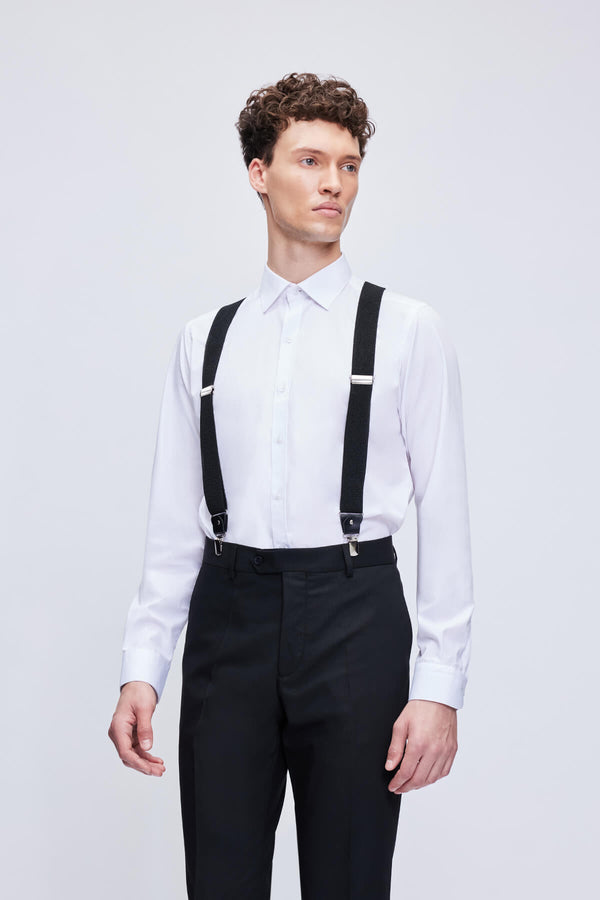
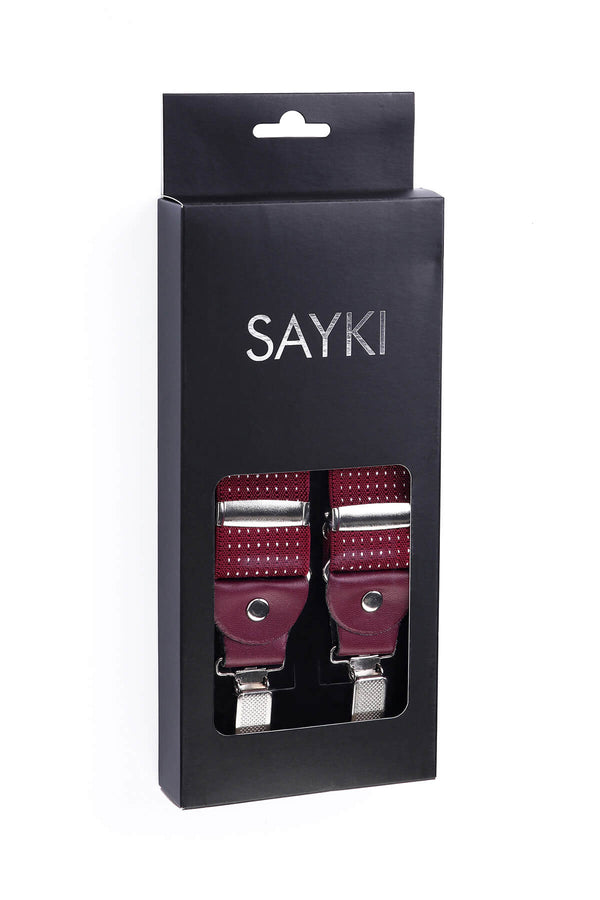
Step-by-Step: Putting On Suspenders with a Suit
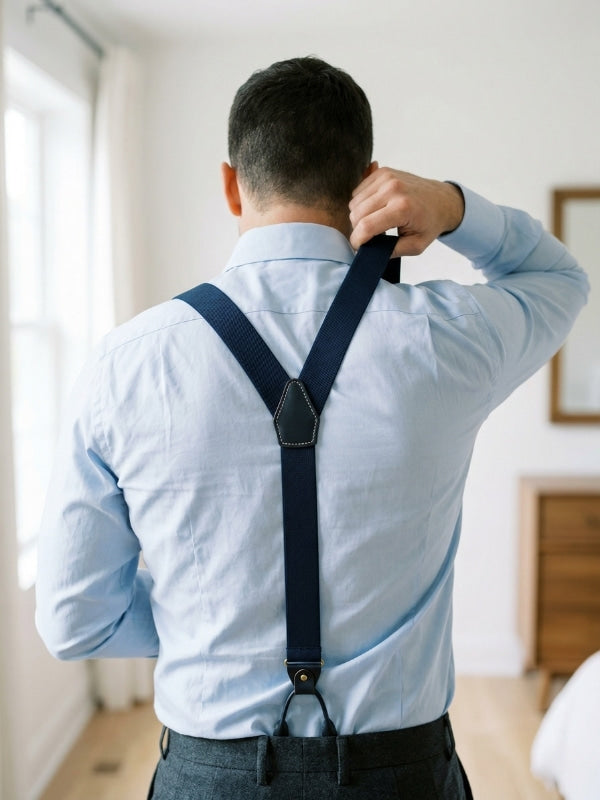
Start by attaching the suspenders to the back of your trousers first. Button or clip the rear attachment points while the trousers are lying flat or draped over a chair - this is easier than reaching behind you once you're dressed. Then step into the trousers, pull them up to your natural waist, and bring the straps over your shoulders. Attach the front points, adjust the length evenly on both sides, and check in a mirror. The trousers should hang straight without bunching at the waist or sagging at the seat.
"A belt cinches your trousers to your body. Suspenders let them fall from your shoulders - and that difference changes the entire line of the suit."
Choosing the Right Suspenders for Your Outfit
The right pair of suspenders depends on what you're wearing, where you're going, and how visible the suspenders will be. Here are the key considerations.
| Occasion | Attachment | Material | Width | Color / Pattern |
|---|---|---|---|---|
| Black Tie / White Tie | Button-on only | Silk or satin-finish elastic | Narrow (1") | White, black, or ivory - solid only |
| Wedding (Groom) | Button-on | Elastic or boxcloth | Narrow to medium (1"-1.25") | Navy, burgundy, champagne - coordinate with wedding palette |
| Business / Office | Button-on preferred | Woven elastic | Medium (1.25") | Solid navy, charcoal, dark gray, or subtle stripe |
| Smart Casual | Either works | Elastic or leather | Medium (1.25"-1.5") | Patterns welcome - stripes, dots, textured solids |
| Casual / Weekend | Clip-on is fine | Leather, tweed, or heavy elastic | Wide (1.5"-2") | Bold patterns, brown leather, earthy tones |
For Formal Events and Weddings
Button-on suspenders in a solid dark color - navy, black, charcoal, or burgundy - are the go-to for formal occasions. Stick with a Y-back design, narrow to medium width (about 1 inch), and make sure the leather tabs match your shoes. White or ivory suspenders are traditional for black-tie and white-tie events when worn under a waistcoat. At weddings, groomsmen often coordinate their suspender color with the wedding palette for a unified look without matching exactly.
For Business and Professional Settings
In an office environment, treat suspenders like you would a tie - choose conservative colors and patterns that complement your suit. Solid navy, dark gray, or subtle stripes are safe and polished. Button-on models look more refined than clip-ons in professional settings. Keep the width moderate and the pattern restrained.
For Casual and Weekend Wear
Casual suspenders open up more options. Clip-ons are perfectly fine here. Wider straps, bolder patterns, and textured materials like tweed or leather all work well with chinos, jeans, and unstructured jackets. This is where you can express more personality - patterned suspenders with a chambray shirt and rolled sleeves, for instance, look sharp without trying too hard.
Suspenders vs. Belts: Pros & Cons
Both suspenders and belts keep your trousers in place, but they do it differently and produce different results. Here's how they compare across the factors that matter most.
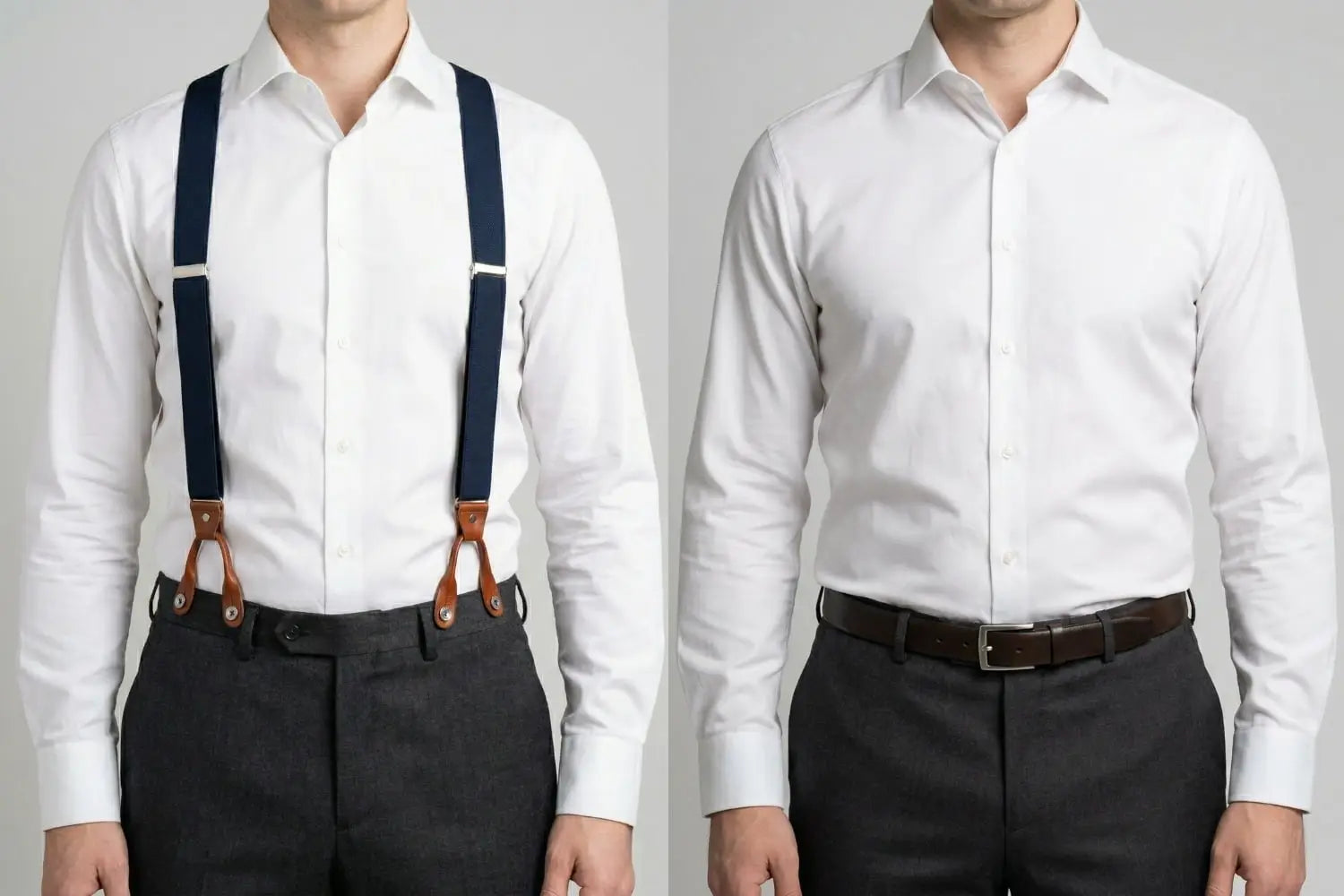
| Factor | Suspenders | Belt |
|---|---|---|
| Silhouette | Trousers hang from the shoulders, creating a smooth, unbroken line from waist to hem | Cinches at the waist, which can create bunching or a visible break in the trouser line |
| Comfort | No pressure on the waist or hips - weight is distributed across the shoulders | Can dig into the waist, especially when sitting for long periods |
| Fit Consistency | Trousers stay at the same height all day regardless of movement | Trousers can slip down throughout the day, especially after meals |
| Formality | Traditionally more formal - the classic choice for bespoke and high-end tailoring | Standard in modern business and casual dress |
| Convenience | Requires button-on trousers for the best result, or clips as an alternative | Works with any trousers that have belt loops - no modifications needed |
| Style Statement | Distinctive and intentional - shows an extra level of thought about your outfit | Expected and unnoticed in most settings |
The real advantage of suspenders shows up over a full day. After eight hours at a desk, in meetings, or on your feet, a belt has shifted, loosened, or dug into your waist. Suspenders hold the same position from morning to evening because the weight hangs from your shoulders, not your hips. If you've ever tugged your trousers up after standing from a chair, you already know the problem suspenders solve.
When to Wear Suspenders: Formal vs. Casual
Suspenders work across a wider range of settings than most men realize. The key is adjusting the style, material, and visibility to match the occasion.
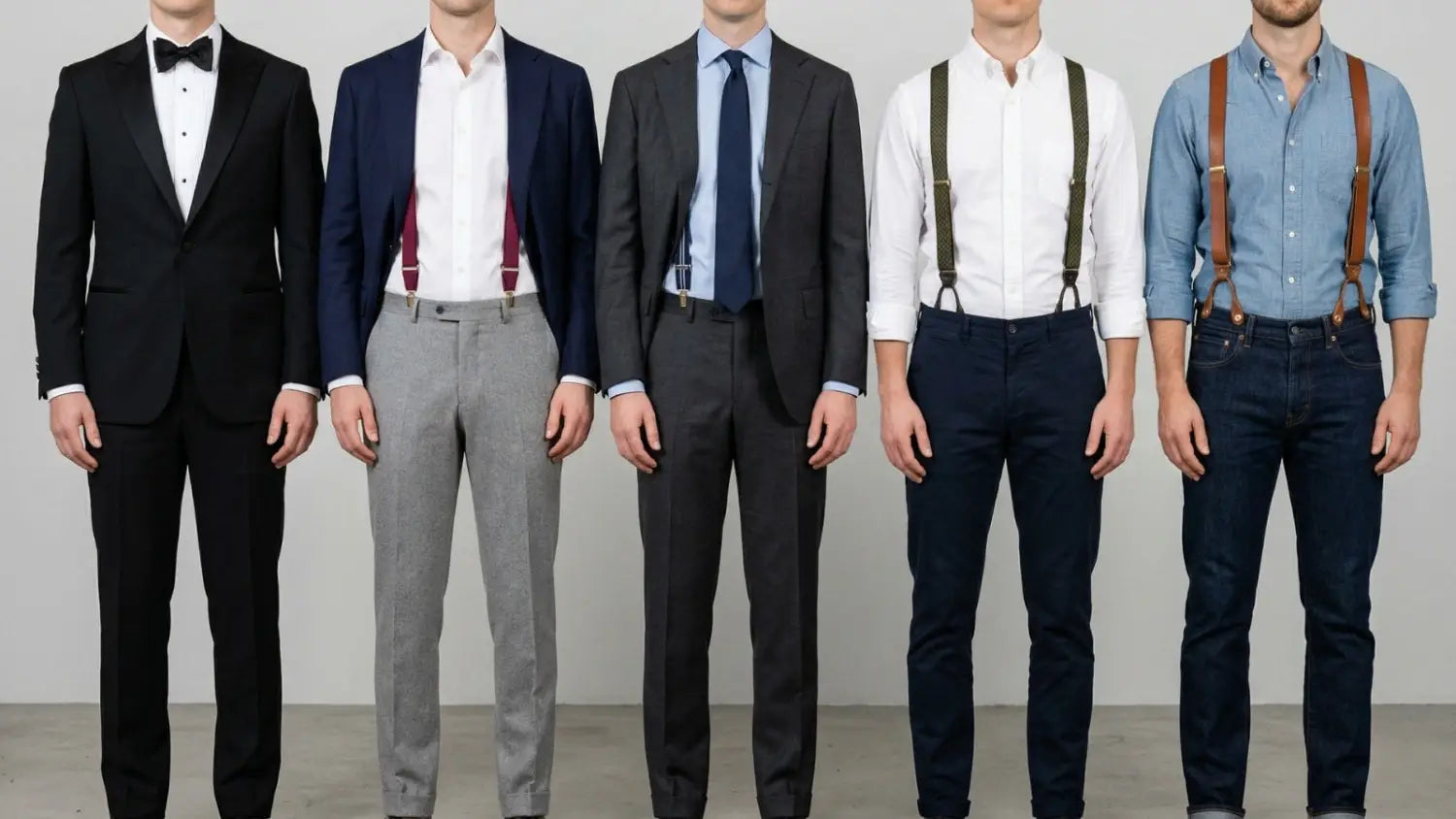
Formal and Black-Tie Events
At formal events, suspenders are not just acceptable - they're the traditional choice. White or black button-on braces worn under a tuxedo jacket or waistcoat are a classic pairing. The suspenders stay hidden, doing their job without being part of the visible outfit. This is where quality matters most: silk or satin-finish elastic with leather button tabs signals attention to detail.
Weddings
Weddings are one of the most popular settings for suspenders. Grooms and groomsmen often wear matching or coordinated suspenders as part of the wedding look. For outdoor and rustic weddings, suspenders can replace the jacket entirely - a crisp shirt, rolled sleeves, and visible suspenders create a relaxed but polished appearance. For traditional indoor weddings, keep them under the jacket and opt for button-on models.
Business and Office
In corporate and professional environments, suspenders function like any other suiting accessory. They stay under your jacket during the workday and add a layer of refinement when you remove your jacket in your own office. Conservative colors and patterns are the way to go. Wall Street and Washington, D.C. have long histories of suspender-wearing professionals.
Casual and Weekend
Suspenders with jeans, chinos, or casual trousers bring a vintage, put-together feel to relaxed outfits. Clip-on models are practical here. Leather suspenders with denim, or patterned elastic suspenders with a henley and boots, create looks that feel personal and intentional. The only rule is to keep the proportions right - wider straps for heavier fabrics, thinner straps for lighter ones.
Find Your Perfect Pair
Browse our suspenders collection and discover the right style for your next suit, wedding, or weekend outfit.
Shop SuspendersDo suspenders have to match shoes?
The suspenders themselves don't need to match your shoes, but the leather fittings should. If your suspenders have brown leather tabs or button ends, wear them with brown shoes. Black leather fittings go with black shoes. The elastic or fabric portion of the suspenders follows different rules - it should coordinate with your tie, shirt, or pocket square rather than your footwear. For suspenders with metal clips instead of leather tabs, shoe matching isn't a concern. Focus on making the strap color work with the rest of your outfit instead.
Can you wear suspenders with a vest?
Yes, and it's one of the most classic combinations in menswear. Suspenders paired with a vest (waistcoat) create a traditional layered look that works well at formal events, weddings, and in professional settings. The vest covers the suspenders entirely, giving you the functional benefits without any of the straps being visible. This is the standard approach at black-tie events. If you want the suspenders to be visible, skip the vest and wear them with just a suit jacket, which you can remove to show off the braces underneath.
Are clip-on suspenders acceptable?
Clip-on suspenders are perfectly fine for casual and everyday use. They work with any pair of trousers and require no special buttons or tailoring. However, for formal events, weddings, and professional suiting, button-on suspenders are the better choice. Clips can damage delicate fabrics over time, they occasionally slip off the waistband under tension, and they look less polished up close. If you're new to suspenders and want to try the look before committing to button-on trousers, clip-ons are a practical starting point. Just invest in a pair with strong, well-made clips that grip securely.
How tight should suspenders be?
Suspenders should be snug enough to hold your trousers at your natural waist without sagging, but not so tight that they pull the waistband up uncomfortably or create tension across your shoulders. A good test: you should be able to slide a flat hand between the strap and your shoulder without force. The trousers should hang naturally with a clean break at the shoe - not hiked up to show your socks, and not dragging on the ground. Adjust both sides evenly so the front and back of your trousers sit at the same height. If you find yourself constantly readjusting, the straps are either too loose or the trousers are the wrong rise for suspender wear.