


12 min read


You just opened an invitation. It says "black tie," "formal," or maybe just "cocktail attire" — and you are staring at your closet. Suit or tuxedo? Get it wrong and you either overdo it or stand out for the wrong reason. The distinction is not about fashion rules for their own sake; it is about showing up looking like you belong, while feeling completely at ease. This guide gives you a clear decoder — the actual construction differences, what each invitation phrase means, and when owning beats renting.
In This Guide
Why Wearing the Wrong One Could Ruin the Moment
Showing up in a suit to a black-tie event leaves you feeling like the only guest who did not get the memo. Wearing a full tuxedo to a relaxed garden party makes you look like you did not read the invite. Here is what is at stake and how to avoid both.
- You are the only guest in a suit at a black-tie wedding. The tuxedo-clad crowd will notice, and you will feel it all night. Fix: if "black tie" is stated anywhere on the invitation, go with a tuxedo — no exceptions.
- You buy a black suit thinking it passes for a tuxedo. Without satin lapels and a bow tie, it reads as a dark business suit, not evening formal. Invest in a true tuxedo if you attend formal events regularly.
- You rent a tuxedo every time and spend $600 a year on three events. At SAYKI, tuxedos start at $199.90. After two rentals, owning is the clear financial winner — and the fit is tailored to your body.
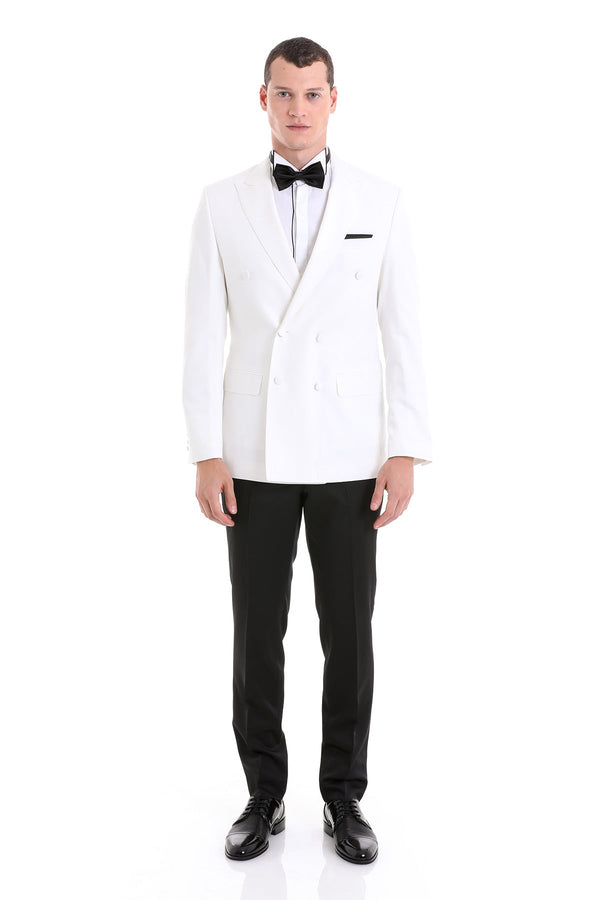
- You assume a white dinner jacket is interchangeable with a black tuxedo. A white dinner jacket signals summer or resort elegance. Wearing one in a ballroom in November can look wildly out of place. Match tuxedo style to season: black or midnight blue for evening and winter; ivory for warm-weather events.
- You wear an ultra-slim fit that restricts movement. Dancing becomes awkward and photos catch you tugging at the jacket. Dynamic Fit adds room where you need it while keeping a defined waist — a better option for athletic builds who want to move freely.
Dress Code Decoder: What to Wear to What
How to Decide Between a Tuxedo and a Suit
Step 1: Read the invitation wording like a decoder
"Black tie" means tuxedo. "Black tie optional" or "formal" allows either a tuxedo or a dark suit. "Cocktail attire" or "semi-formal" almost always leans toward a suit. If you see "casual," leave the tux at home. Do not rely on word-of-mouth — find the official invitation wording. For a complete breakdown of tuxedo construction, lapel choices, and fit decisions, see our Complete Tuxedo Buying Guide for Men.
Step 2: Consider the time of day and venue
Evening events after 6 p.m. traditionally call for a tuxedo. Daytime weddings or outdoor garden parties usually favor a suit. An upscale hotel ballroom pushes toward tuxedo territory; a barn or beach venue suggests a more relaxed suit. When in doubt, the time of day is the fastest tiebreaker.
Step 3: Ask yourself whether you are center stage or a supporting role
Grooms, prom dates, and award recipients are front and center — and photographs last forever. In those cases, a well-fitted tuxedo makes you look the part. As a guest, you can lean slightly more understated. Never outshine the bride or the guest of honor.
Step 4: Check what you already own
Pull out your best navy or charcoal suit. If it fits well and the dress code is flexible, you may not need to shop. But if your closet is empty and your calendar shows multiple formal events, buying a tuxedo now saves you from repeat rentals and the compromises that come with them.
Step 5: Count how many times you will need formalwear this year
One prom? Renting can make sense. Two weddings, a gala, and a holiday party? Buying a tuxedo at $199.90 is a no-brainer — the same as a typical rental, but you own it, tailor it once, and never worry about late return fees again.
Step 6: Try both options in person
Visit a store where you can put on a suit and a tuxedo back to back. Look in the mirror: which one feels like you? At any SAYKI location you can compare side by side and get fit right — Slim, Regular, Dynamic, or Comfort — without any pressure to buy immediately. For prom-specific advice on this same comparison, our Tuxedo vs Suit for Prom: Which Should You Wear? guide covers the full prom-season angle.
Step 7: Lock in accessories right away
Once you choose, plan the details before you leave the store. For a suit: pocket square, necktie, leather dress shoes. For a tuxedo: bow tie, cummerbund or low-cut waistcoat, studs, patent leather shoes. Having the complete set removes morning-of scrambling and ensures the full look photographs as intentional.
The Construction Difference: Tuxedo vs Suit
Every visible difference between a tuxedo and a suit comes down to a handful of construction details. Know these and you can decode any garment in under ten seconds.
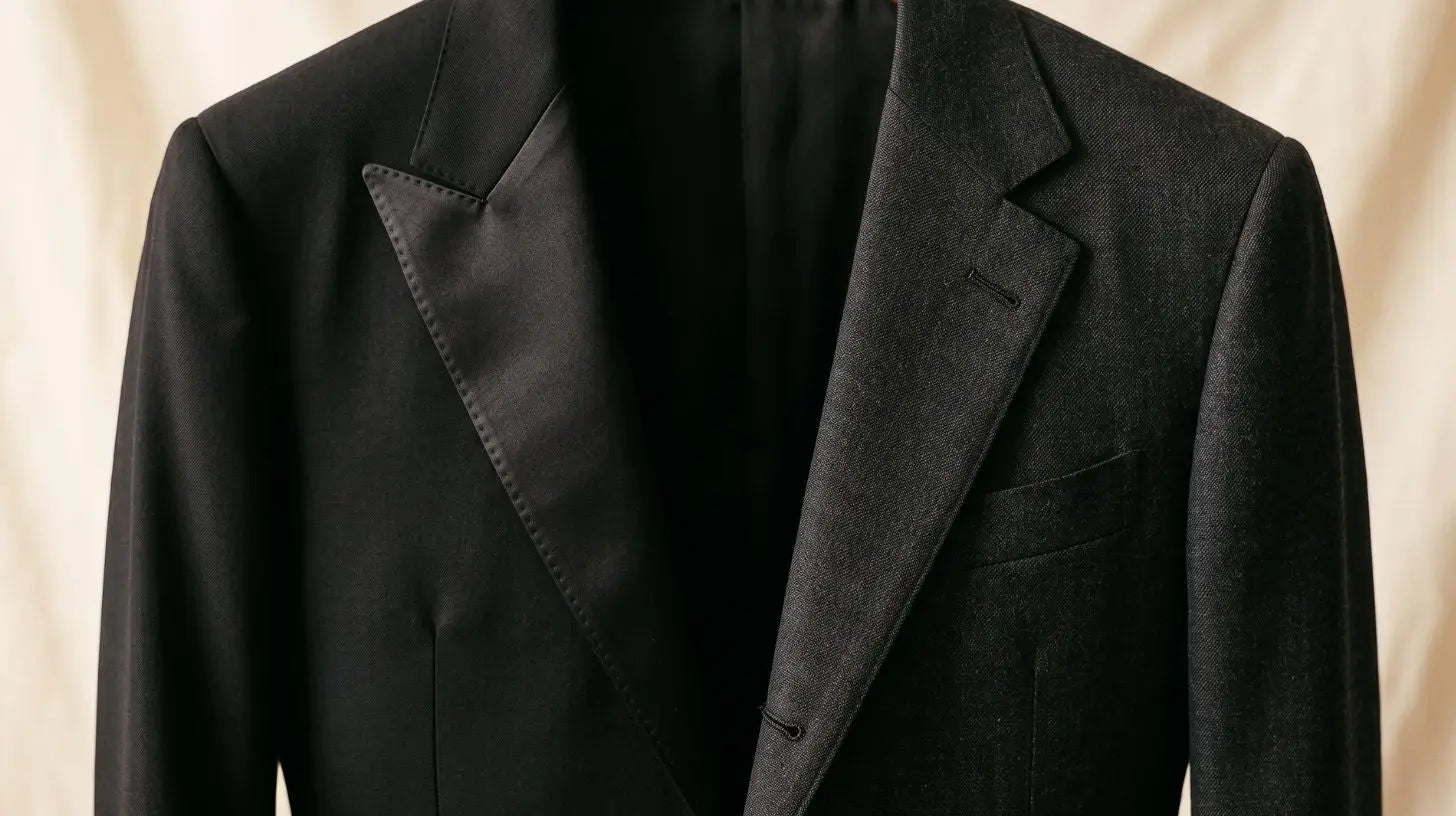
Tuxedo
The four satin markers
- Satin or grosgrain lapel facing (peak or shawl, never notch)
- Covered or satin-wrapped buttons
- Matching satin stripe down trouser outer seam
- Worn with a bow tie — not a necktie
- Formal shirt: pleated front, studs, wing or spread collar
- Patent leather or highly polished black shoes
Suit
Self-fabric throughout
- Self-fabric lapels — notch, peak, or shawl — no satin facing
- Standard exposed fabric-covered buttons
- Plain trousers, no satin stripe
- Pairs with a necktie or bow tie
- Standard dress shirt — spread or point collar
- Polished black or dark-brown leather Oxfords
Editor's Picks
See the Difference on Your Own Shoulders
Try a tuxedo and a suit side by side at any of SAYKI's nine U.S. stores. Tuxedos and suits from $199.90 — same price as renting, but yours to keep.
Shop TuxedosCommon Tuxedo vs Suit Mistakes That Stand Out in Every Photo
- Mistaking a black suit for a tuxedo. A black suit lacks satin lapels and a trouser stripe. It reads as a somber business suit, not evening formal. If the invitation says black tie, go full tuxedo.
- Wearing a pre-tied bow tie. It often sits stiff and lopsided. Learn to tie a real bow tie — a five-minute tutorial is all you need. A slightly imperfect hand-tied bow has far more character than a perfectly symmetrical clip-on.
- Pairing a tuxedo with a long necktie. A tuxedo demands a bow tie. A long necktie clashes with satin lapels and immediately signals you did not know the rule.
- Wearing brown shoes with a black tuxedo. Brown leather breaks the formal black-tie palette entirely. Stick to black patent leather or highly polished black Oxfords.
- Ignoring the vest or cummerbund with a tuxedo. Without one, your shirt front may billow and the waist looks unfinished. A cummerbund with pleats facing up, or a low-cut waistcoat, completes the formal line.
- Using a regular dress shirt with a tuxedo. A formal tuxedo shirt with a pleated or pique bib, stud holes, and a wing or spread collar is essential to match the jacket's level of dress. A standard button-front office shirt breaks the look.
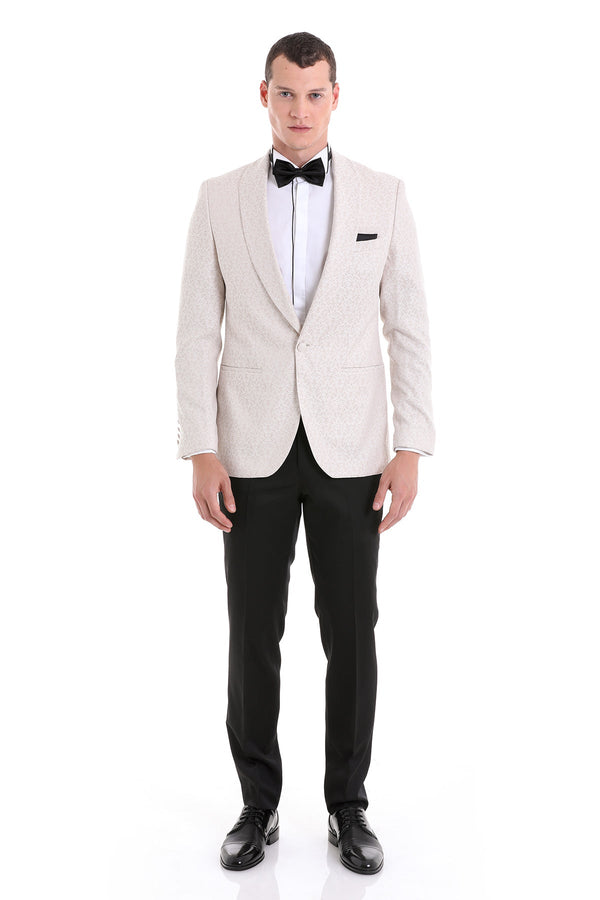
- Wearing an ivory dinner jacket in the wrong season. Ivory is a summer and resort statement. A winter indoor gala calls for black or midnight blue — match the jacket color to the calendar and climate.
How to Keep Your Tuxedo or Suit Ready for the Next Evening
- Dry clean sparingly. Frequent dry cleaning weakens fibers and fades satin. Spot-clean small marks and only dry clean after a stain or at the end of a season. For a tuxedo worn once, air it out and brush it — that is usually enough.
- Hang on a broad, contoured cedar hanger. Wire hangers distort the shoulders. A wide, shaped hanger supports the jacket's structure, and cedar naturally repels moths.
- Store in a breathable garment bag, not plastic. Plastic traps moisture and can yellow the fabric over time. A cotton or muslin bag lets the wool breathe while keeping dust off.
- Brush after each wear. A soft garment brush removes lint, dust, and surface oils before they set into the fabric. It takes under a minute and dramatically reduces how often you need a professional clean.
- Steam instead of iron. Irons can leave shine marks or scorch delicate fibers. A handheld steamer relaxes wrinkles gently, especially on satin tuxedo lapels that should never touch a direct iron.
- Check for loose buttons and hems before the big day. A quick once-over two days before the event prevents last-minute panic. Most tailors can fix a loose button or a dropped hem in under 15 minutes.
Why Men Turn to SAYKI for Both Tuxedos and Suits
Deciding between a tuxedo and a suit is simpler when you can feel the fabric, examine satin lapels in person, and talk to someone whose brand has been crafting menswear for over a century. SAYKI carries a full range of suits and tuxedos, all starting at $199.90 — the same price as renting, but you walk out owning an essential piece of your wardrobe.
The brand's heritage runs deep: founded in 1924 as part of the Hatemoğlu tradition, with its U.S. flagship at 375 Madison Avenue in New York City. With nine stores across New York, New Jersey, Illinois, Maryland, Massachusetts, Virginia, and Pennsylvania, finding a fitting that works around your schedule is straightforward. Four distinct fits — Slim Fit, Regular Fit, Dynamic Fit, and Comfort Fit — mean you can find a cut that moves with you, whether you are slow-dancing at a prom or giving a speech at a wedding.
Men who attend multiple formal events often buy two: one black tuxedo and one navy or charcoal suit. At $199.90 each, that is a practical, cost-effective way to stay prepared for every dress code — without returning to the rental shop. For the wedding-specific version of this same decision, our Wedding Suit vs Wedding Tuxedo: Which Is Right for You? guide covers every scenario a groom and his guests face. Find your nearest store at our store locator.
Frequently asked questions
What is the difference between a tuxedo and a suit?
The biggest visual difference is satin or grosgrain facing on the tuxedo's lapels and a matching stripe down the trouser seam. Suits use the same fabric throughout — no satin. Tuxedos are worn with a bow tie and a formal dress shirt; suits allow a necktie and a standard dress shirt. Tuxedos are reserved for black-tie and evening formal occasions; suits cover everything from cocktail events to office wear.
Should I wear a tuxedo or a suit to a wedding?
It depends on the dress code. For "black tie," wear a tuxedo. For "black tie optional" or "formal," a dark navy or charcoal suit works well. For "cocktail" or "semi-formal," a suit is standard. Never wear white — save that for the bride — and do not show up in a tuxedo to a casual daytime garden wedding.
What is the difference between a tuxedo and a suit for prom?
The satin trim on a tuxedo's lapels and the stripe along the trousers are the main visual differences. Proms almost always call for a tuxedo, so choosing one ensures you match the event's formality and look intentional in photos. A dark suit works if the school's dress code specifically permits it and you strongly prefer one — but a tuxedo is rarely a misstep at prom.
How do I dress for a black-tie event as a man?
You need a tuxedo with satin lapels, a formal white shirt with a pleated or pique front and studs, a black bow tie, and black patent leather shoes. Add a cummerbund or a waistcoat to keep the waistline clean. Skip novelty accessories — let the sharp tailoring and classic details do the work.
Is it worth buying a tuxedo instead of renting one?
Yes, if you will wear it more than once. Rental fees often hit $150 to $250 per use. After two events you have spent more than the $199.90 entry price of a SAYKI tuxedo. Owning means the tuxedo is tailored to your body, you avoid rental shop shortages, and you always have it ready for unplanned invitations.
What is the difference between a dinner jacket and a tuxedo?
A dinner jacket is another term for a tuxedo jacket — the two are often used interchangeably. However, an ivory or white dinner jacket worn with black trousers is a warm-weather alternative to a full black tuxedo. Wear a dinner jacket to summer weddings or tropical black-tie events, not to an evening ballroom gala in winter.