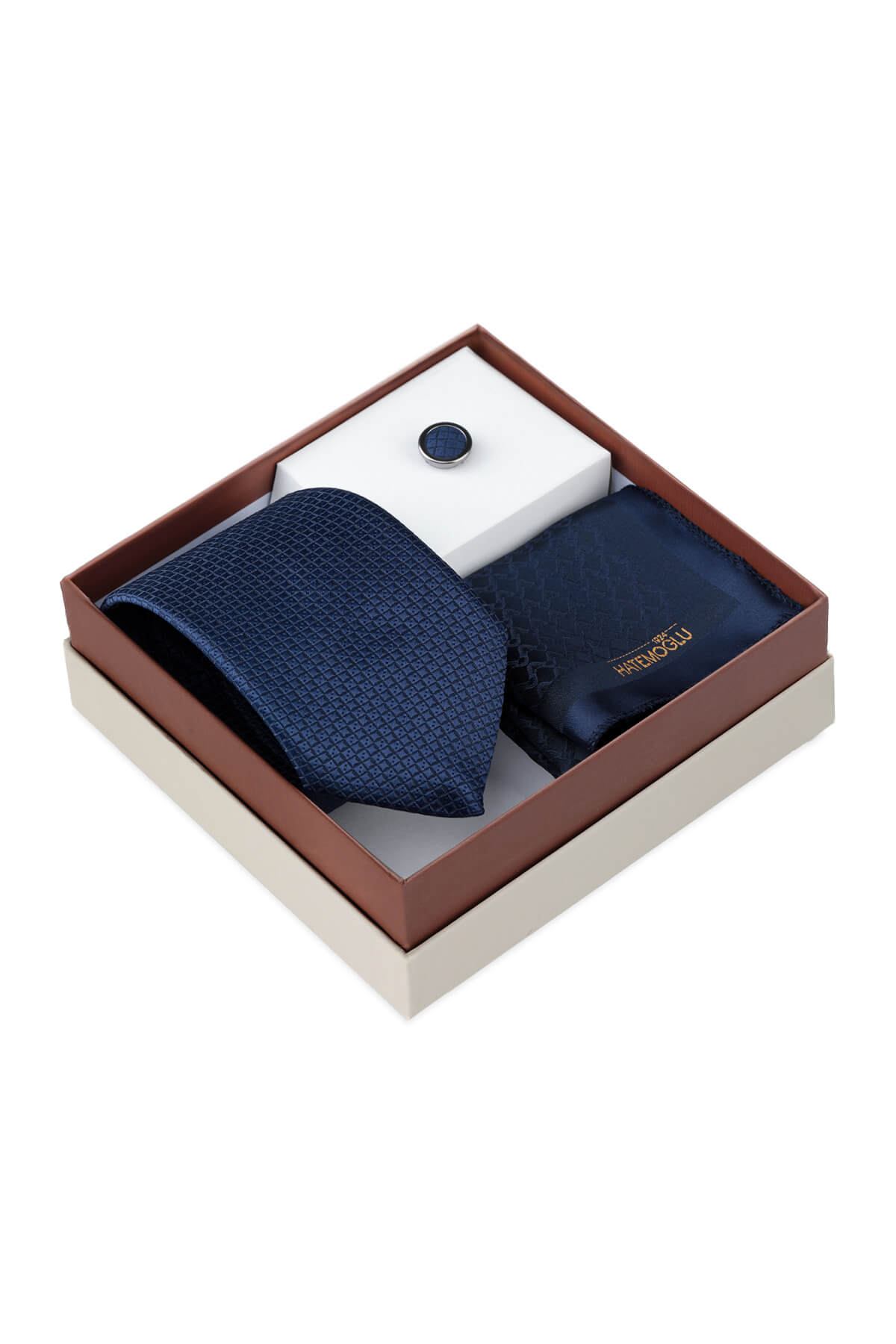
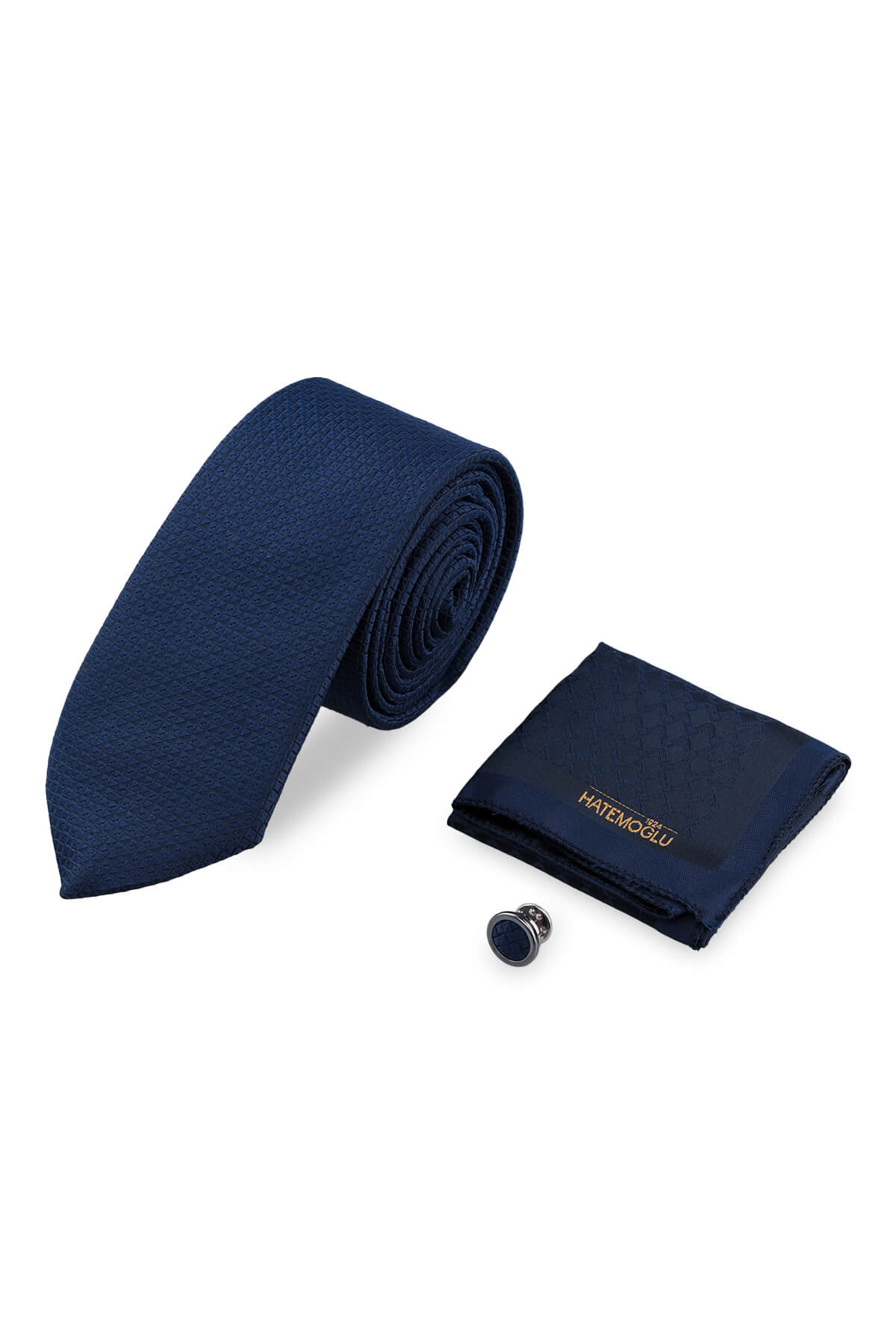
What is a Tie, Pocket Square & Pin Set?
A tie, pocket square, and pin set is a coordinated group of menswear accessories designed to be worn together, typically including a necktie, a folded pocket square for the breast pocket, and a decorative lapel pin. These sets take the guesswork out of accessory coordination by pairing colors, patterns, and textures that are already designed to work in harmony. Rather than assembling individual pieces and hoping they complement each other, a matched set gives you a finished, intentional look in one selection.
SAYKI builds its accessory sets around the same tailoring sensibility found across its ties and pocket square collections, with attention to fabric weight, weave, and color balance. Drawing on a tailoring heritage that dates back to 1924, each set is composed so the tie carries the dominant color while the pocket square and pin add complementary accents rather than competing for attention.
Elevate Your Suit with Matching Men's Accessory Sets
A coordinated accessory set transforms how a suit reads. The right tie, pocket square, and pin combination introduces color, pattern, and personality to an outfit that might otherwise feel plain, and it signals attention to detail that people notice in professional and formal settings alike. Because the pieces are pre-matched, they work especially well for men who want a polished result without spending time studying color theory.
These sets pair naturally with structured tailoring, whether you are dressing up suits for a wedding or business event, or adding refinement to more relaxed men's blazers for smart-casual occasions. A navy suit takes well to a burgundy or silver-toned set, while a grey suit offers a neutral canvas for bolder pattern combinations.
Why Choose SAYKI's Tie and Pocket Square Sets?
SAYKI's accessory sets are designed with the same fabric quality and color discipline that define the brand's wider menswear range. The ties are cut to a contemporary width that suits modern tailoring, the pocket squares are finished with clean hand-rolled or machine-rolled edges depending on the fabric, and the lapel pins are scaled to sit proportionally on the jacket without overwhelming it.
The value positioning matters too. Coordinated accessory sets from premium tailoring houses often carry premium prices, but SAYKI keeps its sets within an accessible range while maintaining the construction and color matching that make a coordinated look convincing. This makes them a practical choice for groomsmen outfitting a wedding party, professionals building an event-ready wardrobe, or anyone who wants a reliable finishing touch.
How to Style Tie, Pocket Square & Lapel Pin Sets
The guiding principle is coordination without exact duplication. Your tie and pocket square should share a color family or complementary tone, but they should not be identical in pattern, since matching them precisely tends to look costume-like rather than considered. A patterned tie pairs best with a solid or subtly textured pocket square that picks up one of the tie's colors.
The lapel pin works as the final accent and is best kept understated. Position it on the left lapel, roughly where the buttonhole sits, and let its metal or color tone echo something already in the outfit, such as a watch, cufflinks, or a thread in the tie. For formal events, a more refined pin suits the occasion, while textured fabrics and earthier tones work well for relaxed gatherings. The goal is a layered look where each accessory contributes without any single piece dominating.