


17 min read


Contents
Your Office Wardrobe Reset: Dressing Confidently for the Return to In-Person Work
- Decode the real dress code, what "business casual" and "smart casual" actually mean in a modern office, not in an old handbook.
- Build a five-day capsule using a navy suit, two blazers, a few knitwear pieces, and the right shirts, fewer decisions, more confidence.
- Choose the suit fit that works for your body (Slim Fit, Regular Fit, Dynamic Fit, or Comfort Fit) so you never look like you borrowed someone else's jacket.
- Turn one suit into ten outfits by breaking it apart: jacket with chinos, trousers with a sweater, full suit for client meetings.
- Own your work look for less than rental prices, full suits start at $199.90, which is the same as a single rental but stays in your closet forever.
- Spot the difference between a blazer and a suit jacket so you can dress for a job interview, a team lunch, or a presentation without second-guessing yourself.
- Avoid the most common back-to-office mistakes, from wearing a jacket that is too tight to confusing "dressed down" with "dressed lazy."
This guide is written for you if you are heading back to a downtown tower, a suburban office park, or a hybrid schedule and want to walk in looking like you made a deliberate choice, not like you panicked at 7:42 a.m. It covers the whole range from job seekers needing a single interview outfit to mid-career professionals refreshing a stale closet. After reading it, you will be able to walk into your workplace, any season, knowing your clothes are pulling their weight as hard as you are.
Why Your Office Wardrobe Still Opens Doors
Dressing the part is not about vanity. It is about control, over the first impression you make, the way you carry yourself in a meeting, and how quickly people take you seriously. Get it wrong, and you risk being the person whose clothes whisper "I did not prepare" before you even open your mouth.
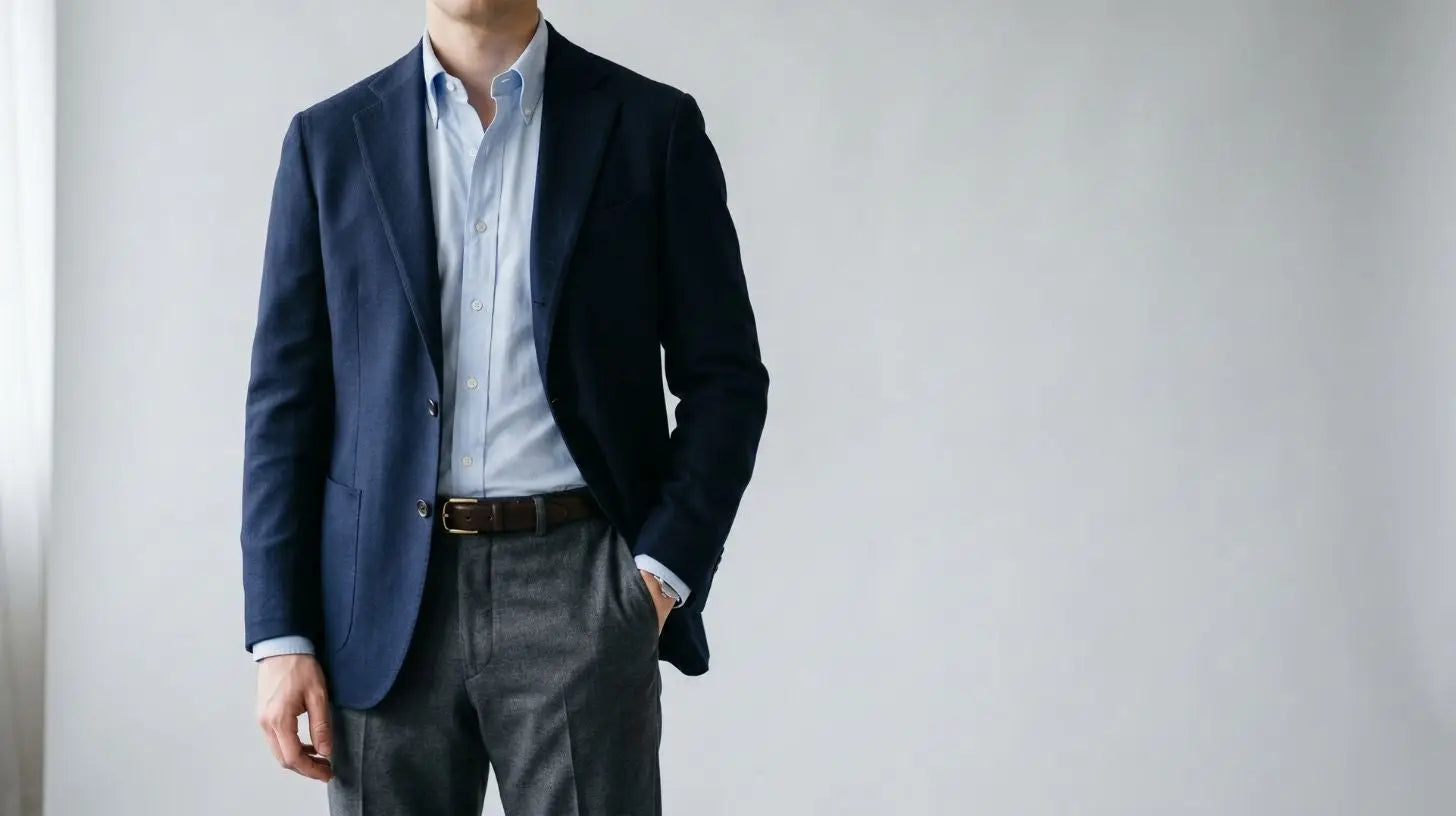
- You show up on your first day in a polo while every manager wears a tailored blazer. Even in a casual office, a sharp, unstructured blazer instantly signals you understand professional context. Pair a navy blazer with chinos and a crisp knit polo to match the room without overdoing it.
- You wear a shiny rented tuxedo-shirt combo to a job interview because you read "suit" and panicked. A classic two-button suit in charcoal or navy, bought for $199.90, looks intentional. It costs the same as that rental but fits you, not whoever wore it last.
- Your suit jacket pulls across the shoulders and you spend the whole day hunching forward. That is a fit problem, not a body problem. SAYKI's Dynamic Fit gives athletic builds room through the chest and back without losing shape. Comfort Fit offers a more relaxed drape for a natural shoulder. Knowing your fit makes you stand straighter and look more authoritative.
- You think "business casual" means you can recycle your weekend jeans. Dark, well-fitted trousers or chinos paired with a fine-gauge knit sweater or a soft-shouldered blazer hit the mark. You look approachable but credentialled.
- You invest in a full three-piece suit, but your office never goes beyond sport coats and trousers. Start with a single-breasted suit in a year-round fabric. Wear the jacket as a blazer with denim on Thursday and the full rig for a board review on Monday. More use, lower cost per wear.
- You forget your shoes. Scuffed, square-toed loafers undercut even the finest Italian wool. A simple pair of dark brown or black leather derbies or oxfords ties everything together.
- You layer a bulky hoodie under an overcoat and call it hybrid style. A lightweight merino crewneck or a cashmere-soft knit under a wool overcoat is warmer, sharper, and takes up less hanger space. Knitwear is the unsung hero of the back-to-office wardrobe.
- You wait until the night before a big presentation to check your shirt collar. A spread collar works with nearly every face shape and jacket lapel. White and light blue pair with gray, navy, and charcoal. Stock three and rotate.
Once you see your office wardrobe as a system instead of a collection of odds and ends, the morning guesswork disappears and you walk in ready to be noticed for your work, not your outfit.
How to Build Your Back-to-Office Wardrobe Step by Step
The prospect of overhauling your closet can feel overwhelming, especially if you have not worn a jacket in three years. But you do not need to buy everything at once. You need a plan built around real, repeatable outfits.
Step 1: Read the room, decode your actual dress code
Before you spend a dollar, check what people at your level and one step above actually wear on a Tuesday. HR handbooks are often out of date. If everyone from director to intern wears chinos and quarter-zips, a pinstripe suit will stick out. If the leadership team is in blazers and dress shirts, follow that lead. Identify whether your office is formal (suits daily), business casual (blazer, trousers, dress shirt or fine knit), or smart casual (unstructured jacket, dark jeans or chinos, elevated knitwear). This single observation saves you hundreds of dollars and the discomfort of being the most or least dressed person in the room.
Step 2: Start with one versatile suit that does double duty
A navy or mid-charcoal suit is the single highest-return garment you can buy. It goes to interviews, client meetings, presentations, and even cocktail events. Look for a suit that can stand alone as a full set and have its jacket worn separately. A lightweight wool or wool-blend in a two-button, notch-lapel silhouette will never feel outdated. With suits starting at $199.90, you can own it for what renting would cost and get years of use. Quick check: can you wear the jacket with dark denim on a Friday? If not, the fabric may be too formal; choose a softer twill or hopsack weave.
Step 3: Choose the right fit for your body, not the mannequin's
Nothing sabotages an office look faster than a jacket that fights your shoulders. SAYKI offers four fits designed for different builds:
- Slim Fit, tapered through the waist and hip, narrower sleeve pitch. Works best on lean, straight frames.
- Regular Fit, classic proportions, a touch of room through the chest and back. The safest starting point for most men.
- Dynamic Fit, built for an athletic build: broader shoulders, wider chest, dropped sleeves. Gives you full mobility without boxiness.
- Comfort Fit, a more relaxed drape with a natural shoulder. Ideal if you never want to feel constricted sitting at a desk for eight hours.
Step 4: Add a blazer that bridges business and casual
A standalone blazer in a soft texture, hopsack, cotton-linen blend, or a lightweight knit, gives you a second jacket that can pair with everything from wool trousers to clean sneakers and chinos. Navy is the default, but a muted olive or medium blue can feel modern. Keep the lapels unstructured and the shoulders soft so the blazer reads as "smart casual," not "suit jacket orphan."
Step 5: Invest in knitwear that works instead of a tie
In many offices, the tie is now optional. A fine merino crewneck, a half-zip mock neck, or a cashmere-soft V-neck layered over a dress shirt instantly sharpens a look without feeling stiff. Stick to neutral tones, charcoal, oatmeal, navy, deep burgundy, that slot into any outfit. Knitwear also travels well, so you can keep a spare sweater at your desk for aggressive air conditioning.
Step 6: Build a shirt rotation that never fails
Start with three dress shirts: white twill, light blue poplin, and a subtle micro-check or stripe. All with a spread or semi-spread collar that sits correctly under a jacket lapel. Ensure the collar does not gap when you turn your head. Once you have those basics, add a pale pink or a clean Bengal stripe for variety. A well-fitted shirt anchors every outfit, whether you wear a tie or not.
Step 7: Anchor everything with proper trousers and shoes
Trousers should follow the same fit principle as your jacket. Flat-front styles with a slight taper look modern. Own two pairs of wool-blend trousers in gray and navy, plus one pair of dark, five-pocket chinos that can pass as dressy. For shoes, dark brown leather derbies or oxfords, kept polished, will match all three. One good belt in the same leather hue completes the frame.
Step 8: Map a five-day capsule before you buy anything else
Lay out the combinations: Monday, full navy suit and white shirt; Tuesday, suit trousers, light blue shirt, merino crewneck; Wednesday, gray trousers, navy blazer, micro-check shirt; Thursday, chinos, olive jacket, cashmere V-neck; Friday, dark jeans, unstructured navy blazer, crisp polo sweater. If every piece works in at least three of those looks, you have a lean, powerful wardrobe.
With these steps, you can walk into a store with a clear list instead of guessing, and you will leave with items that actually earn their place on your hangers.
Build Your Office Capsule
Versatile suits in four fits that carry you from interview to client dinner, starting at $199.90.
Shop SuitsOffice Dressing Mistakes That Undermine Your Professional Image
The line between "dressed like you care" and "dressed like you tried too hard" is thin. These errors are especially common when men are returning to an office after an extended break and their internal style compass has drifted.
- Wearing a black suit as your daily office uniform. In American business culture, black reads as formal or somber. Charcoal gray or navy is more versatile and projects approachable authority.
- Confusing "business casual" with "t-shirt and sneakers." A tailored sport coat or fine knit over a collared shirt, with well-fitting trousers and leather shoes, respects the workplace without feeling overdressed.
- Buying a jacket with a too-aggressive taper. A Slim Fit works only if your body shape matches. If you have a broader torso, a Dynamic Fit or Comfort Fit jacket will sit cleanly without pulling at the button. Same for trousers: a slight break at the shoe is safer than a cropped, skin-tight hem.
- Wearing a tie every day when no one else does. You look like you missed the memo. Save the tie for client-facing days and wear it with a jacket. A pattern or textured silk gives a personality lift.
- Keeping a rumpled dress shirt because "the jacket will cover it." As soon as you take the jacket off, a wrinkled, yellowed collar ruins the whole effect. Replace your white dress shirt the moment the collar loses its structure.
- Wearing a suit jacket without the matching trousers and calling it a blazer. Orphaned suit jackets often have a sheen or a worsted finish that reads "suit separate," not "sport coat." A true blazer has distinct texture, softer construction, or subtle pattern.
- Neglecting the bag and tech accessories. A fraying backpack with a pinstripe suit signals you stopped thinking at the chest. A simple leather briefcase or a clean canvas messenger bag unifies the look.
- Overlooking the belt-to-shoe mismatch. Brown shoes with a black belt, or vice versa, is the visual equivalent of a clashing tie and pocket square. Pick one leather color and stick to it throughout the day.
- Assuming shirt tucking and ironing are optional. Tucking your shirt properly and pressing it keeps the whole silhouette crisp. A shirt that balloons at the waist makes even a $1,000 suit look cheap.
Avoiding these missteps does not require fashion instinct, just awareness. And when you know what not to do, every morning decision becomes faster and braver.
How to Keep Your Office Wardrobe Looking Sharp for Years
You just invested in clothes that define how you show up at work. A few simple habits will protect that investment and stretch the life of your suits, blazers, and knitwear well beyond what most men get.
- Rotate your suits and blazers. Never wear the same jacket two days in a row. Give wool at least 24 hours to recover its shape and release moisture.
- Use a wide, contoured wooden hanger for jackets. Wire or plastic hangers distort the shoulder padding and leave divots. Trousers hang by the hem or folded over a bar, never from belt loops.
- Brush your suit after each wear with a soft garment brush. It removes dust and surface dirt before they set in, reducing the need for dry cleaning.
- Dry clean only when needed, usually once or twice a season. Excessive dry cleaning strips natural fibers. Spot clean small stains with a damp cloth and hang the jacket in steam to release odors.
- Fold knitwear; do not hang it. Hanging a merino sweater stretches the shoulders and creates permanent dimples. Store knitwear flat in a drawer or on a shelf, folded neatly.
- Keep cedar blocks or lavender sachets in your closet. They deter moths without the chemical smell of mothballs, which can cling to wool.
- Polish leather shoes monthly and use shoe trees after every wear. This preserves the shape, prevents crease cracking, and gives you a consistent shine.
- Steam, do not iron, when possible. A portable steamer relaxes wrinkles without flattening the fabric's natural texture, especially on suit jackets and wool trousers.
A ten-minute weekly routine is all it takes to make a $200 suit look like it cost three times as much every time you pull it on.
Where to Find Office-Ready Menswear That Respects Your Budget
The hardest part of rebuilding an office wardrobe is finding clothes that look premium but do not require a finance-district bonus. That is the exact problem SAYKI has been solving for over a century.
SAYKI is the U.S. arm of Hatemoğlu, a family-owned menswear company founded in 1924, over 100 years of tailoring expertise passed through three generations. The flagship store opened in 2016 at 375 Madison Avenue in New York City, and today nine stores span NY, NJ, IL, MD, MA, VA, and PA. You get a brand rooted in classic, quality construction, priced to compete with the rental counter.
Every suit and tuxedo starts at $199.90, exactly what you would pay to rent for a single event, but you keep the garment. For back-to-office dressing, that changes the math. Instead of a throwaway rental, you own a tailored, year-round suit you can wear again and again for interviews, meetings, and client dinners. The collection includes Slim Fit, Regular Fit, Dynamic Fit, and Comfort Fit options, so you never have to settle for a one-size-fits-none approach. Blazers, outerwear, and knitwear round out the office capsule at prices that leave room in your budget for the shoes, shirts, and accessories that complete the look.
SAYKI has stores in New York City, the DC metro area, the Philadelphia corridor, and beyond. Use our store locator to find the location nearest you, where the team can help you identify the fit and pieces that work for your specific office culture.
Frequently Asked Questions
Business casual today means a collared shirt (button-down or fine-gauge knit polo), tailored trousers or dark chinos, and a softly constructed blazer or sports jacket. Ties are optional. Leather shoes like derbies, loafers, or minimal sneakers in good condition are standard. Avoid overly distressed denim, graphic tees, and athletic wear. When in doubt, add a navy blazer, it instantly pulls a casual outfit into professional territory without feeling formal.
Yes, in most industries a well-fitted blazer, dress shirt, and tailored trousers will look sharp and appropriate. Stick with a solid navy or charcoal sport coat, a light-blue or white shirt, and dark trousers. Make sure the blazer is not an orphaned suit jacket, look for visible texture, soft shoulders, or patch pockets. If the company is conservative (law, finance), a full two-piece suit is still the safer bet.
The shoulder seam should end exactly where your shoulder bone ends, no overhang, no pulling. When buttoned, you should be able to slip a flat hand between your chest and the jacket without straining. The jacket length should cover your trouser zipper and roughly bisect the distance between collar and floor. Sleeves should show a quarter to half-inch of shirt cuff. At SAYKI, the four fits, Slim Fit, Regular Fit, Dynamic Fit, Comfort Fit, let you choose the silhouette that matches your build instead of forcing your body to match the garment.
Slim Fit has a narrower cut through the chest, waist, and sleeves, with higher armholes and a tapered trouser. It suits lean builds. Regular Fit offers more room in the chest and back, with a classic straight-leg trouser. It works well on average builds and anyone who prefers ease over shaping. If you are between the two, try both in the same size; the Regular Fit can be lightly tailored for a sharper look while retaining comfort for a full day at your desk.
Dynamic Fit is designed for athletic builds, broader shoulders, larger chest, and a narrower waist relative to chest size. The jacket allows more movement across the back and arms without showing pull lines, and the trouser is cut with a slightly fuller thigh that tapers cleanly below the knee. If you find traditional Slim Fit jackets restrictive and Regular Fit jackets boxy, Dynamic Fit bridges that gap.
SAYKI offers full two-piece suits starting at $199.90, which positions the brand at the same price point as renting for a single event. You can purchase online at sayki.com or visit one of the nine U.S. stores. Outlet locations at Woodbury Commons (619 Race Track Lane, Central Valley, NY) and Wrentham Village (1 Outlet Blvd Suite #730, Wrentham, MA) often carry seasonal suits at even lower final-sale prices.
A blazer is a standalone jacket made from coarser, more textured fabric like hopsack, flannel, or knit blends. It has softer shoulders, often features metal or horn buttons, and is designed to pair with trousers that differ in color and fabric. A suit jacket is crafted from finer, smoother cloth such as worsted wool and is intended to be worn only with its matching trousers. Wearing a suit jacket as a blazer can look disconnected. When building a back-to-office closet, owning one true blazer and one suit gives you maximum versatility.