


13 min read


Contents
A Coat for Every Forecast: The Outerwear You Actually Need
Here is what you will walk away with today:
- Which coat type solves your real-life weather, from drizzle to deep freeze, and back to mild office air conditioning.
- How to read a coat's fit, Slim Fit, Regular Fit, Dynamic Fit, and Comfort Fit, so the shoulders and chest work with your body, not against it.
- What to layer underneath without looking bulky, the knitwear-and-blazer combo actually works better with the right outer shell.
- When a trench makes more sense than an overcoat, and why that peacoat you have been eyeing might replace both.
- Simple, non-negotiable care routines that keep a wool coat looking like you bought it last week, not last decade.
If you are a professional balancing work and weekends, a groom planning a cohesive look for the wedding party, or a student who needs one multifunctional coat that does not scream "borrowed from Dad," this page was written with your morning in mind. By the end, you will know exactly which coat to pull from your closet for any weather, any occasion, and feel confident it is right.
Why the Wrong Coat Can Sink Your Whole Look
A coat is not just protection from the elements, it is the first thing people see. Showing up to a client meeting in a faded parka or shivering through a wedding in a thin jacket sends a message you did not intend. The right coat, on the other hand, quietly signals that you pay attention to the details.
Here is what is at stake when you guess instead of choose:
- You are walking into a job interview in a downpour. A water-resistant trench that hits just above the knee keeps your suit dry and your composure intact. Damp lapels never make a good first impression.
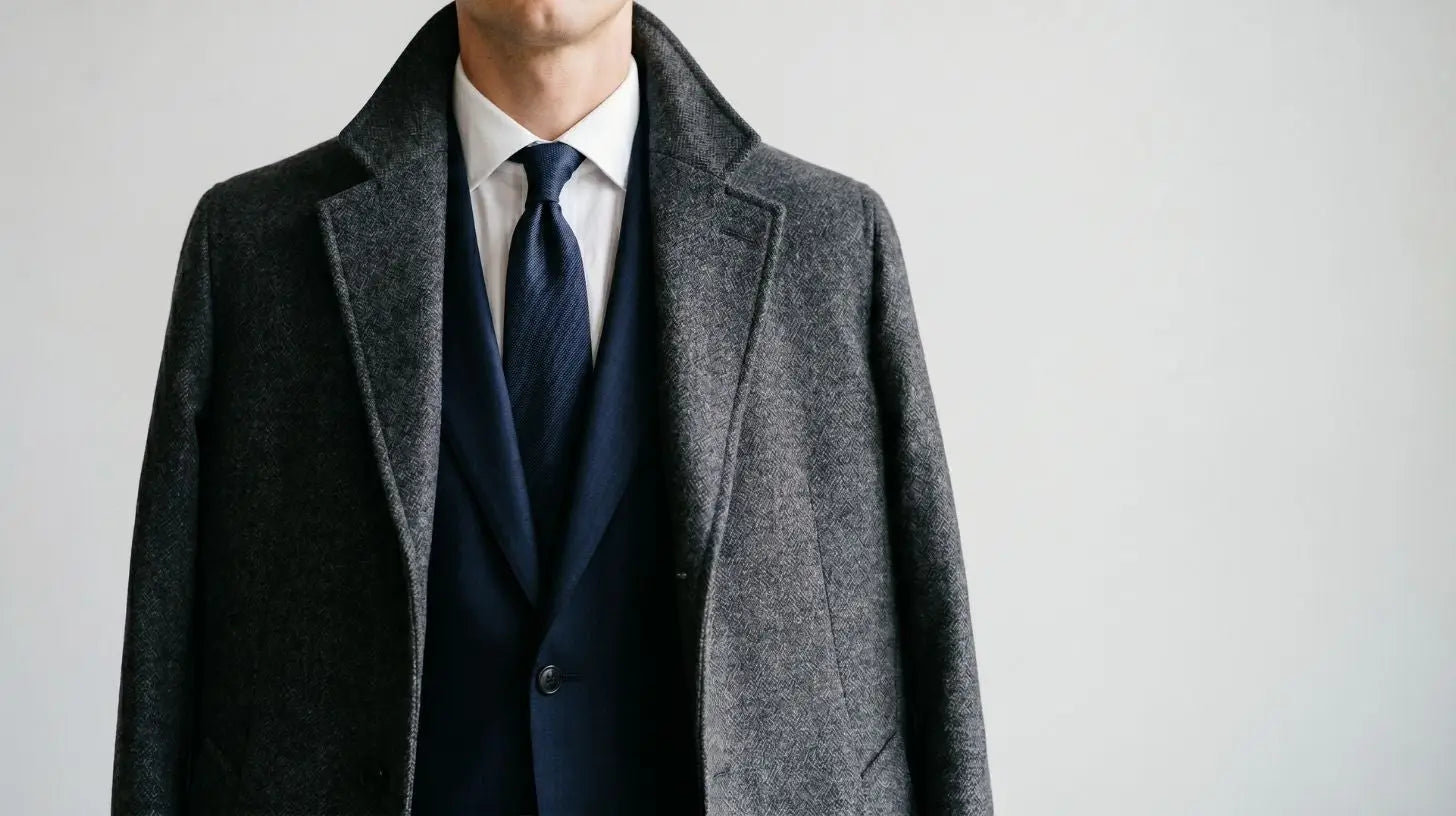
- You are standing through an outdoor ceremony in November. A wool overcoat in a dark neutral, charcoal or navy, layers over your suit without bunching. You stay warm, the photos stay sharp.
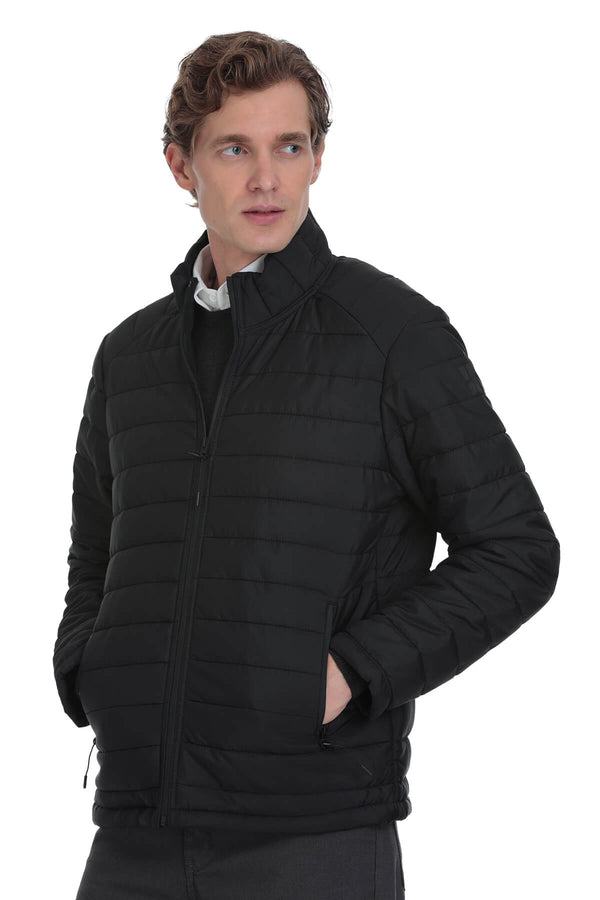
- You are commuting daily in a city. A mid-weight peacoat or car coat in a Dynamic Fit gives you room to move your arms reaching for a subway pole, while still looking crisp.
- You bought a coat that is too slim. When you zip it over a chunky knit, the fabric pulls across the back. A Comfort Fit or Regular Fit leaves breathing room for actual layers.
- You rented a coat for a one-off event and hated the fit. Owning a wool blend coat costs about the same as two rental fees, and you will wear it for years. SAYKI suits and tuxedos start at $199.90, and the buy-over-rental mindset carries straight into outerwear.
A single smart coat choice can make every outfit underneath look intentional and pulled-together. Act on this now, and you will never be caught off-guard by the weather forecast again.
How to Choose the Right Coat in 7 Practical Steps
Walking into a store or scrolling online, it is easy to feel overwhelmed. That is why a step-by-step filter, not a fashion rulebook, is what you actually need. Follow these decisions in order, and you will land on the one coat that earns its closet space.
Step 1: Define Your Real-Weather Reality
Look at your typical week, not the one snowy trip you take once a year. If you face mild rain and chilly mornings, a trench or lightweight car coat solves 80 percent of your days. If you are in a true winter climate with temps well below freezing, a full-length wool overcoat or insulated parka becomes non-negotiable.
Step 2: Match the Coat Type to Your Daily Life
Your lifestyle dictates the silhouette. Here are the six coats worth knowing, from most formal to most casual:
Step 3: Pick the Fit That Moves With You
Your coat should fit like it belongs on your shoulders, not like a hand-me-down. Here is how the four SAYKI fits translate to outerwear:
- Slim Fit: Narrows through the chest and waist, great if you wear slim suits and minimal layers underneath.
- Regular Fit: Classic, comfortable, and never boxy. A safe starting point for most builds.
- Dynamic Fit: Offers extra room through the shoulders and upper back without adding bulk to the waist. Excellent if you move a lot, have a broad chest, or want a tailored look that does not restrict.
- Comfort Fit: The roomiest cut. Ideal for wearing over thick sweaters or if you simply prefer a relaxed, easy feel.
Step 4: Choose Fabric That Works Hard
Wool (or a high-wool blend) regulates temperature, resists wrinkles, and drapes cleanly. Cotton and cotton-nylon blends work for lightweight trenches and casual jackets. Technical shells offer water resistance but rarely look formal. Pick a fabric weight that matches your climate: heavy melton wool for deep cold, lighter worsted wool for transitional months.
Step 5: Get the Length Right
For formal occasions, a coat that falls just above or at the knee looks most balanced. Shorter men can go slightly above the knee to avoid swamping the frame. Peacoats and car coats typically end at the hip, better for casual days and layered street looks.
Step 6: Check Details Like Lapels and Pockets
Notch lapels on an overcoat signal quiet elegance. Peak lapels bring a bolder, more formal presence. Welt pockets keep lines clean; patch pockets make the coat feel more casual. A functional interior pocket for your phone or gloves adds real-world utility.
Step 7: Try It On Over Your Typical Layers
Trying a coat over a thin t-shirt tells you nothing. Bring the bulkiest sweater or blazer you plan to wear underneath. Lift your arms, sit down, and reach forward. If the coat restricts you on the spot, it will only get worse in real life.
You now have a filter that eliminates 90 percent of coats on the rack and guides you straight to the one that earns its hanger space.
Editor's Picks
Coats Built to Layer and Last
Overcoats, peacoats, and trenches in four fits, made to wear over your suit, starting at SAYKI prices.
Shop OuterwearCoats That Look Off, and How to Spot the Trouble Before You Buy
Even stylish men get tripped up by a few easily fixable coat mistakes. They are usually the result of impulse buys or ignoring proportion. Here is what to look for and exactly how to side-step each one.
- Shoulders that droop well past your own. The coat eats your silhouette and makes your entire frame look smaller. Check that the shoulder seam ends right where your shoulder bone ends.
- Sleeves that cover your knuckles. One inch of your shirt cuff should be visible when your arms hang straight. A tailor can shorten them easily; do not settle for swimming in fabric.
- A chest so tight you cannot close the top button over a dress shirt. Try the next size up or switch to a Dynamic Fit cut. A coat that will not close is not a style choice, it is a costly error.
- Wearing a full-length formal overcoat with light-wash jeans and sneakers. The contrast kills the look. For casual outfits, reach for a peacoat, car coat, or field jacket instead.
- Choosing a bright red or electric blue coat as your only winter option. Bold colors are fun, but they limit what you can wear underneath. Navy, charcoal, camel, and olive blend with 90 percent of your wardrobe.
- Ignoring the lining. A cheap, poorly sewn lining can tear within weeks. Inspect the seams, a smooth, sturdy viscose or cupro lining tells you the coat was built to last.
- Buying without sitting down in it. You will discover back pulls and uncomfortable bunching that walking around the store never revealed.
Avoiding these missteps means your coat will always look like it was made for you, because, in a sense, it was.
Keep Your Coat Looking New Season After Season
A well-made coat can last a decade, but only if you treat it right. The goal is to protect the fabric and shape you invested in, so it keeps you looking sharp without monthly trips to the dry cleaner.
- Brush wool and cashmere after each wear. A soft garment brush lifts dust and surface dirt before they settle into the fibers, reducing the need for chemical cleaning.
- Hang on a broad, contoured wooden hanger. Wire hangers create stress points at the shoulders; a wide hanger mimics your own shoulder shape and prevents dimples.
- Spot clean stains immediately. Dab, do not rub, with a clean cloth and cool water. For stubborn marks, a drop of mild wool-safe cleaner goes a long way.
- Steam, do not iron. A handheld steamer set to a wool setting relaxes wrinkles without flattening the nap or causing shine. Keep the steamer head a few inches from the fabric.
- Store in a breathable cotton garment bag. Dry cleaner plastic traps moisture and can cause yellowing. A cotton bag lets the coat breathe while keeping dust away.
- Dry clean sparingly, once a year at most. Over-cleaning strips natural oils and dulls the finish. If your coat is not stained or holding odor, brushing and airing is often enough.
- Rotate coats. Giving wool at least 24 hours between wears allows creases to release naturally and fabric to recover its shape.
A few easy habits and you will pass that coat down, not toss it out.
The Outerwear You Deserve, Made Accessible by SAYKI
Finding a coat with a flattering cut, premium fabric, and a price that does not make you wince is rare. At SAYKI, it is what we have been doing since 1924. As the U.S. arm of Hatemoğlu, we are a third-generation family company with over 100 years of menswear expertise, and our flagship at 375 Madison Avenue in New York City still stands as proof that quality never needs to shout.
We design outerwear in all four fits, Slim Fit, Regular Fit, Dynamic Fit, and Comfort Fit, so you are never stuck with one generic shape. Our coats are built for the modern man who wants a European-tailored look without the European price tag. Just as our suits and tuxedos start at $199.90, our outerwear stays true to the same belief: owning a well-fitted piece beats renting it for a single event, every time.
With nine stores across New York, New Jersey, Illinois, Maryland, Massachusetts, Virginia, and Pennsylvania, you can actually pull a coat on, move around, and feel the difference a century of tailoring knowledge makes. Use our store locator to find the location nearest you, no guesswork, no returns roulette, just a coat that finally fits the way it should.
Frequently Asked Questions
For cold, dry days, a knee-length wool overcoat offers the most polished look over suits and sport coats. In wet or snowy conditions, a water-resistant trench or an insulated parka with a removable hood becomes the practical hero. A hip-length peacoat or car coat bridges the gap for casual to smart-casual days. Your best bet is to own two: one formal layer and one weatherproof workhorse.
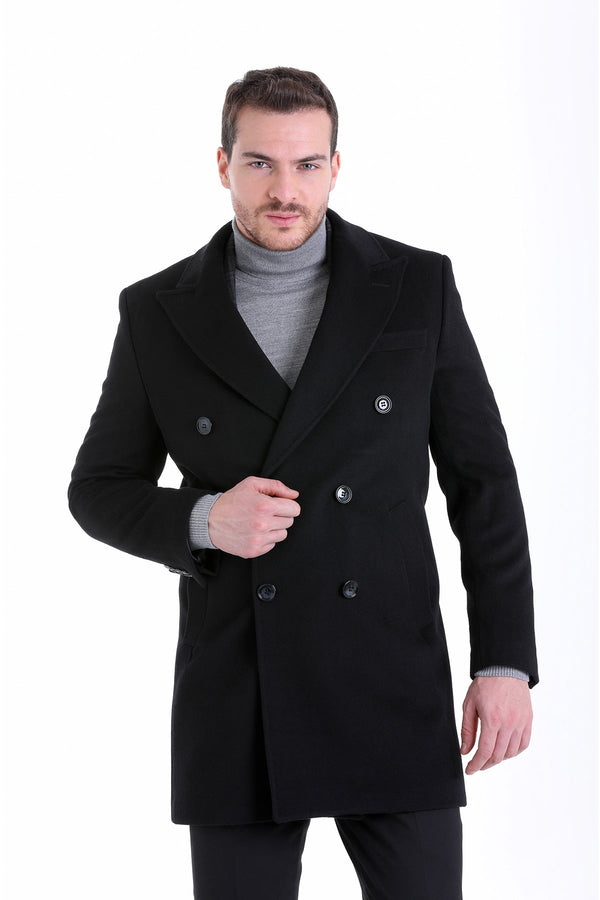
A peacoat is a double-breasted, hip-length wool coat originally worn by sailors. Its thick fabric and broad lapels give it a sharp, structured silhouette. Wear it with dark denim, chinos, or a rollneck on weekends; it layers over a lightweight sweater and even a blazer for business-casual settings. Save the full-length overcoat for formal occasions where a longer line is expected.
A trench coat is typically a lightweight, water-resistant piece that hits at or just below the knee, with details like epaulets, a belted waist, and a storm flap. It is built for rain and transitional weather. An overcoat is a heavier wool coat designed specifically to be worn over a suit or tailored jacket, with a cleaner, more formal cut and no utility hardware. If you face wet commutes in suits, own both.
The shoulder seam should sit exactly where your shoulder bone ends, not sliding down your arm or pulling up toward your neck. When buttoned, the chest should allow you to slide a flat hand inside comfortably; if the fabric pulls into an "X" shape across the closure, the coat is too tight. To keep full arm mobility, try a Dynamic Fit if you have broader shoulders or an athletic build.
Dry clean your wool coat no more than once a season, and ideally only when it is visibly stained or has absorbed odors that airing cannot remove. Over-cleaning breaks down the wool's natural fibers and can cause a faded, lifeless appearance. In between, brush the coat after each wear and use a steamer to freshen the fabric.
With proper care, brushing, correct storage, and minimal dry cleaning, a well-constructed wool coat can last 10 years or more. You will extend its life significantly by rotating it with another coat each day and handling small repairs like a loose button immediately. A quality coat is not a one-season purchase; it is a long-term staple.
Yes. SAYKI has nine stores across the United States where you can try on coats and feel the fit for yourself. Our flagship is at 375 Madison Ave, New York, NY 10017. You can also visit us in New Jersey, Illinois, Maryland, Massachusetts, Virginia, and Pennsylvania, with every store carrying the full range of fits so you can walk out wearing the right one.