


14 min read


Contents
Your Men's Dress Code Cheat Sheet: From Black Tie to Smart Casual
- Decode any dress code in under a minute so you never second-guess an invitation again.
- Know when a tuxedo is required and when a dark suit does the job perfectly.
- Build a versatile wardrobe that covers work, weddings, weekends, and everything in between.
- Understand how your fit, Slim Fit, Regular Fit, Dynamic Fit, or Comfort Fit, changes your whole look.
- Spot the real difference between business casual and smart casual and stop mixing them up.
- Avoid the most common mistakes like wearing a black suit to a cocktail party or skipping the blazer at a smart event.
- Own instead of renting: suits and tuxedos start at $199.90, the same as one rental, and you keep the garment.
If you are a man facing a prom, a wedding, a job interview, or a shifting office culture, this page is written for your real life, not a fashion textbook. By the end, you will be able to read any invitation and know instantly which pieces you already own and what you might need to buy.
Why Dressing for the Dress Code Actually Changes Your Entire Experience
Getting the dress code wrong can make you feel like an outsider. Nail it, and you walk in at ease, focused on the people you are with instead of your outfit.
- You arrive at a wedding and every other man is in a tuxedo while you are in a navy suit. The fix: if the invitation says black tie, you wear a tuxedo; a dark suit alone will not match the formality. For "black tie optional," a tuxedo is still preferred but a charcoal or midnight blue suit with a crisp white shirt and black tie works.
- You show up to a job interview in a full suit and tie when the office dress code is actually business casual. The fix: research the company beforehand. A blazer and tailored chinos often strike the right balance, polished but not overdressed.
- You rent a tuxedo for prom and realize you have spent $200 for a single night's wear. The fix: for the same $199.90, you can own a tuxedo that fits you, stays in your closet for future events, and never needs to be returned the next day.
- You wear a sport coat and jeans to a "smart casual" dinner and feel noticeably underdressed. The fix: smart casual means a blazer, a collared shirt, tailored trousers or dark jeans, and leather shoes, always structured, not sloppy.
- You assume "cocktail attire" means any dark suit, but you end up looking too heavy for a lively evening setting. The fix: cocktail invites call for a lighter suit in navy or mid-grey, a crisp pocket square, and sometimes a tie that adds personality rather than formality.
- You do not know that the length of your trousers changes the formality of the whole outfit. The fix: for suit trousers, aim for a slight break. For more casual looks, a shorter hem with no break works, but never go too short for a formal event.
- You wear a tie that is too wide or too skinny for your jacket's lapel, throwing off the proportions. The fix: match the tie width to your lapel width, Slim Fit jackets pair best with slimmer ties; Regular Fit and Comfort Fit handle classic widths beautifully.
- You skip a pocket square altogether and an otherwise perfect blazer looks incomplete. The fix: a simple white linen pocket square costs very little and signals you have paid attention to detail.
When you dress accurately for the code, you give yourself one less thing to think about, and you come across as someone who respects the occasion and the people who invited you.
How to Choose the Right Outfit for Any Dress Code: A 5-Step Walkthrough
Dress code names can feel like a foreign language. This step-by-step removes the guesswork so you can decide fast.
Step 1: Read the invitation for clues
Start with the wording, time of day, and venue. An evening wedding at a ballroom usually signals black tie or formal; a daytime garden party is often cocktail or smart casual. "Black tie encouraged" means a tuxedo is expected but not strictly required, play it safe and wear one if you can.
Step 2: Pin the dress code into a clear category
Map what the invitation says to the core categories that matter for men. Use this mental shortcut:
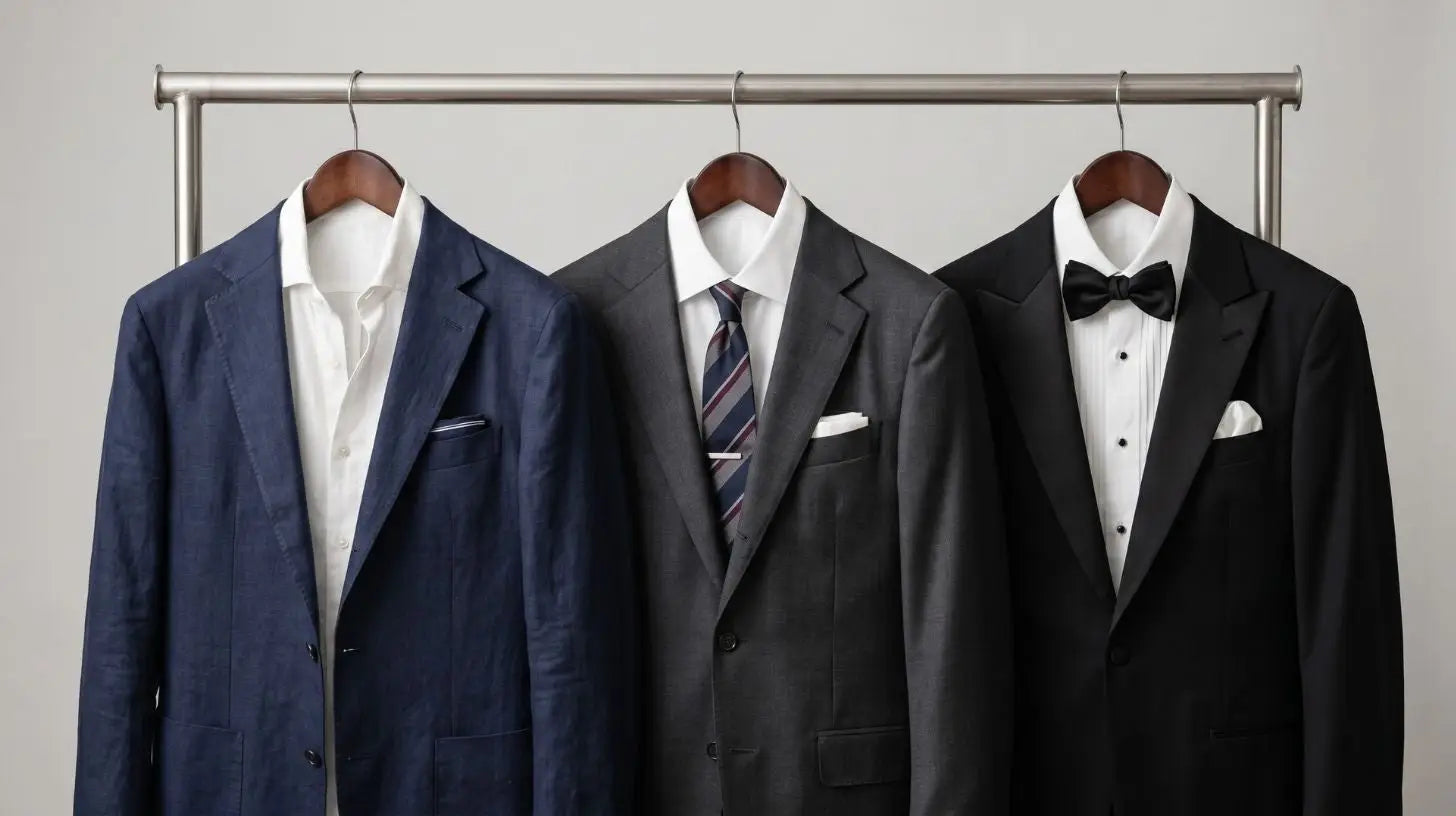
- White Tie: ultra-formal, a black tailcoat, white waistcoat, and white bow tie.
- Black Tie: a tuxedo with a black bow tie, black cummerbund or waistcoat.
- Black Tie Optional / Formal: a tuxedo is best; a dark, well-tailored suit in charcoal or midnight blue works.
- Cocktail: a sharp suit, sometimes without a tie, with a neat pocket square and polished shoes.
- Business Formal: a full suit, tie, and cap-toe oxford shoes, traditional office attire.
- Business Casual: no tie, a blazer or sport coat, dress trousers or chinos, a collared shirt, and loafers or derbies.
- Smart Casual: a blazer over dark jeans or chinos, a button-down or fine-gauge knit, and leather shoes.
Step 3: Gather the building blocks
Once you know the category, ask yourself: do I need a suit, a blazer, or neither? A tuxedo is its own category. For almost every code above casual, a well-constructed blazer or suit jacket anchors your look. A SAYKI suit starting at $199.90 does the job for formal, cocktail, or business formal without requiring a rental.
Step 4: Choose your fit and make it yours
Your fit transforms the same garment. Suits, tuxedos, and blazers at SAYKI come in four precise fits:
- Slim Fit: a close-to-the-body cut that follows your shape without pulling, great for a modern, sharp silhouette.
- Regular Fit: a classic cut with a comfortable, straight line through the chest and waist.
- Dynamic Fit: generous through the shoulders and chest for an athletic build, then tapers slightly at the waist.
- Comfort Fit: the roomiest option, designed to move easily without looking boxy, ideal if you prefer more breathing room.
Step 5: Try everything on two days before, not the morning of
Put on the full outfit, including the shoes and any accessories. Walk, sit, and raise your arms. That reveals any last fit tweaks and removes panic. A quick trip to a tailor for hemming turns good into perfect. You will walk into the event confident you have met the expectation, without a single moment of overthinking.
One Suit, Every Dress Code
Versatile suits in four fits that carry you from the boardroom to the ballroom, starting at $199.90.
Shop SuitsCommon Men's Dress Code Mistakes (and How to Avoid Them)
It is easy to misinterpret a dress code, especially when rules shift from one generation to the next. These are the slip-ups that stand out, and the simple fixes that keep you in the clear.
- Wearing a black suit and tie to a black tie event. Black tie means a tuxedo, not just any black suit. A black suit looks somber but is not a tux; the satin lapel and stripe on the trousers are what set a tux apart.
- Assuming business casual means jeans and sneakers. In most offices, business casual still requires a collared shirt, tailored trousers or neat chinos, and closed-toe leather shoes. Keep jeans for true casual days.
- Overlooking the collar of your dress shirt under a blazer. A spread or semi-spread collar frames your face and sits neatly under suit lapels. A too-small collar gets lost; a too-pointed collar can look outdated.
- Skipping the blazer at a smart casual event. Even dark jeans benefit enormously from a well-fitted blazer. It signals you made an effort and keeps the look intentional rather than accidental.
- Wearing a belt that clashes with your shoes. Match your leathers: black shoes call for a black belt; brown shoes need a brown belt. Small detail, big coherence.
- Ignoring the season's fabric weight. Heavy tweed at an August outdoor wedding is uncomfortable and visually off. Linen or lightweight wool breathes and looks appropriate. The reverse holds for winter: a flannel suit or wool overcoat makes sense.
- Letting your trousers pool around your ankles. Excess fabric kills a sharp line. Aim for a slight break that just touches the top of your shoe for suits; for more casual trousers, no break works, but avoid a cropped look unless you intend it.
Each mistake you avoid puts you one step closer to looking like you belong exactly where you are, without a single worry about what anyone else thinks.
How to Care for Your Suits, Tuxedos, and Blazers So They Last
You want the pieces you rely on for dress codes to stay as crisp as day one. A handful of simple habits does the job.
- Brush your suit or tuxedo with a soft garment brush after each wear. It removes dust and surface soil before it settles into the fibers, your first line of defense against dullness.
- Dry clean only when truly necessary, once or twice a season at most. Excessive dry cleaning strips the fabric's natural sheen and shortens the garment's life. Spot treat small marks with cold water and a damp cloth instead.
- Hang jackets on wide wooden hangers that support the shoulder. Wire hangers distort the shape over time. Trousers should be hung by the hem or folded with a padded bar to avoid creases.
- Store wool pieces in a breathable cotton garment bag, never plastic. Wool needs air circulation to prevent moisture buildup and odors. Plastic dry-cleaner bags trap humidity and weaken the fibers.
- Rotate your suits and blazers. Letting a jacket rest for 24 to 48 hours between wears allows the wool to recover its shape and freshness, two basic suits in rotation will last far longer than one worn daily.
- Steam wrinkles out instead of pressing directly with a hot iron. A handheld steamer relaxes fibers without creating a shine that can make the fabric look cheap. If you must iron, use a press cloth and low heat.
- Button the top button of a jacket when you hang it. This keeps the front flat and prevents the lapels from curling while in storage.
A small effort after each wear pays off in years of looking sharp without a last-minute scramble.
SAYKI: Classic Menswear Since 1924, with 9 Stores Across the US
Figuring out what to wear is only half the battle, finding well-made pieces that do not force you to rent or overspend is the other. That is where SAYKI fits naturally.
SAYKI is the U.S. arm of Hatemoğlu, a third-generation family company founded in 1924. With over 100 years of menswear expertise, we opened our American flagship at 375 Madison Ave, New York, NY 10017, and now operate nine stores across New York, New Jersey, Illinois, Maryland, Massachusetts, Virginia, and Pennsylvania. Every garment draws on a century of pattern-making, yet suits and tuxedos start at $199.90, the same price as a typical rental. You own a piece that fits your body and your life, without a next-morning return.
Whether you need a wedding tuxedo, a job interview suit, or a blazer that holds its own in a smart-casual office, you can find it in one of our four core fits. Choose from Slim Fit for a sharp, modern outline, Regular Fit for timeless comfort, Dynamic Fit for an athletic build that tapers cleanly, or Comfort Fit for all-day ease. No gimmicks, no wardrobe confusion, just the right cut for your frame and the occasion.
Visit any of our full-price or outlet locations to try the fit that suits you, or use our store locator to find the one nearest you.
Frequently Asked Questions
It depends entirely on the dress code on the invitation. For a black-tie wedding, wear a tuxedo with a black bow tie. For formal or black-tie optional, a dark charcoal or midnight-blue suit with a white shirt and silk tie is a safe, respectable choice. A cocktail-attire wedding calls for a lighter navy or mid-grey suit, often without a tie but with a pocket square. For a daytime or beach wedding, a light-colored suit or a blazer with tailored trousers works beautifully. If you are ever unsure, a two-button navy suit with brown leather shoes covers more dress codes than any other single outfit.
A tuxedo has satin detailing, on the lapels, buttons, and a side stripe down the trousers, while a suit does not. A tuxedo is traditionally worn with a bow tie and a black cummerbund or waistcoat; a suit is matched with a long tie. For prom, a tuxedo feels more formal and celebratory, while a dark suit can still look sharp if your date's style or the venue leans less formal. The good news: you can own a tuxedo for $199.90 at SAYKI, the same price as many prom rentals, and keep it for formals, galas, and weddings down the road.
Yes, but only if the company's dress code is clearly business casual and you match the rest of the outfit carefully. Pair a navy blazer with pressed chinos or tailored grey trousers, a crisp button-down shirt, and polished leather shoes. This signals professionalism without overdressing. For any corporate, finance, or law interview, a full two-piece suit is still expected. When in doubt, a suit always makes a stronger first impression.
Smart casual means you are bridging casual pieces with structured tailoring. Think of a soft-structured blazer over a fine-gauge knit or an Oxford shirt, dark selvedge jeans or tailored chinos, and leather derby shoes or minimal sneakers. The key is intention, every piece should look deliberate. Avoid graphic tees, distressed denim, and worn-out trainers. Smart casual works for date nights, creative workplaces, and low-key dinners where you still want to feel pulled together.
Business casual has settled into a mix of polished comfort. For most offices, that means a well-fitted blazer or a lightweight knit over a collared shirt, soft-tailored trousers or dark chinos, and loafers or minimal leather sneakers. A tie is no longer expected. The look is clean, not stiff. Avoid hoodies, cargo pants, and sneakers unless your office explicitly says they are acceptable, and even then, keep them neat. A SAYKI blazer in Dynamic Fit or Comfort Fit makes hitting this code easy without feeling formal.
Slim Fit suits are cut closer to the body through the chest, waist, and trousers. They create a modern, tapered silhouette and work best on lean or medium frames. Regular Fit suits offer a classic, straight cut with more room through the chest and mid-section without looking loose. At SAYKI, you also have Dynamic Fit for broader shoulders and athletic shapes, plus Comfort Fit for a relaxed, roomy feel. The right fit is the one that lets you move freely while keeping the jacket's shoulders flush with your own and the button closure smooth.