


15 min read


Contents
Your Complete Blazer Guide: Fit, Style, and Occasion Know-How
- Spot a well-fitting blazer without a tailor's eye, learn the two checks that matter most.
- Pick the right fabric and weight for a wedding, a job interview, or a casual Friday dinner.
- Decide between navy, gray, and earth tones so your blazer works with shirts and trousers you already own.
- Avoid the "orphaned suit jacket" mistake that makes even an expensive blazer look like a hand-me-down.
- Understand SAYKI's four core fits, Slim Fit, Regular Fit, Dynamic Fit, and Comfort Fit, and which one flatters your build.
- Style a blazer without a tie and still look intentional, never sloppy.
- Care for your blazer so it stays crisp through dozens of wears and dry-cleaning cycles.
If you are a guy who wants to look polished without wearing a full suit, or you are tired of renting jackets that never quite fit, this guide is written for your next big day, and every smart-casual day in between. After reading, you will walk into any store knowing exactly what to look for and how to spot a blazer that fits you like it was made for you.
Why Your Blazer Choice Makes or Breaks the Occasion
Show up to a boardroom or a country club wedding in the wrong blazer, and you will feel the difference before anyone says a word. Too formal, too flashy, too baggy, each mistake sends a signal you did not intend. Get it right, and the blazer does the talking for you.
- You wear a loud patterned blazer to a job interview. It distracts from your answers. Fix: A solid neutral blazer, like a dark navy wool, keeps the focus on you, not your outfit.
- Your blazer pulls across the chest when you button it. You will spend the whole meeting adjusting it. Fix: Choose a Dynamic Fit if you have an athletic build, or size up and let a tailor take in the sides.
- You rent a blazer for a wedding and it feels like a costume. The sleeves are an inch too long and the shoulders droop. Fix: Owning a blazer from SAYKI that starts at $199.90 gives you the same cost as a rental but with a tailored fit you can wear again and again.
- You buy a cotton blazer for a fall outdoor event. By 8 p.m. you are shivering. Fix: Match the fabric weight to the season, wool or wool-blend for cooler months, linen or cotton for summer.
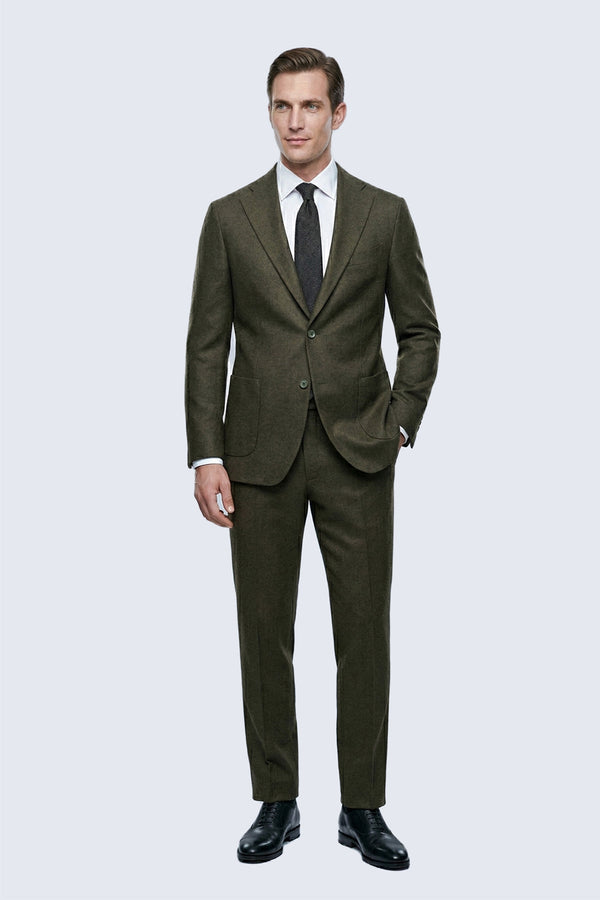
- You pair a navy blazer with navy trousers of a slightly different shade. The look falls apart. Fix: Always create contrast, wear a navy blazer with gray, tan, or olive trousers.
- You ignore shoulder fit because you think a tailor can fix it. If the shoulder seam hangs past your natural shoulder line, no tailor can save it. Fix: The blazer's shoulder should end exactly where your shoulder does, and that is non-negotiable.
- You assume all blazers are the same just because they are blue. That leads to wearing a shiny, fashion-forward blazer to a conservative work event. Fix: Know the dress code first; a worsted wool blazer with a subtle texture works almost everywhere.
Getting these details right means you never have to second-guess your outfit, and that is a feeling worth the five minutes it takes to check them.
Editor's Picks
How to Pick a Blazer You'll Actually Enjoy Wearing
Standing in front of a rack of blazers can feel like a guessing game. Fabric weights, lapel styles, four different fits, it is easy to freeze. Follow these steps, and the confusion clears up fast.
Step 1: Define where you'll wear it most
Start with the real-world scenario. Will this be your go-to for the office, a wedding guest staple, or a weekend smart-casual upgrade? A blazer that crushes a summer garden party (unstructured, linen) is not the same one you would wear to a winter business dinner (structured, wool). If you can only buy one, aim for a mid-weight wool in a dark solid, it covers the most ground.
Step 2: Match the fabric to the season and setting
Fabric decides not only comfort but also formality. For fall and winter, reach for wool, flannel, or a wool-silk blend. These drape cleanly and keep you warm. In spring and summer, linen, cotton, or a linen-wool blend breathes and looks effortlessly put together. Avoid shiny polyester blends, they trap heat and age poorly.
Step 3: Settle on a color that earns its place in your closet
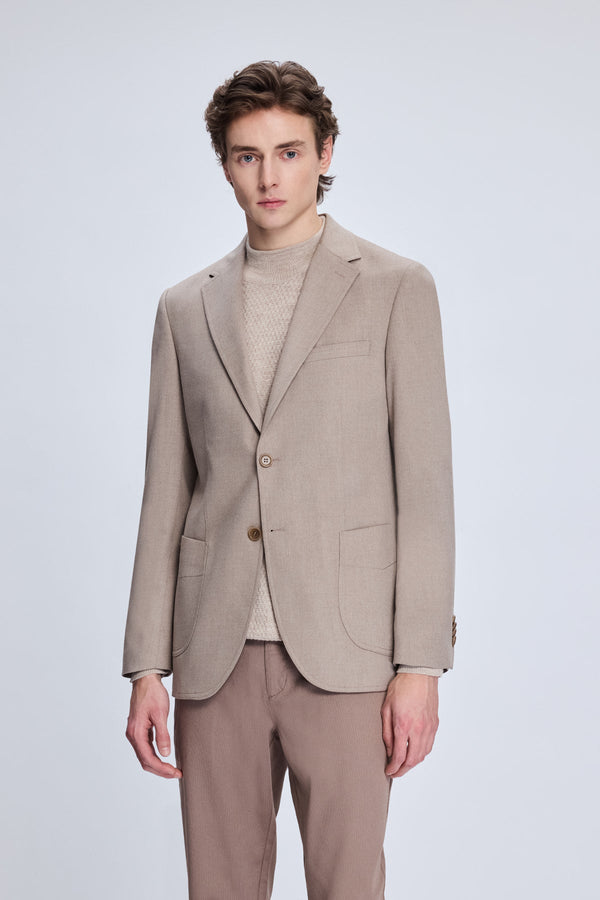
Think about the shirts and trousers you wear five days out of ten. Navy is the most versatile, it pairs with light blue, white, pink, and stripes. Charcoal gray reads a touch more serious and works beautifully with black, burgundy, and olive. If you already own a navy blazer, branch into subtle earth tones like tobacco brown or olive green. The goal is to be able to blind-select a shirt and trousers on a rushed morning and know it looks good.
Step 4: Understand SAYKI's four fit profiles and choose yours
Fit is where a blazer turns from a garment into your second skin. SAYKI offers four distinct cuts, and picking the right one eliminates 90 percent of the discomfort men complain about.
- Slim Fit: Tapered through the torso and sleeves. Best for lean builds who want a modern, close-to-the-body line without restriction.
- Regular Fit: A straight cut that skims the body. Works on most body types and gives you room to move while looking sharp.
- Dynamic Fit: Extra room through the chest, shoulders, and upper arms. Created for athletic or broader builds that need freedom where a Slim Fit pulls.
- Comfort Fit: The most relaxed silhouette. Ideal when you want a more laid-back drape or need full-range motion without any tightness.
Step 5: Check the details that separate a classic blazer from a trendy one
You do not need to memorize tailoring terms, but a few details tell you how formal or casual the blazer is. Notch lapels are the universal standard and work for almost every occasion. Peak lapels dress things up slightly, better for a festive wedding than a casual office. Patch pockets signal casual ease; flap pockets are more traditional. Metal buttons read preppy and are a classic blazer mark, while horn or matte buttons keep things subdued.
Step 6: Try it on with the shirts and trousers you already own
Do not judge a blazer in isolation. If possible, bring or mentally picture the outfit you plan to wear it with. A blazer that looks dark in the store might wash out next to your favorite light-blue shirt. Stand in natural light if you can, and check the length: a blazer should cover your seat but not go much lower than the curve of your backside. Sleeves should show about a quarter to half-inch of shirt cuff.
Step 7: Decide on any tailoring before you leave the store
Almost no one gets a perfect off-the-rack fit, and that is okay. Focus on shoulders and chest first, these are hard and expensive to alter. Sleeve length and waist suppression are easy tweaks. A blazer from SAYKI starts at $199.90, so even with minor alterations, you are spending far less than you would on a high-end designer piece.
Follow these steps, and the blazer you bring home will get more compliments than any other piece in your wardrobe.
Find Your Blazer in Four Fits
Slim, Regular, Dynamic, and Comfort Fit blazers built for real bodies, starting at $199.90.
Shop BlazersBlazer Mistakes That Stand Out More Than You Think
Even well-dressed men trip over these blazer missteps because they are subtle, until you wear the wrong thing in the wrong room. Fix them now and you will dodge a dozen awkward glances.
- Wearing a blazer that matches your dress pants too perfectly. It looks like a broken suit, not a deliberate outfit. Always create contrast between your blazer and trousers.
- Choosing a peak lapel blazer for a casual weekend brunch. Peak lapels ramp up formality. Save them for dressier events and stick with a notch lapel for everyday wear.
- Buttoning the bottom button of a two-button blazer. That bottom button should always remain open, it is a tailoring rule rooted in how blazers are cut to drape.
- Leaving the vent stitching or pocket basting threads in place. Those white threads are meant to be removed before your first wear. Keeping them on screams "I just bought this and did not check."
- Ignoring sleeve length. If your blazer sleeves cover your entire hand, you look like you borrowed a size too big. Show a sliver of shirt cuff and everything clicks.
- Buying a blazer without checking the shoulder pitch. Even a well-fitting blazer can rumple if your shoulders do not fill the natural angle of the sleeve. Try the blazer on, button it, and raise your arms slightly, the drape should stay clean.
- Wearing a heavily structured blazer with jeans. A structured wool blazer and relaxed denim clash. Pair jeans with an unstructured cotton or knit blazer for a balanced look.
- Skipping a test sit. Always sit down in the fitting room. If the blazer bunches uncomfortably around your hips or rides up sharply, it is the wrong cut for your body.
When you sidestep these, you are not just avoiding fashion slip-ups, you are projecting the quiet confidence of a guy who knows exactly what he is doing.
How to Keep Your Blazer Looking Like It Just Came Off the Rack
You have invested in a blazer that makes you feel great, and a few small habits will protect that investment for years. A little care goes a long way toward preserving the shape, color, and drape.
- Rotate your blazers. Never wear the same blazer two days in a row. Giving the fabric 24 hours to breathe allows the fibers to recover and wards off permanent creasing.
- Spot clean immediately. If you drip coffee or a bit of sauce, blot (never rub) with a clean, damp cloth and let it air dry. Quick action prevents stains from setting.
- Dry clean sparingly, two or three times a year at most. Frequent dry cleaning strips the natural oils from wool and fades the color. Between cleanings, brush the blazer with a soft garment brush to remove lint and surface dust.
- Hang it on a wide, contoured wooden hanger. Wire or narrow hangers distort the shoulders over time. A proper hanger supports the blazer's natural shape and keeps the lapels flat.
- Use a breathable garment bag when traveling. A cloth bag protects against wrinkles and snags without trapping moisture like a plastic bag would.
- Steam instead of iron. A handheld steamer gently releases wrinkles without risking the sheen or press marks an iron can leave on wool and blends.
- Unbutton and empty all pockets before storing. This helps the blazer keep its silhouette and prevents unsightly pocket sag.
A little care now saves you from buying a replacement blazer much sooner than you would expect.
SAYKI: A Blazer Built on 100 Years of Menswear Know-How
Finding a blazer that looks sharp, fits your build, and does not cost a month's rent can feel impossible. That is where SAYKI comes in.
We are the U.S. arm of Hatemoğlu, a family company founded in 1924. Three generations later, we are still focused on one thing: making classic menswear that is accessible without cutting corners. Our flagship at 375 Madison Ave in New York City is the heart of that mission, and you will find the same dedication in our nine stores across NY, NJ, IL, MD, MA, VA, and PA.
Our blazers come in Slim Fit, Regular Fit, Dynamic Fit, and Comfort Fit, the four profiles we have refined over decades of fitting real men. Each is designed to move with you, not against you, whether you are shaking hands in a boardroom or raising a glass at a wedding. And because we believe you should own your look, not rent it, SAYKI blazers start at $199.90. That is on par with what many guys spend on a single rental, except you keep the blazer and wear it on your terms.
Visit any SAYKI store to try on all four fits in one trip and walk out with a blazer ready for your next big day.
Frequently Asked Questions
A blazer is designed to be worn with contrasting trousers, while a suit jacket comes as part of a matched set. Blazers usually have slightly more structure and bolder details like metal buttons or patch pockets, so they stand on their own. If you take a suit jacket and try to wear it with jeans, it often looks out of place, the fabric and cut are not meant for that mix. A true blazer is your go-to separate that works with chinos, tailored trousers, and even dark denim.
It depends on the company culture. For traditional corporate or law-firm interviews, a full suit is still the safest bet. In many creative, tech, or business-casual offices, a navy blazer with sharply pressed gray trousers and a solid shirt projects competence without appearing overdressed. When in doubt, ask the recruiter about the dress code, it is a perfectly reasonable question. And always err on the side of a darker, more structured blazer rather than a casual linen one.
Smart casual is the space between a suit and weekend wear. A blazer is the centerpiece: pair an unstructured or lightly structured blazer with chinos or dark selvedge jeans, a crisp button-down or fine-gauge knit, and leather shoes (loafers or clean sneakers). The key is that each piece looks intentional, no wrinkled shirts or scuffed shoes. You are aiming for "I did not try too hard, but I clearly know what I am doing."
A well-fitting blazer has shoulder seams that end exactly where your shoulders end, sleeves that reveal a quarter to half-inch of shirt cuff, and a buttoned front that does not pull into an X shape across your belly. The length should cover your seat without going past the knuckles of your thumb when your arms are at your sides. If the blazer passes these three checks, shoulders, sleeve length, and torso closure, you have found your fit profile.
Your safest and sharpest choices are white, light blue, and a subtle micro-stripe that incorporates blue or gray. A pale pink shirt also looks surprisingly strong under navy, adding warmth without clashing. Stay away from black shirts under a navy blazer, the combination reads flat and drains contrast. If you want something more casual, an off-white or light chambray shirt keeps the look approachable.
Slim Fit blazers are tapered through the chest, waist, and arms for a close-to-the-body silhouette that works best on lean or slender builds. Regular Fit offers a more traditional, straight cut with extra room through the torso and sleeves, accommodating most body types without looking boxy. The right choice depends on your comfort and how you want the blazer to move with you, if you feel restricted when reaching forward, Regular Fit or Dynamic Fit is likely a better home.
SAYKI has nine physical stores across the United States where you can try on blazers in Slim, Regular, Dynamic, and Comfort Fit. You will find our full-price and outlet locations in New York, New Jersey, Illinois, Maryland, Massachusetts, Virginia, and Pennsylvania, including our flagship at 375 Madison Ave in New York City. Use our store locator to find the one nearest you. Each store carries a range of blazers starting at $199.90, with staff who can help you dial in the right fit on the spot.