


Choosing the right suit fabric matters as much as choosing the right cut. The material decides how your suit drapes, breathes, ages, and feels against your skin. This guide walks through every major suit fabric, when to wear each one, and how to care for them so they keep their shape for years.

Contents
Wool: The Classic Choice
Wool has been the foundation of men's tailoring for more than a century, and there's a good reason it still dominates the category. Spun from the fleece of sheep, it brings together qualities that no other natural fiber matches in the same combination: it breathes, it drapes, it resists wrinkles, and it tailors beautifully. The vast majority of suits sold today, from entry-level pieces to bespoke commissions, are made from some form of wool.
Not all wool is the same, though. The category includes everything from rough Scottish tweeds to whisper-soft Italian Super 130s, and the differences matter. Worsted wool, the most common type, is made from long, combed fibers that produce a smooth, refined surface. This is the wool you'll find in most business suits. Woolen fabrics, by contrast, use shorter fibers and create a fuzzier, more textured finish, which is why tweed and flannel feel different from a standard charcoal suit.

Wool weight is the other variable to understand. Fabric weight is measured in ounces per yard or grams per meter, and it determines how the suit performs across seasons. A 7-to-9-ounce wool is light enough for spring and summer wear, while a 12-ounce-and-heavier wool is meant for cold weather. Most year-round suits sit in the 9-to-11-ounce range, which is why a single charcoal or navy wool suit can carry you through most of the calendar.
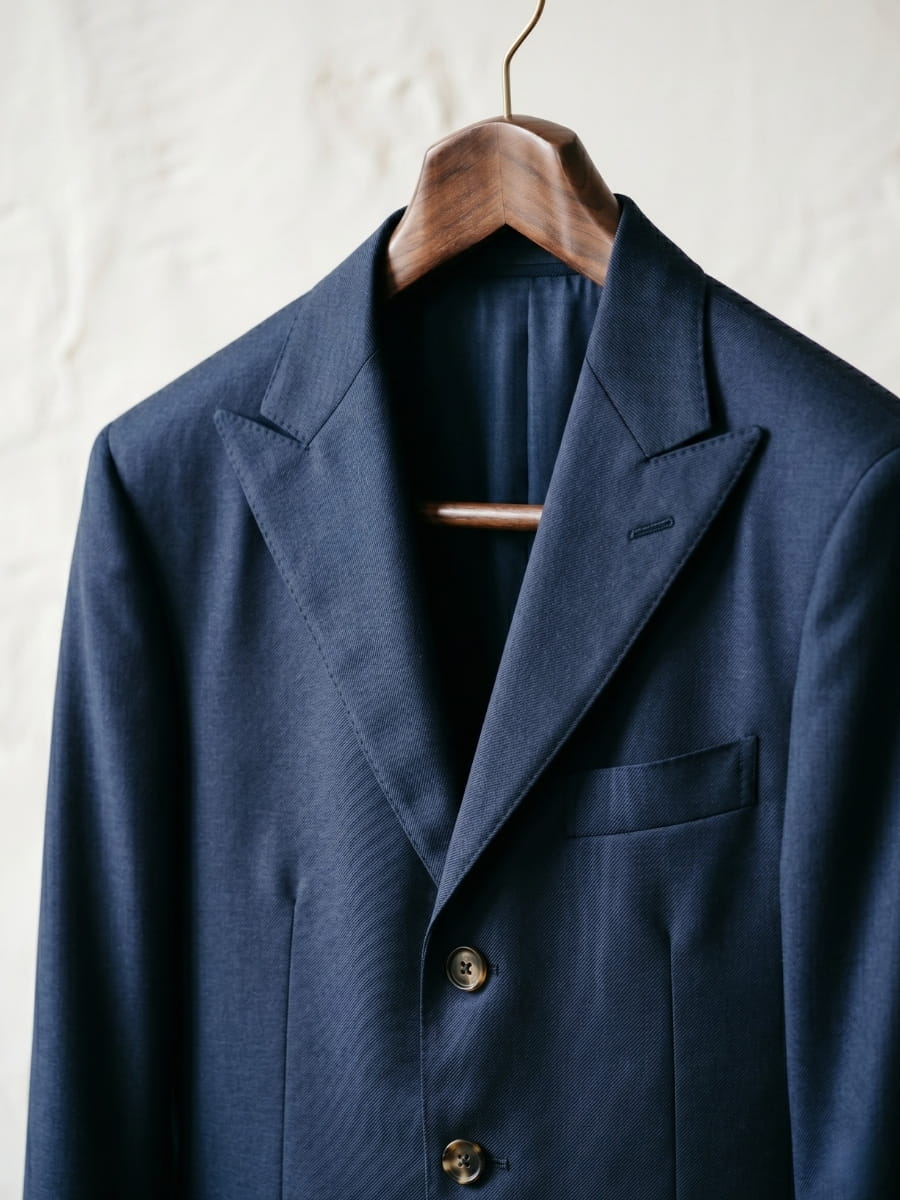


Beyond sheep's wool, the broader wool family includes a few luxury cousins worth knowing. Cashmere comes from the undercoat of cashmere goats and brings exceptional softness and warmth, though it wears more easily than standard wool. Mohair is woven from the hair of Angora goats and has a slight sheen and crisp hand feel that resists wrinkles unusually well. Both are typically blended into wool rather than used on their own, and both push a suit toward the higher end of the price spectrum.
Cotton & Linen Suits
When the weather turns hot, wool gets uncomfortable and cotton or linen takes over. These plant-based fibers breathe more easily than most wools, weigh less, and read as more relaxed, which is why they dominate summer tailoring. They're also less expensive in most cases, making them a sensible entry point for anyone building a warm-weather wardrobe.
Cotton suits sit somewhere between casual and business-appropriate. A clean, well-pressed navy cotton suit can work in most office settings, especially in summer, but it won't carry the same authority as wool. Cotton has a softer hand feel, less natural drape, and it wrinkles more readily, which means cotton suits look their best when they've just been pressed. The trade-off is that cotton handles heat well, washes easily compared to other suit fabrics, and feels comfortable when temperatures climb.
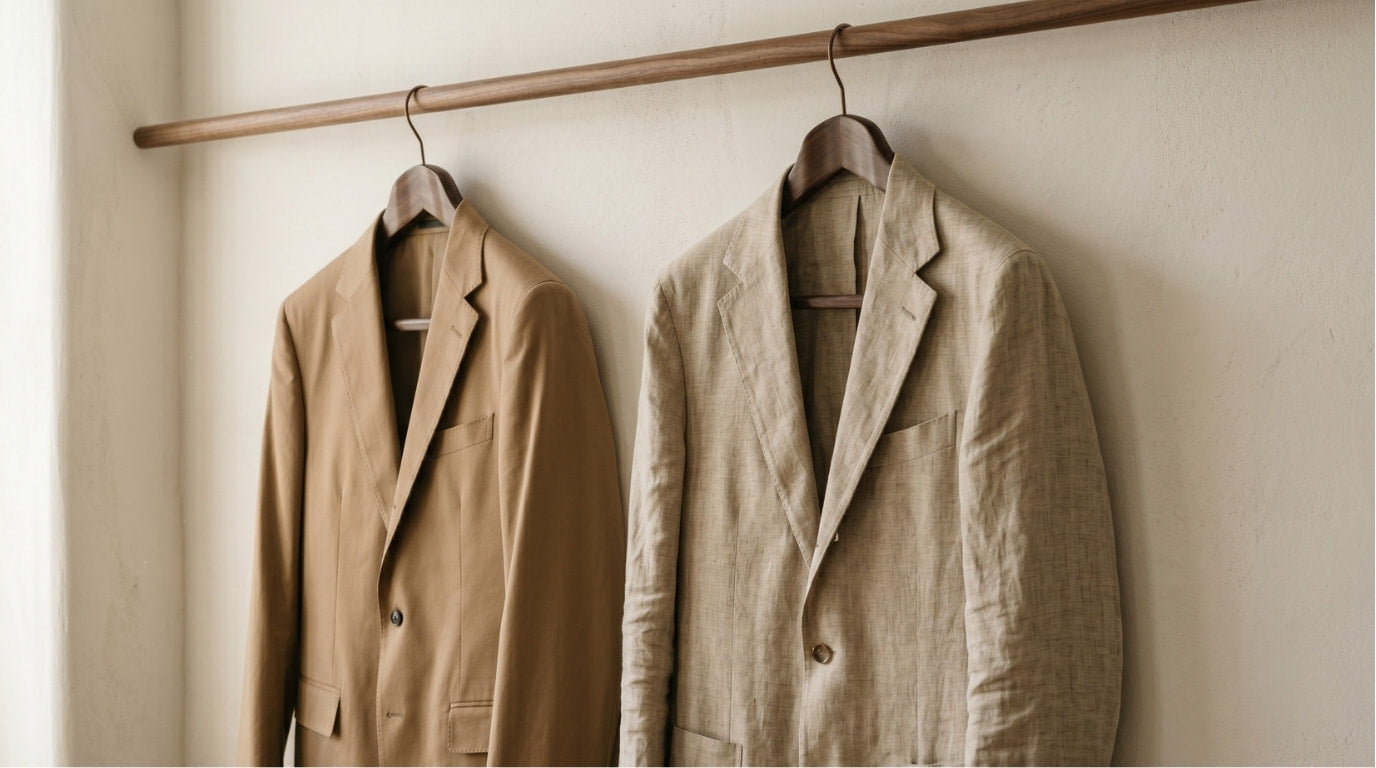
Linen takes the casual-summer-fabric idea to its logical conclusion. It's spun from the flax plant, has been woven for thousands of years, and breathes better than almost any other suit fabric on the market. The catch is that linen wrinkles aggressively. Within an hour of putting on a linen suit, you'll see soft creases form at the elbows, behind the knees, and across the lap. Linen wearers learn to embrace this. The wrinkles aren't a flaw; they're part of the fabric's character. Trying to keep a linen suit perfectly smooth is a losing battle.
Seersucker, a textured cotton fabric with a puckered surface, deserves its own mention here. The dimpled weave keeps the fabric off your skin so air circulates more freely, which makes seersucker one of the most comfortable summer options. The traditional blue-and-white striped version reads slightly preppy, but solid-color and modern-cut seersucker suits work well at outdoor weddings, summer parties, and warm-weather business events.
Silk & Velvet Options
Silk and velvet sit in a different category from the everyday workhorses. These are statement fabrics, used selectively for evening events, formal occasions, or as part of a blend that adds character to a more practical base material. You won't see many men wearing a 100% silk or 100% velvet suit, but you'll see plenty using these fabrics as accents or in carefully chosen pieces.
Silk suits are rare for a reason. Pure silk is delicate, expensive, and difficult to tailor in large pieces, so true silk suits tend to be summer luxury items reserved for tropical formal events. More commonly, silk shows up as a blend, often paired with wool in proportions like 80% wool and 20% silk. The silk content adds a soft sheen, a smoother hand feel, and a slight drape improvement, all without the fragility of pure silk. A wool-silk blend suit feels luxurious without being impractical, and it works well for evening events where you want a hint of polish beyond a standard wool suit.
Velvet, corduroy, and velour are different from silk but occupy a similar role. They're rich, tactile fabrics with a soft pile that catches the light, and they're best used in evening or cold-weather settings. A velvet dinner jacket worn over black trousers is a classic move at holiday parties and creative formal events. A full velvet suit is much harder to pull off, but it can work in the right setting, like a winter wedding or a themed gala.
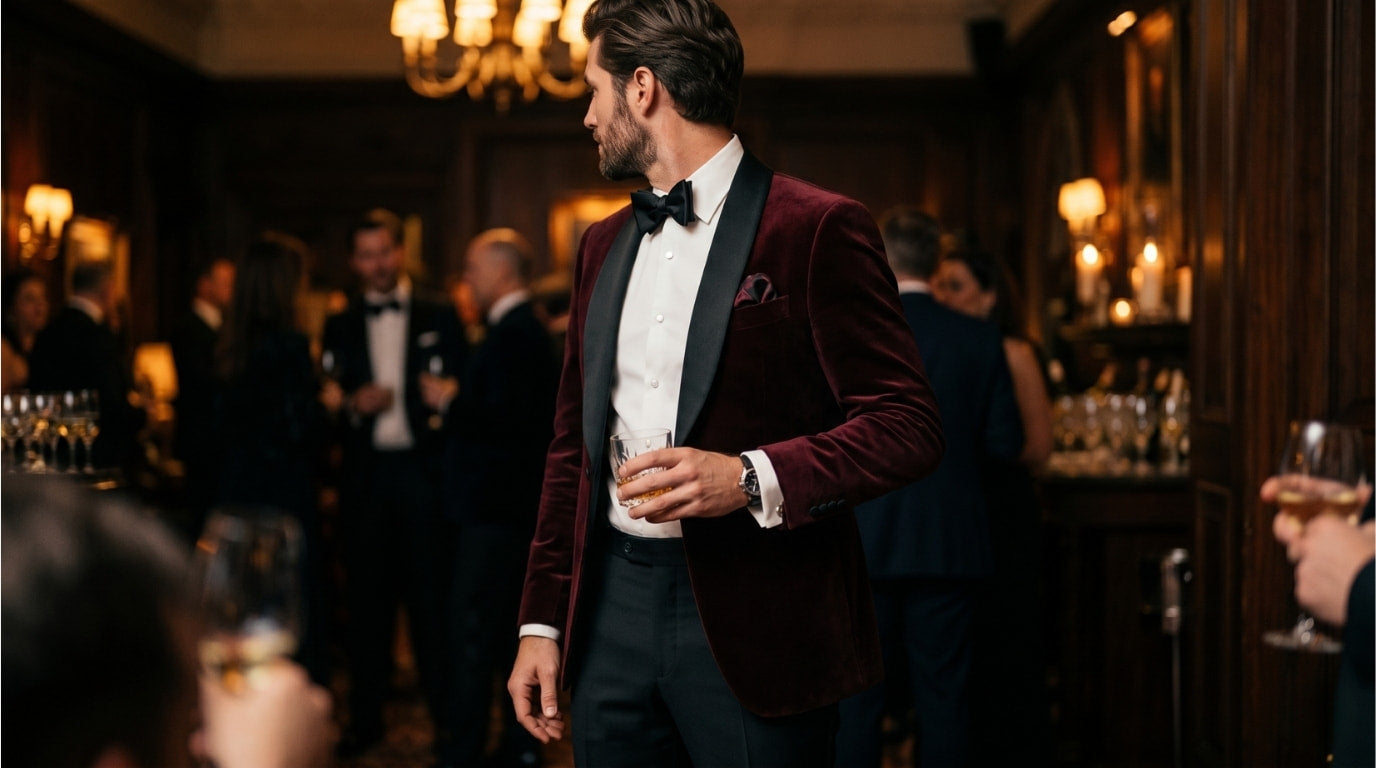
If you want to experiment with these fabrics without committing to a full suit, separate blazers are the easier route. A velvet blazer or a silk-blend sport coat can be worn with simpler trousers, which gives you the visual interest of the fabric without the cost or commitment of a complete suit.
Synthetic Blends & Performance Fabrics
Synthetic fibers have a mixed reputation in tailoring, and the reputation is mostly earned. The cheap polyester suits of the 1970s set a low bar, and 100% polyester suits today still tend to feel hot, look glossy under harsh light, and lack the drape that natural fibers deliver. For a true high-quality suit, natural fibers remain the standard.
That said, modern synthetic blends are a different story. When small amounts of polyester, viscose, or elastane are added to a wool base, the result can be a suit that travels better, wrinkles less, and stretches slightly for comfort. A 90% wool, 10% polyester blend is barely distinguishable from pure wool to the touch but holds its shape better through a long workday or a flight. Performance suits designed for travel often use these blends specifically because they recover from creasing more quickly.
The key with synthetic content is to read the composition tag. Anything with more than 30% synthetic content starts to lose the qualities that make a suit look and feel like a quality piece. Below that threshold, a small amount of synthetic fiber can be a practical addition rather than a downgrade. Stretch wools, often containing 2 to 4% elastane, have become especially popular because they add comfort without compromising the look of the suit.
← Scroll horizontally to see full comparison →
| Fabric Type | Breathability | Wrinkle Resistance | Drape Quality | Best Use |
|---|---|---|---|---|
| 100% Wool | Excellent | Very good | Excellent | Daily business, formal events |
| Wool-Silk Blend | Excellent | Good | Excellent with sheen | Evening events, weddings |
| Cotton | Very good | Poor | Moderate | Summer business, casual |
| Linen | Excellent | Very poor | Light, casual | Summer events, daytime |
| Wool-Synthetic Blend | Good | Excellent | Good | Travel, daily commute |
| 100% Synthetic | Poor | Excellent | Stiff, glossy | Avoid for quality tailoring |
Seasonal Suit Fabrics
Picking a fabric for the season comes down to two variables: weight and weave. Lighter weights and more open weaves let air move through the fabric, which is what you want in summer. Heavier weights and tighter weaves trap warmth, which is what you need in winter. The same fiber, like wool, can serve very different seasons depending on how it's spun and woven.
← Scroll horizontally to see full scale →
For summer, look at fabrics in the 7-to-9-ounce range. Tropical wool, woven loosely from high-twist worsted yarns, lets air pass through while still looking polished enough for business settings. Linen and cotton handle heat even better but pull the look in a more casual direction. If you want a single summer suit that works across both office and weekend events, a tropical wool in navy or light gray is a stronger investment than a linen or cotton piece.
For winter, the goal is warmth without bulk. Heavyweight wool flannel in the 12-to-14-ounce range traps body heat well and looks substantial under an overcoat. Tweed serves a similar role but reads as more casual, which makes it better for fall or for less formal winter occasions. Cashmere blends sit in a sweet spot between flannel and tweed, offering warmth and softness at a higher price point.
Spring and fall are easier seasons to dress for because most year-round wool suits, in the 9-to-11-ounce range, perform well in both. A single high-quality navy or charcoal wool suit will carry you through eight months of the year if you choose a mid-weight fabric. The other four months, summer at one end and deep winter at the other, are where dedicated seasonal pieces start to make sense.
Caring for Different Suit Materials
Different fabrics need different care routines. Wool, cotton, linen, silk, and synthetic blends each respond to cleaning, pressing, and storage in their own way, and using the wrong method can shorten the life of a good suit. The general rule across all suit fabrics is to dry-clean as little as possible. Frequent dry cleaning breaks down fibers and dulls the finish over time. Most suits only need cleaning a few times a year if you brush them regularly and let them air out between wears.
Wool benefits from being brushed after each wear with a soft horsehair brush. This removes surface dust and lifts crushed fibers, which keeps the fabric looking fresh between cleanings. Hang wool suits on a sturdy contoured hanger to preserve the shoulder shape, and let the suit rest for at least a day between wears so the fibers recover. Steam, rather than direct ironing, is the safest way to remove minor wrinkles from wool.
Cotton suits handle home care better than most other materials. Light pressing with a steam iron set to medium heat keeps a cotton suit looking sharp, and minor stains often respond to spot cleaning with cold water. Linen is similar but even more forgiving in some ways. Linen washes well, though most tailored linen suits are still best handled by a dry cleaner who specializes in delicate fabrics. Wrinkles in linen can be relaxed with steam, but accepting some natural creasing is part of wearing the fabric.
Velvet, silk, and silk blends require the gentlest care. These fabrics should never be ironed directly. A handheld steamer held a few inches away from the surface releases wrinkles without damaging the pile or fibers. Store them in breathable garment bags away from direct sunlight, which can fade rich colors over time. Synthetic blends are the most forgiving in daily care because they resist wrinkles naturally, but they shouldn't be ironed at high heat since the synthetic fibers can melt or develop a permanent shine.
Choosing Fabric Based on Occasion
The right fabric for any given event depends on three things: the formality of the occasion, the time of day, and the season. A black-tie event in February calls for very different fabric than an outdoor wedding in July, even though both might involve a dark suit at first glance. Matching the fabric to the setting is what separates a well-dressed guest from one who simply followed the dress code on paper.

For daily business and office wear, a mid-weight worsted wool in navy or charcoal is the safest investment. A 9-to-11-ounce wool handles year-round office wear and works for most meetings, presentations, and client dinners without ever feeling out of place. This is the suit you want to own first if you're building a professional wardrobe from scratch.
For black-tie events and formal evening occasions, the fabric should shift toward something with a bit more polish. A wool-silk blend or a fine Super 130s wool in midnight blue or black reads dressier under evening light, since the slight sheen of silk content catches reflections in a way that flat worsted wool does not. Pure wool works here too, but the upgrade in fabric quality shows in low-light settings.
Weddings deserve more thought than most occasions because the right fabric depends heavily on the season and the venue. For a summer outdoor wedding, tropical wool, light cotton, or linen in lighter colors fits the casual register. Linen wrinkles work in this context rather than against you. For a winter indoor wedding, a mid-to-heavyweight wool flannel or a wool-cashmere blend matches both the dress code and the cold-weather setting. Smart casual events sit in the middle: cotton, linen, or tweed depending on the season, all of which feel more relaxed than worsted wool while still looking intentional. For travel and long days that involve flights, meetings, and dinners back-to-back, wool with a small percentage of synthetic content for wrinkle recovery is the most practical choice. Stretch wool with 2 to 4% elastane handles long flights and full days far better than pure wool.
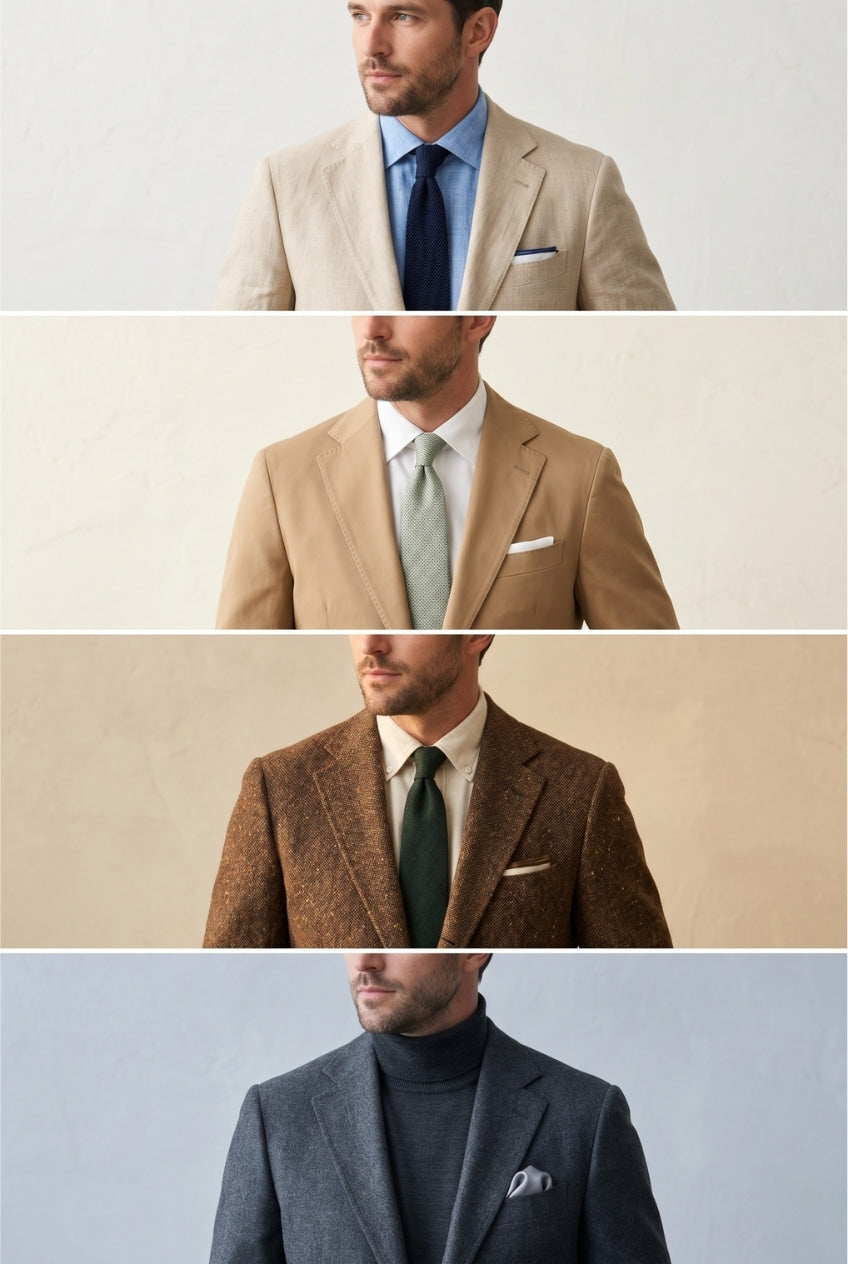
Fabric also affects how a suit pairs with the rest of your outfit. A worsted wool suit looks cleanest with crisp poplin or twill shirts, while a textured tweed or flannel suit calls for shirts with a bit more visual weight, like oxford cloth or brushed cotton. Cotton and linen suits look most natural with softer shirt fabrics that match the casual register of the suit itself. Matching fabric weights and textures across the outfit is one of the quieter signs of a well-considered look.
Find the Right Fabric for the Right Moment
Browse our suit collection to discover wool, cotton, linen, and blended options crafted for every occasion and season.
Shop SuitsDoes fabric affect fit & drape?
Yes, fabric is one of the biggest factors in how a suit fits and drapes on the body. Heavier wools fall in cleaner vertical lines and resist clinging to the body, which gives the suit a more sculpted silhouette. Lighter fabrics like tropical wool, silk blends, and linen drape closer to the body and can show shape and movement more readily. Cotton tends to hold a stiffer shape with less natural flow, which is why cotton suits often look most polished right after pressing. The same suit pattern, cut from different fabrics, will look noticeably different on the same person. This is why high-quality tailoring depends as much on choosing the right fabric as on getting the measurements correct.
Are natural fibers better than synthetics?
For tailored suits, natural fibers like wool, cotton, linen, and silk generally outperform pure synthetics in the qualities that matter most: breathability, drape, hand feel, and the way the fabric ages. A 100% wool suit looks and feels better than a 100% polyester suit at almost every price point. That said, small amounts of synthetic content blended into natural fibers can be a practical addition. A wool suit with 2 to 4% elastane stretches more comfortably during long days, and a wool blend with 5 to 10% polyester recovers from wrinkles more quickly during travel. The rule of thumb is that natural fibers should make up at least 70 to 80% of the fabric for the suit to retain the qualities of quality tailoring. Below that ratio, the synthetic character starts to take over.
Can you mix different fabrics in a suit?
Within a single suit, the jacket and trousers are almost always cut from the same fabric to create a cohesive look. Mixing different fabrics within one suit, like a wool jacket with cotton trousers, breaks the visual unity and reads as separates rather than a suit. However, mixing fabrics across an outfit is encouraged. A worsted wool suit with a cotton or linen pocket square, a silk tie, and a brushed cotton dress shirt creates texture and visual interest while keeping the suit itself unified. Some modern suit fabrics are themselves blends of multiple fibers, like a wool-silk-linen blend that combines breathability, drape, and a subtle sheen in a single cloth. These blended fabrics are designed and woven together at the mill, so they read as one consistent material rather than a mix.