


13 min read


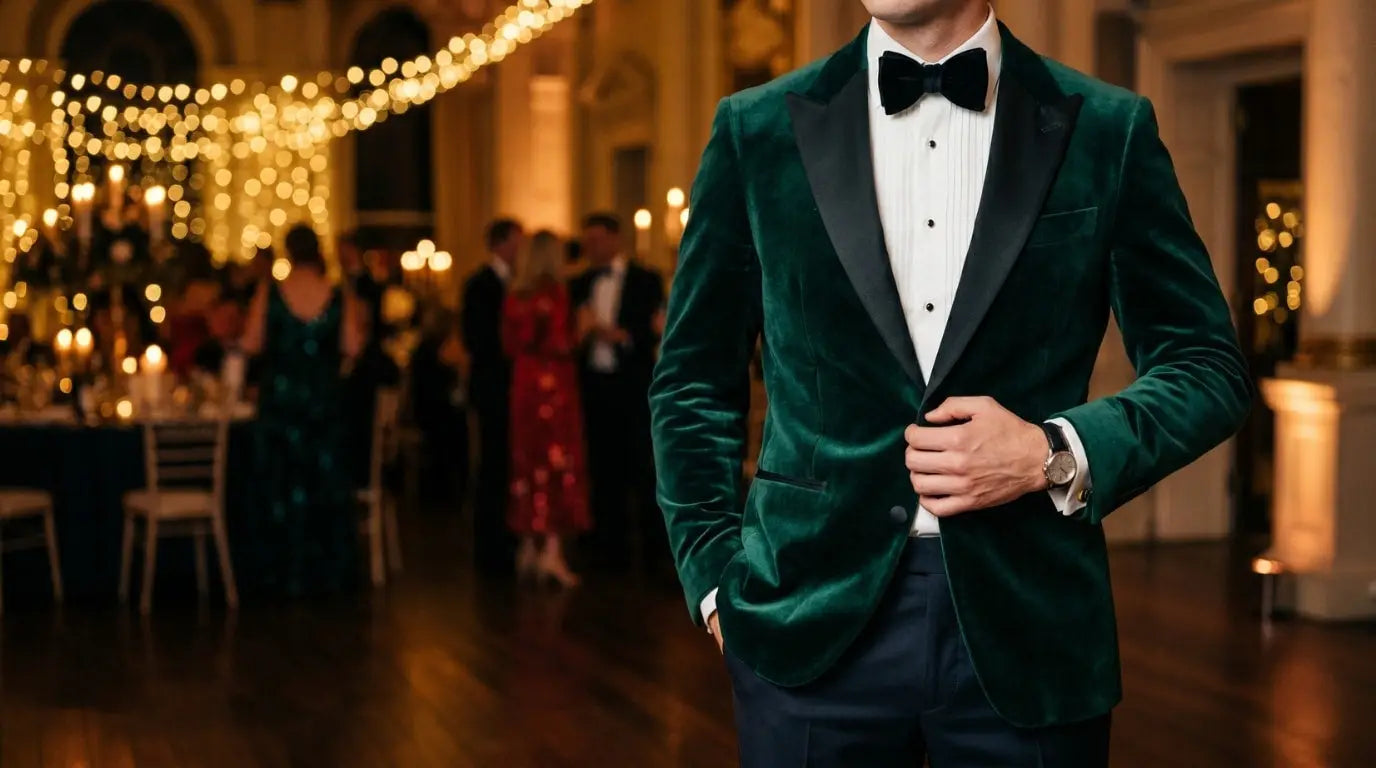
Festive attire and creative black tie sit in the most enjoyable corner of the dress code spectrum. They reward personality, color, and texture in ways a standard tuxedo never will. This guide explains what each term means, how to read your invitation, and how to put together a look that feels celebratory without crossing into costume territory.
Contents
What Is Festive Attire?
Festive attire is best understood as cocktail attire dressed up for a celebration. It usually appears on invitations during the holiday season, when hosts want guests to look polished and in the spirit of the occasion without committing to a full black-tie dress code. The word itself is the clue: festive means merry, warm, and celebratory, so your outfit should carry a sense of occasion that an ordinary work suit does not.
The most common mistake is reading "festive" as "casual." A heavy knit sweater might feel cozy, but it rarely matches the energy of a New Year's Eve party or a December gala, and you risk looking underdressed next to everyone else. Aim higher than you think you need to. A well-fitted suit in a seasonal color, a crisp shirt, and one or two thoughtful accessories will almost always land in the right place.
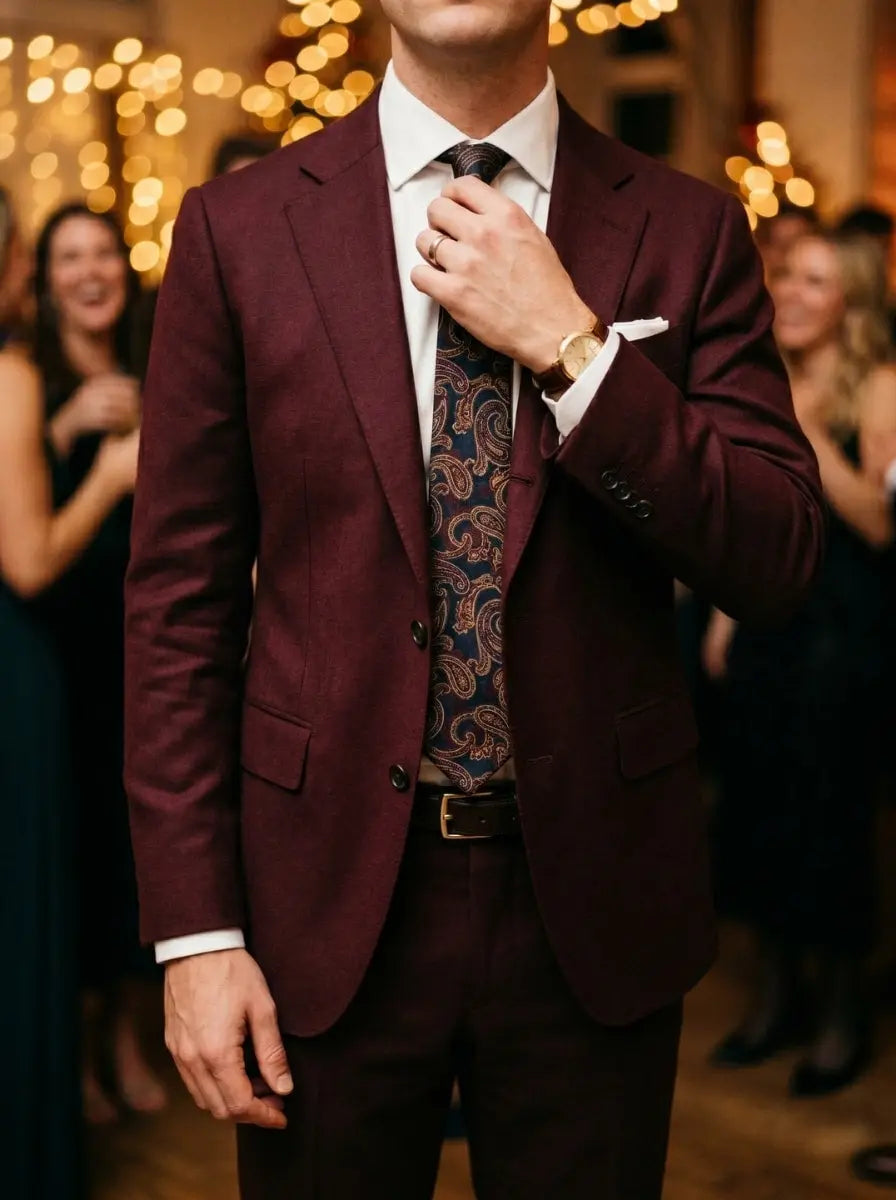
The biggest decisions in festive dressing come down to color and fabric. This is where you signal the occasion. Rich, warm tones and tactile fabrics like velvet or flannel read as celebratory, while a flat charcoal worsted reads as Tuesday at the office. The goal is to look intentional, like you dressed for the party rather than wandered in from a meeting.
Understanding Creative Black Tie
Creative black tie takes the formal black-tie framework and gives you permission to add personal flair. Where a classic black-tie invitation expects a black tuxedo, white shirt, and black bow tie with very little room to deviate, creative black tie invites you to bring color, texture, and individuality to the formula while keeping the overall silhouette sharp and formal.
Think of it as the dress code for fashion-forward galas, arts and media events, and modern weddings where the host wants the room to look both elegant and expressive. You are still building around tuxedos and formal tailoring, but you can swap a black jacket for a deep jewel-tone one, choose a patterned bow tie, or introduce a velvet texture that catches the light.
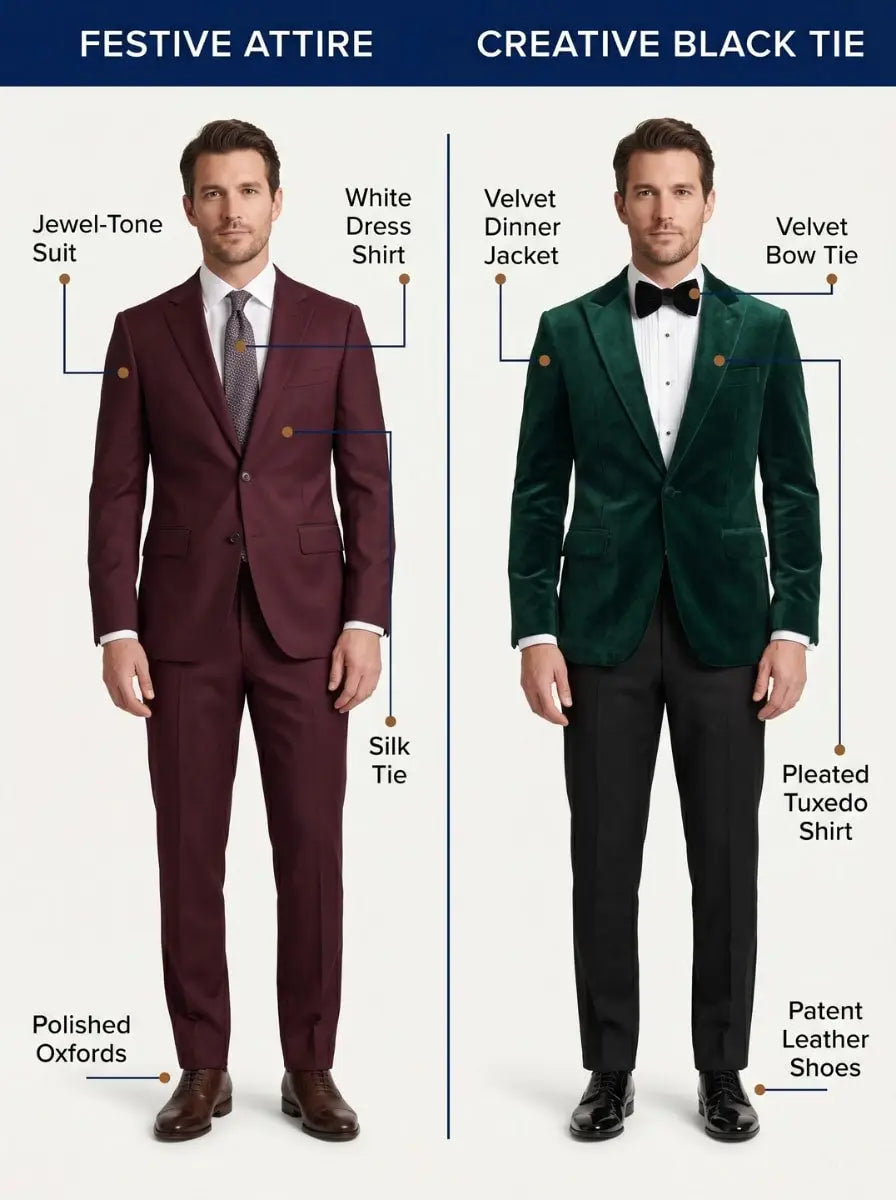
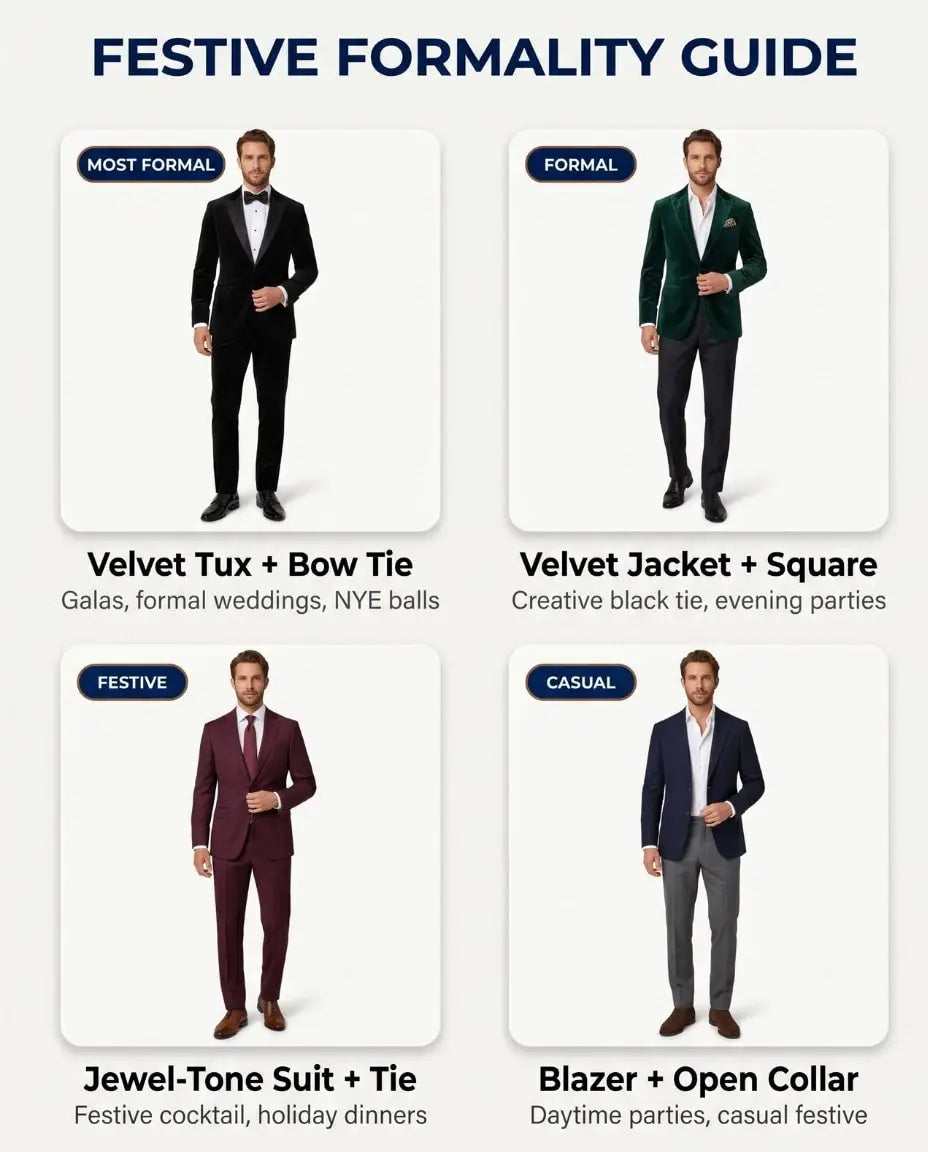
The line between festive attire and creative black tie can blur, and the two often overlap in practice. The simplest way to tell them apart is formality. Festive attire is rooted in cocktail dressing, so a sharp suit works perfectly. Creative black tie sits one notch up, closer to formal, so you want to anchor the look in tuxedo territory even when you are adding expressive elements. When in doubt, the time of day and venue tell you which direction to lean.
Choosing Colors & Fabrics
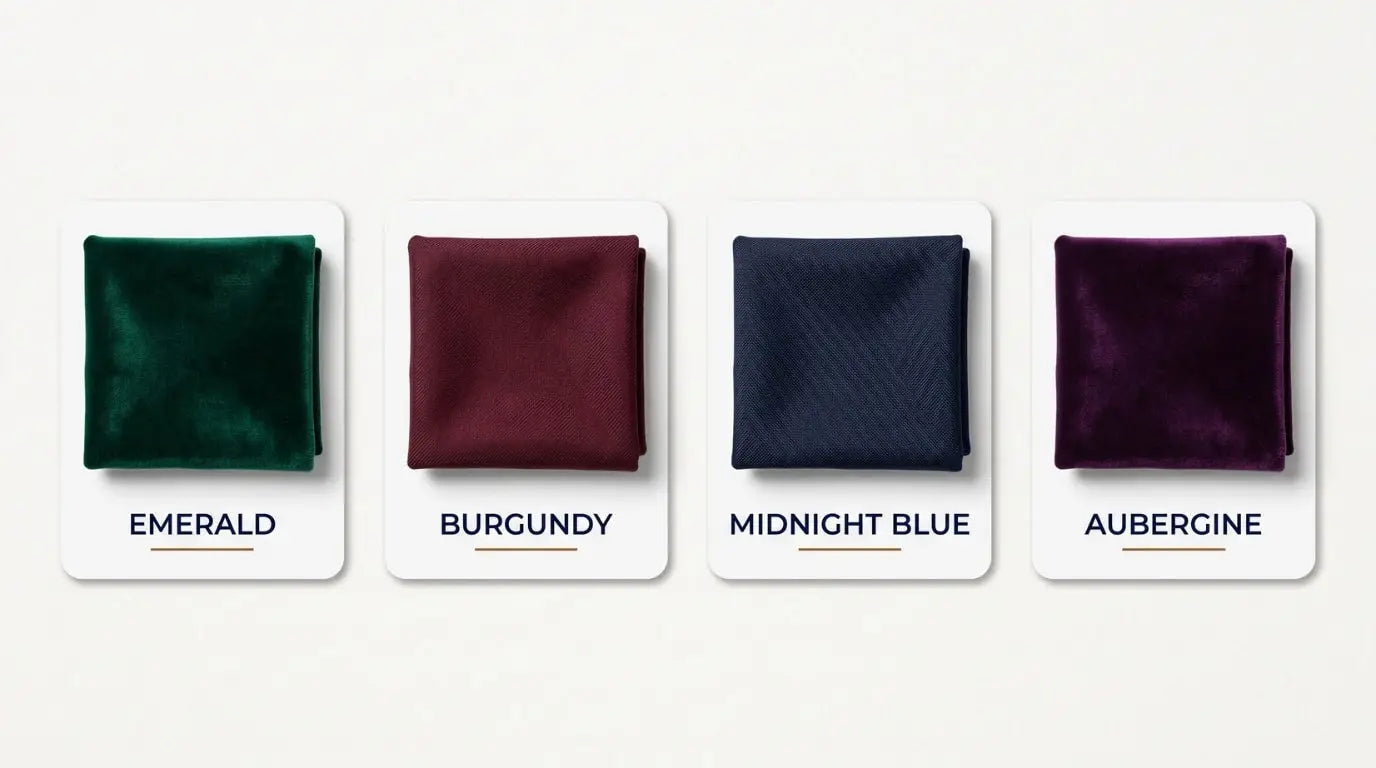
Color is the single most important choice in both festive attire and creative black tie. Rich jewel tones do the heavy lifting here. Emerald green, deep burgundy, sapphire, and aubergine all feel celebratory and luxurious without being loud. They photograph beautifully in low evening light and pair naturally with the metallic accents that come with the territory.
There is a long-running debate about classic holiday red and green. They are undeniably on-brand for December celebrations, but worn together they can tip into costume territory fast. The safer approach is to pick one of them as your dominant color and let everything else stay neutral, or to choose a more sophisticated cousin of the shade, such as oxblood instead of bright red, or forest instead of kelly green.
Fabric Sets the Tone
Fabric carries as much weight as color. Velvet is the signature festive material for good reason. A velvet dinner jacket in emerald, burgundy, or midnight blue instantly communicates occasion, and it sits perfectly in the creative black-tie space. Flannel, brushed wool, and textured weaves like hopsack add depth for daytime or less formal festive events.
For warmer climates or summer celebrations, lighter materials keep you comfortable while still looking sharp. Fine tropical wool and breathable weaves hold their shape in the heat. Whatever the season, the rule holds: texture and richness signal celebration, while flat, thin fabrics signal the everyday.
← Scroll horizontally to see full comparison →
| Fabric | Best Season | Formality | Festive Strength |
|---|---|---|---|
| Velvet | Fall and winter | Creative black tie | Very high; the signature festive fabric |
| Flannel | Fall and winter | Festive cocktail | Moderate; warm and textured for daytime |
| Worsted Wool | Year-round | Festive to formal | Low alone; relies on color and accessories |
| Tropical Wool | Spring and summer | Festive cocktail | Moderate; keeps warm-weather looks sharp |
| Silk Blend | Year-round evening | Creative black tie | High; subtle sheen catches evening light |
Suit & Tuxedo Options for Festive Events
Your choice between a suit and a tuxedo depends entirely on how the invitation reads. Festive attire happily accepts a well-tailored suit, while creative black tie pulls you toward tuxedo territory. Knowing the difference between the two helps you decide where to invest.
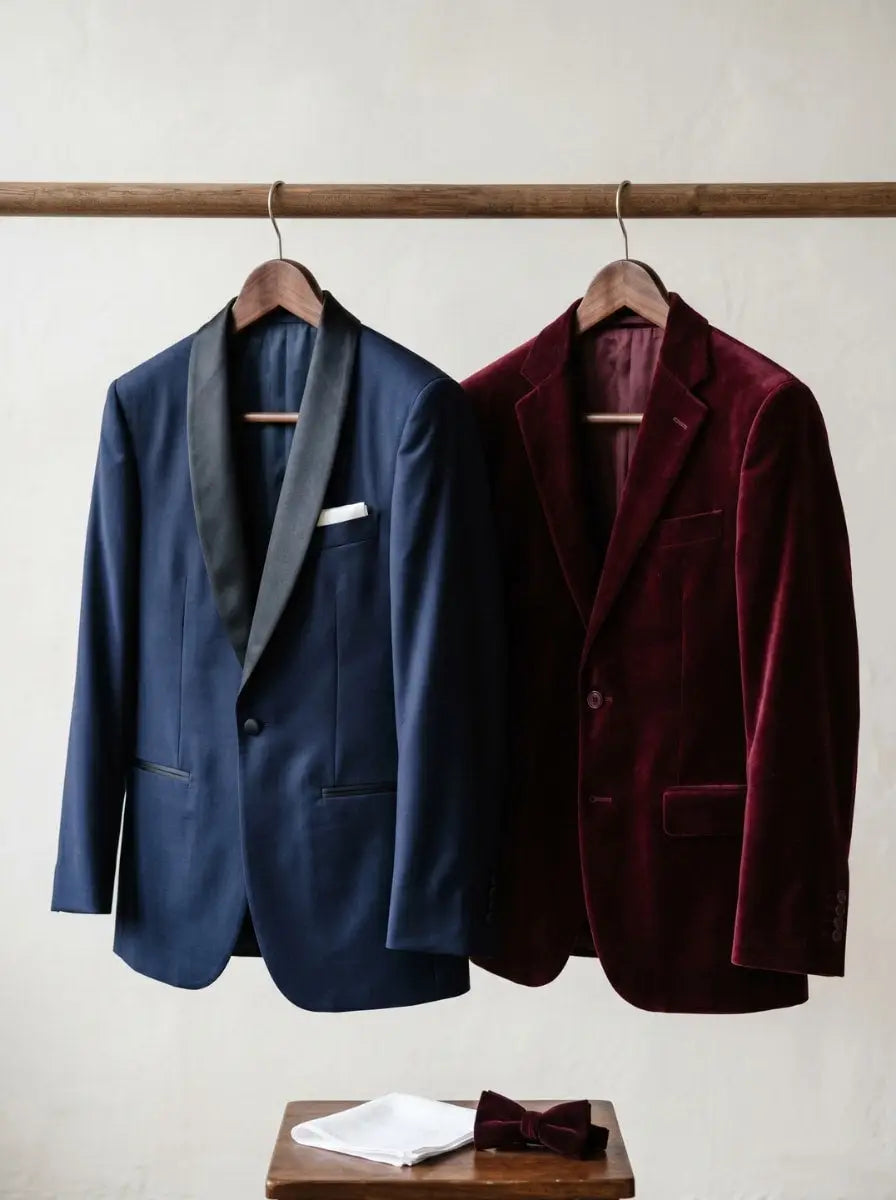
The defining feature of a tuxedo is satin: you will find it on the lapels, the buttons, and the side seam of the trousers. A suit has none of these details, which makes it more flexible and easier to wear across different occasions. For festive cocktail events, a colored or textured suit is often the smarter, more versatile pick.
The Festive Suit Approach
For most festive holiday parties and celebrations, a sharp suit is all you need. Reach for one of our suits in a jewel tone or a richly textured fabric, pair it with one of our crisp white or subtly patterned dress shirts, and finish with a tie that ties the look together. This route gives you a piece you can wear well beyond the holidays, which makes it the practical choice for most occasions.
The Creative Black-Tie Approach
When the invitation calls for creative black tie, anchor the look in a tuxedo and introduce your personality through color or fabric. A deep-plum or emerald velvet dinner jacket worn with a crisp white shirt is a reliable formula that reads as both formal and individual. For the most polished result, pair it with one of our pleated tuxedo shirts, and keep the trousers and shoes classic so your statement piece does the talking.
The Versatile Middle Ground
A velvet or jewel-tone blazer worn over dark trousers bridges the two dress codes neatly. It carries enough texture and color for a festive event while staying refined enough for creative black tie. This is the most flexible single piece you can own for the celebration season, since it dresses up or down depending on what you pair with it.
Accessorizing: Ties, Pocket Squares & Cufflinks
Accessories are where festive and creative black-tie looks come alive. They let you adjust formality and add personality without rethinking the whole outfit. The smart approach is to choose one accent to lead and keep the rest quiet so the look stays cohesive rather than busy.
Ties and Bow Ties
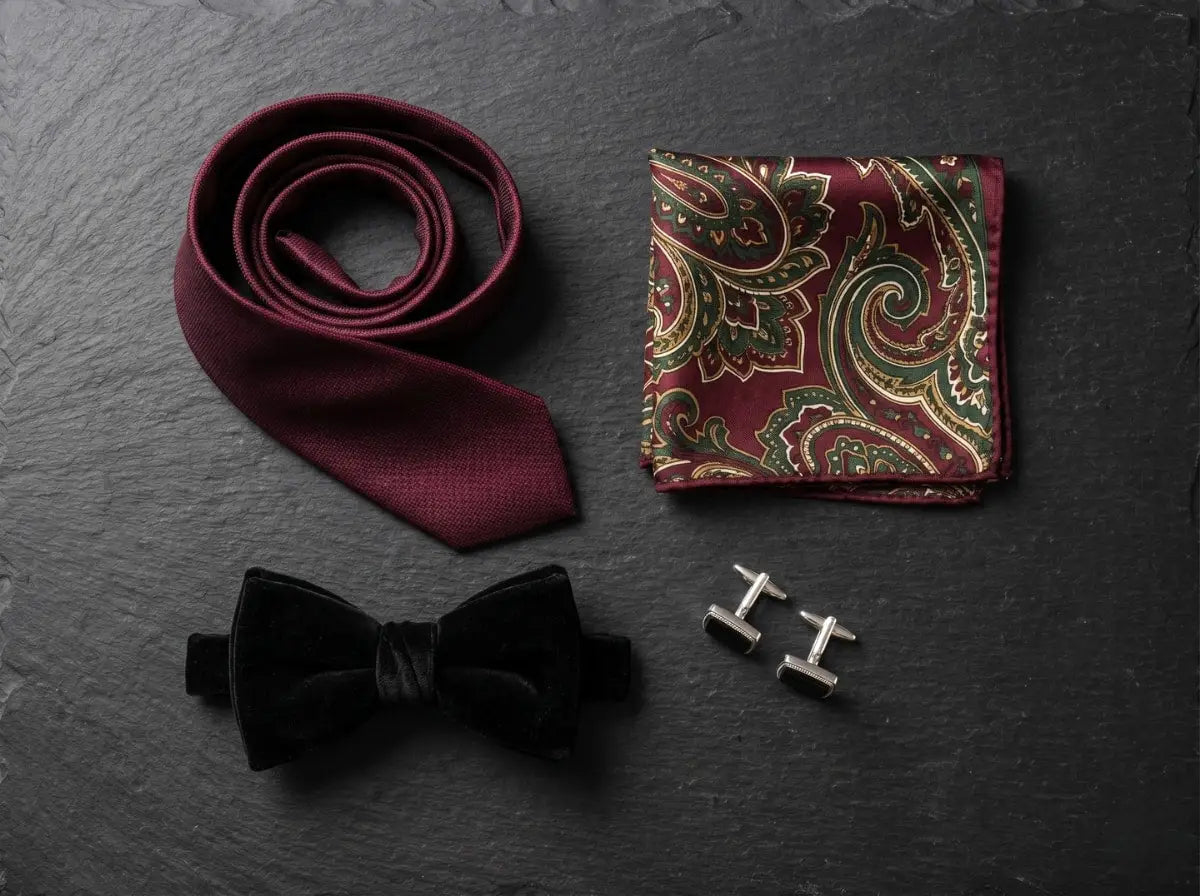
For festive attire, a silk tie in a deep color or a subtle seasonal pattern works well with a suit. For creative black tie, a bow tie keeps you closer to formal, and a velvet or patterned bow tie adds the individuality the dress code invites. Whichever you choose, the texture and color of your neckwear should feel deliberate, not loud. A grenadine or knit tie reads as relaxed and festive, while a satin bow tie pushes the look toward formal.
Pocket Squares
The pocket square is the easiest way to introduce festive color. Traditionally a crisp white square in the breast pocket signals formality, but festive and creative dress codes welcome more expression. Pick a square that complements your tie without matching it exactly, since an exact match looks packaged rather than considered. A burgundy or emerald square against a dark jacket adds warmth and ties the palette together.
Cufflinks and Finishing Details
Cufflinks are a quiet luxury that rewards attention to detail, especially with a French-cuff shirt. For festive looks, a metallic or stone-set pair adds a touch of shine that suits the season. Coordinate your metals across the outfit: cufflinks, watch, and any other hardware should sit in the same family, whether that is silver, gold, or gunmetal. Keep watches understated, since chunky or sporty pieces clash with the formality of these events.
Footwear for Festive & Creative Black Tie
Footwear anchors the whole look, and the right shoe keeps a celebratory outfit from drifting too casual. The general rule is simple: the dressier the event, the sleeker and shinier the shoe.
For creative black tie, black patent leather shoes are the timeless standard. Their high shine matches the formality of a tuxedo and never looks out of place. If you want a touch of personality, a deep oxblood patent or a polished velvet slipper in black or burgundy works beautifully and stays within the spirit of the dress code.
For festive cocktail attire built around a suit, you have more room. A pair of well-polished black or dark brown oxfords or a clean monk strap keeps the look sharp without demanding patent leather. Whatever you choose, the shoe color should complement the suit rather than fight it, and the leather should be polished enough to catch a little light. Pair everything with solid, over-the-calf dress socks so no skin shows when you sit.
Seasonal Considerations (Holidays, Weddings)
Both dress codes flex with the calendar, and adjusting for the season is one of the easiest ways to look like you know what you are doing. The same emerald jacket that looks rich at a December gala can feel heavy at a July rooftop wedding, so plan around the weather and the light.
Fall and Winter Celebrations
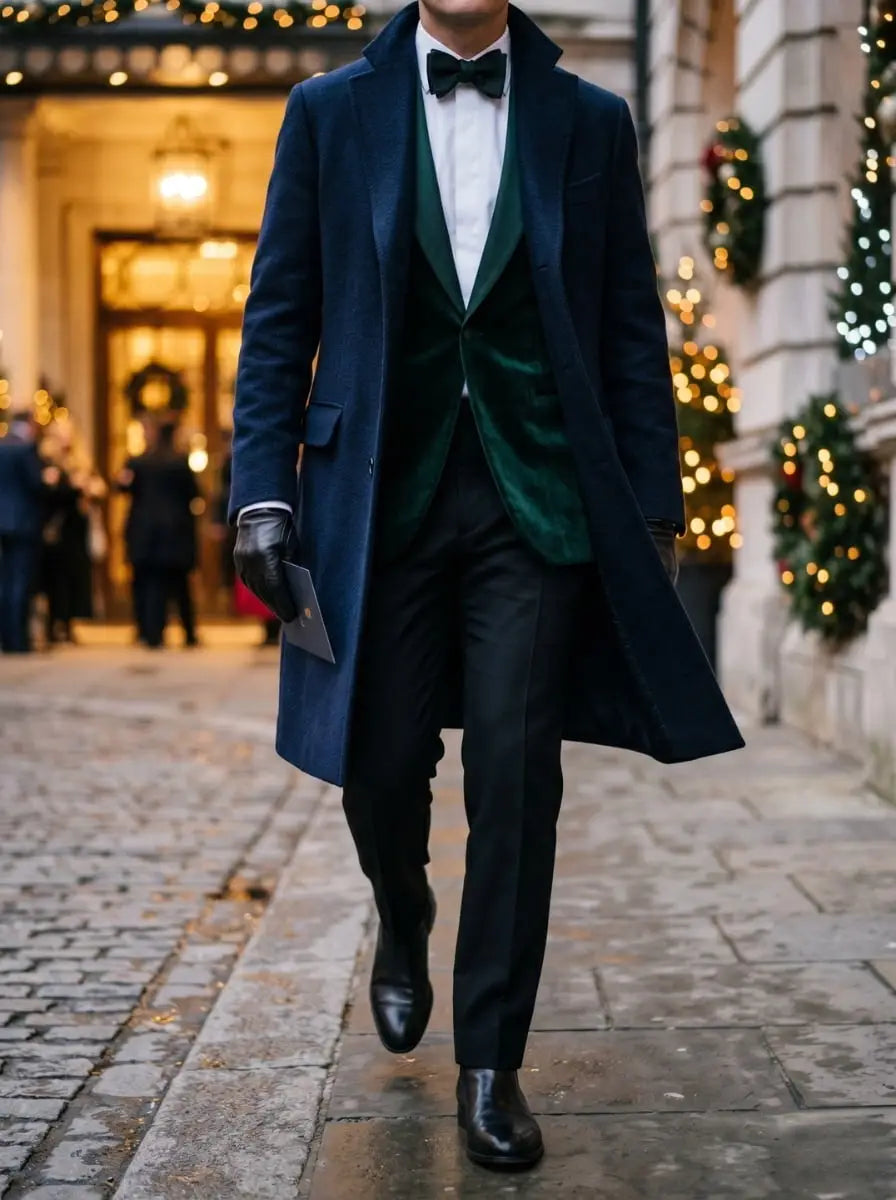
This is peak festive territory. Heavier fabrics like velvet, flannel, and brushed wool give you warmth and a depth of texture that photographs beautifully in low evening light. Deep jewel tones come into their own here, and a velvet dinner jacket feels right at home at holiday parties, winter weddings, and New Year's Eve events. Layer with a wool or cashmere overcoat in black, midnight blue, or charcoal, making sure it falls long enough to cover your jacket hem.
Spring and Summer Events
Warm-weather festive events call for a lighter touch. Switch to breathable tropical wool and fine weaves that hold their shape in the heat. You can lean into slightly brighter or softer colors that suit outdoor light, such as a lighter blue or a muted, sophisticated pastel, while keeping the silhouette sharp. For summer creative black tie at a destination or beach setting, a white or ivory dinner jacket reads as a confident, fashion-forward choice when the rest of the outfit stays classic.
Festive and Creative Black-Tie Weddings
Weddings are where these dress codes appear most often. A creative black-tie wedding invites you to bring color and texture while staying formal, so a jewel-tone tuxedo or velvet jacket is ideal. For a festive wedding, a sharp suit in a seasonal color does the job. The one constant across both: your outfit should feel celebratory and respectful of the couple's day, never so loud that it competes with the wedding party.
Build Your Festive Look
Explore our collection of suits, tuxedos, and dress shirts to put together a festive or creative black-tie outfit that stands out for the right reasons.
Shop Suits & TuxedosCan you wear a colored tuxedo?
Yes, and a colored tuxedo is one of the strongest moves for creative black tie. Deep jewel tones like emerald, burgundy, midnight blue, and aubergine keep the formality of a tuxedo while adding the personal flair the dress code invites. Velvet versions of these colors work especially well in evening light. The key is balance: when the jacket is bold, keep the shirt crisp white, the trousers and shoes classic, and the accessories restrained. A colored tuxedo is best reserved for creative black-tie events, festive galas, and modern weddings rather than traditional black-tie occasions, which still expect black or midnight blue.
Is creative black tie appropriate for business events?
Creative black tie is rarely the right call for standard business events, which usually follow business formal or business casual codes. It can suit certain corporate occasions, such as an evening awards gala, a holiday company party, or an industry event in a creative field like fashion, media, or design, where individuality is welcomed. For these, a jewel-tone or velvet jacket with a crisp shirt works well. For ordinary office settings, daytime meetings, or conservative industries like finance and law, a classic dark suit is the safer choice. When unsure, lean toward the more conservative end and let your accessories carry any personality.
Do you need to match your partner's outfit?
You do not need to match your partner's outfit exactly, and a head-to-toe match can actually look overdone. The goal is coordination rather than matching. Aim for outfits that share a level of formality and a complementary color story so you read as a cohesive pair in photographs. For example, if your partner is wearing a deep emerald dress, an emerald pocket square or tie nods to it without copying it. Agree in advance on the overall palette and formality, then let each outfit stand on its own. This approach looks more intentional and lets both of you feel like yourselves.