


14 min read


Contents
What You Will Actually Pay for a Tuxedo That Looks Great
Here is what matters most when money meets style.
- A serviceable tuxedo does not have to cost four figures. Quality entry-level tuxedos that look sharp in person and on camera begin around $199.90, often the same price as a weekend rental.
- Tailoring changes everything. Budget an extra $30 to $80 for hemming trousers and adjusting sleeves. Even a $200 tuxedo can look bespoke with the right alterations, while an untailored $800 one never will.
- Renting three times often costs more than owning. If you will attend even two formal events in the next few years, buying from the start usually saves you hundreds.
- Fabric tells the real story. Wool and wool-blend tuxedos hold their shape, resist wrinkles, and breathe better than cheap polyester. Even at lower price points, check the blend.
- Fit is more visible than price. A tux that sits cleanly on your shoulders and drapes without pulling, whether Slim, Regular, Dynamic, or Comfort, reads as expensive no matter what you paid.
- Store policies protect your wallet. Look for clear return and exchange terms, especially online. A bargain that cannot be returned becomes an expensive mistake.
- Black and midnight blue never age. Trendy colors or skinny cuts date your photos; a classic lapel and timeless silhouette stay relevant for decades.
If you are a prom-goer, a wedding guest or groomsman, a job seeker facing a formal dinner, or anyone who needs a black-tie look without the rental counter regret, this page was written for your situation. For the wider view of fit, fabric, and occasion behind these numbers, our Complete Tuxedo Buying Guide for Men walks through it. By the time you finish reading, you will know exactly what to spend, and what not to.
Why Getting the Tuxedo Price Right Matters More Than You Think
Spend too little and you risk a shiny, ill-fitting jacket that betrays every photo. Spend too much without understanding what you are paying for, and you might still end up with something that does not fit your life. The price you choose is not just a number. It either builds a long-term wardrobe asset or becomes a one-night regret.
- You rent a tux for prom, then again for a cousin's wedding, then for a gala. Three rentals can easily total $600 or more. For that money you could own a well-made tuxedo starting at $199.90, fitted after tailoring, and ready for every future invitation without another rental fee.
- You buy the cheapest online deal without checking the fabric, and it turns out to be stiff, shiny polyester that wrinkles in the car. Even at lower prices, look for poly-wool blends or a fabric that drapes and moves. A little research keeps you from looking like your tux came with a plastic wrapper.
- You assume a $700 tuxedo must be great, but the construction is glued, not canvassed, and the lapels ripple after one wear. Price does not guarantee quality; at the $200 to $500 range you can find half-canvassed or well-fused construction if you shop where margins are leaner.
- You skip tailoring because you already spent enough, and the sleeves bunch and the trousers pool at your shoes. A tailored $200 tux looks more expensive than a boxy $600 tux. Always factor alterations into the true cost.
- You buy a trendy cut for a wedding, and five years later you cannot wear it again without looking dated. Stick with classic lapels, a moderate silhouette, and black or midnight blue. Your tux becomes repeat-wear armor, not a time capsule.
- You measure the cost by the first event only, forgetting that owning eliminates future rental panic and last-minute fitting stress. That peace of mind is part of the value.
- You do not check the store's fit range, so you end up with a cut that does not match your build. Having Slim, Regular, Dynamic, and Comfort Fit options means you find the silhouette that flatters you rather than forcing your body into the only shape on the rack.
When you treat the purchase like a small investment that pays itself back in confidence and reuse, the numbers suddenly make sense. This is not about spending more; it is about spending exactly where it counts.
How to Choose a Tuxedo That Delivers Maximum Value for Your Money
It is easy to freeze when you see dozens of price points, cuts, and fabric names. But breaking the decision into concrete steps turns overwhelm into a clear plan.
Step 1: Decide How Often You Will Wear It
Be honest. Will you attend one prom and maybe a wedding next year? That is already two uses. If there is any chance you will need a tux again, buying almost always beats renting. A tuxedo that costs $199.90 and fits after a quick hem becomes yours forever.
Step 2: Set a Real Budget That Includes Alterations
Tell yourself the total you are willing to spend, tuxedo plus tailoring. A solid entry point where fabric, cut, and construction come together is around $199.90 to $300, plus about $30 to $80 for basic trouser hem and sleeve adjustment. Write down that combined number and shop within it.
Step 3: Understand Fabric at Your Price Point
Fabric is where cheap tuxedos reveal themselves. At the lower end, around $199 to $300, look for a poly-wool blend that resists wrinkles and breathes. Moving up, $400 to $700, you will find higher wool content and possibly half-canvassed construction. Do not obsess over thread count; pay attention to how the fabric feels and drapes when you move.
Step 4: Choose the Right Fit for Your Body
Your build dictates which cut will make you look and feel best. Try at least two of these four.
- Slim Fit: tapered through the chest and waist, narrower sleeves. Works well for lean or athletic frames that want a modern outline.
- Regular Fit: a classic, straight cut that skims the body without clinging. Forgiving and timeless.
- Dynamic Fit: some stretch and a shape that bridges Slim and Regular. Room to move with a tailored look.
- Comfort Fit: the most room in the chest, waist, and sleeves. Great for stockier builds or anyone who hates pulling when they sit or dance.
Quick check: raise your arms to shoulder height, button the jacket, and turn to the side. If you feel excessive tightness or the jacket pulls open, try the next more generous fit.
Step 5: Pick a Lapel Style That Matches the Occasion
Shawl lapels, the rounded continuous collar, are classic for black-tie events and prom. Peak lapels add stature and work beautifully for weddings and galas. Notch lapels are traditionally for suits; avoid them on a tuxedo unless you are intentionally going for a less formal look. When in doubt, a shawl or peak in black silk is always safe.
Step 6: Check the Construction Clues
At every price, look for details that signal care. Working sleeve buttons, or non-functional ones that can be moved, let you adjust sleeve length more easily. A lining that hangs smoothly indicates better assembly. A fused tux feels stiffer; a half-canvassed one has a floating layer that moves with you. Even at $199.90, expect clean stitching and a lining that does not look like a plastic bag.
Step 7: Always Budget for Tailoring
No tuxedo fits perfectly off the rack. Factor in hemming the trousers to a slight break, taking in or letting out the jacket waist, and shortening sleeves to show a quarter-inch of shirt cuff. This small spend turns a good tux into a great one. Some stores offer in-house alterations; ask before you buy.
Step 8: Know Where to Find Rental-Rate Ownership
Not every seller operates with the same markup. Brands that cut out the middleman, like SAYKI, which prices tuxedos from $199.90, the same as many U.S. rental services, give you the chance to own a classic formal piece without paying a premium. Compare the all-in cost against two future rental fees. That math rarely favors renting.
$199.90
Quality entry tuxedo
$30–80
Tailoring, the cheapest upgrade
$400–700
Higher wool, half-canvas
$600+
Three rentals over a few years
With these steps, you will walk into any store or open any website already knowing what you need, what you will spend, and what you will look like at the event. That is a rare kind of confidence.
Editor's Picks
A Tuxedo That Looks Expensive Without the Price
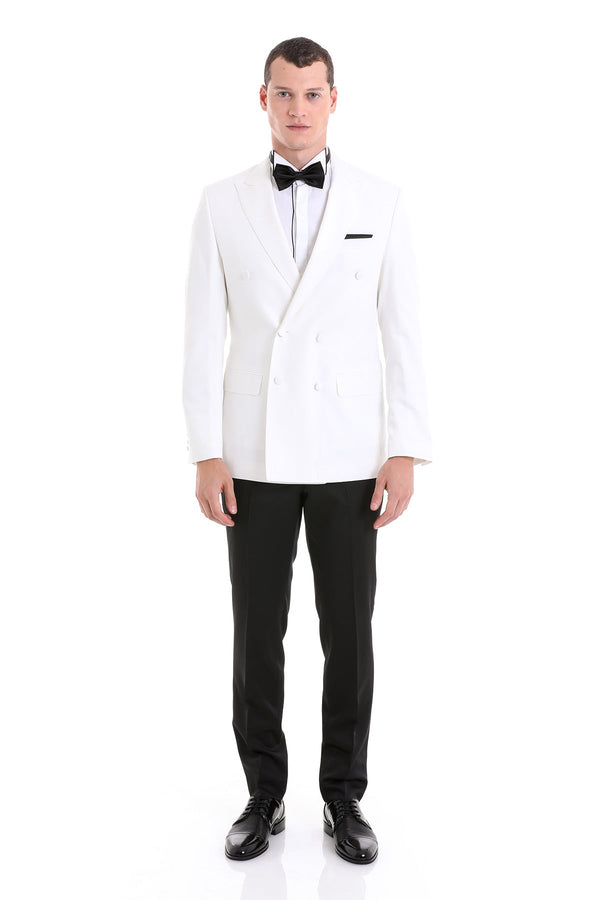
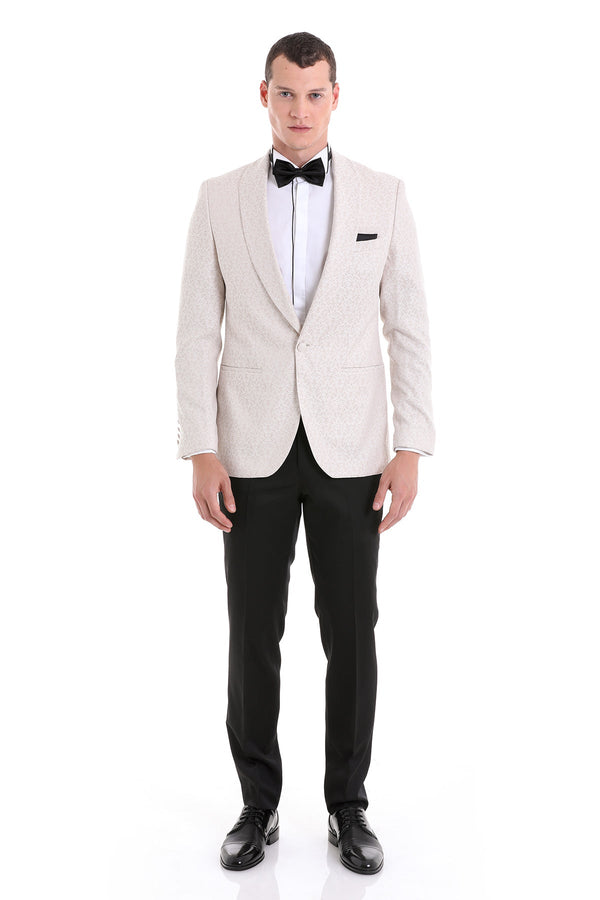
SAYKI tuxedos start at $199.90 in four tailored fits, the same as a single rental, except you keep it.
Shop TuxedosTuxedo Mistakes That Show Up in Photos (and on Your Credit Card)
Even men who dress well most days stumble with tuxedos, because formalwear comes with its own rulebook. The good news: every misstep here is avoidable once you know what to look for.
- Buying without trying on multiple fits. You might assume you are a Regular Fit, but a Dynamic Fit could give you a sharper silhouette without sacrificing comfort. Pull two cuts from the rack and compare in a mirror.
- Forgetting that alterations are not optional. A tux that fits okay out of the box will always look like it came out of a box. Spend the extra $40 to hem trousers and adjust sleeves.
- Choosing a skinny, trend-driven cut for a wedding you will see in pictures decades later. Stick with a moderate silhouette and a classic black or midnight blue.
- Assuming a higher price means higher quality, then finding glued seams and thin lining. Flip the jacket inside out. Look for neat stitching, a comfortable lining, and substantial fabric. A $300 tuxedo can outperform a $600 one.
- Renting every single time without doing the math. Two rentals can already exceed a $199.90 purchase price. If you suspect even a second formal event, buying saves money.
- Wearing a tuxedo with the wrong shirt or shoes. Pair a spread or wing collar tuxedo shirt with the jacket and use black patent or polished leather oxfords. Small mismatches distract from a sharp outfit.
- Buying online on impulse without checking the return policy. Tuxedo sizing varies; make sure you can exchange or return before the event.
- Ignoring the season. A heavy wool tux at a summer outdoor wedding, or a paper-thin blend in a winter ballroom, both work against you. Choose a mid-weight wool or poly-wool that works year-round.
Every one of these can turn into a story you laugh about later, but get them right and you will simply enjoy the evening, knowing you look exactly as you hoped.
How to Keep Your Tuxedo Sharp for Every Black-Tie Invitation
Once you have found a tuxedo you trust, treat it like an ally. The care you give it today determines how it looks at the next wedding, prom, or formal dinner.
- Hang it on a broad, contoured wooden hanger immediately after wear. Wire hangers warp the shoulders. A 17-inch wooden hanger helps the jacket keep its shape and lets creases fall out.
- Dry clean as seldom as possible, once or twice a season. Excessive dry cleaning breaks down fibers. Spot-clean small marks with a damp cloth and use a steamer to refresh the fabric between events.
- Store in a breathable cotton garment bag, never plastic. Plastic traps moisture and can lead to mildew. A cotton bag lets the wool breathe while keeping dust off.
- Brush the fabric with a soft clothes brush after each wear. It lifts surface dirt, lint, and hair before they settle in, reducing the need for wet cleaning.
- Let the tux rest at least 24 hours after wear before storing. Wool recovers from stretch and body heat overnight. Hang it in a ventilated spot.
- Do not overload the pockets, and empty them afterward. Bulky items pull the jacket out of shape and can permanently stretch the lining.
- Attend to small repairs early. A loose button or snagged lining is a ten-minute fix today that prevents a bigger tailoring headache later.
These habits take only minutes but add years to a tuxedo's life. A well-maintained tux looks like a smart investment every single time you put it on.
Why Tuxedo Shoppers Turn to SAYKI (Since 1924)
If the math already tells you buying beats renting, and you want a tuxedo that feels far more expensive than its price, SAYKI exists to solve that exact equation. We are the U.S. arm of Hatemoğlu, a third-generation family company that has been cutting menswear for over 100 years, which means the value is baked into the pattern, not bolted on with marketing.
Our flagship opened at 375 Madison Avenue, New York, NY 10017, and today we have nine stores across NY, NJ, IL, MD, MA, VA, and PA. Tuxedos start at $199.90, the same price many rental shops charge for a weekend, so you keep the garment you paid for and tailor it to your frame. No return deadline, no late fee.
You will find four fits that reflect real body diversity: Slim, Regular, Dynamic, and Comfort. Our tuxedos use thoughtful fabric blends that photograph well and move comfortably. If you want to think through accessories or a flexible jacket style next, our guides on Cummerbund vs Waistcoat: Tuxedo Accessory Guide and Convertible Tuxedo: What It Is and Why It Matters pick up where this one leaves off. Find the nearest store on our store locator.
Frequently Asked Questions
Is it worth buying a tuxedo instead of renting one?
Yes, in most cases. Renting typically costs $150 to $250 per event. If you attend two or three formal occasions over a few years, you have already spent enough to own a tuxedo that fits you better and is always available. Tuxedos starting at $199.90 give you a polished, tailored look without the recurring rental cost.
How much does a good tuxedo cost at SAYKI?
Our tuxedos start at $199.90, the same tier as many rental services. Despite the accessible price, you get classic styling, wool-blend fabrics, and four fit options to match your build. It is entry-level pricing backed by over 100 years of menswear expertise.
What is the difference between a tuxedo and a suit for prom?
A tuxedo typically has satin or grosgrain lapels, a satin stripe down the trouser leg, and is worn with a formal white shirt and bow tie. A suit lacks satin details and is usually paired with a long tie. For prom, a tuxedo matches the formal black-tie code, while a dark suit can work if the event is less formal.
How should a tuxedo jacket fit properly?
The shoulder seam should end at your shoulder edge without drooping. When buttoned, you should slide a flat hand between your chest and the jacket comfortably. Sleeves should reveal about a quarter to half inch of shirt cuff, and the length should cover your seat but not extend far beyond it. Trouser break should be a slight fold at the front of the shoe.
Is it cheaper to buy or rent a tuxedo for prom?
For a single prom with no future need, renting can be slightly cheaper if you find a deal under $150. But once you factor in a possible wedding or formal event within the next few years, buying a tuxedo at $199.90 becomes more cost-effective. You also avoid last-minute rental shortages and get a garment altered to your body.
What is the difference between Slim Fit and Regular Fit tuxedos?
Slim Fit is cut closer through the chest, waist, and sleeves for a sharper, modern silhouette. Regular Fit offers a straight, classic cut with more room, suiting a broader build or a traditional preference. Neither is better, just different shapes for different bodies. At SAYKI you can also try Dynamic Fit or Comfort Fit.
Does SAYKI have a store in New York?
Yes. Our Manhattan flagship is at 375 Madison Avenue, New York, NY 10017, open Mon to Fri 10AM to 8PM, Sat 11AM to 7PM, and Sun 11AM to 6PM. We also have locations in New Jersey, Illinois, Maryland, Massachusetts, Virginia, and Pennsylvania.