


13 min read


You have a wedding coming up, and whether you are the groom, a groomsman, or a guest, the dress code says black tie or formal, which means you need a tuxedo. Should you rent or buy? What is the right fit? How do you look like yourself and not like you are playing dress-up? This guide walks you through choosing a tuxedo that fits your role, your body, and your budget, without the last-minute panic.
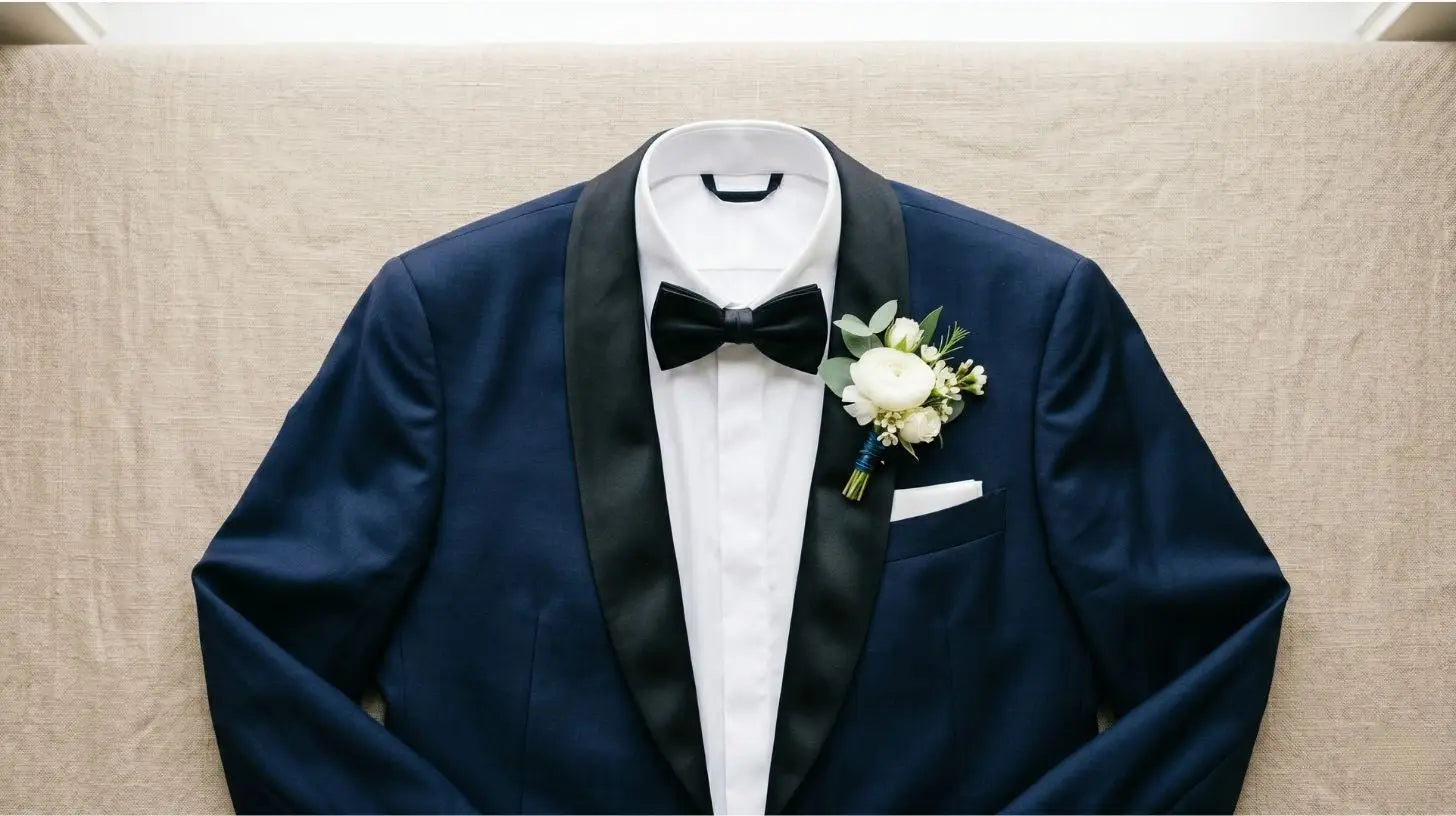
What this guide covers
How to Pick the Perfect Tuxedo for Wedding Season
Wedding dress codes sound more complicated than they are. Here is the short version of what to settle before you shop:
- Know when a tuxedo is required. Black tie invitations mean a tuxedo, not just a dark suit.
- Pick the right fit for your build. Slim Fit, Regular Fit, Dynamic Fit, and Comfort Fit each serve a different shoulder, chest, and waist ratio.
- Choose a lapel style that matches the formality. Peak lapel for most weddings, shawl for black-tie elegance.
- Buy instead of rent if you will wear it again. Owning a tuxedo starts at $199.90, the same price as many U.S. rentals.
- Understand what "creative black tie" really means. Dark velvet, midnight blue, or subtle pattern can be acceptable if the invitation permits.
- Plan for minor alterations. Off-the-rack tuxedos almost always need a sleeve or trouser adjustment to look expensive.
Whether you are a first-time tuxedo shopper, a father of the bride upgrading from a decade-old suit, or a groomsman told to "just match the others," this guide is for you. For the complete framework behind every choice here, our Complete Tuxedo Buying Guide for Men is the place to start.
Why Getting the Tuxedo Right Matters More Than You Think
Showing up to a black-tie wedding in an ill-fitting rental, a mismatched shirt, or a regular suit can make you feel out of place all evening. You will be in family photographs, professional albums, and dozens of phone cameras. A well-chosen tuxedo gives you confidence, comfort, and a look that does not distract from the celebration.
- You are a groomsman and the groom asked for a specific look. Renting can deliver a "close enough" jacket that gaps at the collar. Buying your own ensures the fit is yours alone and avoids the uncomfortable rental polyester.
- You have more than one formal event this year. Spending $150 to $250 to rent twice in a season often exceeds buying a tuxedo from $199.90 that you keep forever.
- The dress code says black tie and you only own navy suits. A tuxedo is the only correct answer. A business suit signals you did not read the invitation carefully.
- Your body type does not match off-the-peg rental sizes. Slim Fit works for lean frames, Dynamic Fit gives athletes room in the shoulders, Regular Fit suits classic builds, and Comfort Fit offers extra ease through the midsection.
- The wedding is outdoors or has an unconventional color scheme. A deep midnight blue tuxedo or velvet jacket might be exactly what the couple wants. Owning lets you tailor the shade, not settle for whatever the rental shop stocks.
- Rental return deadlines cause morning-after stress. When you own the tuxedo, you keep it. No early drop-off, no late fees, no shipping back a box.
Acting now turns what could be a source of anxiety into a straightforward upgrade. You will look like you belong at the event and own a tuxedo that pays for itself after two wears.
How to Choose a Wedding Tuxedo Step by Step
When you have not shopped for formalwear in years, lapel types and trouser breaks can blur together. This sequence takes you from invitation to final fitting with clear decisions at each stage.
Step 1: Read the Invitation for the Exact Dress Code
Check whether the couple specified "black tie," "black tie optional," "creative black tie," or "formal." The wording sets your guardrails.
"Black tie"
A classic tuxedo is expected, full stop.
"Black tie optional"
Your choice, but wearing a tuxedo is never wrong.
"Creative black tie"
Midnight blue, velvet, or a statement bow tie are welcome.
"Formal"
A dark suit may pass, but confirm with the wedding party.
Step 2: Decide Between a Tuxedo and a Dark Suit
A tuxedo is defined by satin or grosgrain lapel facings, a satin stripe down the trouser, and traditionally a bow tie. A black or midnight blue suit lacks those details and is less formal. For most weddings where you are a groomsman or the groom, the couple will explicitly require a tuxedo. As a guest, default to a tuxedo for any black-tie event.
Step 3: Pick the Tuxedo Fit That Matches Your Body
- Slim Fit: narrower through the chest, waist, and sleeves with a shorter jacket length. Best if you are lean or prefer a modern silhouette.
- Regular Fit: a classic cut that skims the body without clinging. Works for most average builds and stays timeless.
- Dynamic Fit: extra room across the shoulders and upper arms with a tapered waist. Built for athletic or broader upper bodies.
- Comfort Fit: generous through the chest, waist, and seat. Ideal if you prioritize ease of movement.
Quick check: can you comfortably cross your arms in the jacket, and do the shoulders end exactly at your shoulder bone? If yes, you are in the right ballpark.
Step 4: Choose the Lapel Style and Jacket Silhouette
Peak lapels point upward and look sharper, working for any body type, which makes them the safest choice for weddings. Shawl lapels have a continuous rounded edge for a sleek, dinner-jacket look that is slightly dressier and often favored for black tie. Stick with a single-breasted, one-button jacket unless you are experienced with formalwear.
Step 5: Lock In the Tuxedo Shirt and Accessories
Plan for a white or ivory dress shirt with a wingtip or turndown collar. Choose a black bow tie you tie yourself, since pre-tied looks stiff. A cummerbund or waistcoat adds polish and hides the trouser waistband. For creative black tie, a deep burgundy velvet bow tie or midnight blue cummerbund adds subtle personality. A crisp white or ivory option from our tuxedo shirts keeps the front clean.
Step 6: Get the Trousers Right
Tuxedo trousers should have a satin stripe down the side seam and sit at your natural waist, not low on the hips. The hem should just graze the top of your shoe with a slight break. Flat-front trousers give a clean, modern line, while pleated fronts offer more room for sitting and dancing. Check that the length does not puddle in your dress shoes.
Step 7: Own It Instead of Renting It
Renting a tuxedo often costs $150 to $250 for a weekend and you return it with nothing to show. A high-quality classic tuxedo from SAYKI starts at $199.90, the same price as many U.S. rentals. After a single wear you have broken even, and after a second event you are saving money. Choose classic styling and the tuxedo will serve you for a decade.
Step 8: Try On and Adjust Before the Wedding Week
Do not wait until the week before. Visit a store or order at least three weeks ahead so a tailor can adjust sleeve length, trouser hem, and waist suppression. Even a $199.90 tuxedo looks custom when the sleeves show a quarter-inch of cuff and the jacket hugs your shoulders without pulling.
With these steps behind you, the tuxedo is no longer a mystery. It is a series of small, manageable choices that add up to a look you will be proud to wear.
Editor's Picks
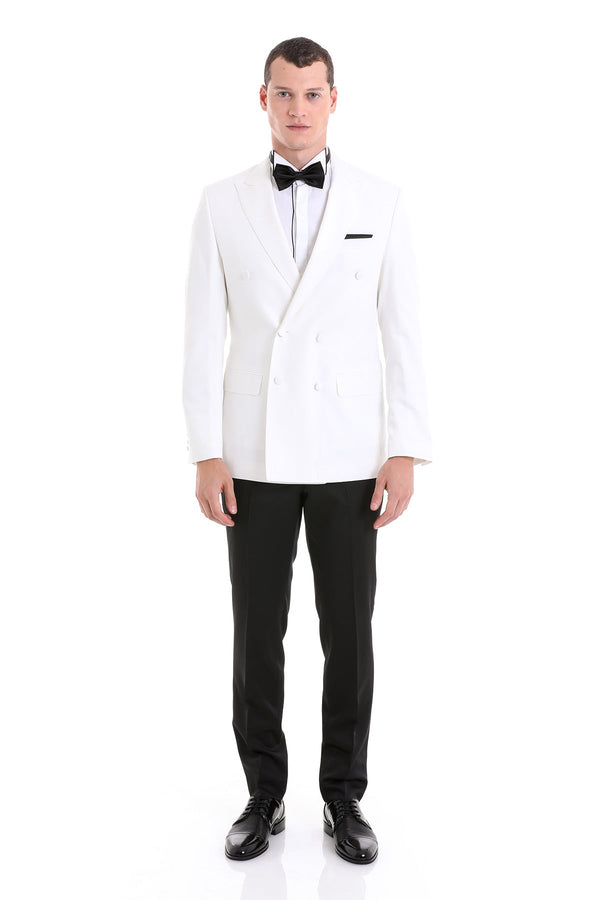
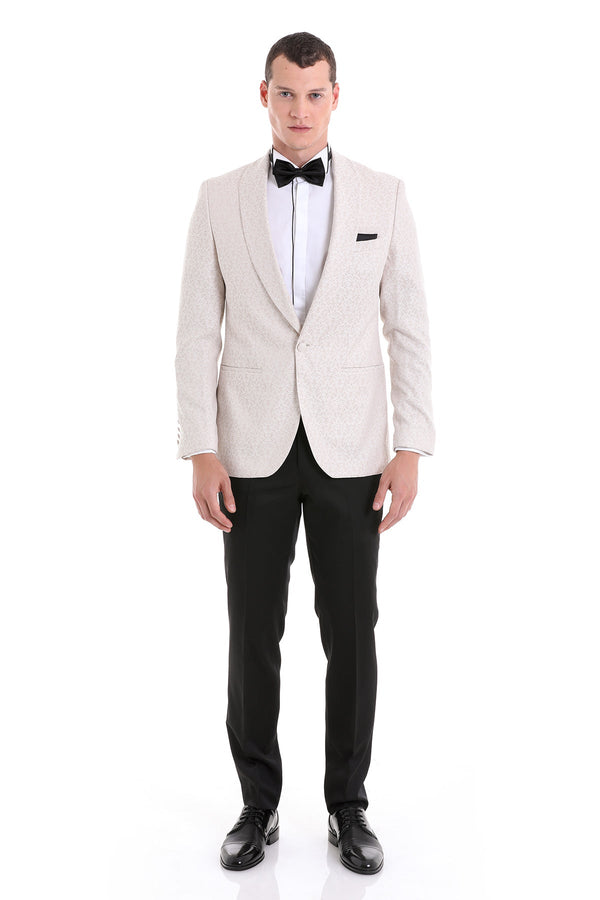
Own Your Wedding Tuxedo
Classic tuxedos in four fits, starting at $199.90, the same as a weekend rental. Tailor it and keep it.
Shop Wedding TuxedosTuxedo Mistakes That Stand Out at Every Wedding
Even well-intentioned shoppers make missteps that show up painfully in wedding photos. These are the most common pitfalls and exactly how to sidestep them.
- Wearing a black suit instead of a tuxedo. A suit lacks satin lapels, satin trouser stripes, and the formal details that signal you understood the dress code. Always check for satin facing on the lapels.
- Choosing a notch lapel tuxedo. Notch lapels belong on suits. A peak or shawl lapel is correct. If you see a notch lapel on a "tuxedo," treat it as a very dark suit.
- Forgetting that trouser length matters in dancing shoes. The higher-waisted cut can puddle when you stand in thin-soled patent shoes. Always try on the entire outfit with the shoes you will wear.
- Wearing a pre-tied bow tie with a polyester shine. A self-tie black bow tie in silk or matte micro-fiber looks more authentic. Take ten minutes to learn to tie it.
- Mixing brown shoes with a black tuxedo. Black patent leather oxfords or polished black calfskin are the only correct choices. Brown or tan breaks the formality instantly.
- Ignoring the shirt cuff. A French cuff that shows beneath the jacket sleeve is a formal statement. Button-cuff shirts feel like office wear.
- Skipping a waist covering. A cummerbund or waistcoat bridges the gap between trousers and jacket. Leaving the shirt exposed looks incomplete.
Seeing these as avoidable choices, not mysterious rules, means you walk into any venue with quiet confidence. If the wedding leans strict evening formality, our guide on How to Choose a Tuxedo for Black Tie covers the details that separate a true black-tie look from a dark suit.
How to Keep Your Wedding Tuxedo Looking Sharp for Years
Once you have invested in a tuxedo, a little care protects how it drapes and how the fabric ages, so it is ready for the next invitation without a rush.
- Hang it on a broad, contoured wooden hanger. A thin wire hanger distorts the shoulder pads. A shaped hanger preserves structure and lets the jacket breathe.
- Brush the wool after each wear. A soft garment brush removes surface dust and keeps the nap from going flat, which alone reduces dry cleaning frequency.
- Limit dry cleaning to once a season, or after visible stains. Over-cleaning weakens wool and fades the satin lapel. Spot-clean small marks and steam between wears.
- Store it in a breathable garment bag, not plastic. Plastic traps moisture and can yellow the lapel trim. A cloth bag allows air circulation while keeping moths out.
- Steam, do not iron. A handheld steamer relaxes wrinkles without the shine a hot iron creates on satin edging.
- Repair loose satin trim immediately. If the trouser stripe or lapel facing begins to lift, a quick stitch prevents a small flaw from becoming a visible tear.
That small effort means next year, when another invitation lands, you pull the tuxedo from the closet and it still looks like you bought it for the occasion. If a younger family member has prom on the horizon, our guide on How to Choose a Prom Tuxedo Without the Stress walks through fit and styling for that night.
Where to Find a Classic Tuxedo Without the Rental Price
You want a tuxedo that fits like it was made for you, uses real wool, and does not cost more than renting. That is the gap SAYKI fills. As the U.S. arm of Hatemoğlu, a third-generation family company founded in 1924, we have been making suits and tuxedos for over 100 years. Our Manhattan flagship at 375 Madison Avenue, New York, NY 10017 and eight other stores across New York, New Jersey, Illinois, Maryland, Massachusetts, Virginia, and Pennsylvania carry a full range of tuxedos starting at $199.90.
Every tuxedo comes in the four fits you actually need, Slim, Regular, Dynamic, and Comfort, so the jacket hugs where it should and allows movement where you want it. That price point means you can own a wool-blend tuxedo with satin peak or shawl lapels for what a national rental chain charges for a three-day loan. Walk in during the week, try on multiple fits, and leave with a tuxedo that is yours. Find the nearest store in our store directory.
Frequently Asked Questions
What is the difference between a tuxedo and a suit for a wedding?
A tuxedo has satin or grosgrain lapel facings, a satin stripe along the trouser outseam, and is traditionally worn with a bow tie and formal shirt. A suit, even a black one, has matching fabric lapels, no trouser stripe, and is less formal. For a black-tie wedding, the invitation expects a tuxedo. For other dress codes, a dark suit may be appropriate.
Should I wear a tuxedo or a suit to a wedding?
Follow the invitation: "black tie" calls for a tuxedo, "black tie optional" makes a tuxedo the sharper choice but a dark suit acceptable, and "formal" often allows a sharp navy or charcoal suit. If you are in the wedding party, the couple will typically specify the style. When in doubt, a well-fitted tuxedo in black or midnight blue never looks wrong at an evening wedding.
How do I dress for a black tie event as a man?
A black tie event requires a black tuxedo with peak or shawl lapels, matching trousers with a satin stripe, a white formal shirt with French cuffs, a black self-tie bow tie, black patent leather oxfords, and either a cummerbund or waistcoat. For creative black tie, you can substitute midnight blue, velvet, or a subtle pattern, but keep the shirt white and the bow tie black.
Is it worth buying a tuxedo instead of renting one?
Yes, especially if you will attend even one more formal event in the next few years. A classic tuxedo from SAYKI starts at $199.90, comparable to a single rental in many U.S. cities. After your second wear you have saved money versus renting twice. Owning also lets you tailor the fit exactly and skip rental deadlines.
How should a tuxedo jacket fit properly?
The shoulder seam should end exactly at the edge of your shoulder bone with no overhang. The jacket should button without pulling at the chest, and the sleeves should leave about a quarter to half inch of shirt cuff visible. The length should cover your seat. If anything feels off, try Dynamic Fit for broader shoulders or Comfort Fit for a fuller cut before tailoring.
What is the difference between slim fit and regular fit tuxedos?
Slim Fit tuxedos have a narrower cut through the chest, waist, and sleeves, with higher armholes and a shorter jacket length, designed for lean builds. Regular Fit offers a straight, classic silhouette that skims the body without excess fabric, suiting most shapes. Both use the same quality fabrics, so the choice is how close to the body you want the jacket to sit.
Does SAYKI have a store in New York?
Yes. SAYKI's U.S. flagship is at 375 Madison Avenue, New York, NY 10017, near Grand Central Terminal. Store hours are Monday through Friday 10AM to 8PM, Saturday 11AM to 7PM, and Sunday 11AM to 6PM. You can try on tuxedos in all four fits and walk out the same day with your purchase.