


18 min read


You have a black-tie event on the calendar, a wedding, prom, or gala dinner, and you want to look sharp, not like you rented a costume. A black tuxedo is the most formal and unmistakable piece in menswear, but only when every detail works together. This guide walks you through the choices that turn a generic black jacket into a look that feels personal, comfortable, and confidently yours.
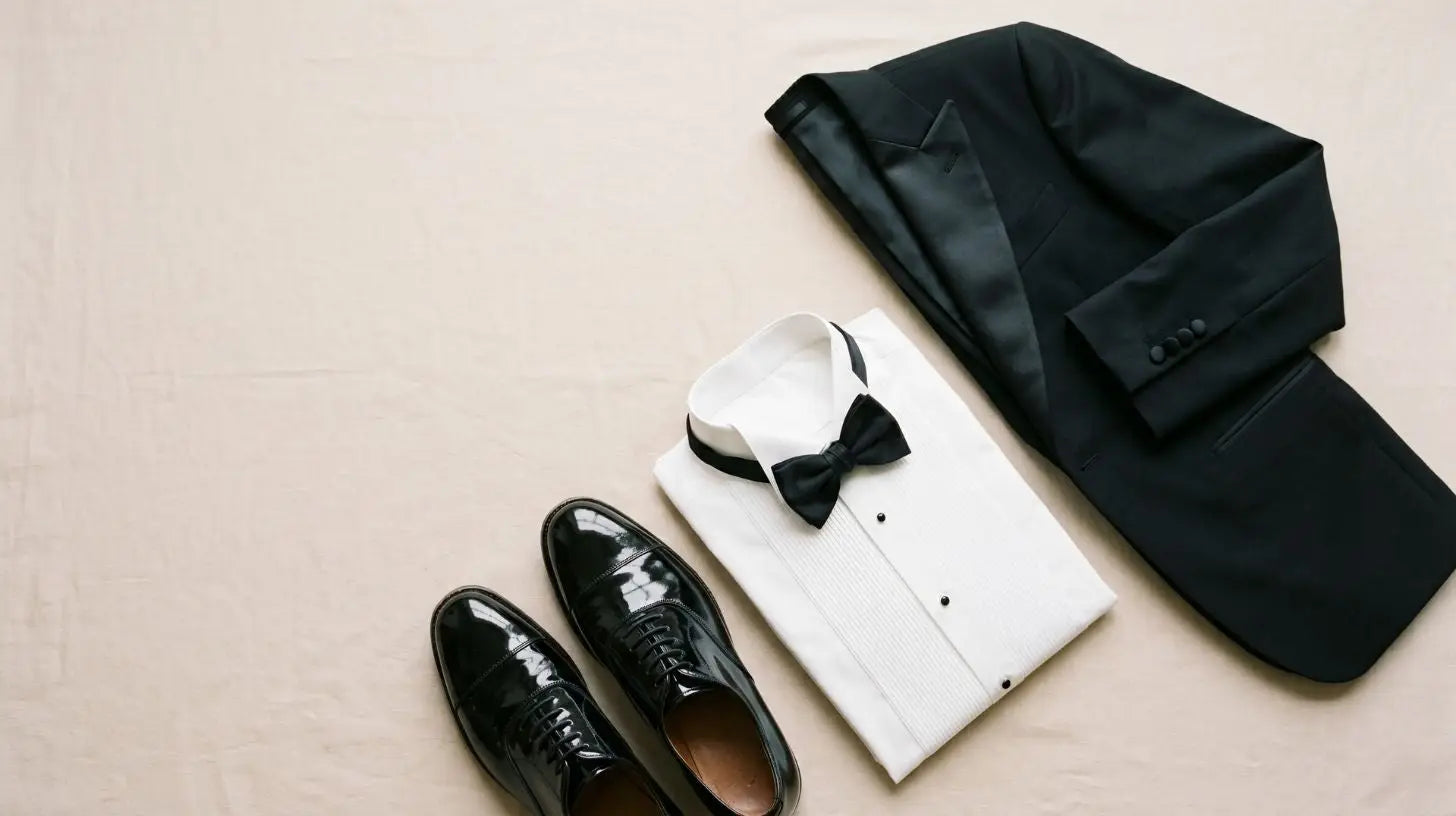
What this guide covers
- Start with the right fit - understand how Slim Fit, Regular Fit, Dynamic Fit, and Comfort Fit shape your silhouette and which one suits your build and the occasion.
- Choose a turndown collar shirt with French cuffs - not a wing collar, unless the invitation explicitly calls for white tie.
- Self-tie bow tie over pre-tied - a small asymmetry that signals you know what you are doing, and photographs far better.
- Match your lapel to the formality - peak or shawl lapels define a proper dinner jacket, while notch lapels belong on a business suit.
- Finish with patent leather shoes and subtle accessories - black silk cummerbund or waistcoat, simple studs and cufflinks, white linen pocket square.
If you are wearing a tuxedo for the first time, or you have rented one before and it never felt quite right, this page is written for you. The black tuxedo is the anchor of the wider system covered in the Complete Tuxedo Buying Guide for Men, and once you read on, you will know how to put together a look that fits like it was made for you.
Why Tuxedo Styling Determines How You Are Remembered
At any formal event, a poorly styled tuxedo, wrong shirt, sagging shoulders, cheap rental shoes, is the first thing people notice, and not for the reasons you want. You risk looking like you borrowed a mismatched outfit rather than someone who belongs in the room. Getting the details right is the difference between feeling awkward and feeling like the night is yours.
- Wearing a pre-tied bow tie to a black-tie wedding - a perfectly symmetrical, machine-made bow tie reads as rental-shop generic. Self-tie it once, and you will have a slightly imperfect, personal look that signals confidence. It also sits flatter against the collar and photographs more naturally.
- Pairing a wing collar shirt with a dinner jacket - a wing collar is intended for white tie and tails, not for a black tuxedo. Stick to a classic turndown collar, point or spread, with a bib front or hidden placket, and you will avoid a stiff, costume-like neckline.
- Choosing a notch-lapel jacket for a black-tie dress code - a black tuxedo traditionally features a peaked or shawl lapel. If you wear a notch lapel, you are signaling a business suit, even in black. The fix is simple: when buying your own, always select peak or shawl.
- Wearing a belt with tuxedo trousers - tuxedo trousers are cut without belt loops so the waistband stays clean. Side adjusters or suspenders hold them up. Adding a belt breaks the line and looks tacky. If your trousers have loops, you are probably looking at suit pants, not tuxedo trousers.
- Leaving dress shirt cuff buttons closed without cufflinks - French cuffs require cufflinks. Wearing them threaded through the buttonholes with just the silk knot looks unfinished. Go for simple silver, black onyx, or mother-of-pearl stud sets for a coherent finish.
- Skipping waist coverage - a tuxedo jacket is designed to be worn with a cummerbund or a formal waistcoat, not a bare shirt. The cummerbund pleats face up to catch crumbs, and it covers the waistband for a seamless transition. Without it, the V of your shirt draws the eye to your beltline, and if you are wearing suspenders, they will show.
- Wearing a novelty or colored bow tie and vest to a classic black-tie event - colored accessories might feel fun at prom, but they can date your photos and distract from the overall line. A black silk bow tie and matching cummerbund keep the look crisp, timeless, and appropriate for any future formal occasion.
- Renting a tuxedo that fits poorly - rental tuxedos often come in boxy cuts with limited size options, and you cannot tailor them. When you own a tuxedo, starting at $199.90, the same as renting, you can have the sleeves, waist, and trousers altered to your exact body, and you can wear it again for every formal event ahead.
When you get the styling right, you do not just meet the dress code, you own it. The full room-ready picture, from entrance to seating, is laid out in How to Dress for a Black Tie Event: Men's Guide 2026, and it starts with the styling choices below.
A Step-by-Step Guide to Styling Your Black Tuxedo
Building a tuxedo look from scratch can feel like juggling too many details at once, but breaking it down one piece at a time makes it straightforward. Follow these steps and you will move from unsure to fully dressed with a complete, personal black-tie outfit.
Step 1: Lock In the Fit That Flatters Your Build
Start by choosing a tuxedo with a cut that works for your shoulders, chest, and waist, not against them. SAYKI offers four fits, so you do not have to settle for a generic boxy jacket.
- Slim Fit - trimmed through the chest and waist with a higher armhole and narrower trousers. Best if you have an athletic or lean build and want a modern, close-to-body silhouette.
- Regular Fit - a classic cut with a comfortable straight line through the body and standard trousers. Ideal if you prefer ease of movement and a timeless proportion.
- Dynamic Fit - a more athletic shape that has broader shoulders and chest while tapering at the waist, designed for men who work out or have a V-shaped torso. The jacket moves with you without pulling.
- Comfort Fit - a relaxed cut with more room through the torso and sleeves. Perfect if you prioritize breathing space and a softer drape, or if you have a larger build and want to avoid a restrictive feel.
Quick check: can you raise your arms comfortably without the collar lifting off your neck? Do the shoulders lie flat without dimples? If not, try a different fit or get minor adjustments from a tailor.
Step 2: Choose the Right Tuxedo Shirt
Your shirt is the frame for everything else. Opt for a crisp white dress shirt with a turndown collar, point or semi-spread, a plain or marcella bib front, and French cuffs. A wing collar puts you into white-tie territory and almost always looks out of place unless you are wearing full formal dress. French cuffs let you add cufflinks, and the bib adds texture without pattern. Avoid button-down collars, chest pockets, or colored shirts.
Step 3: Get the Bow Tie Right
A self-tie black silk bow tie is non-negotiable for classic black tie. It takes about three minutes to learn and delivers a slightly uneven, human finish that a pre-tied version cannot match. Choose a size that matches your face width and a shape, butterfly, semi-butterfly, or batwing, based on your collar proportions. A narrow face calls for a narrower bow, while a wider face balances with a slightly fuller bow. If you are truly pressed for time at prom, a well-adjusted pre-tie is acceptable, but own a self-tie for future events.
Step 4: Understand Lapels and Jacket Details
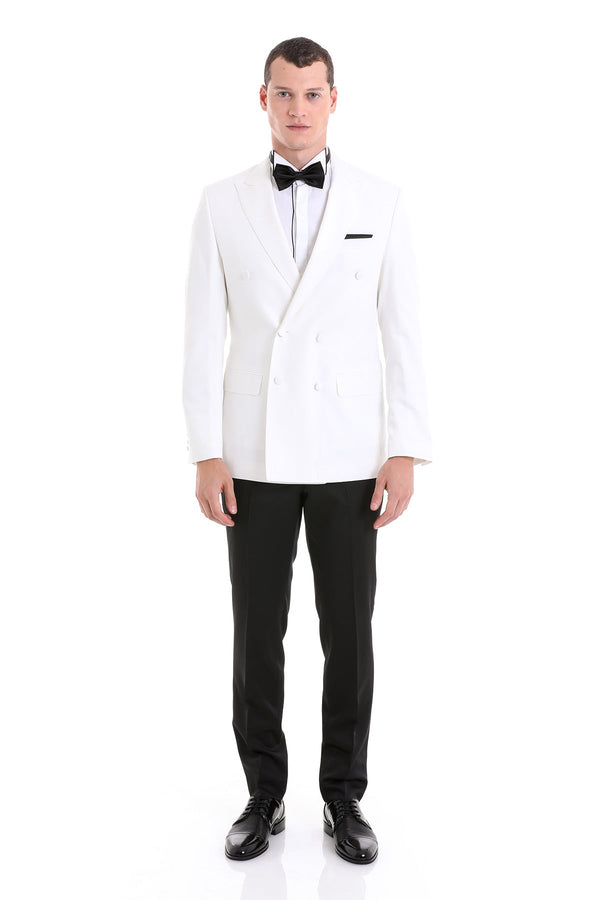
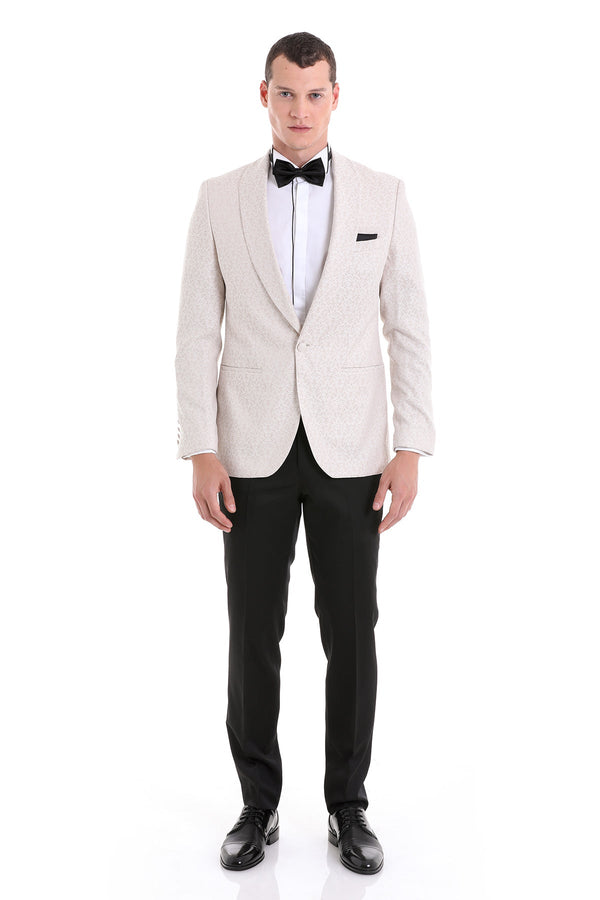
A black dinner jacket should have either a peak lapel or a shawl lapel, both in satin or grosgrain to match the trouser stripe. Notch lapels are for suits and will undercut the formality. A single-button front is the standard for black tie, and a double-breasted jacket with peak lapels is equally correct and very impactful if you are tall. Look for a jacket with jetted pockets, no flaps, to keep the line sleek. The trousers should have a single satin stripe running down the outer seam, since plain trousers are suit trousers, not correct for a true tuxedo.
Step 5: Select the Right Shoes
Patent leather oxfords are the classic choice: glossy, unadorned, and formal. Highly polished calfskin wholecuts or well-shined cap-toe oxfords also work if you do not own patent leather. Do not wear matte derby shoes, loafers, or anything with broguing, since the tuxedo demands a seamless, shiny finish. Black silk socks reaching above the calf keep you covered when you sit.
Step 6: Add Cufflinks and Studs
Your tuxedo shirt will have holes for studs instead of buttons down the front placket. Choose a matching set of studs and cufflinks in silver, black onyx, or mother-of-pearl. Keep them simple, since this is not the time for novelty themes. Put the studs through the front placket starting from the top, and insert cufflinks into your French cuffs after you have put on the shirt.
Step 7: Choose a Waist Covering
Without a cummerbund or formal waistcoat, the V of your shirt will gape below the jacket button. A black silk cummerbund, worn with pleats facing upward, hides the trouser waistband and creates a continuous line. Alternatively, a low-cut black formal waistcoat adds extra structure and warmth. Skip the belt entirely, since tuxedo trousers should stay up with side adjusters or braces. If your trousers have belt loops, you have bought suit trousers, so ask a tailor to remove the loops or look for proper tuxedo pants.
Step 8: Nail the Finishing Touches
Fold a plain white linen pocket square into a straight presidential fold and slip it into your jacket's left chest pocket. Avoid colored silk squares for classic black tie, since they clash with the monochrome palette. A wristwatch is traditionally omitted because a formal event implies you do not check the time, but if you must, a simple dress watch with a black leather strap is subtle. No visible jewelry beyond studs and cufflinks. And check your jacket sleeve length: aim for around a quarter-inch to half-inch of shirt cuff to show below the jacket sleeve.
Once you have worked through these steps, you will have a cohesive look where every piece supports the next. From here, you are ready to dress with intention and enjoy the event instead of worrying about whether you got it right.
Lapel
Peak or shawl in satin, never notch
Shirt
White, turndown collar, French cuffs, bib front
Neckwear
Black silk self-tie bow tie
Waist
Black cummerbund or low-cut waistcoat, no belt
Shoes
Patent leather oxfords, black over-the-calf socks
Editor's Picks
Build Your Black Tuxedo, Not a Rental Costume
Own a tailored black tuxedo from $199.90, the same price as a single rental, and style every detail to your taste.
Shop TuxedosTuxedo Mistakes That Show Up in Every Photo
It is easy to make small errors when you are focused on getting the big pieces right, but these are the ones that wedding photographers and prom pictures will highlight forever. Recognizing them now means you can sidestep them completely.
- Wearing a wing collar with a dinner jacket - as mentioned, the wing collar belongs to white tie and tails. Unless the invitation says white tie, stick with a turndown collar. A wing collar will also thrust your chin upward and look uncomfortable in candid shots.
- Using a colored or patterned cummerbund - a black cummerbund is the only safe bet for black tie. Patterned or colored options might seem fun at prom, but they often become the focus of photos in a way you will regret later. Keep it black, silk, and pleats up.
- Buttoning both jacket buttons if it is a two-button style - a single-button tuxedo jacket is the most common, but if yours has two, never fasten the bottom button. Leaving it undone is the rule for all single-breasted jackets, tuxedo or not.
- Pairing a white dinner jacket with black trousers and treating it like the same level of formality - a white ivory dinner jacket is a warm-weather, slightly less formal option. For a classic black-tie evening event, especially in fall and winter, stick to an all-black tuxedo.
- Choosing black shoes that are not patent or high-shine - dull leather shoes break the reflective, formal look that a tuxedo demands. If you do not own patent leather, give your best black oxfords a fresh mirror shine until you can see a clear reflection. A quick brush will not cut it.
- Leaving visible T-shirt or undershirt beneath the tuxedo shirt - a thin, deep-V-neck undershirt that stays completely hidden is fine. But if any white cotton peeks out at the collar or through the placket, it ruins the crispness. Opt for a flesh-toned, low-cut undershirt or skip it if the dress shirt is opaque enough.
- Wearing a watch with a metal bracelet - a sports watch or a chunky metal band distracts from the sleek black and white palette. If you must wear a watch, go with a slim, black leather strap and a small case. Better yet, leave it in the pocket and rely on the event's timeline.
- Over-accessorizing with pocket square folds that are too elaborate - a presidential fold, a straight rectangular peek, is all you need. A puffed or pointed fold can look like you are trying too hard. The tuxedo's strength is in its restraint.
When you steer clear of these common missteps, you do not just avoid embarrassment, you gain the quiet confidence of knowing your entire outfit is working in harmony, and that will show in every frame.
How to Keep Your Tuxedo Looking Immaculate Between Events
Owning a black tuxedo instead of renting gives you a garment you can wear for years, but only if you treat it well. A little care between outings keeps the fabric crisp, the lapels glossy, and the fit exactly as it was on day one. The longer routine, from airing out to choosing the right garment bag, is covered in How to Store a Tuxedo Properly: Keep It Event-Ready.
- Dry clean only when absolutely necessary - once or twice a season at most, or after a visible stain. Over-cleaning strips the natural luster from wool and can cause the satin facings to dull. Spot-clean small marks with a damp cloth.
- Brush the jacket after every wear - use a soft garment brush to remove dust, skin oils, and any clinging lint from the wool and satin lapel. This prevents soil from setting in and extends time between cleanings.
- Store on a broad, contoured wooden hanger - a suit hanger with wide shoulders supports the jacket's shape and prevents dimples at the sleevehead. Wire or thin plastic hangers will distort the shoulders over time.
- Use a breathable garment bag, not plastic - plastic traps moisture and can cause mildew or musty odors. A cotton or linen garment bag lets the fabric breathe while protecting against dust. Keep it in a cool, dry closet.
- Keep moths away naturally - cedar blocks or lavender sachets in the garment bag ward off moths without harsh chemicals. Replace them every few months.
- Steam out wrinkles instead of ironing - a handheld steamer on a low setting removes creases without risking shine on the satin lapel or trouser stripe. If you must iron, use a press cloth and avoid direct contact with the satin.
- Check buttons, studs, and the trouser stripe before each event - a loose button or a missing stud can derail your look minutes before you leave. Keep an extra set of buttons and studs in the inside pocket, and inspect the satin stripe for snags.
A tuxedo that is cared for properly will still look current and sharp at your fifth wedding or tenth prom season. That small effort now pays for itself every time you open your closet and see it ready to wear.
Where to Find a Black Tuxedo That Fits Without the Rental Markup
If you are ready to stop renting and start owning a black tuxedo you can tailor and style exactly to your taste, SAYKI gives you a century of menswear craftsmanship at a rental-competitive price. Our tuxedos start at $199.90, the same as what you would pay for a one-time rental, so you can invest in a garment you will wear again instead of handing it back after the night.
SAYKI's foundation was laid in 1924, when Hatemoğlu began tailoring for men in Turkey, and today the U.S. brand operates nine stores with a flagship at 375 Madison Avenue, New York, NY 10017. Over a hundred years of family expertise means every tuxedo we cut is grounded in timeless construction, not fast trends. You can choose from four distinct fits, Slim Fit, Regular Fit, Dynamic Fit, and Comfort Fit, so the jacket sits exactly the way you want it.
Visit the New York City flagship or one of our other eight locations across the Northeast and Midwest to try on fits in person through the SAYKI store directory, or browse the collection online at sayki.com. When you buy instead of rent, you gain the freedom to have the sleeves tailored, pick your own shirt and accessories, and show up at every formal event knowing your black tuxedo is yours, not a borrowed costume.
Frequently asked questions
How do I dress for a black tie event as a man?
Wear a black dinner jacket with peak or shawl lapels, matching black trousers with a single satin stripe, a white dress shirt with a turndown collar and French cuffs, a black self-tie bow tie, black patent leather shoes, and a black cummerbund or formal waistcoat. Keep accessories minimal: studs and cufflinks in silver or onyx, a white linen pocket square, and dark socks. The goal is monochromatic polish with no distracting colors or patterns.
Should I wear a tuxedo or a suit to prom?
A tuxedo is the traditional choice for prom and gives you a distinguished, formal edge over a dark suit. If your school's dress code or personal style leans slightly less formal, a black suit with a crisp white shirt and bow tie can also work, but owning a tuxedo, starting at $199.90, means you will stand out and never have to rent again. Black tie instantly signals you took the night seriously, and you can keep the tux for weddings and galas ahead.
What is the difference between a tuxedo and a suit for prom?
A tuxedo features satin detailing, on the lapels, buttons, and a stripe down the trouser leg, and is traditionally worn with a bow tie and cummerbund or waistcoat, while a suit lacks satin and is paired with a long tie. Tuxedos are reserved for evening formal events, while suits are multi-purpose. At prom, a tuxedo feels more celebratory and gives you a sharper, more camera-ready silhouette than a suit of the same color.
Is it worth buying a tuxedo instead of renting one?
Yes, especially when you can buy a tuxedo for $199.90, the same price as many rentals. A purchased tuxedo can be tailored exactly to your body, so the sleeves, waist, and trousers fit correctly. You also pick every detail yourself, from the shirt and bow tie to the shoes, instead of accepting whatever comes in the rental bag. Over time, you will spend less and look far better at every formal occasion that follows.
What is the difference between slim fit and regular fit suits?
Slim Fit is cut closer to the body with narrower sleeves, a tapered waist, and slimmer trousers, creating a sleek, modern silhouette. Regular Fit offers a more generous, straight cut through the chest and waist for greater comfort and a classic drape. At SAYKI, you will also find Dynamic Fit for athletic V-shaped bodies and Comfort Fit for a relaxed roomier outline, so you can choose the silhouette that flatters your build.
How should a suit jacket fit properly?
The shoulder seams should end at the edge of your natural shoulder without overhang or pulling, and the jacket collar should lie flat against your shirt collar. With the top button closed, you should be able to slide a flat hand between the jacket and your chest without strain. Sleeves should end just above the wrist bone to show about a quarter-inch of shirt cuff. The jacket length should cover your seat and curve gently over it. If any of these are off, a tailor can adjust, provided the shoulders fit.
How often should I dry clean a suit?
Dry clean a suit or tuxedo only when it has visible stains or odors, typically no more than once or twice a season. Frequent cleaning wears down wool fibers and can dull satin lapels. Between wears, brush the fabric, use a steamer for wrinkles, and hang the jacket in a well-ventilated area. This preserves the garment's shape and finish for years.