


14 min read


The bolo tie is one of the most distinctive accessories in menswear. Part Western heritage, part modern statement piece, it offers a way to stand out without the formality of a traditional necktie. This guide covers everything from the bolo tie's rich history to practical styling advice for wearing one with confidence. SAYKI recommends starting with a simple silver or turquoise slide on a dark shirt, since that pairing is the easiest way to wear a bolo with intent rather than as a costume piece.
Contents
What Is a Bolo Tie?
A bolo tie - also spelled "bola tie" - is a type of necktie made from a braided cord or leather string with decorative metal tips, held together by an ornamental clasp or slide. The clasp sits at the throat, and the two cord ends hang down the chest. Unlike a conventional necktie that wraps around the collar and knots at the front, a bolo tie simply slides through its clasp, making it one of the easiest neckwear options to put on and adjust.
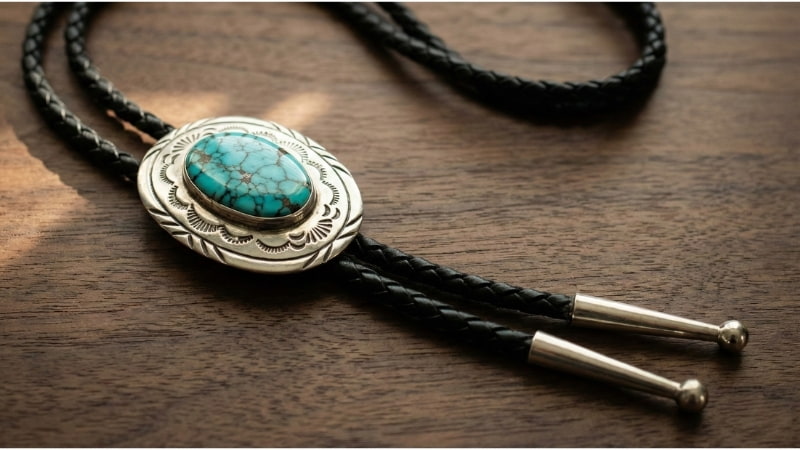
The clasp, often called the slide, is the centerpiece of the bolo tie. It can be crafted from silver, turquoise, onyx, carved bone, or dozens of other materials. Some clasps feature simple geometric designs, while others showcase intricate Native American artwork or gemstone settings. The cord itself is typically braided leather in black or brown, though modern versions use everything from woven fabric to metallic cable.
The beauty of a bolo tie lies in its simplicity and versatility. It reads as a piece of jewelry as much as neckwear, giving it a presence that standard ties don't always achieve. Whether you wear it cinched tight against a buttoned collar or loosened for a relaxed look, the bolo tie adapts to your personal style.
The History & Cultural Significance of Bolo Ties
The bolo tie's origins trace back to the American Southwest in the late 1940s. While several origin stories exist, the most widely accepted credits Victor Cedarstaff, a silversmith and leather craftsman from Wickenburg, Arizona, who reportedly fashioned the first bolo tie around 1949. According to the story, Cedarstaff removed his hatband during a windy horseback ride and wore it around his neck to keep from losing it. The improvised neckpiece caught on, and he began crafting decorative versions with silver clasps.
Native American artisans - particularly Navajo, Zuni, and Hopi silversmiths - quickly adopted the bolo tie and elevated it into an art form. Their work incorporated traditional techniques like turquoise inlay, silver overlay, and stamp work that turned each bolo into a unique piece of wearable art. These handcrafted bolos became prized collector's items and remain some of the most valued bolo ties today.
The bolo tie became the official state neckwear of Arizona in 1971, followed by New Mexico in 2007 and Texas in 2023. This legislative recognition reflects the accessory's deep cultural roots in the American West. Far from being a novelty, the bolo tie carries genuine regional identity and craftsmanship traditions that span generations.
In recent years, the bolo tie has experienced a resurgence beyond its Western roots. Fashion designers from Ambush to Ralph Lauren have featured bolo ties in their collections. Musicians, artists, and public figures have embraced it as a way to add personality to both casual and dressed-up outfits. What was once strictly Southwestern has become a global menswear statement.
Types of Bolo Ties & Materials
Bolo ties come in a wide range of styles, and the clasp material largely defines the tie's character and formality level. Understanding these categories helps you pick the right bolo for each occasion.
Silver and Metal Clasps
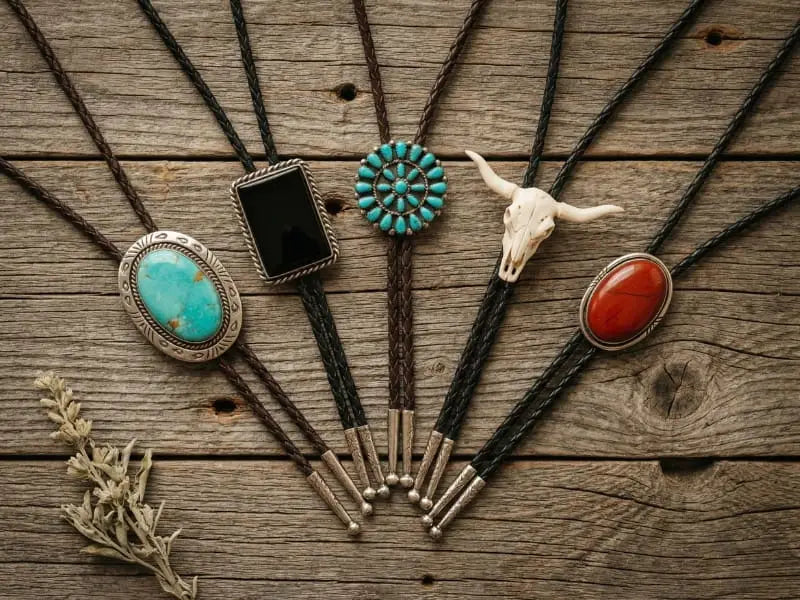
Sterling silver is the classic bolo tie material. A polished silver slide with clean lines or subtle engraving reads as refined and works well with suits and blazers. Artisan-crafted silver clasps with hand-stamped patterns carry a more traditional Southwestern feel. For a modern edge, look for geometric or abstract metal designs in brushed nickel, gunmetal, or matte black finishes.
Stone and Turquoise Settings
Turquoise remains the most iconic bolo tie stone, valued for its striking blue-green color against silver settings. But bolos also feature onyx for a formal black accent, coral for warm red tones, and agate or jasper for earthy, organic patterns. The stone you choose significantly affects the tie's formality - darker stones lean dressier, while bright turquoise brings a more casual, colorful energy.
Leather and Natural Materials
Bolo ties with clasps made from carved bone, polished wood, or horn offer a rugged, organic look that pairs well with casual outfits. These materials work best for relaxed settings where a metal clasp might feel too formal. Brown leather cord with natural material clasps creates a warm, earthy combination.
When to Wear a Bolo Tie: Formal vs. Casual Occasions
One of the biggest questions about bolo ties is where they actually fit on the dress code spectrum. The answer depends on the clasp material, the cord style, and how you wear it.
← Scroll horizontally to see full spectrum →
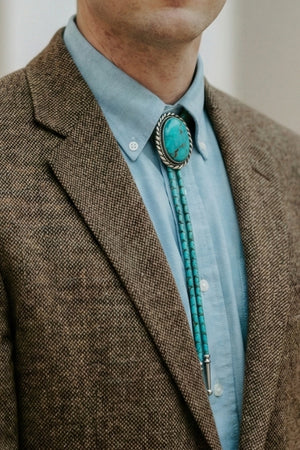
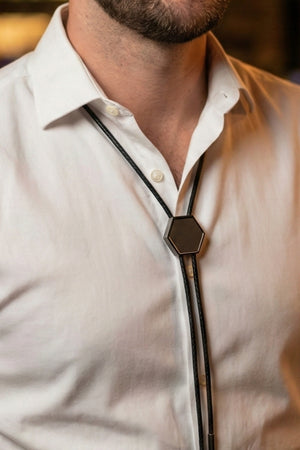
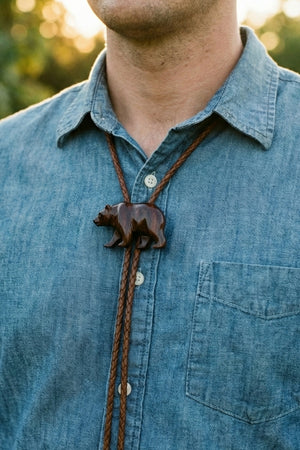
Formal and Semi-Formal Occasions
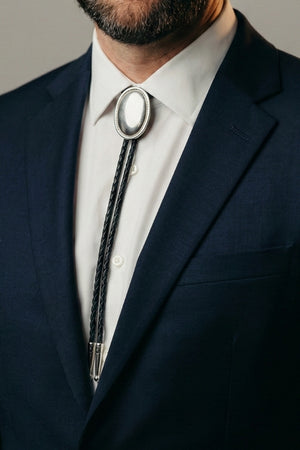
A sterling silver or polished metal bolo tie worn snug against a buttoned collar is entirely appropriate for formal settings, especially in the American South and Southwest where the bolo carries genuine cultural weight. Weddings, award ceremonies, and upscale dinners are all fair game when you pair a refined clasp with a well-tailored suit. Keep the cord black and the clasp elegant - avoid oversized or novelty designs in these settings.
Business and Creative Settings
In business environments that allow personal expression, a bolo tie replaces the standard necktie with something more memorable. Creative industries, architecture firms, media companies, and tech offices are natural fits. A mid-sized clasp in silver or dark stone worn with a button-down collar strikes the right balance between professional and individual.
Casual Wear
For casual settings, the bolo tie works as a standalone accessory that adds polish without formality. Wear it loosened slightly with an open collar, a chambray shirt, or even a well-fitted henley. Natural material clasps and brown leather cords feel right at home with jeans, chinos, and unstructured jackets.

How to Style a Bolo Tie with Shirts & Suits
The key to wearing a bolo tie well is matching it to the rest of your outfit in terms of formality, color, and proportion. Here are the combinations that work best.
With a Suit
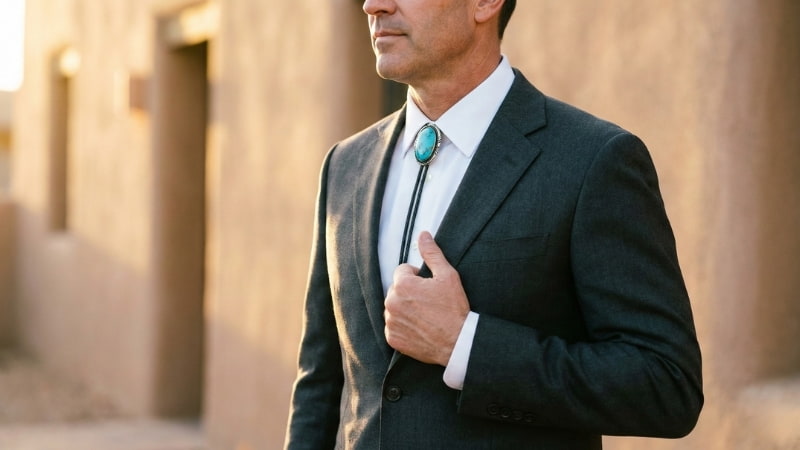
A bolo tie paired with a suit creates a sharp, distinctive look. Choose a slim silver or dark stone clasp that sits neatly against a white or light-colored dress shirt. Button the collar fully and position the clasp at roughly the same height where a traditional tie knot would sit. Dark suits - navy, charcoal, black - provide the best contrast for the clasp to stand out as a focal point. Avoid patterns on the shirt that compete with the bolo design.
With a Blazer
A sport coat or blazer is arguably the most natural pairing for a bolo tie. The slightly relaxed structure of a blazer matches the bolo's blend of dressed-up and personal. Try a textured blazer - tweed, linen, or hopsack - with a solid shirt and a turquoise or stone clasp. This combination works for gallery openings, dinner dates, and creative workplace settings.
With a Dress Shirt Alone
Wearing a bolo tie with just a dress shirt - no jacket - gives you a clean, polished look for warm-weather events or smart casual settings. A light blue or white shirt with rolled sleeves and a bolo tie feels effortlessly put together. Keep the clasp moderate in size so it doesn't overpower the simplified outfit.
With Casual Shirts
Western shirts, chambray, denim, and even band-collar shirts all pair well with bolo ties. For these combinations, you can choose larger, more expressive clasps since the casual context supports bolder choices. Loosen the clasp slightly so it sits below the first button for a relaxed, lived-in feel.
Bolo Tie vs. Necktie vs. Bow Tie
Each neckwear style carries its own strengths and best-use scenarios. Understanding how the bolo tie compares to traditional options helps you decide when to reach for each one.
← Scroll horizontally to see full comparison →
| Feature | Bolo Tie | Necktie | Bow Tie |
|---|---|---|---|
| Formality Range | Casual to semi-formal (formal in the Southwest) | Business to black tie | Business to white tie |
| Ease of Wearing | Slides on and adjusts - no knotting required | Requires a proper knot (four-in-hand, Windsor, etc.) | Self-tie versions need practice; pre-tied are simple |
| Statement Level | High - immediately stands out as a personal choice | Low to moderate - expected in most formal settings | Moderate to high - playful and distinctive |
| Comfort | Very comfortable - no tight knot at the throat | Can feel restrictive depending on collar fit | Comfortable once tied, sits at the collar |
| Best Setting | Creative offices, weddings, cultural events, casual dressy | Corporate offices, formal events, interviews | Black tie events, preppy settings, creative formal |
| Versatility | Works with or without a jacket, formal or casual shirts | Primarily worn with collared dress shirts and jackets | Best with suits, tuxedos, or vests |
The necktie remains the default choice for conservative business and formal events. It's the safe pick for job interviews, corporate meetings, and black-tie affairs. The bow tie occupies a more niche role - it signals personality and works well at formal events, academic settings, and preppy social gatherings.
The bolo tie fills a gap that neither the necktie nor bow tie quite covers. It's personal without being eccentric. It adds polish to casual outfits and individuality to formal ones. Where a necktie says "I followed the dress code" and a bow tie says "I want to stand out," a bolo tie says "I know exactly what I'm doing."
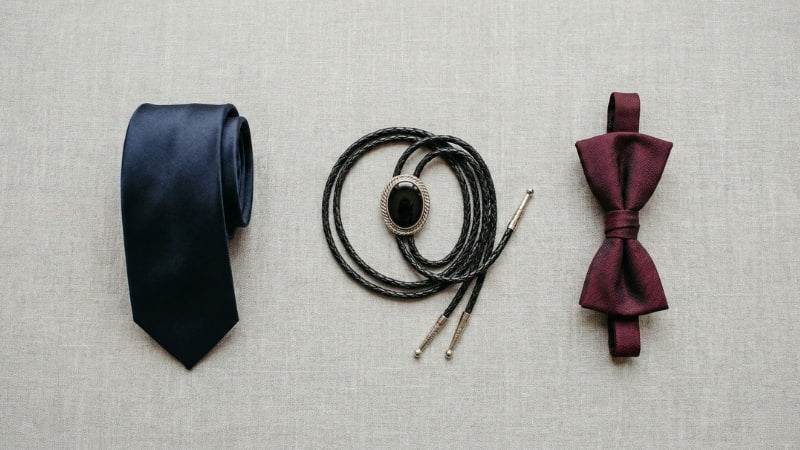
Complete Your Look
Explore our collection of accessories, dress shirts, and blazers to build the perfect outfit for your bolo tie.
Shop AccessoriesHow to Care for and Store Your Bolo Tie
A quality bolo tie can last decades with proper care. The clasp and cord each need different attention to stay in good shape.
Caring for Metal Clasps
Sterling silver clasps will tarnish over time, which is natural. A soft polishing cloth designed for silver restores shine in minutes. Avoid chemical silver dips on clasps with turquoise or stone settings - the chemicals can damage porous stones. For these pieces, use a dry polishing cloth on the silver portions only and wipe the stone gently with a slightly damp cloth.
Caring for the Cord
Leather cords can dry out and crack if neglected. Apply a small amount of leather conditioner every few months to keep the braiding supple. Avoid getting leather cords wet - if they do get damp, let them air dry flat rather than hanging, which can stretch the leather unevenly. For fabric or synthetic cords, a damp cloth wipe is usually all you need.
Storage Tips
Store bolo ties flat or loosely coiled in a soft-lined drawer or jewelry box. Hanging them for long periods can stretch the cord and warp its shape. Keep silver clasps away from humidity and rubber bands, both of which speed up tarnishing. If you own multiple bolos, wrap each one individually in a soft cloth or anti-tarnish pouch to prevent clasps from scratching each other.
Are bolo ties appropriate for weddings?
Yes, bolo ties can be a great choice for weddings, especially in outdoor, rustic, Western-themed, or semi-formal celebrations. A sterling silver or polished stone clasp with a black cord pairs nicely with a well-fitted suit and looks intentional rather than underdressed. For very traditional or black-tie weddings, a standard necktie or bow tie is the safer choice. If you're the groom, a bolo tie can be a memorable personal touch - particularly if it has sentimental or cultural meaning.
Can you wear a bolo tie with a tuxedo?
Wearing a bolo tie with a tuxedo is unconventional but not unheard of, especially in the American West where the bolo is considered formal neckwear. If you go this route, choose a refined silver or gold clasp without large stones, keep the cord slim and black, and make sure the overall look is polished. This combination works best at themed galas, Western-formal events, or celebrations where the dress code allows personal interpretation. At a strictly traditional black-tie event, a bow tie is still the expected choice.
Do bolo ties have size guidelines?
Bolo ties don't follow a strict sizing system, but proportion matters. The clasp should be roughly 1.5 to 2.5 inches across - large enough to be a visual focal point but not so big that it overwhelms your shirt collar. The cord length typically ranges from 36 to 42 inches, and most bolos have adjustable slides so you can set the length that works best for your torso. If you're taller, look for cords on the longer end. The metal tips at the cord ends should be proportional to the clasp - slim tips with a slim clasp, more substantial tips with a larger slide.
Are bolo ties still in style?
Yes. The bolo tie has moved beyond its Western roots and now shows up in modern menswear as a statement alternative to the necktie. Worn with a clean shirt and a tailored jacket, it reads as intentional rather than dated. The key is restraint: keep the rest of the outfit simple so the bolo stands out, and choose a clasp that suits the occasion, slimmer and polished for dressier settings, bolder for casual ones.