


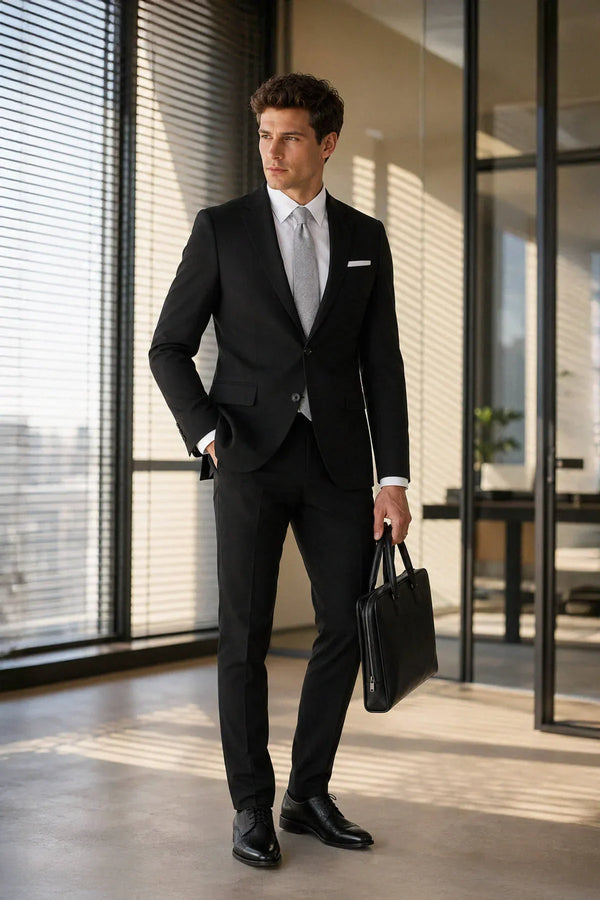

What does the dress code say?
16 min read
Summarize this article with AI
The traditional suit-and-tie combination has long been the gold standard of men's formal wear. But modern style has evolved, and going tieless is no longer a shortcut or a sign of sloppiness. When done right, skipping the tie can actually sharpen your look, projecting confidence, creativity, and contemporary sophistication. SAYKI recommends starting with a well-fitted suit and a spread or cutaway collar shirt, since those two choices do most of the work once the tie is gone.
Whether you're heading to a creative office, a cocktail party, or a weekend wedding, knowing how to pull off a suit without a tie is a valuable skill. This guide breaks down everything you need to know: when it works, what to wear, and how to avoid the common pitfalls that make tieless looks fall flat.
Contents
Why Go Tie-Free?
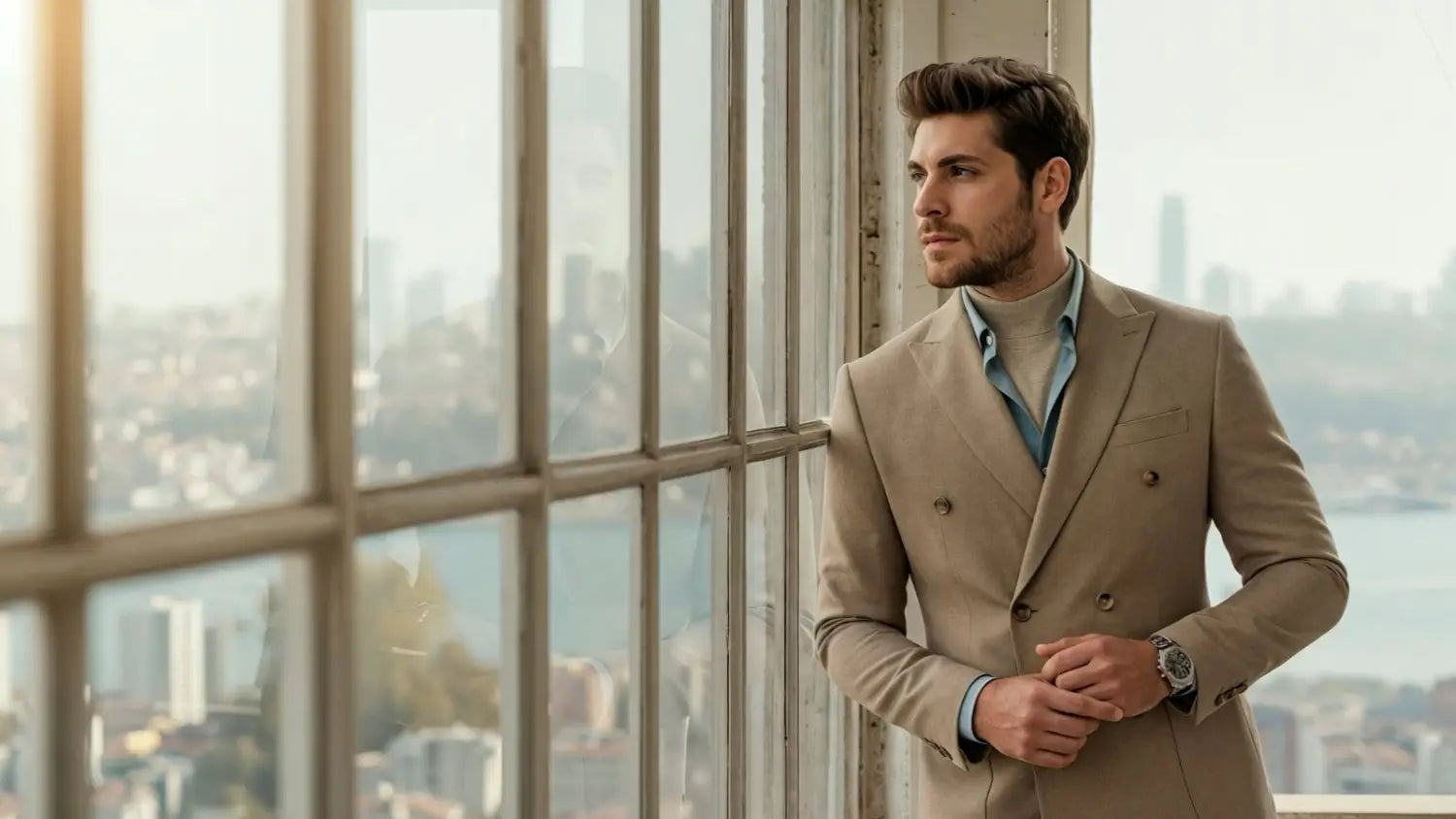
The necktie has served as a symbol of professionalism for over a century. So why would anyone intentionally leave it behind? The answer lies in how modern dress codes have shifted. Today's workplaces, social events, and even some formal occasions have embraced a more relaxed interpretation of style without sacrificing elegance.
Going tieless offers several advantages. First, there's comfort. Without the knot pressing against your collar, you can move and breathe more freely throughout the day. Second, it signals approachability. In industries built on collaboration and creativity, a tieless suit suggests you're serious about your work but not stuffy about it. Third, it gives you room to express personal style through other elements, from the texture of your shirt to the details of your accessories.
That said, going without a tie isn't about cutting corners. It requires more attention to fit, fabric, and overall coordination. When you remove the focal point of a tie, everything else becomes more visible, so every detail matters.
When Is It Okay to Skip the Tie?
Context is everything. While tieless suits have gained acceptance in many settings, certain occasions still call for traditional neckwear. Knowing the difference will help you dress appropriately and confidently.
Tieless Suit: When It Works
Smart Casual Offices
Creative & tech industries
Cocktail Parties
Evening social events
Gallery Openings
Arts & culture events
Casual Weddings
Unless black tie specified
Nice Dinners
Upscale restaurants
Business Travel
Flights & casual meetings
Business casual and smart casual environments are the most obvious settings for tieless suits. If your workplace leans toward polo shirts and chinos, a suit without a tie strikes the right balance between polished and relaxed. The same goes for after-work drinks, networking events, and industry mixers where overdressing could make you seem out of touch.
Weddings offer some flexibility, but read the invitation carefully. Garden parties, destination weddings, and daytime ceremonies often welcome tieless attire. Black tie or formal evening weddings, however, still expect traditional dress.
First dates, weekend brunches, and cultural events like gallery openings or theater performances sit comfortably in tieless territory. Here, the goal is to look sharp without appearing stiff.
When should you keep the tie on? Job interviews at conservative companies, client meetings in traditional industries (finance, law, government), funerals, and any event explicitly labeled "formal" or "black tie" still warrant the complete look.
Suit Fit Matters More Than the Tie
Here's a truth that applies to all menswear but becomes especially critical when going tieless: fit is everything. A perfectly tailored suit can look stunning without a tie. A baggy or boxy suit will look unfinished no matter what you add to it.
When you remove the tie, attention shifts to the shoulders, chest, and lapels. The jacket should sit cleanly on your shoulders without extending past the natural shoulder line. The chest should have enough room for comfort but no excess fabric bunching or pulling. The lapels should lie flat against your shirt without gaping.
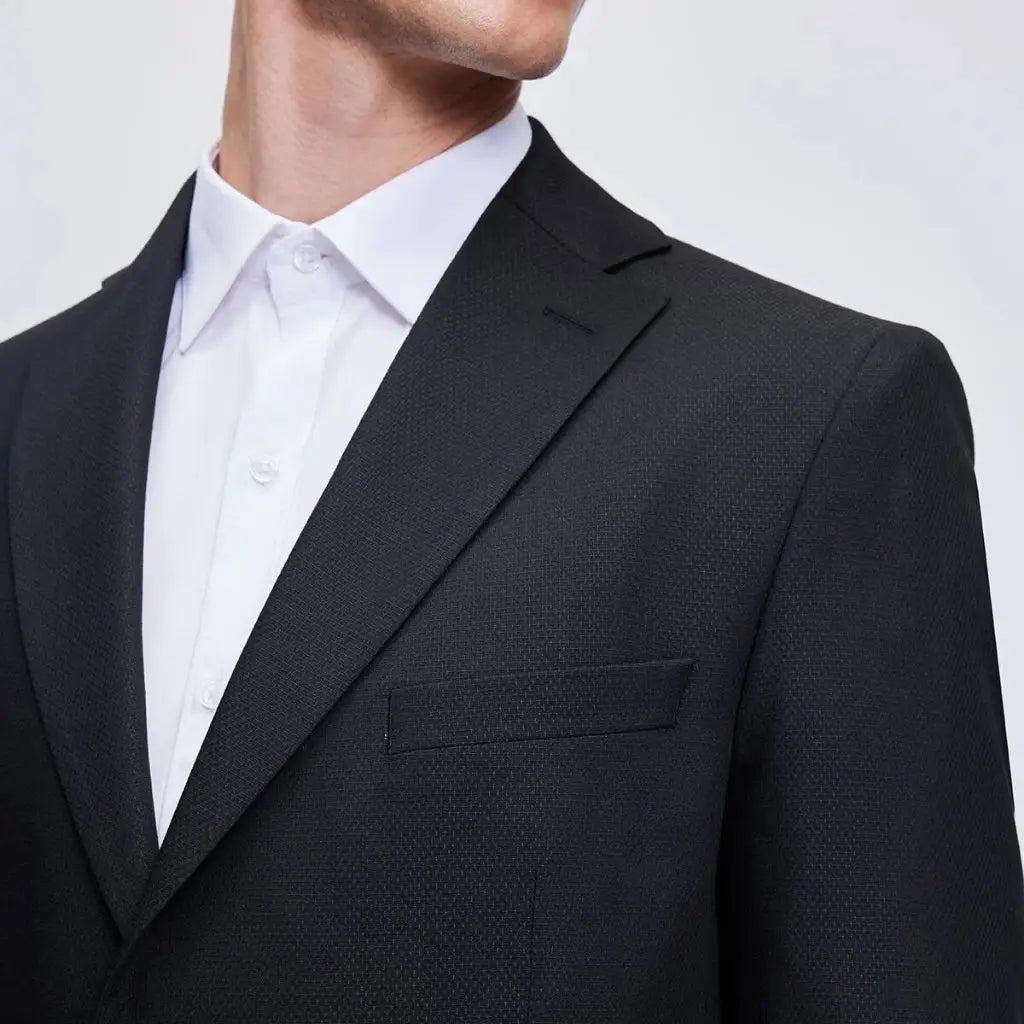
Sleeve length deserves special attention. With no tie drawing the eye upward, people notice the relationship between your jacket sleeves and shirt cuffs. Aim for about half an inch of shirt cuff visible beyond the jacket sleeve. This detail signals that both pieces were chosen with care.
The jacket length matters too. Modern suits trend slightly shorter than their predecessors, typically ending at the base of your thumb when your arms hang naturally. This proportion keeps the look contemporary without appearing cropped or costume-like.
Your men's pants follow the same principles. The waist should sit comfortably without a belt cinching excess fabric. The break (where the trouser meets the shoe) can range from a slight fold to a clean no-break cut, depending on your preference and the formality of the occasion.
Choosing the Right Shirt & Collar When Going Tie-Less
The shirt you choose plays a more prominent role when there's no tie to anchor the look. Collar style, button placement, and fabric all contribute to whether your tieless outfit succeeds or struggles.
Start with the collar. Not all collars work equally well without a tie. The goal is to find one that holds its shape and frames your face without looking empty or collapsed.
| Collar Style | Tieless Suitability | Best For |
|---|---|---|
| Spread Collar | ✓ Excellent | Most versatile; works open or buttoned |
| Cutaway Collar | ✓ Excellent | Modern look; designed to be worn open |
| Button-Down Collar | ✓ Good | Casual suits; Americana style |
| Camp Collar | ✓ Good | Summer suits; relaxed settings |
| Point Collar | ✗ Avoid | Designed for ties; looks incomplete without one |
| Pin or Tab Collar | ✗ Avoid | Requires a tie to function properly |
Spread and cutaway collars work best for tieless looks because they maintain their shape while framing the open neckline attractively. Button-down collars offer a more relaxed American feel and stay in place naturally. Point collars, with their narrow spread, tend to look lost without a tie holding them together.
Consider your shirts carefully. Fabric weight and texture add interest when there's no tie pattern competing for attention. A slightly heavier cotton with a subtle weave, like Oxford cloth or end-on-end, creates visual depth. Linen and linen-cotton blends work beautifully for summer, adding texture and a laid-back elegance.
Color matters too. White and light blue remain classics that pair with virtually any suit. Pale pink, soft lavender, and cream offer subtle variety without overwhelming the look. Bolder patterns, including stripes and small checks, can work but require careful coordination with your suit.
How to "Replace" the Tie Visually with Accessories & Details
When you skip the tie, you create visual space at the center of your chest. The question becomes: what fills that space? The answer isn't always another accessory. Sometimes, it's letting the simplicity speak for itself. Other times, strategic additions can complete the look.
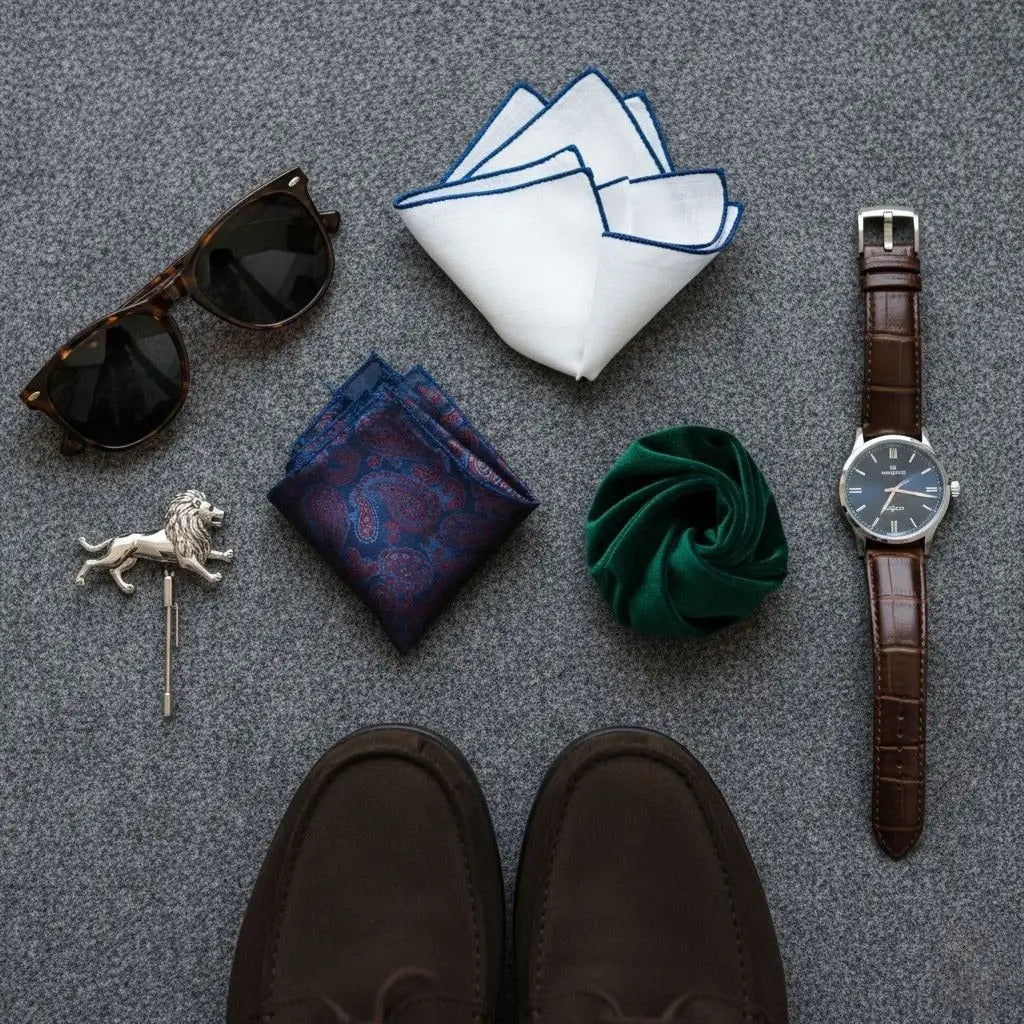
The pocket square is your most valuable tool here. Unlike a tie, which draws a vertical line down your chest, a pocket square adds a horizontal accent at the breast pocket. This subtle shift in emphasis works beautifully with open collars. Choose folds that complement the formality of your outfit. A simple straight fold reads professional, while a puff or peak adds creative flair.
Lapel pins and boutonnieres offer another option, though they work better for special occasions than daily wear. A small, tasteful pin in silver or gold adds just enough interest without trying too hard.
Your men's accessories beyond the pocket can help too. A quality watch, visible when your jacket sleeve rides up, shows attention to detail. Well-chosen cufflinks (if you're wearing French cuffs) catch light and add polish. Even your sunglasses, when tucked into your breast pocket or worn confidently, contribute to the overall impression.
Accessories That Complete a Tieless Look
Pocket Square
High impact, essential
Quality Watch
Subtle sophistication
Lapel Pin
For special occasions
Sunglasses
Outdoor events
The key is restraint. Without a tie anchoring the look, it's tempting to overcompensate with too many accessories. Resist that urge. One or two thoughtful additions will always beat a cluttered collection of competing elements.
Shoes, Socks & Other Style Anchors
When your neckline is open and relaxed, balance comes from the bottom of your outfit. Your formal shoes and socks provide grounding that keeps the overall look intentional rather than incomplete.
Leather shoes remain the standard for suits, tieless or not. Oxford and derby styles work across the formality spectrum. For more relaxed settings, loafers add a touch of European ease that pairs naturally with open collars. Suede options in brown or navy complement lighter suits and warm-weather fabrics.
Shoe color should relate to your suit without matching exactly. Navy suits work beautifully with brown or burgundy leather. Gray suits offer even more flexibility, pairing well with black, brown, or even oxblood shades. Black suits traditionally call for black shoes, though modern interpretations allow more creativity.
Socks present an opportunity for personality. Because tieless suits often read as more creative, you have permission to play with color and pattern here. Bold socks peeking between your trouser hem and shoe can add welcome visual interest. Just keep the quality high, with fine-gauge cotton or wool blends that stay up throughout the day.
Your belt (if you wear one) should complement your shoes in color and finish. For a cleaner silhouette, consider side-tab or adjustable trousers that eliminate the need for a belt entirely. This streamlined approach aligns with the minimalist spirit of tieless dressing.
Styling Ideas: Examples of Tieless Suit Combinations
Theory only takes you so far. Let's look at specific combinations that work, from casual to nearly formal.
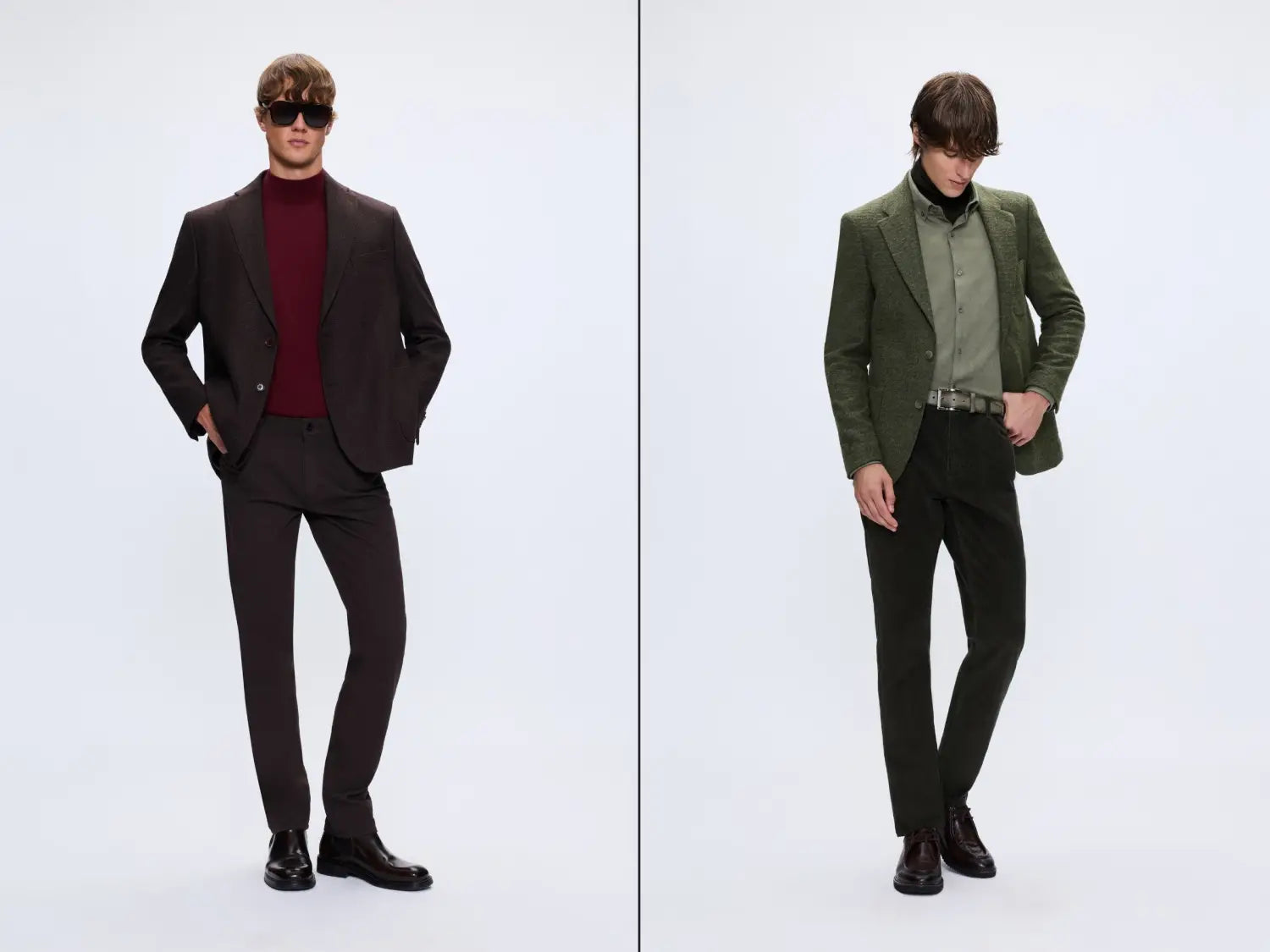
Casual Suit + Open Collar Shirt
This is the most common tieless approach and the easiest to execute. Start with an unstructured or lightly constructed suit in a relaxed fabric like cotton, linen, or a textured wool blend. Pair it with a spread-collar shirt in white or light blue, unbuttoned at the neck.
Keep the accessories minimal. A white linen pocket square with a simple fold, a leather-strap watch, and brown leather loafers complete the look without overcomplicating it. This combination works for creative offices, casual Fridays, and after-work events.
Suit with Polo or Knit Shirt
Replacing the dress shirt with a polo or fine-gauge knit sweater takes the tieless look in a more deliberately casual direction. This works best with suits in softer fabrics and looser constructions.
Choose a polo in a solid, neutral color: white, navy, black, or pale gray. The collar should have enough structure to sit properly under your jacket lapels. Avoid polos with large logos or busy patterns, which compete with the suit rather than complementing it.
Fine-knit sweaters offer another option, particularly for cooler weather. A merino crew neck or mock neck in a complementary shade adds warmth and visual interest. This combination suits weekend outings, casual dinners, and smart-casual events where a dress shirt might feel too formal.
Suit with Turtleneck or Knit Underlayer
For colder months, a turtleneck under your suit jacket creates a sophisticated European look that eliminates the tie question entirely. The high neckline fills the visual space where a tie would normally go, creating a sleek, unbroken line from collar to chest.
Pair blazers and structured suits with fine-gauge merino or cashmere turtlenecks in neutral colors. Black works with almost everything, while navy, charcoal, and camel offer variety. Avoid bulky knits that distort the jacket's silhouette.
This combination works for gallery openings, upscale dinners, and any occasion where you want to look refined without the formality of a tie.
Monochrome Tie-Less Looks
Dressing in a single color family, or very closely related shades, creates a streamlined look that doesn't need a tie to feel complete. The visual cohesion compensates for the missing neckwear.
All Navy
Navy suit, light blue shirt, navy pocket square, brown shoes
Tonal Gray
Charcoal suit, light gray shirt, silver accessories
Earth Tones
Brown or tan suit, cream shirt, cognac leather
Black on Black
Black suit, black shirt, minimal silver details
Navy is the easiest monochrome palette to execute. Pair a navy suit with a lighter blue shirt, navy pocket square with subtle pattern, and brown leather shoes. The different shades and textures create interest while the color family stays unified.
Gray tones work similarly, moving from charcoal suits to light gray or white shirts with silver accessories. Earth tones, combining tan or brown suits with cream dress pants and cognac leather, feel warm and approachable.
Common Mistakes to Avoid When Wearing a Suit Without a Tie
The freedom of going tieless comes with some pitfalls. Here are the errors that most often undermine otherwise good intentions.
Do This
- Choose collars designed for tieless wear
- Keep the shirt buttoned at the second button
- Add a pocket square for visual interest
- Ensure perfect fit in shoulders and chest
- Match formality across all pieces
- Iron or steam your shirt collar crisp
Avoid This
- Unbuttoning too many shirt buttons
- Wearing a point collar without a tie
- Choosing a baggy or oversized suit
- Overloading with accessories
- Mixing very formal with very casual
- Ignoring wrinkled or limp collars
Unbuttoning too far down is the most common mistake. One button open looks intentional. Two buttons can work on some builds and in some contexts. Three or more buttons starts to look like you're auditioning for a nightclub scene from the 1970s. Keep it to one, occasionally two, and you'll stay on the right side of the line.
Choosing the wrong collar style leaves you looking unfinished rather than stylish. Point collars, tab collars, and pin collars were designed to work with ties. Without one, they collapse or splay awkwardly. Stick to spread, cutaway, or button-down collars that hold their shape independently.
Ignoring fit becomes more obvious without a tie. When there's no vertical line drawing the eye, people notice shoulder seams, chest fabric, and trouser break more clearly. If your suit doesn't fit well, no amount of styling will save it.
Overcomplicating with accessories swings the pendulum too far. Adding a pocket square, lapel pin, tie bar (without a tie), statement watch, and bold socks all at once creates visual chaos. Choose one or two additions and let the suit speak for itself.
Editor's Picks
How to Decide: Tie vs. No Tie
When you're standing in front of your closet, how do you make the call? A few questions can guide you toward the right choice.
Tie or No Tie: Quick Decision Guide
What industry or context?
What will others likely wear?
How will you feel?
When in doubt, bring a tie in your pocket. You can always add it later.
First, consider the explicit dress code. Black tie, formal, and business professional almost always require a tie. Business casual, smart casual, and creative attire give you room to go without.
Second, think about the industry and the specific people you'll encounter. Traditional sectors like finance, law, and government tend to expect ties for anything more serious than a casual team lunch. Tech, media, design, and startups often appreciate the more relaxed approach.
Third, picture what others will likely wear. When in doubt, it helps to match the room. Showing up in a tie when everyone else is tieless rarely hurts, but the reverse can make you feel underdressed and distracted.
Finally, trust your comfort level. If you feel confident in a tieless look, that confidence will come through in how you carry yourself. If you feel uncertain, a tie might provide the reassurance you need. Either way, the goal is to feel like yourself, at your best, in clothes that support rather than distract from who you are.
Modern menswear has room for both approaches. Master the tieless look, and you add another tool to your style arsenal, one that serves you well across the many occasions where formal meets relaxed.
Frequently Asked Questions
Is it unprofessional to wear a suit without a tie?
Not anymore, as long as you read the setting. In business casual and smart casual workplaces, creative and tech industries, and most social events, a tieless suit looks polished and current. Keep the tie for conservative job interviews, traditional finance, law, or government meetings, funerals, and anything labeled formal or black tie.
What collar is best for a suit without a tie?
Spread and cutaway collars are best because they hold their shape and frame an open neckline well. Button-down and camp collars also work for more casual suits. Avoid point, pin, and tab collars, which are designed to sit around a tie and look incomplete or collapsed when worn open.
How many buttons should you undo without a tie?
One or two at most. Undoing the top button is standard and looks intentional. A second open button suits warmer settings or a more relaxed look. Going beyond that starts to read as careless rather than stylish, so keep the neckline open but controlled.
What can replace a tie on a suit?
A pocket square is the most effective replacement, adding a horizontal accent at the chest that balances an open collar. A quality watch, a tasteful lapel pin for special occasions, and well-chosen shoes and socks also fill the visual space. The key is restraint: one or two thoughtful details beat a cluttered look.
Does suit fit matter more without a tie?
Yes. With no tie drawing the eye upward, attention shifts to the shoulders, chest, lapels, and the cuff-to-sleeve relationship. A clean shoulder line, flat lapels, and about half an inch of visible shirt cuff are what make a tieless suit look finished. A baggy or boxy suit looks unfinished no matter what you add.