


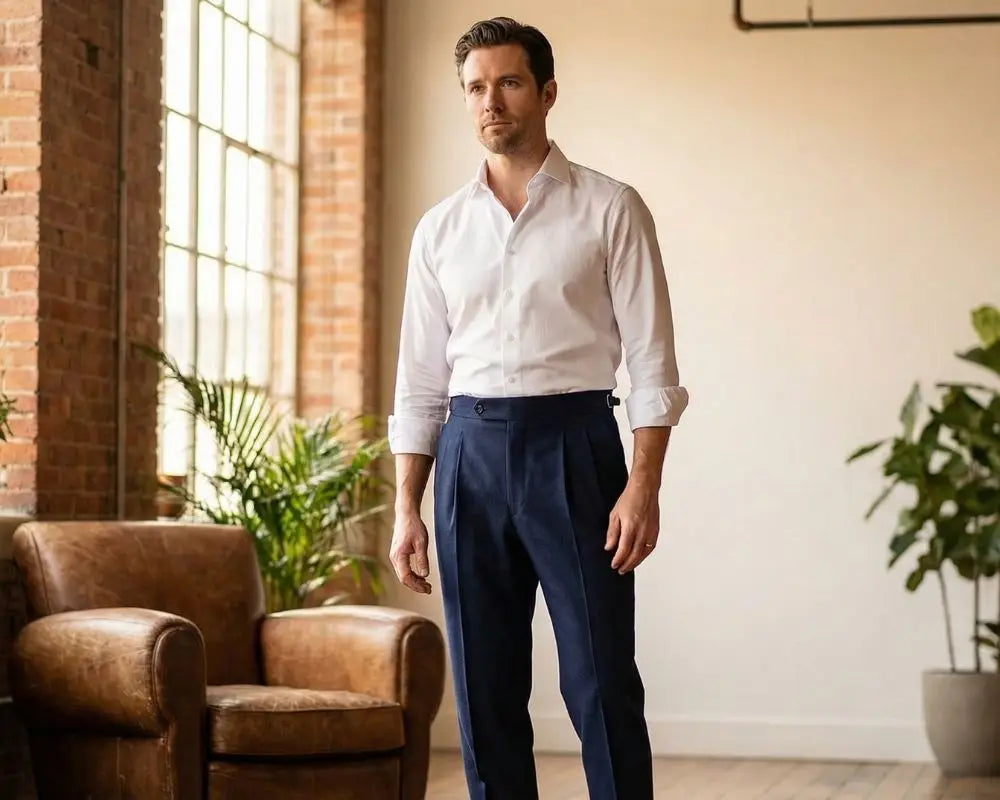
For years, pleated pants have been dismissed as relics of the '80s and '90s. The mention alone triggers images of baggy khakis and boxy suits. But here's the thing: pleated trousers never actually left the wardrobes of well-dressed men. From Cary Grant to Sean Connery's James Bond, pleats have always been a hallmark of refined menswear. SAYKI recommends pleated pants for any man who wants extra comfort without losing a sharp, tailored line, and today they're experiencing a well-deserved resurgence. Let's explore why pleated pants deserve a spot in your wardrobe and how to wear them with confidence.
Contents
What Are Pleated Pants?
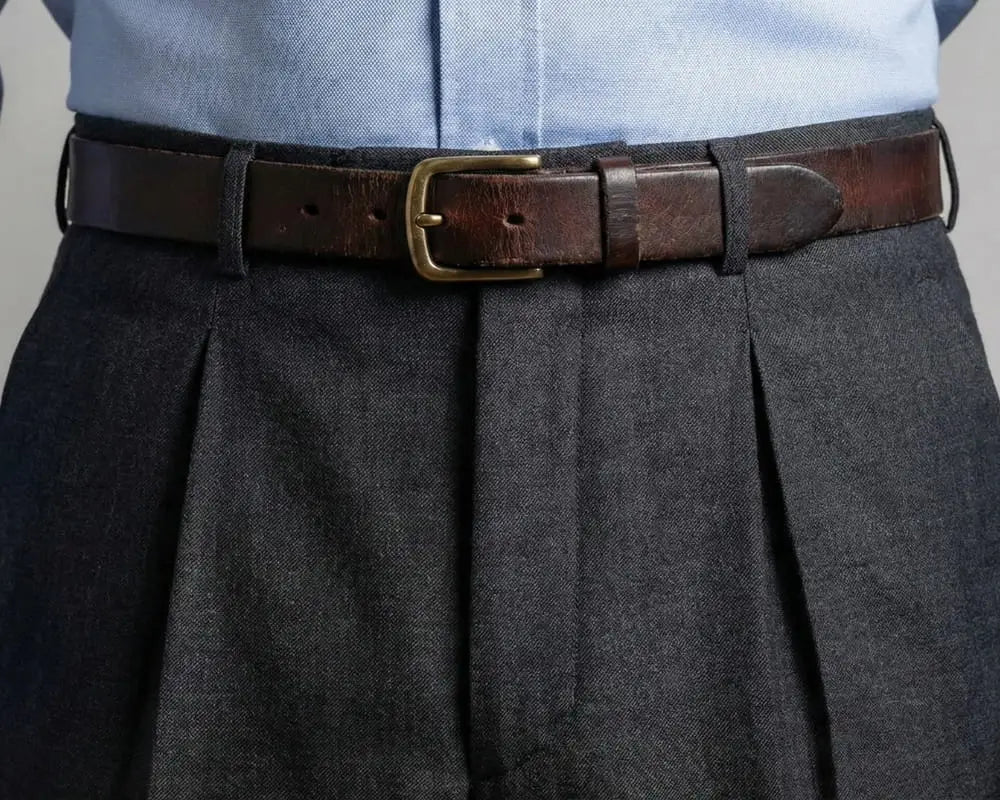
Pleated pants feature folds of fabric below the waistband, in the rise area at the front of the trousers. These folds create extra room and visual interest compared to flat-front pants, where the fabric lies smooth against the body.
Pleats come in two main orientations. Forward-facing pleats (also called inward pleats) point toward the fly and are associated with British tailoring traditions. Reverse pleats (outward-facing) point toward the pockets and are favored in Italian tailoring, particularly the Neapolitan style. Most trousers feature either one or two pleats on each side, though some adventurous dressers have experimented with three or even four.
Pleat Orientation Guide
A Brief History of Pleated Pants
Pleated trousers have been a menswear staple for over a century. During the golden age of Hollywood, leading men wore them as standard. Look at any photograph of Fred Astaire, and you'll see pleated, high-waisted trousers that allowed him to move with grace on the dance floor. The style dominated menswear through the mid-20th century.
The negative reputation came later. During the 1980s and 1990s, designers took pleats to extremes. Trousers became excessively baggy, with too much fabric creating unflattering ballooning around the midsection. This era gave us the stereotypical image of the "middle management" look: oversized pleated khakis paired with boxy blazers.
The backlash was swift. By the early 2000s, slim-fit, flat-front pants dominated fashion. Pleats became associated with "dad pants" and outdated style. But fashion is cyclical. Around 2016, pleated trousers began appearing on designer runways again. This time, they came with modern, tailored silhouettes that honored the original purpose of pleats without the excess.
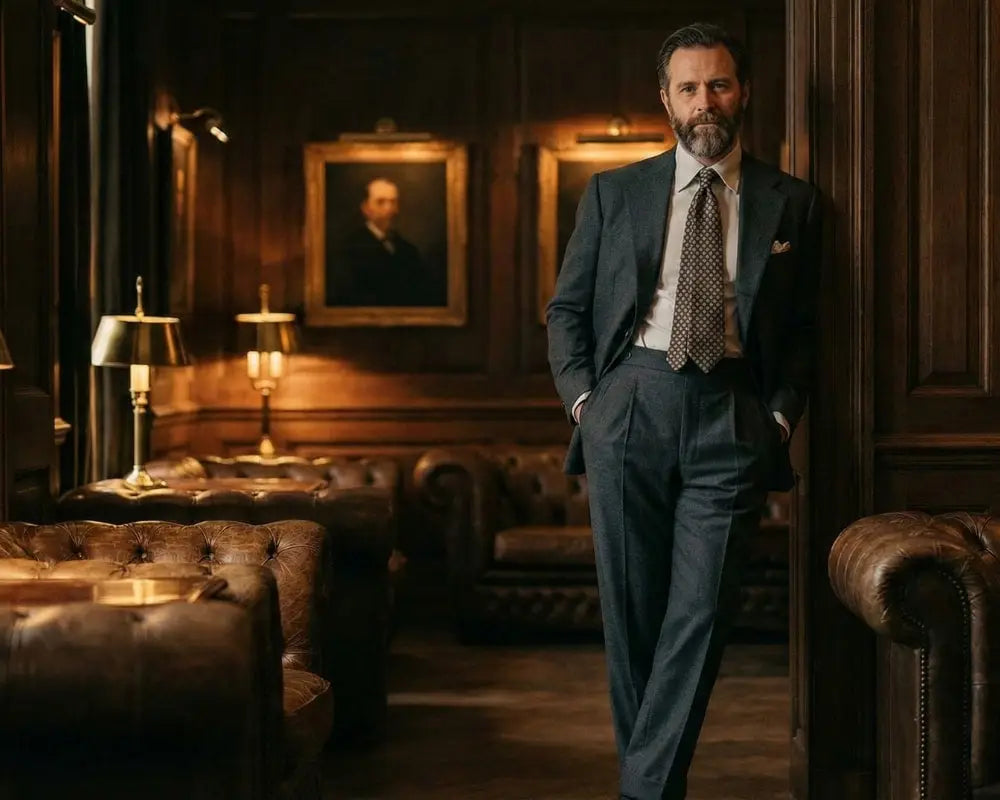
Benefits of Pleated Pants: Comfort & Style
Pleats serve both functional and aesthetic purposes. Understanding these benefits helps explain why discerning dressers have never abandoned them.
Enhanced comfort and mobility: The extra fabric in the rise allows for greater freedom of movement. Whether you're sitting at a desk all day, getting in and out of cars, or simply walking, pleats provide breathing room that flat-front pants cannot match. This is particularly valuable for men with athletic builds or larger thighs.
Flattering for different body types: Contrary to popular belief, pleats can be slimming. When worn at the natural waist (as they should be), the visual details of the pleats draw the eye and help disguise weight around the midsection. The structured folds create vertical lines that elongate the silhouette.
Superior drape: Well-made pleated trousers drape beautifully. The fabric falls in a way that flat-front pants simply cannot replicate. This is especially noticeable with quality wool and linen fabrics.
Classic elegance: There's a reason why dress pants from the most distinguished eras featured pleats. They communicate an understanding of traditional tailoring and an appreciation for details that many modern garments lack.
Why Choose Pleated Pants?
Types of Pleats: Single, Double & Forward
Not all pleats are created equal. The number and direction of your pleats affect both the look and functionality of your trousers.
Single pleats offer a subtle introduction to the style. They blend seamlessly into the front crease of the trouser leg, creating a continuous line from hem to waistband. Single pleats work well for men new to the style or those who prefer understated elegance. They provide some extra room without dramatically changing the trouser's profile.
Double pleats make a stronger visual statement. They offer more room and a more pronounced drape, making them ideal for men with larger thighs or those who prioritize comfort. Double pleats are common in traditional British and American tailoring.
Forward (inward) pleats are generally considered more conservative. They tend to stay closed and flat, maintaining a streamlined appearance even when you move. This makes them a safer choice for business settings.
Reverse (outward) pleats have a more relaxed feel. They may open slightly when you sit or move, creating a fuller look. Italian tailors, particularly those from Naples, favor this style for its elegant drape and Mediterranean sensibility.
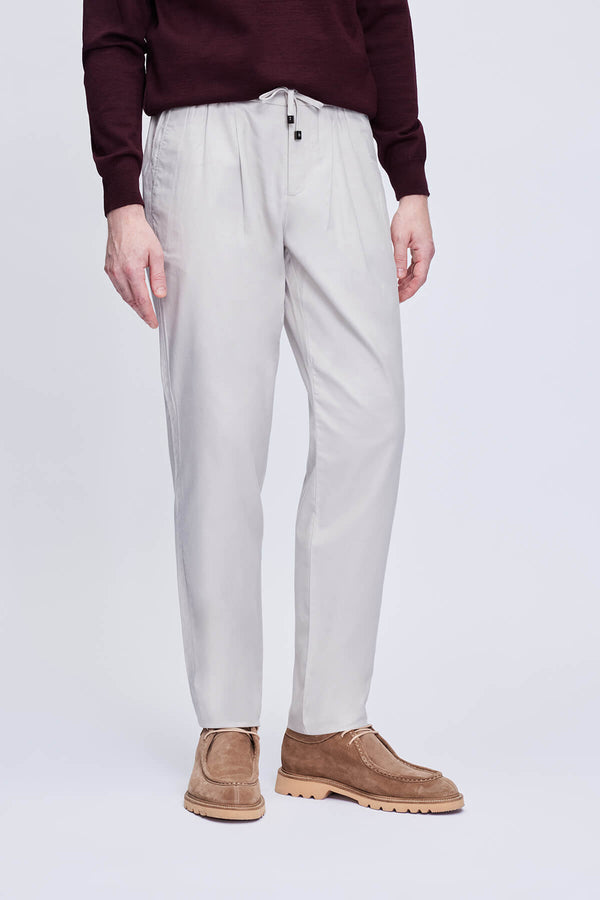
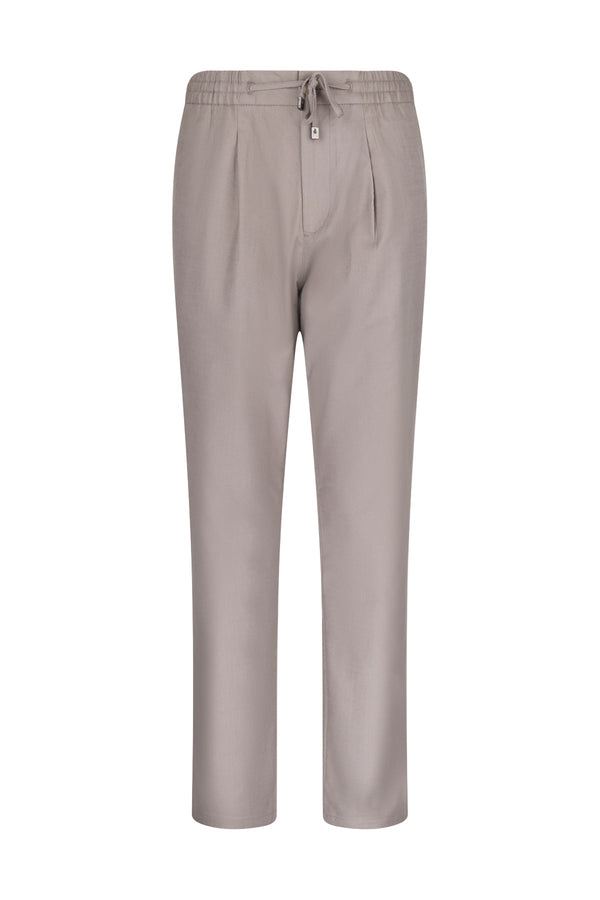
Editor's Picks
Pleated Pants vs. Flat-Front Pants
The debate between pleated and flat-front pants often comes down to personal preference and body type. Here's an honest comparison.
| Aspect | Pleated Pants | Flat-Front Pants |
|---|---|---|
| Best for body type | Athletic builds, larger thighs, midsection weight | Slim builds, flat stomachs |
| Comfort level | Higher (more room for movement) | Can feel restrictive when sitting |
| Ideal rise | High rise (natural waist) | Low to mid rise |
| Style perception | Classic, traditional, elegant | Modern, minimal, contemporary |
| Best fabrics | Lightweight wool, linen, tropical blends | Any weight works well |
Flat-front pants work well for slim men who want a streamlined, modern look. They're the default choice in contemporary fashion and pair naturally with slim-fit jackets and casual wear. However, they offer little forgiveness for men with weight around the middle or muscular thighs.
Pleated pants excel when worn correctly. The key is fit: modern pleated trousers should be tailored through the leg, not baggy throughout. When the only extra fabric is in the pleats themselves, the result is both comfortable and refined.
See also : What Are Slacks? Slacks vs. Dress Pants
When & Where to Wear Pleated Pants
Pleated pants are versatile enough for most occasions, though some settings suit them better than others.
Business and professional settings: Pleated trousers are perfectly appropriate for the office. In fact, they were the standard in business attire for decades. A pair of charcoal or navy pleated men's pants with a well-fitted blazer communicates sophistication and attention to detail.
Formal occasions: For weddings, galas, and other dressy events, pleated trousers pair beautifully with men's suits. The traditional construction complements formal wear perfectly. Most quality tuxedo trousers feature pleats for good reason.
Smart casual: Pleated chinos or cotton trousers work well for smart casual settings. Pair them with a polo shirt or an unbuttoned dress shirt with rolled sleeves for a Mediterranean-inspired look.
Consider avoiding pleats for: Very casual settings where jeans or casual flat-front chinos would be more appropriate. Extremely slim-fit, fashion-forward outfits where the traditional nature of pleats might clash with the overall aesthetic.
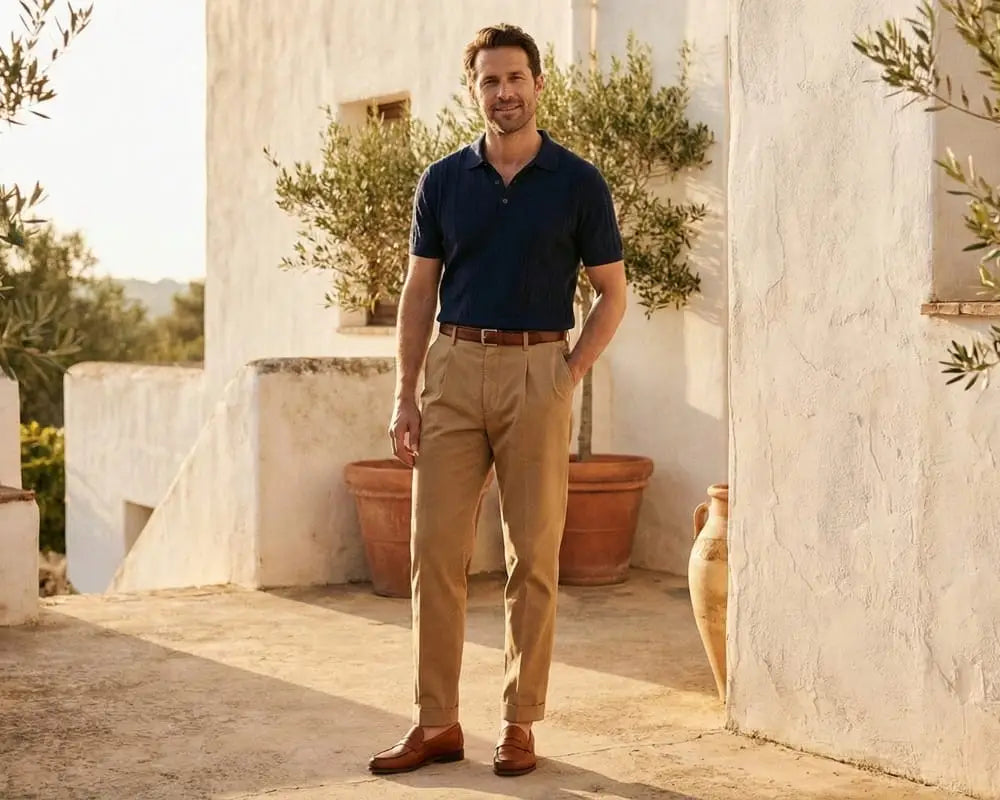
How to Style Pleated Pants
Wearing pleated pants well requires attention to a few key principles.
Wear them at your natural waist. This is non-negotiable. Pleated trousers are designed to sit at or near your belly button, not low on your hips. Wearing them too low defeats their purpose and creates an unflattering silhouette. A high rise also helps the pleats fall correctly and disguise any midsection weight.
Choose lighter fabrics when possible. Lightweight wool, tropical blends, and linen drape beautifully with pleats. Heavier fabrics like flannel can work, but they emphasize the volume of the pleats. If you're new to the style, start with lighter materials.
Consider the break carefully. A minimal break (where the trouser barely touches your shoe) or no break at all creates a cleaner, more modern look with pleated pants. Too much fabric pooling at the ankle reinforces outdated associations.
Pair with fitted jackets. A well-fitted sport coat or suit jacket balances the visual weight of pleated trousers. The jacket also partially covers the pleats, letting them do their job without being too prominent.
Cuffs are optional. Trouser cuffs add visual weight at the hem, which can counterbalance the pleats at the top. They also create a more traditional look. However, cuffs are not required. For a more contemporary appearance, skip them.
Coordinate your shirts. Both dress shirts and casual button-ups work well with pleated trousers. For a sophisticated European look, try an unbuttoned linen shirt with sleeves rolled up, tucked into high-waisted pleated pants.
Do pleated pants make you look bigger?
This is the most common concern about pleated pants, and the answer is: it depends entirely on the fit.
Poorly fitted pleated pants with excessive fabric throughout will make anyone look larger. This is the style that gave pleats their bad reputation. When trousers are baggy in the thighs, seat, and legs in addition to having pleats, the result is unflattering.
However, well-fitted pleated pants do not make you look bigger. In fact, they can be slimming. When worn at the natural waist, the vertical lines of the pleats create a lengthening effect. The structured folds draw the eye and add visual interest that distracts from any weight around the middle.
Men with some weight around their midsection often find that pleated pants are more flattering than flat-front options. Flat-front pants worn at a low rise tend to emphasize belly shape, while high-waisted pleated trousers smooth and disguise it.
The key is ensuring the rest of the trouser is properly tailored. The legs should be fitted (not tight, but not billowing), and the seat should be clean without excess fabric. When the only extra material is in the pleats themselves, the silhouette remains sharp.
Are pleated pants formal or casual?
Pleated pants occupy a unique position: they can be either formal or casual depending on the fabric, color, and how you style them.
On the formal end: Pleated wool trousers in charcoal, navy, or black are entirely appropriate for business settings, formal events, and dressy occasions. Most traditional suit trousers and tuxedo pants feature pleats. In this context, pleats signal an appreciation for classic tailoring.
On the casual end: Pleated cotton chinos or linen trousers are perfect for smart casual settings. Khaki, olive, or cream pleated pants paired with a polo or casual button-up create a relaxed but refined look that works for weekend outings, casual dinners, and warm-weather gatherings.
Think of pleats as a construction detail rather than a formality indicator. Just as a shirt can be formal (crisp white dress shirt) or casual (relaxed linen), pleated pants adapt to their context. The fabric weight, color, and accompanying pieces determine where they fall on the formality spectrum.
Can pleated trousers be tailored?
Absolutely. Pleated trousers can be tailored just like any other pants, though there are some specific considerations.
Tapering the legs: A tailor can slim the leg width of pleated pants to create a more modern silhouette. This is often the best way to update vintage or older pleated trousers that have wider cuts.
Adjusting the waist: The waist can be taken in or let out, though the range is limited by how the trousers were originally constructed. Taking in the waist may affect how the pleats fall, so work with an experienced tailor.
Hemming: Length adjustments work exactly as they do with flat-front pants. Discuss your preferred break (or lack thereof) with your tailor.
Adding or removing cuffs: Cuffs can typically be added if there's enough fabric, or removed if you prefer a cleaner hem.
What's difficult to change: The rise of pleated pants is challenging to alter significantly. If trousers sit too low or too high, it's often better to find a different pair rather than attempting major alterations.
When buying off the rack, look for pleated pants that fit well in the seat and waist, as these are the hardest areas to alter. The legs can be tapered, and the length adjusted, but starting with a good foundation makes all the difference.
Pleated Pants: Quick Style Guide
- Wear at natural waist
- Choose lighter fabrics
- Opt for minimal or no break
- Pair with fitted jackets
- Start with single pleats
- Wearing too low on hips
- Baggy fit throughout
- Excessive fabric pooling
- Overly casual pairings
- Heavy fabrics for beginners
Pleated pants are not a relic of the past. They're a timeless element of menswear that offers real benefits in comfort, fit, and style. The key is finding well-fitted versions and wearing them correctly. Whether you're building a professional wardrobe or looking to add variety to your casual rotation, pleated trousers deserve serious consideration. Try a pair, wear them at your natural waist, and you might wonder why you waited so long.
Frequently Asked Questions
Yes, this is essential. Pleated trousers are designed to sit at or near the belly button, not low on the hips. A high rise lets the pleats fall correctly, helps disguise any midsection weight, and keeps the silhouette sharp. Wearing them too low defeats their purpose and looks unflattering.
Forward pleats point inward toward the fly, follow British tailoring tradition, stay flat and closed, and read more formal. Reverse pleats point outward toward the pockets, follow Italian and Neapolitan style, may open slightly when sitting, and give a more relaxed, elegant drape.
Yes. After years of flat-front dominance, pleated trousers returned to designer runways around 2016 and have stayed. Modern versions come with tailored legs and clean lines, so they look current rather than dated. The key is a slim leg with the extra fabric kept only in the pleats.
Most dress and smart casual shoes work well. Pair charcoal or navy pleated wool trousers with leather oxfords, derbies, or loafers. For pleated chinos or linen, try suede loafers, minimalist sneakers, or boat shoes. Keep the break minimal so the shoe stays visible and the line looks clean.
Yes, with the right fit. Choose a single pleat rather than double, keep the leg trim, and avoid cuffs, which can visually shorten the leg. Wear them at the natural waist with a matching or tonal belt to create one long vertical line that adds height.


Comments
Great article…articulate and informative…you covered it all without being wordy