


Chelsea boots are one of the most adaptable shoes in menswear. With their clean silhouette and slip-on design, they bridge the gap between casual style and polished tailoring. This guide covers how to pair Chelsea boots with suits, which materials and colors work best, and how to keep your boots looking sharp for years.

Contents
What Are Chelsea Boots?
Chelsea boots are ankle-high, slip-on boots defined by their elastic side panels and clean, laceless design. The style dates back to the Victorian era, when Queen Victoria's bootmaker J. Sparkes-Hall first used vulcanized rubber to create a boot that could be pulled on and off without buckles, buttons, or laces. That simple innovation produced one of the most lasting silhouettes in men's footwear.
The boots gained mainstream popularity in the 1960s when London's mod scene adopted them. The Beatles famously wore a Cuban-heeled version designed by Anello & Davide, and the style quickly spread across the Western world. Today, Chelsea boots remain a wardrobe staple because their minimal shape works across dress codes - from a full suit to jeans and a jacket.
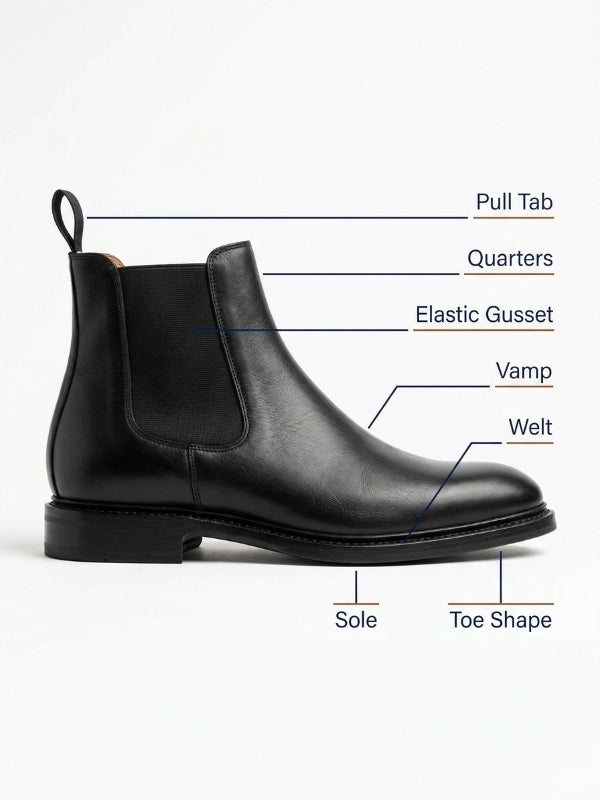
The defining features are straightforward: a close-fitting ankle cut, elastic gussets on both sides for easy entry, a pull tab at the back heel, and typically a round or almond-shaped toe. Most are constructed from two pieces of leather (the front vamp and back quarters) joined by the elastic panel. This construction keeps the profile slim and elegant, which is exactly why they pair so well with tailored clothing.
Suit Fits That Pair Best with Chelsea Boots
Not every suit silhouette works equally well with Chelsea boots. Because Chelseas have a slim, tapered shape, the cut of your pants matters more than you might expect. The wrong trouser width can make an otherwise sharp outfit look unbalanced.

The golden rule is proportion. Slim and tapered trousers let the Chelsea boot's shape speak for itself. Wide-leg or boot-cut pants swallow the boot's silhouette, defeating the purpose of wearing such a streamlined shoe. If your trouser hem pools heavily on top of the boot, the look loses its sharpness.
One more detail: never tuck your trousers into Chelsea boots. The fabric should fall naturally over the top of the boot with a clean line at the ankle. Tucking creates bulk around the shaft and gives the outfit a clunky appearance that works against the boot's refined design.
Leather vs. Suede: Choosing Materials
The material of your Chelsea boot sets the tone for the entire outfit. Leather and suede each have distinct strengths, and knowing when to reach for one over the other will help you dress appropriately for any setting.
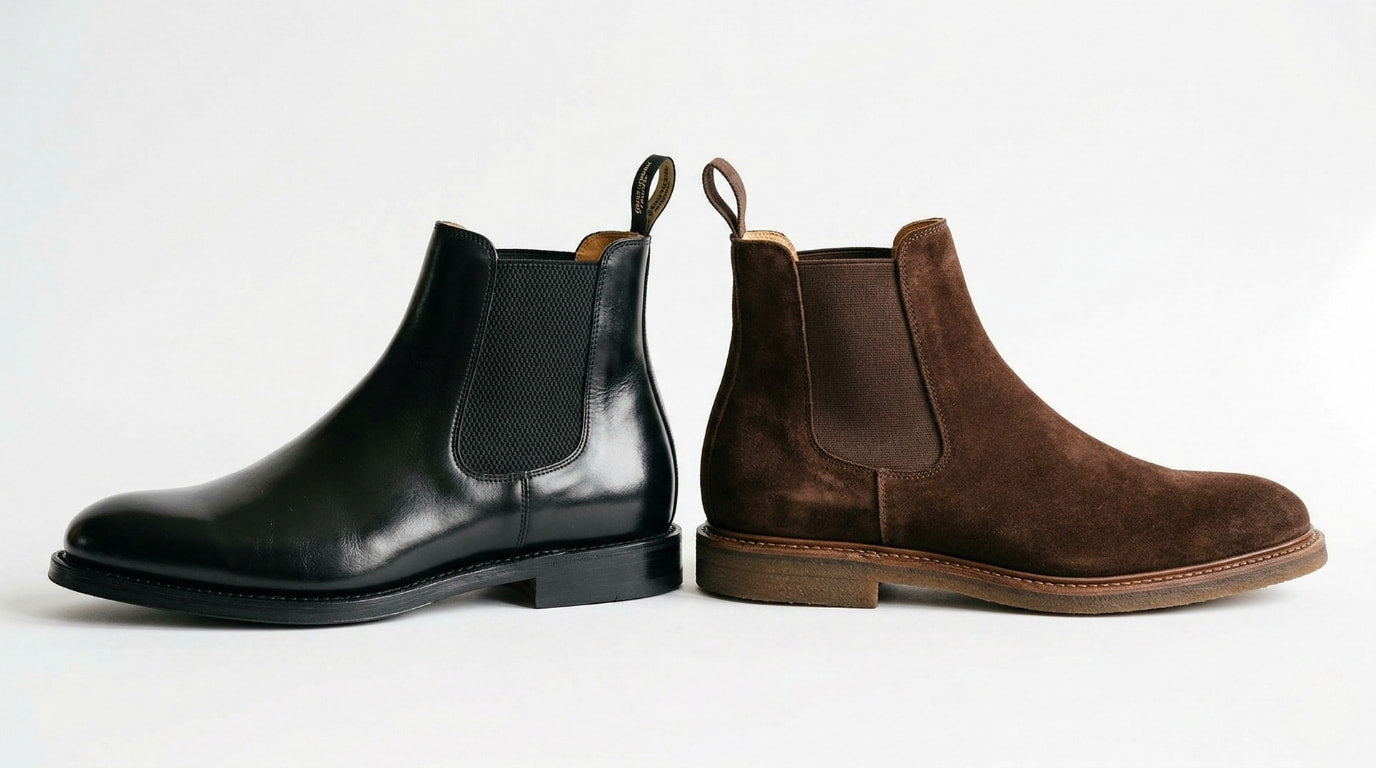
Leather Chelsea boots are your go-to for anything business or above. Their smooth, polished surface reads as formal and pairs naturally with wool, flannel, and structured suits in darker tones. Black leather is the most versatile single choice - it works with black, charcoal, and navy suits from the office to evening events. Brown leather is the natural second option, opening up pairings with lighter grays, blues, and earth-toned outfits. Leather also holds up well in light rain and is easy to maintain with regular conditioning and polish.
Suede Chelsea boots bring texture and visual warmth that smooth leather cannot match. A chocolate or tan suede pair looks excellent under a lighter-colored or summer-weight suit, and suede's softer finish works naturally with unstructured blazers and linen. The trade-off is durability: suede stains easily, absorbs water, and shows wear faster than leather. Always apply a suede protector spray before the first wear, and save suede boots for dry days and indoor events.
Color Coordination Tips
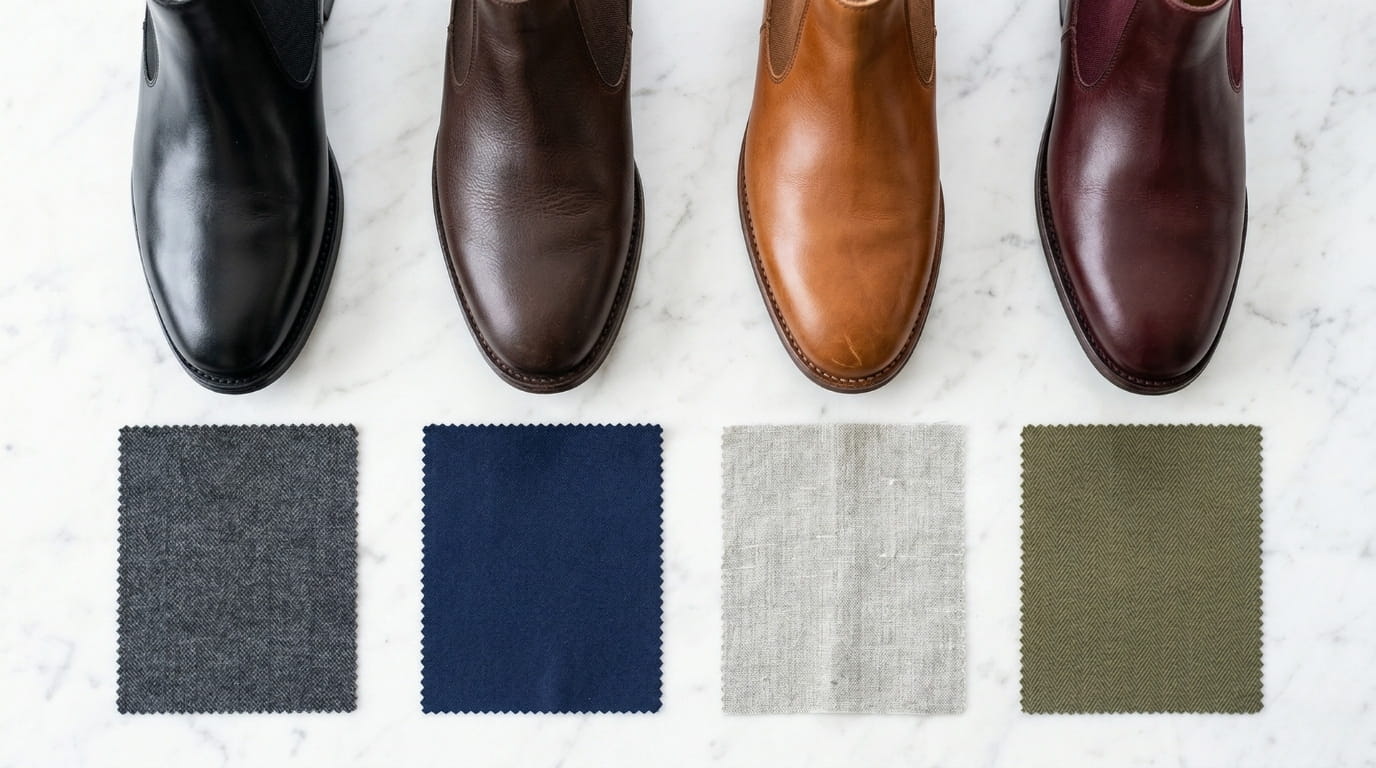
Getting the boot-to-suit color match right is the difference between looking intentional and looking thrown together. The general principle is simple: darker boots are more formal, lighter boots are more casual.
← Scroll horizontally to see full table →
| Suit Color | Best Boot Colors | Setting |
|---|---|---|
| Black | Black leather | Formal events, evening wear, corporate offices |
| Charcoal | Black or dark brown leather | Business meetings, interviews, professional settings |
| Navy | Brown leather, tan suede, or black leather | Versatile - works from office to smart casual outings |
| Light Gray | Black, brown, or burgundy leather | Daytime events, spring/summer occasions |
| Blue (lighter shades) | Tan, cognac, or light brown | Garden parties, casual weddings, weekend wear |
| Earth Tones / Olive | Brown or burgundy leather | Creative offices, fall events, relaxed professional |
One combination to avoid: light tan or sand-colored boots with a very dark suit. The contrast is too stark for formal settings and can make the boots look like an afterthought. Save those lighter shades for unstructured blazers and casual suit separates where the tonal gap feels intentional rather than accidental.
Find Your Suit Match
Browse our collection of modern and classic fit suits, designed to pair perfectly with Chelsea boots and polished footwear.
Shop SuitsSocks & Accessories for Chelsea Boots
Socks may seem like a minor detail, but the wrong choice can undermine an otherwise well-put-together outfit. Because Chelsea boots sit at the ankle and your trouser hem may ride up slightly when you sit, there is a real chance your socks will be visible.
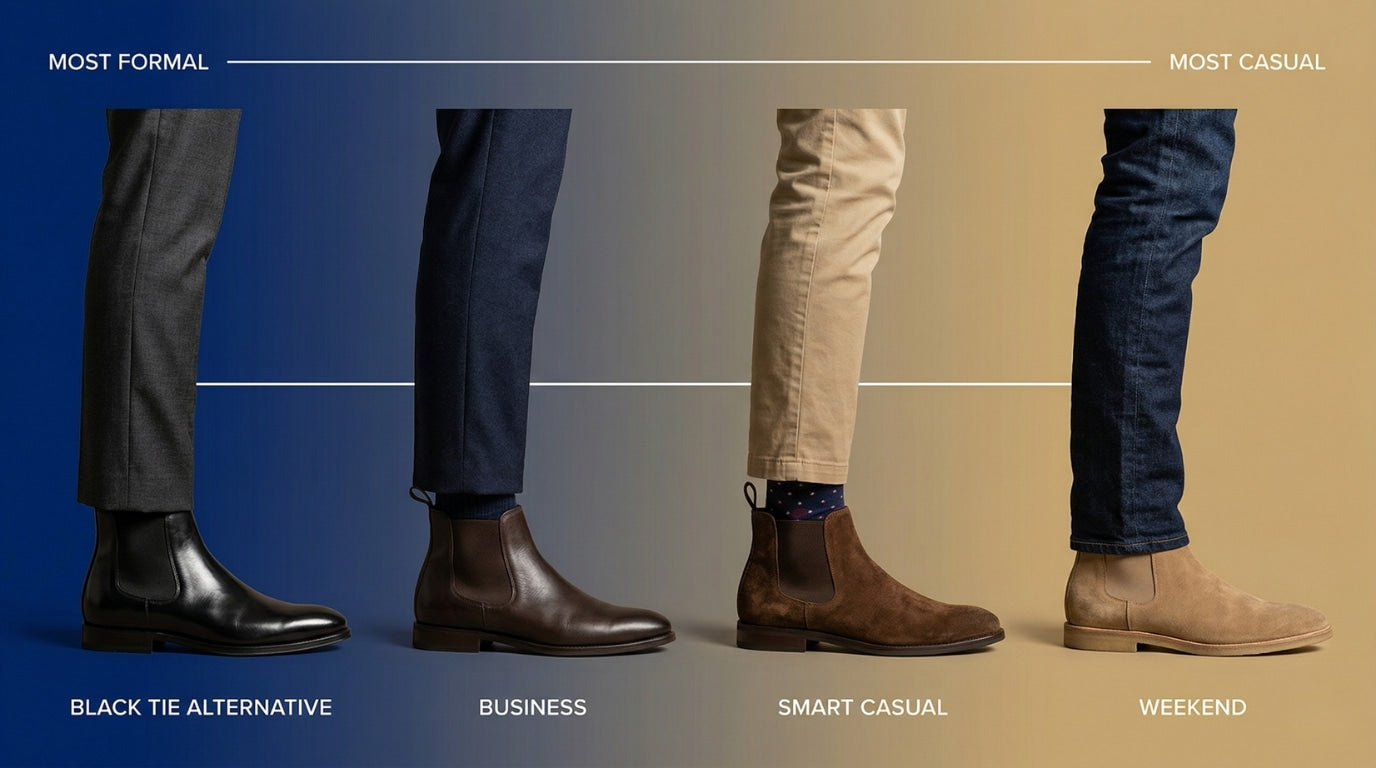
For formal and business settings, match your socks to your suit or boot color - black socks with black boots is the safest foundation. Choose mid-calf or over-the-calf lengths so bare skin never shows when you cross your legs. Wool or cotton blends breathe well and sit comfortably inside the boot's snug fit. Avoid athletic socks entirely: they are too thick for Chelseas and can make the boot feel tight.
Your belt should match the color and finish of your boots. A polished leather belt with polished leather boots creates visual consistency from waist to toe. If your boot has a metal pull tab, try to echo that metal tone in your watch, cufflinks, or tie bar for a cohesive finish.
For accessories beyond socks and belts, keep it simple. Chelsea boots are inherently understated, and overloading the outfit with too many statement pieces can clash with the boot's minimal character. A pocket square that picks up the boot's color - burgundy, cognac, or deep brown - ties the upper and lower halves of the outfit together without competing for attention.
If you prefer thicker socks during colder months, keep in mind that Chelsea boots have no lacing system for micro-adjustments. You may need to go up a half size to accommodate heavier socks without sacrificing comfort. Try your boots on with the socks you plan to wear most often before committing to a size.
Care & Maintenance of Chelsea Boots
A good pair of Chelsea boots is an investment, and proper care can keep them looking sharp for a decade or more. The two main materials - leather and suede - require different approaches, but neither demands excessive effort.
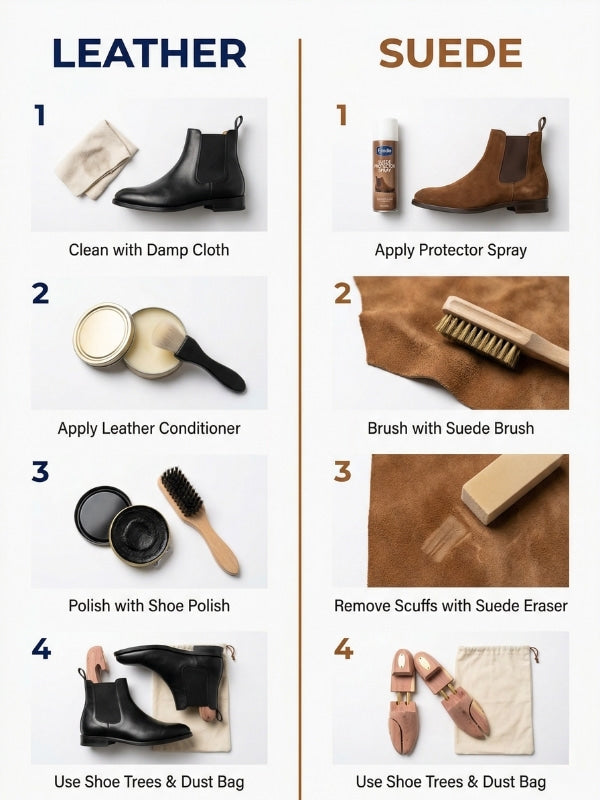
Leather Boot Care
Start by wiping your boots down with a damp cloth after each wear to remove surface dirt and dust. Every few months, apply a leather conditioner to prevent the material from drying out and cracking. Follow up with a matching shoe polish for shine and an extra layer of protection. Let the boots air dry fully before wearing them again. Never place them near direct heat sources like radiators or space heaters, as intense heat can warp the leather and weaken the glue holding the sole.
Suede Boot Care
Suede requires a lighter touch but more preventive care. Before wearing a new pair, spray them evenly with a suede protector to repel water and reduce staining. Use a suede brush after each wear to lift the nap and remove surface dust. For scuff marks, a suede eraser works well. If the boots get wet, let them dry naturally at room temperature, stuff them with newspaper to absorb moisture, and brush the nap once they are fully dry.
Storage
Always use cedar shoe trees when storing your Chelsea boots. Shoe trees absorb moisture from inside the boot, prevent creasing in the leather, and help the boot hold its shape between wears. If your boots came with dust bags, use them. Store the boots in a cool, dry space away from direct sunlight, which can cause fading and drying over time.
When to Avoid Chelsea Boots
Chelsea boots are remarkably versatile, but they are not the right shoe for every situation. Knowing where they fall short helps you avoid style missteps.

The biggest mistake men make with Chelsea boots is wearing them in conditions that damage the material and then blaming the boot. Leather can handle a light drizzle, but it is not a rain boot. Suede should never see a wet sidewalk. If your commute involves unpredictable weather, keep a pair of casual shoes for the walk and swap into your Chelseas once you arrive.
Can you wear Chelsea boots to formal events?
Yes, Chelsea boots are appropriate for most formal events short of strict black-tie affairs. For weddings, business dinners, cocktail parties, and semi-formal celebrations, a pair of polished black or dark brown leather Chelsea boots works perfectly with a well-fitted suit. Choose a boot with a slim profile and an almond or pointed toe for the most refined look. The key is making sure the boots are clean, conditioned, and the leather has a visible shine. Pair them with slim or tapered trousers that break cleanly at the ankle, and your outfit will look just as polished as it would with traditional Oxfords or Derbys.
Do Chelsea boots work with casual suits?
Absolutely. In fact, Chelsea boots are often at their best with casual and smart-casual suits. A linen or cotton suit in a lighter color pairs beautifully with suede Chelsea boots for spring and summer events. Unstructured blazers with chinos and a Chelsea boot create a relaxed yet intentional look that works for creative offices, weekend outings, and date nights. You can also try a broken suit approach - mixing a blazer with separate trousers - where a slightly chunkier Chelsea boot adds personality without looking out of place. The less formal the suit, the more freedom you have with boot color, material, and sole thickness.
How long do Chelsea boots last?
With proper care, a quality pair of Chelsea boots can last well over ten years. Boots built with Goodyear welt construction tend to be the most durable, lasting 12 to 20 years with regular conditioning and occasional resoling. Blake-stitched boots typically last six to ten years. Less expensive cemented-sole boots may only hold up for two to four years, even with good maintenance. The elastic side panels are surprisingly resilient in well-made boots and rarely need replacement. To get the most life from your pair, rotate them with other footwear, use shoe trees after each wear, and condition the leather regularly. A local cobbler can replace worn soles and stretched elastic when the time comes, extending the boot's lifespan even further.