


15 min read


You have the shoes, the shirt, the tuxedo, and everything for the wedding or gala is ready. Then you check the forecast and realize it will be cold before you even reach the venue. Suddenly you are standing in front of your closet, unsure which coat you can put over all that tailoring without ruining the look you spent hours planning.
What this guide covers
What Coat to Wear Over a Tuxedo When the Weather Will Not Cooperate
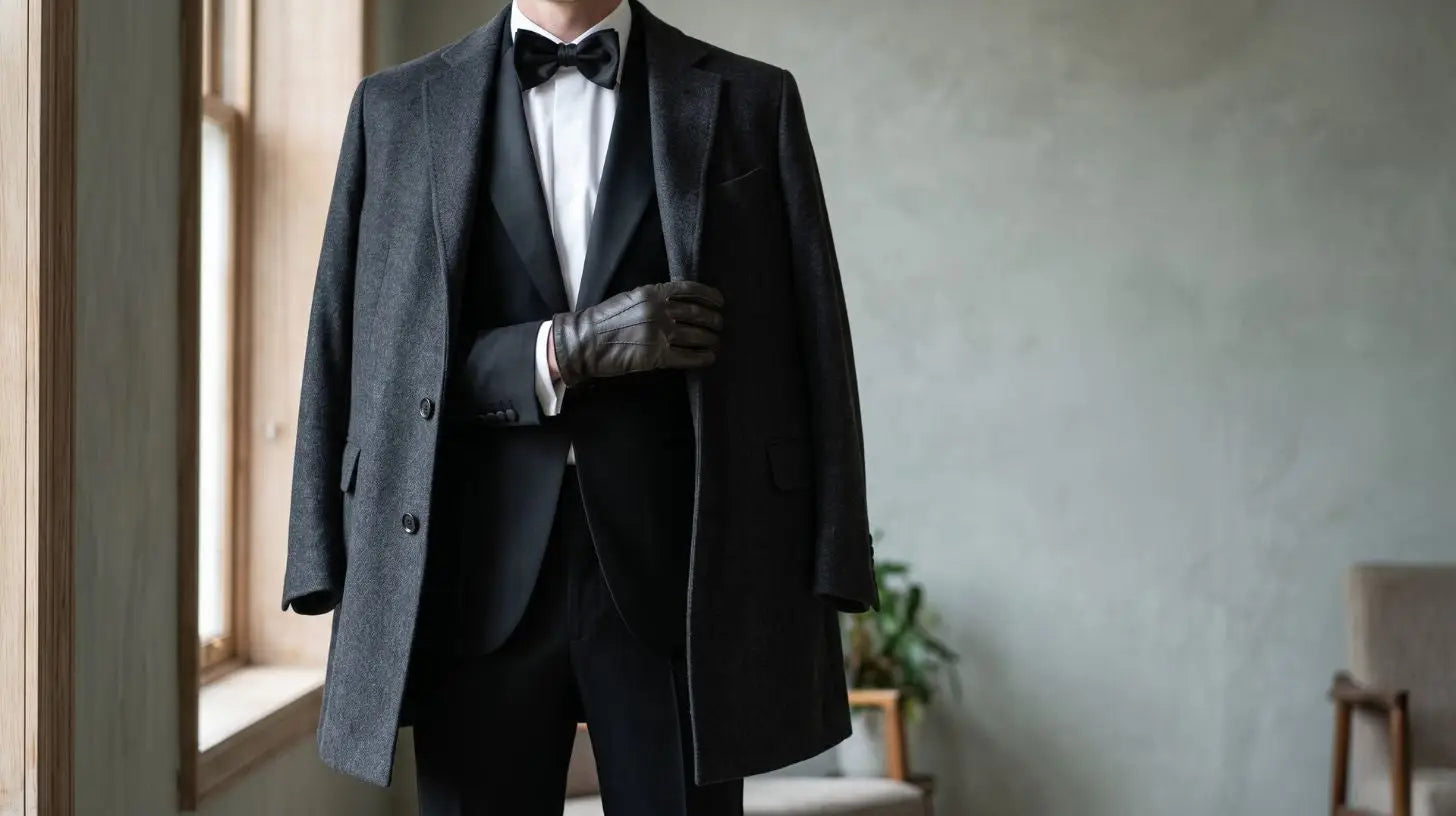
The coat is the first and last thing people see, so it either extends your formal confidence or undoes it before you say hello. Here is the short version before the detail:
- Start with a classic wool overcoat or a clean-lined topcoat. Anything too sporty or puffy will fight the tuxedo and draw the wrong kind of attention.
- Match the coat's formality to the event. A black-tie affair calls for a dress coat, not a belted trench; a creative black-tie party might allow a velvet-collared chesterfield.
- Check that the coat fits over your tuxedo shoulders without pulling. You want room across the back, like a Regular Fit or Dynamic Fit outerwear piece, so nothing binds when you move.
- Look for a length that clears the bottom of your tux jacket. A coat that stops short exposes the vented hem and breaks the visual line.
- If you are in a hurry or on a budget, you do not need a separate dress coat. A well-tailored navy or charcoal topcoat you already own can work, provided it is single-breasted and free of heavy military detailing.
- For winter weddings, choose wool or a cashmere-blend. These breathe, layer well, and will not cling to the tuxedo the way a synthetic shell might.
- Do not forget your hands and neck. Leather gloves and a tonal scarf that tucks inside the collar keep you looking pulled-together, not bundled-up.
This page is most useful if you are a prom-goer, a groom, a groomsman, a guest at a formal winter wedding, or anyone told "black tie required" who does not want outerwear to wreck the entrance. The coat is the outer layer of a full kit, and the pieces beneath it are mapped out in What Accessories Do You Need for a Tuxedo Guide.
Why the Wrong Coat Can Make You Look Like You Forgot the Dress Code
Picture arriving at a candlelit reception in a sleek black tuxedo, then shrugging off a faded parka at the coat check. The stakes are high because the coat frames everything else.
- You show up in a sporty puffer or a heavy anorak. It keeps you warm but reads as a pre-game hangout, not a black-tie celebration. Swap it for a single-breasted wool overcoat that hits just below the knee so the silhouette matches the tuxedo's clean line.
- Your coat's collar competes with the tux lapel. A wide shearling or fur collar can overwhelm the notch or peak underneath. Choose a coat with a modest notched or peak lapel, or no collar at all, so the tuxedo stays the star.
- The coat sleeves are too short to cover the shirt cuff. An inch of formal white shirt showing between coat and glove looks like a hand-me-down. Try the coat on over your tux jacket, or check the sleeve measurement against your dress shirt sleeve plus a little ease.
- You wear a belted trench or a long, flowing car coat. The extra fabric and tie bunch around the waist and create a messy silhouette. Stick to a clean, unbelted topcoat or a chesterfield with a hidden button closure.
- The coat fabric is too shiny or synthetic. It picks up ambient light and looks cheap next to the tuxedo's matte wool. Invest in a coat with high wool content, which keeps the finish quiet and consistent.
- You forget that rental tux and rental coat add up fast. A typical prom or wedding rental can run $150 to $200 for the tux alone, plus extra for a coat. For $199.90 you can buy a tuxedo from SAYKI and own a solid formal overcoat you will wear again and keep.
- The color clashes without you noticing. A camel coat over a black tux can work for daytime or creative black-tie, but at a strict evening affair it creates a jarring contrast. For the safest option, pair a black tux with a charcoal, black, or midnight blue coat.
- You ignore the weather's practical demands. A lightweight linen-blend coat is fine from car to door, but a winter wedding in Chicago needs more. Match the weight to the season: midweight wool for fall, heavier wool-cashmere for deep winter.
Getting this right is about the feeling of arriving without second-guessing a single detail. That feeling starts the moment you throw your shoulders back under a coat that looks like it was always meant to be there.
How to Select the Perfect Formal Overcoat for Any Black-Tie Occasion
You are already juggling the tuxedo, shirt studs, waist covering, and shoes, so adding a coat can feel like one too many decisions. These steps narrow your options fast.
Step 1: Pin down the formality level of the event
Look at the invitation or the host's guidance. "Black tie" needs a coat as formal as the tuxedo itself, such as a wool overcoat in black or charcoal with minimal detailing. "Creative black tie" or a relaxed outdoor wedding gives you more room, like a navy topcoat or a smart chesterfield with a subtle velvet collar.
Step 2: Decide on the coat style that best complements your tux
Three styles almost always work. Choose the one that mirrors your tuxedo's front:
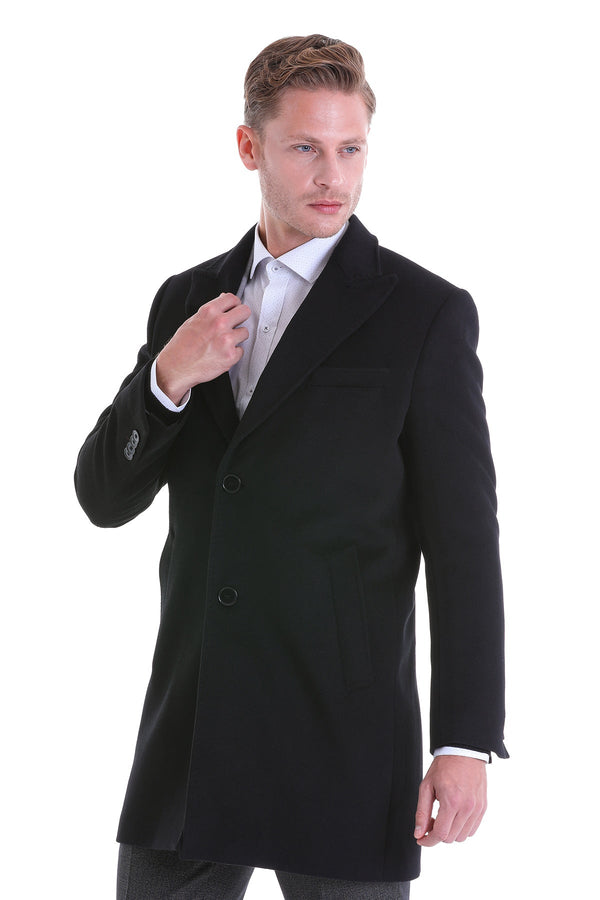
Single-breasted overcoat
Most versatile
Opens in a straight V that mirrors the tuxedo's line and never fights for attention.
Chesterfield
Evening link
Often has a velvet collar that echoes the satin lapel facing, ideal for black-tie evenings.
Guard's coat
Polished edge
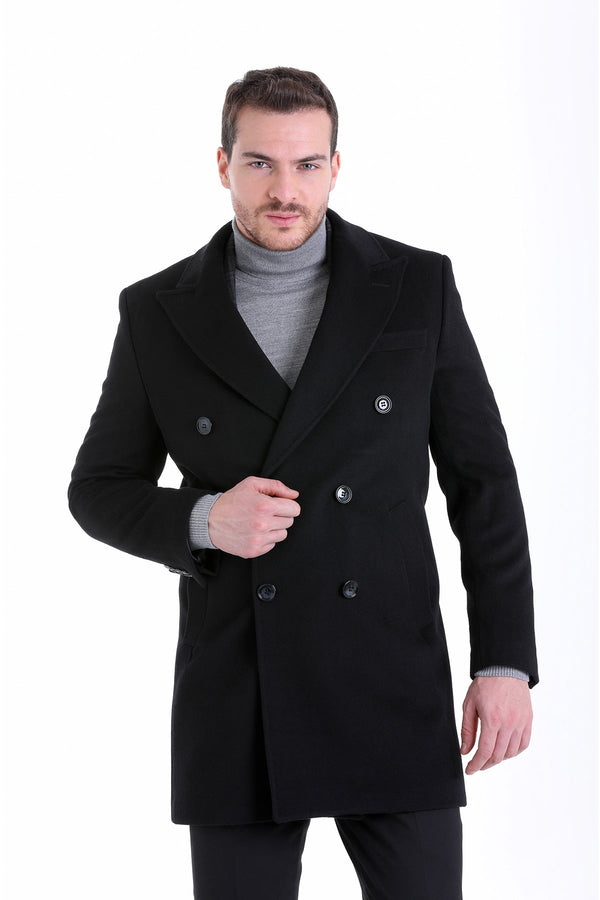
A clean double-breasted cut that sits close to the body, best with a double-breasted tux.
If your tux is single-breasted, stick with a single-breasted coat to keep the front harmonious. A double-breasted coat looks great if your tuxedo is also double-breasted and you are tall enough to carry the extra fabric.
Step 3: Lock in the color
Black is the most formal and disappears into the background, letting the tux do the talking. Charcoal grey is nearly as formal and softens the look slightly. Midnight blue adds depth under evening lights and pairs beautifully with a navy tuxedo. Earthy tones like camel or olive can work for daytime formal events, but avoid them for strict, after-six black-tie.
Step 4: Get the length right
Your overcoat should fall below the tuxedo jacket hem by at least a couple of inches. When standing, the hem should hit between mid-thigh and just above the knee. Shorter, and the tux jacket flaps out the bottom; much longer, and it starts to look like an opera coat, a specific style you would choose intentionally rather than by default.
Step 5: Test the shoulder and sleeve fit over your tux
Never buy a formal coat without trying it on over the actual tuxedo jacket you will wear, or at least a jacket of similar weight. Raise your arms slightly as if hugging someone; the back should not pull tight. The coat's shoulder seams should sit comfortably on top of the tuxedo's shoulder. If you are between sizes, a Dynamic or Comfort Fit in outerwear gives you extra room without looking baggy.
Step 6: Factor in how you will travel and arrive
For a short car-to-venue walk, a midweight wool coat is enough. If you will be outdoors for photos, waiting for shuttles, or walking the city in winter, you need a heavier fabric and a wind-resistant weave. Look for a tight-weave wool or a wool-cashmere blend with a full lining, which holds heat and drapes cleanly over the tux.
Step 7: Do not overlook details that catch the light
Buttons, pocket flaps, and stitching are on display every time you enter a room. Horn or horn-look buttons in a dark tone disappear quietly, while shiny metal buttons reflect light and pull focus. Choose minimal external pocketing; flap pockets are fine, but avoid patch pockets or cargo details. The cleaner the front, the more natural the transition from coat to tux.
Once you work through these practical checks, you will instinctively know which coat feels right the moment you pull it on.
Editor's Picks
Own the tuxedo, then layer with confidence
Try a tux and a coat together under the fitting-room lights. Tuxedos from $199.90.
Shop TuxedosFormal Coat Mistakes That Stand Out Under Chandeliers and Flash Photography
It is surprisingly easy to grab the wrong coat in a rush, and formal events are exactly the kind of hustle where mistakes happen. You can sidestep them once you know what to look for.
- Wearing a heavy, padded parka over a slim tuxedo. The contrast is so extreme it makes the outfit look like a last-minute scramble. Choose an overcoat with a tailored build cut to layer over a jacket.
- Picking a double-breasted coat when your tux is single-breasted. The mismatched closures can disrupt your front view at the coat check. If you love the double-breasted look, test it in a mirror with your actual tux to see if the lapels align.
- Forgetting that satin lapels shine, and so can a cheap coat fabric. A glossy polyester coat reflects light even when the tuxedo has only a subtle luster. Look for a matte finish or a fine twill wool that does not throw glare.
- Choosing a coat color that matches your date's outfit, not your tux. It is a sweet instinct, but the result is two unrelated formal looks side by side. Anchor the coat to your own tuxedo first; your date's attire can be echoed in a pocket square or boutonniere.
- Ignoring the lining. A stiff, crinkly lining makes the coat slide around and restricts movement when dancing. Opt for a smooth viscose or Bemberg-like lining that glides over the tux jacket.
- Not checking the back vent. A coat with no vent can split awkwardly when you sit or bend. A center back vent or double vent gives you room and keeps the coat from riding up.
- Buying a coat that is too snug because you tried it on over a thin sweater. Always try it on over your tuxedo or a similarly built jacket, and ask the associate for a tailor's tape if you are between sizes.
When you avoid these slip-ups, you buy back the mental space to enjoy the occasion fully, coat and all. The bow tie underneath deserves the same care, which How to Pick the Right Bow Tie for a Tuxedo covers in full.
How to Keep Your Formal Overcoat Looking Sharp for Seasons to Come
You just invested in a piece that will likely see you through multiple weddings, galas, and winter events. A few simple habits preserve its shape and finish so it never looks tired next to the tuxedo hanging beside it.
- Brush the coat after each wear. A soft garment brush removes surface dust before it settles into the wool, keeping the fabric fresh and delaying dry cleaning.
- Hang it on a wide, contoured wooden hanger. Thin wire hangers distort the shoulder line over time. A sturdy hanger supports the weight and lets air circulate through the sleeves.
- Spot-clean spills immediately, and do not rub. Blot liquid with a clean white cloth and, if needed, dab with a little cool water. Avoid detergents that strip the wool's natural oils.
- Dry clean sparingly, no more than once or twice a season. Frequent chemical cleaning fades color and weakens fabric. Unless visibly soiled, brushing and airing out are usually enough.
- Store it in a breathable garment bag off-season. Cotton or non-woven bags protect against dust while letting moisture escape. Never use a plastic dry-cleaner bag long term, as it traps humidity and encourages musty odors.
- Steam, do not iron. A handheld steamer relaxes light creases without risk of shine or scorch. Hold it a few inches away and let the fabric relax naturally.
- Keep it away from direct heat and strong light. Heat dries out wool fibers, and UV light fades dark formal colors. A cool, dark section of your wardrobe is ideal.
- Check buttons and lining twice a year. Loose threads quickly become missing buttons. A quick sew or a tailor's lining repair now costs far less than replacing the coat later.
Good coat care takes about five minutes a month, but it feels like slipping into a new piece every time the invitations start arriving.
How SAYKI Can Help You Own the Complete Black-Tie Look
Finding a tuxedo that fits well at a price that does not feel like a one-night rental is hard enough, and layering a coat over it should not add more stress. SAYKI was built to solve exactly that, giving you the craftsmanship of a heritage menswear brand at a cost that makes owning both a tuxedo and a formal overcoat a realistic step.
Rooted in over 100 years of expertise since 1924, SAYKI is the U.S. arm of Hatemoglu, a third-generation family company. Our flagship opened at 375 Madison Ave, New York, NY 10017, and we now have nine stores across the country, from Paramus, NJ to King of Prussia, PA, and from Bethesda, MD to Arlington, VA. You can walk in, try a tuxedo and coat together, and see exactly how they pair under the dressing room lights. The full approach to fit and fabric is laid out in the Complete Tuxedo Buying Guide for Men.
Our tuxedos and suits start at $199.90, the same range as many U.S. rental prices, except you keep it. That same buy-at-rental-prices logic extends to our outerwear, available in Slim, Regular, Dynamic, and Comfort Fits. For layering over a tux, a Regular or Dynamic Fit outerwear piece usually gives the clean drape you need without bulk. Because the collections are designed as a complete wardrobe, the colors and fabrics tend to work together, so you will not be guessing whether the charcoal coat matches the black tux. Find your nearest location through the SAYKI store locator.
Frequently asked questions
How do I dress for a black tie event as a man when it is cold outside?
Start with a well-fitted tuxedo, black or midnight blue, then add a formal overcoat at least as long as the tux jacket. A single-breasted wool topcoat in charcoal or black is the safest and most elegant choice. Pair it with leather gloves, a tonal scarf, and polished black dress shoes. If you are buying rather than renting, you can own a tuxedo from SAYKI for $199.90 and pick an overcoat in a complementary fit and fabric at a similar practical price.
What is the difference between a tuxedo and a suit for prom, and does it change which coat I should wear?
A tuxedo has satin-faced lapels, a satin stripe down the trouser seam, and is worn with a bow tie and a waist covering; a suit has matching fabric throughout and usually takes a long tie. For prom, both are options, but if you choose a tux, your coat should be a formal overcoat, not a casual raincoat or bomber. A classic dark wool topcoat works over either, but it looks most natural over the more formal tuxedo.
Is it worth buying a tuxedo instead of renting one?
For most men the math is straightforward: a rental can cost $150 to $200 for one event, while a tuxedo from SAYKI starts at $199.90 and belongs to you for life. Attend just one more wedding, prom, or gala and the cost per wear drops below a rental. You can also buy the matching formal coat once rather than repeatedly renting one that may not fit. Over five years, ownership is the more economical and stylish route.
What types of outerwear are best for men in winter when dressing up?
For formal winter settings, the top choices are the single-breasted overcoat, the chesterfield with its velvet collar, and the guard's coat. These are made from wool or wool blends and cut long enough to cover a suit or tuxedo jacket. Avoid ski jackets, quilted parkas, and anything with a casual nylon sheen, since they break the formal silhouette instantly. For a winter wedding, a midweight wool topcoat is the most reliable companion to your tux.
What is the difference between a trench coat and an overcoat when worn over a tuxedo?
A trench coat is typically water-resistant and lightweight, with epaulettes, a belt, and a storm flap, details that lean military and casual. An overcoat or topcoat is built from heavier wool, has a clean front, and is designed to be worn over a tailored jacket. Over a tuxedo, the streamlined overcoat wins every time; a trench risks looking borrowed from a different wardrobe. For black-tie, always reach for the overcoat.
Does SAYKI have a store in New York where I can try on a tuxedo and a coat together?
Yes. Our New York City flagship is at 375 Madison Ave, New York, NY 10017. You can try on tuxedos in Slim, Regular, Dynamic, and Comfort Fit, then layer our outerwear over them right in the fitting room. The store is open Monday through Friday 10 AM to 8 PM, Saturday 11 AM to 7 PM, and Sunday 11 AM to 6 PM. The team can help you match a coat to your tuxedo and confirm the fit works.