


14 min read


Picking the right shoe color for your suit sounds simple until you're standing in front of the closet second-guessing yourself. Navy and grey are the two most versatile suit colors in menswear, and each one pairs with a different range of shoes. This guide breaks down which shoe colors work, which ones don't, and how to match your accessories so the whole outfit looks intentional. SAYKI recommends owning one good pair of brown and one of black leather to start, since those two shades cover almost every navy or grey suit you will reach for.

Contents
Color Theory: Suit & Shoe Combinations
You don't need to be a designer to understand why certain suit and shoe combinations look right together. It comes down to a few straightforward principles of color theory that apply to any outfit.
Contrast is the foundation. A shoe color that's noticeably lighter or darker than your suit creates visual separation, which makes both pieces stand out. A navy suit with brown shoes works because the warm brown tone contrasts with the cool blue of the suit. A charcoal suit with black shoes, on the other hand, works through harmony - the tones are close enough that the outfit reads as a clean, unified look.
Warm and cool tones matter too. Navy is a cool color, so it pairs naturally with warm shoe colors like cognac, tan, and burgundy. Grey sits in the neutral zone, meaning it works with both warm browns and cool blacks depending on the shade. Light grey suits look best with darker shoes to anchor the outfit, while charcoal suits can handle anything from black to medium brown.
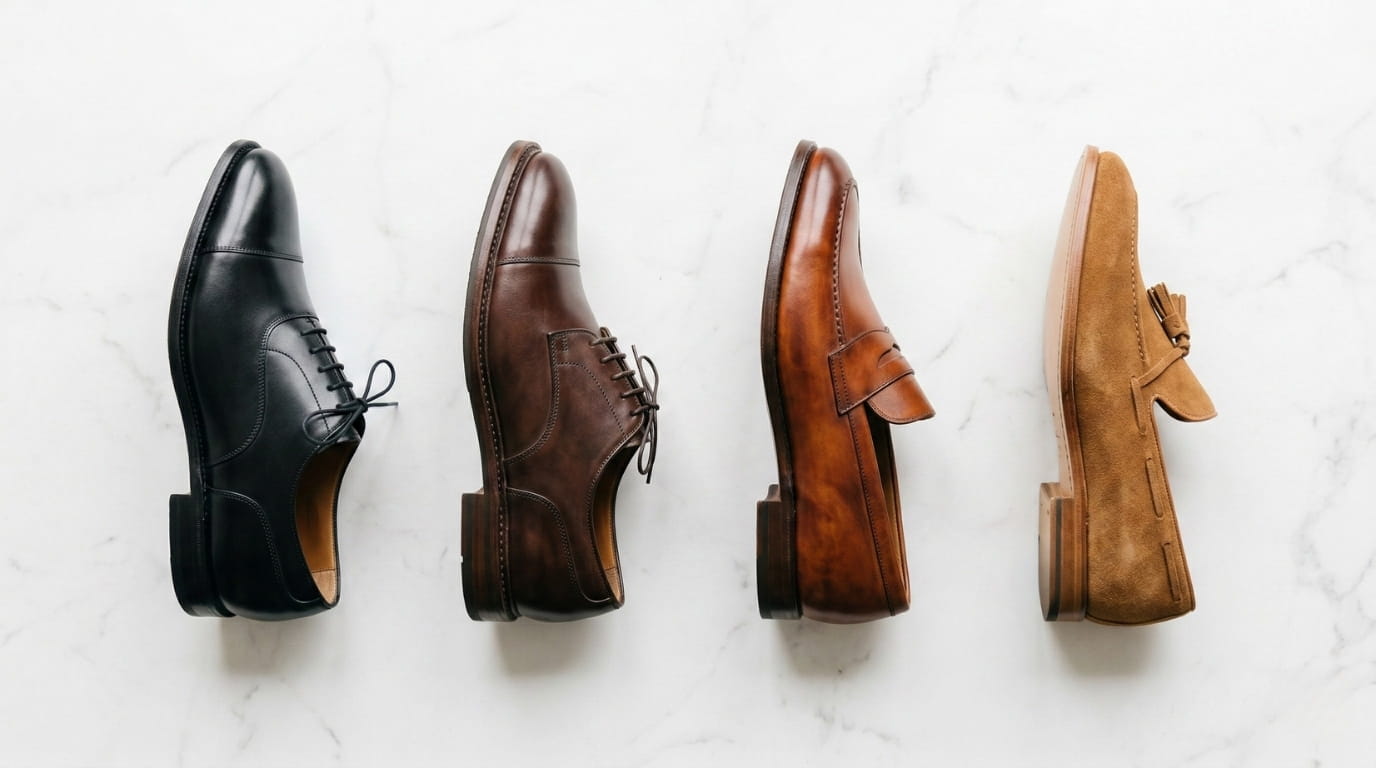
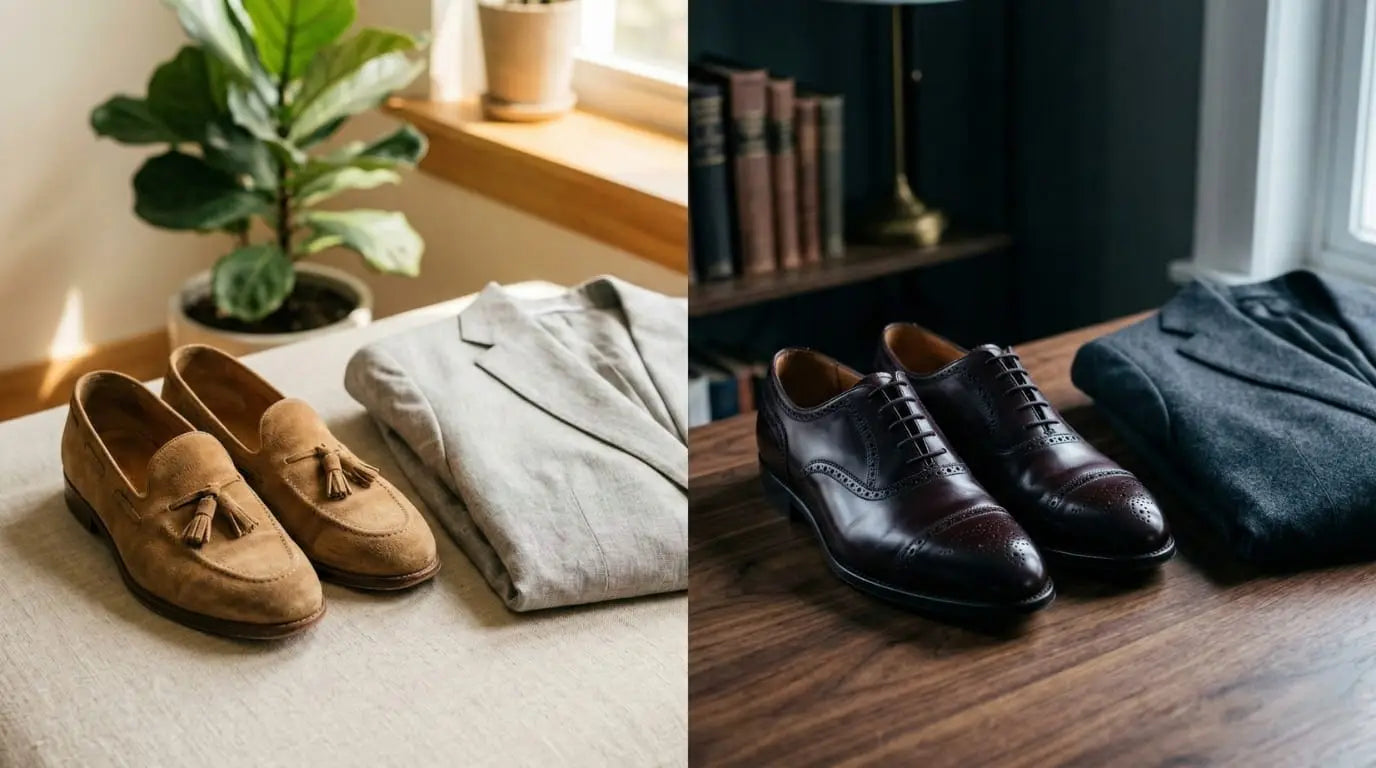
The third principle is occasion-appropriateness. Darker shoe colors read as more formal. Lighter and warmer shoe colors feel more relaxed. A pair of polished black oxfords dresses a suit up. A pair of tan suede loafers dresses it down. Understanding this spectrum helps you match your footwear to the setting without overthinking it.
Shoe Colors for Navy Suits
Navy is the most popular suit color in men's wardrobes, and for good reason. It flatters almost every skin tone, works across seasons, and pairs well with a wide range of shoe colors. Here are the combinations that deliver the best results.
Brown and Cognac
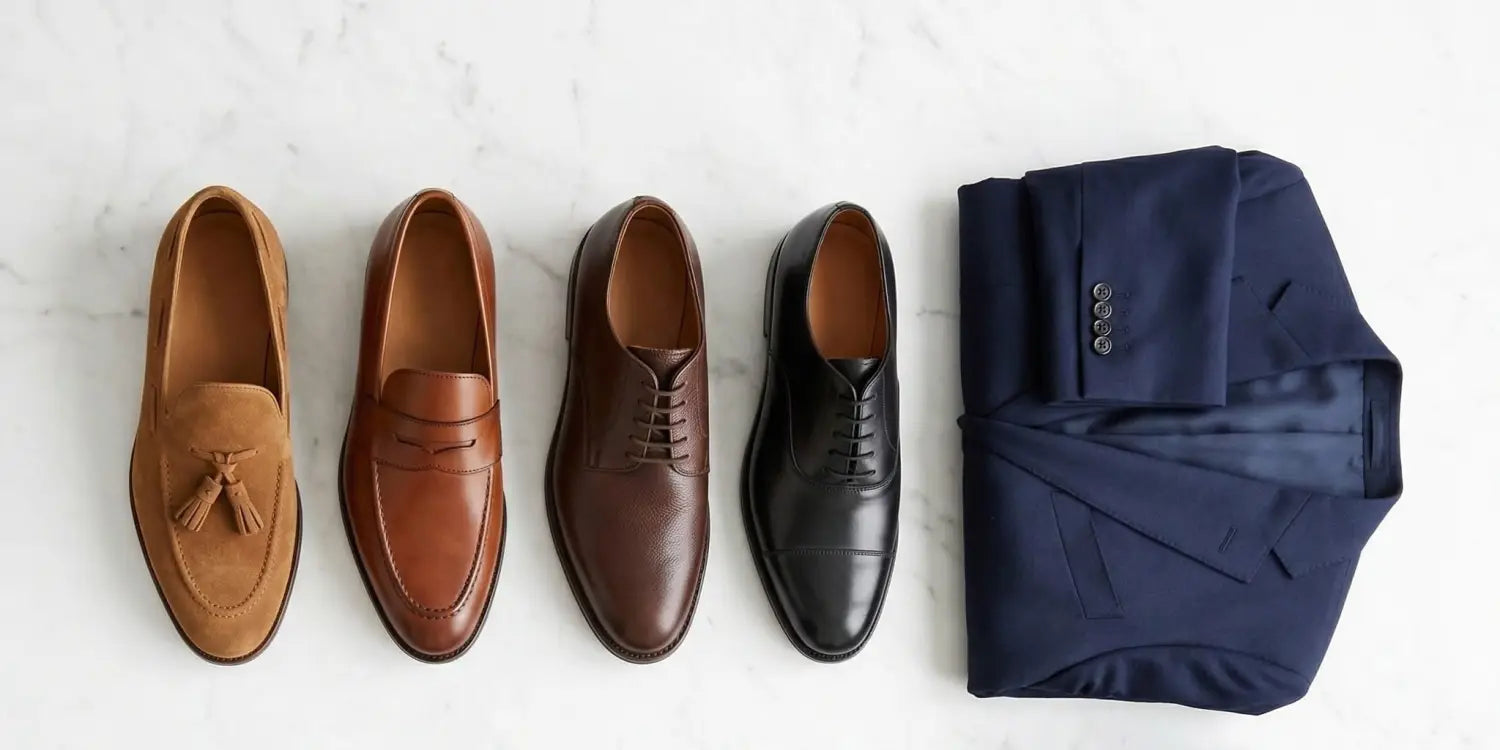
Brown shoes with a navy suit is one of the most reliable pairings in menswear. The warmth of brown leather creates a natural contrast against the cool depth of navy that looks polished without being stiff. Cognac and medium brown tones are the sweet spot for most settings - they're dressy enough for the office and relaxed enough for a weekend dinner. Dark brown works for more conservative environments, while lighter tan leans casual. SAYKI suits in navy pair especially well with mid-tone brown shoes because the fabric's rich dye provides a clean canvas for warm leather tones to stand out.
Black
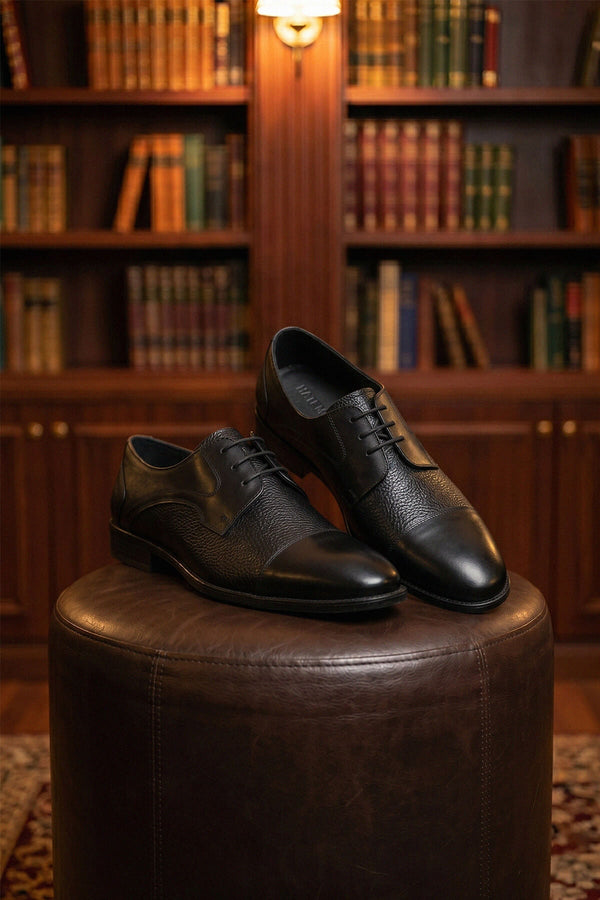
Black shoes with a navy suit is a classic combination that skews formal. This pairing is your go-to for business meetings, evening events, and any setting where you want to look sharp without drawing attention to your footwear. The key is making sure the black shoes are polished and in good condition - scuffed black leather against a crisp navy suit creates an awkward contrast. Opt for oxfords or cap-toe shoes in high-shine leather for the most refined look.
Burgundy and Oxblood
Burgundy shoes with navy is a step up in style confidence. The deep red-brown tone complements navy beautifully and adds a layer of personality that brown or black can't quite match. This combination reads as intentional and put-together, making it a strong choice for events where you want to stand out. Oxblood, which is slightly darker and more subdued, works in business settings where burgundy might feel too bold.
Tan and Light Brown
Lighter shoe tones like tan and camel work with navy suits in warmer weather and casual settings. The high contrast between a dark navy suit and light tan shoes creates an eye-catching look, but it's not the right choice for conservative offices or formal occasions. Save this combination for spring and summer events, outdoor weddings, and business casual Fridays.

Shoe Colors for Grey Suits
Grey suits are the true chameleons of a man's wardrobe. Because grey is a neutral color, it opens the door to shoe options that wouldn't work as well with navy or other suit colors. The shade of grey - light, medium, or charcoal - is the main factor in deciding which shoe color fits best.
Brown and Dark Brown
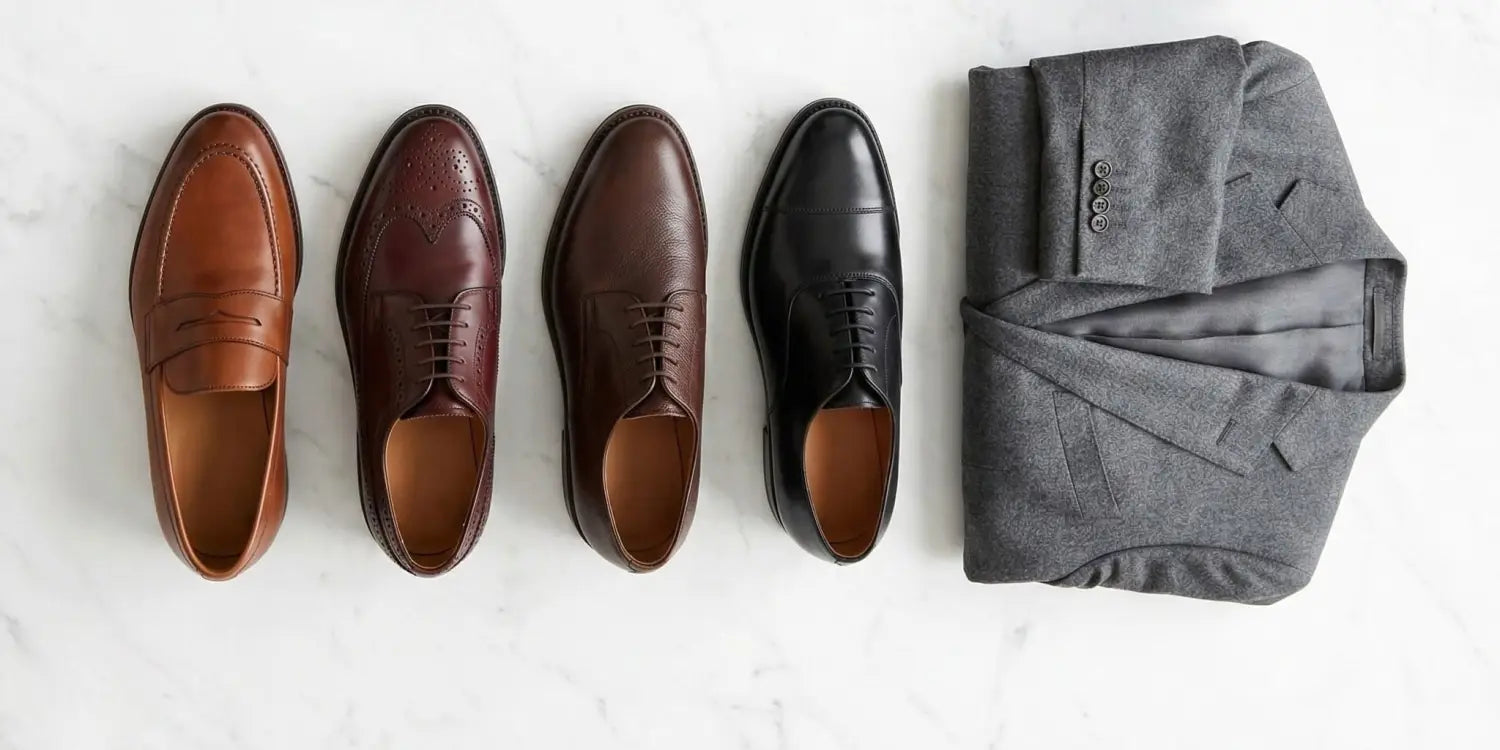
Brown shoes with a grey suit is a pairing that balances warmth and sophistication. For medium grey suits, aim for a mid-brown or cognac shoe - the contrast is visible but not jarring. For charcoal, dark brown leather creates a rich, grounded look that works in both business and social settings. Light grey suits can handle the full brown spectrum, though lighter tans tend to work better than very dark brown, which can feel heavy against the lightness of the suit.
Black
Black shoes with a grey suit is the most formal version of this combination. It works across every shade of grey, but the effect changes. Charcoal with black reads as powerful and authoritative - a boardroom-ready combination. Medium grey with black is clean and professional. Light grey with black creates a stronger contrast that works for formal events, though it can feel a bit stark for everyday wear. When in doubt about what to wear to a formal occasion, a grey suit with black shoes is always a safe and polished choice.
Burgundy and Wine
Burgundy shoes add richness and personality to grey suits in a way that's hard to achieve with other shoe colors. The deep red tones bring warmth to grey's coolness without clashing. This combination works particularly well with medium and charcoal grey suits and is an excellent option for weddings, cocktail parties, and any occasion where you want to look sharp with a subtle point of difference.
Tan and Suede Options
Tan and lighter brown shoes pair best with light to medium grey suits during warmer months. Suede in particular looks great with grey because the matte texture of suede against the smooth wool of a suit creates an appealing mix of surfaces. This is a decidedly casual-leaning combination, so keep it for relaxed dress codes and warm-weather occasions.
Editor's Picks

← Scroll horizontally to see full comparison →
| Grey Shade | Best Shoe Colors | Best Settings | Avoid |
|---|---|---|---|
| Light Grey | Tan, medium brown, burgundy, white sneakers (casual) | Spring/summer events, outdoor weddings, business casual | Very dark brown (looks heavy) |
| Medium Grey | Cognac, dark brown, burgundy, black | Office, client meetings, date nights, weddings | Exact grey-toned shoes (no contrast) |
| Charcoal | Black, dark brown, oxblood, burgundy | Formal events, boardrooms, evening occasions | Light tan (too much contrast for formal) |

Matching Accessories: Belts & Socks
Getting the shoes right is only half the equation. Your belts, socks, and other leather accessories need to work together for the outfit to look put-together rather than pieced-together.
The Belt-Shoe Rule
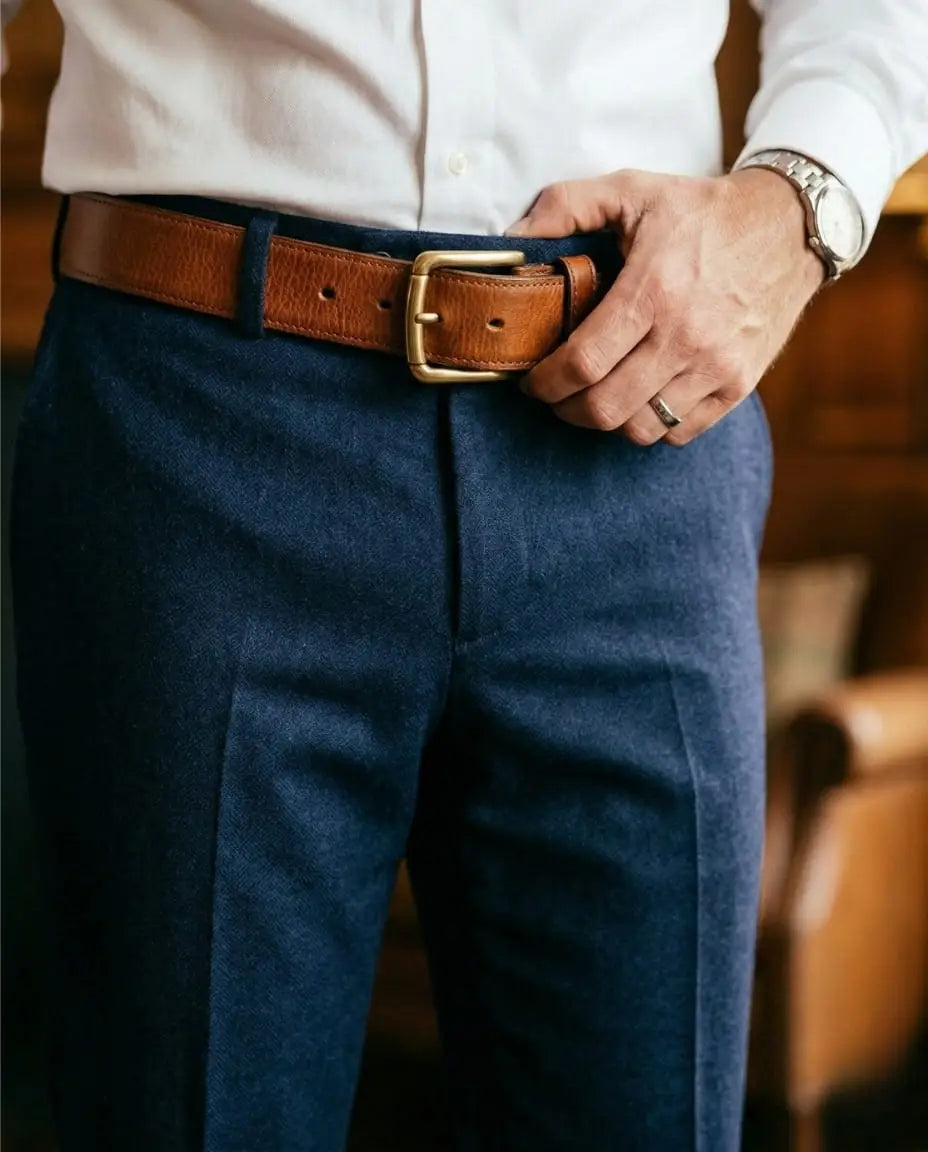
The simplest rule in men's accessories: your belt should match your shoes. Brown shoes call for a brown belt. Black shoes call for a black belt. This doesn't mean the shades need to be identical - a cognac shoe with a slightly darker brown belt is perfectly fine. What matters is that they're in the same color family. Wearing a black belt with brown shoes, or the reverse, is one of the easiest mistakes to spot and one of the simplest to avoid.
Watch and Metal Coordination
If you're wearing a watch with a leather strap, coordinate it with your shoes and belt. Brown leather strap for brown shoes, black for black. Metal watch bands are more flexible - silver and steel go with everything, while gold or rose gold pairs best with brown leather. This kind of detail is subtle, but it's the difference between looking dressed and looking styled.
Socks: The Bridge Between Suit and Shoe
Socks play a supporting role, but the wrong choice can undermine an otherwise strong outfit. The traditional approach is to match your socks to your suit rather than your shoes. Navy socks with a navy suit, grey socks with a grey suit. This creates a longer, uninterrupted line from trouser to shoe that makes you look taller and more polished. For a more modern or expressive approach, patterned socks in colors drawn from the suit-and-shoe combination add personality without breaking the visual flow.

Seasonal Considerations for Shoe Colors
The time of year should influence your shoe color choices almost as much as the suit color itself. Different seasons call for different tones, materials, and levels of formality.
Spring and Summer
Warmer months favor lighter, warmer shoe colors. Tan, light brown, and cognac all feel right when the sun is out and the fabrics get lighter. Suede becomes a strong option in spring and summer because its texture matches the casual energy of the season. A light grey SAYKI suit with tan suede loafers is a sharp warm-weather combination that's hard to beat. Brown and white spectator shoes or even clean white leather sneakers can work for the most relaxed dress codes.
Fall and Winter
As temperatures drop, shift toward darker, richer shoe tones. Dark brown, burgundy, oxblood, and black all feel seasonally appropriate against the heavier fabrics of fall and winter suits. Polished leather gains an edge over suede during wet months since it handles moisture better. A charcoal suit with oxblood brogues captures the rich, layered feeling of autumn dressing perfectly.
Year-Round Essentials
If you want to keep things simple, two shoe colors will carry you through every season: a medium brown (cognac or walnut) and black. These two options cover every suit color and every occasion. Brown handles the majority of business, social, and casual situations, while black steps in for formal events and conservative settings. Start with these two and expand your collection as your wardrobe grows.
Find Your Perfect Pair
Browse SAYKI's collection of suits and shoes to build a combination that fits your style and your schedule.
Shop ShoesFormal vs. Casual Footwear
The shoe style you choose matters just as much as the color. A navy suit with brown shoes can look completely different depending on whether those brown shoes are polished cap-toe oxfords or relaxed suede chukka boots.
Formal Shoe Styles
Oxford shoes are the most formal option. Their closed lacing system creates a sleek, streamlined silhouette that pairs naturally with tailored suits. Cap-toe and plain-toe oxfords in black or dark brown are the standard for business and formal events. Whole-cut shoes - made from a single piece of leather - are another refined option that works well for black-tie-optional and cocktail dress codes.
Business and Smart Casual Styles
Derby shoes, with their open lacing system, are slightly less formal than oxfords but more versatile in everyday use. Monk strap shoes (both single and double) sit in a similar spot on the formality spectrum and add visual interest through their buckle closures. Penny loafers and tassel loafers bridge the gap between business and casual, making them ideal for offices with relaxed dress codes, dinners, and weekend events where a suit still feels right.
Casual Shoe Styles
Chelsea boots and chukka boots work with suits in casual and creative settings. Their ankle-height profile pairs well with slimmer trousers and modern suit cuts. Suede versions lean even more casual and work best in warm weather. For the most relaxed dress codes, clean minimalist leather sneakers in white or off-white can work with unstructured suits and separates, though this is a combination best reserved for social events rather than professional ones.

Mistakes to Avoid in Color Matching
Most suit-and-shoe mistakes come from either mismatched formality levels or ignoring basic color coordination. Here are the missteps that stand out the most and how to avoid them.
Matching Your Suit and Shoes Too Closely
Wearing grey shoes with a grey suit or navy shoes with a navy suit creates a monochrome effect that washes out the entire outfit. Your shoes should create contrast with your suit, not blend into it. This applies to brown suits and brown shoes as well - if the shades are too similar, the outfit looks unplanned rather than coordinated.
Ignoring Shoe Condition
A great color combination means nothing if the shoes are scuffed, dirty, or worn out. Leather shoes need regular cleaning, conditioning, and polishing to maintain the color depth that makes them work with a well-tailored suit. Invest in a basic shoe care kit and use it. A well-maintained pair of shoes in the right color lifts the entire outfit.
Wearing the Wrong Formality for the Setting
A common mistake is wearing casual shoes with a formal suit or overly dressy shoes with a relaxed outfit. Suede chukka boots don't belong at a black-tie event, and patent leather oxfords look out of place at a garden party. Match the formality of your shoes to the formality of both the suit and the occasion.
Forgetting About the Belt
Even the best suit-and-shoe combination can fall apart if your belt is the wrong color. This is especially noticeable with brown shoes - wearing a black belt with cognac shoes creates a visual disconnect that draws attention for the wrong reasons. Always coordinate your belts with your shoes.
Can you wear brown shoes with grey suits?
Brown shoes are one of the best options for grey suits. The warmth of brown leather creates a balanced contrast against grey's neutral coolness, and the combination works across nearly every setting. For light grey suits, try medium brown or tan shoes. For charcoal, dark brown or cognac provides the right amount of weight. The only combination to be careful with is very light brown shoes with very dark charcoal - the contrast can feel too extreme for formal occasions, though it works well in casual settings.
Are black shoes too formal for navy suits?
Not at all. Black shoes with a navy suit is a well-established combination that works in both formal and business settings. The pairing does lean more dressed-up than brown shoes with the same suit, so it's especially strong for evening events, interviews, and conservative workplaces. Where it starts to feel overly formal is in very casual environments - a weekend brunch or a summer outdoor party might call for brown or tan shoes instead. For most professional and social occasions, though, black shoes and a navy suit are a clean, confident match.
Do socks need to match shoes or suit?
The traditional guideline is to match your socks to your suit, not your shoes. Navy socks with a navy suit, grey socks with a grey suit. This creates an unbroken visual line from your trousers to your shoes that elongates your silhouette and looks polished. Matching socks to your shoes - brown socks with brown shoes, for example - is acceptable but tends to shorten the leg visually. For a more relaxed or expressive look, patterned socks that incorporate colors from both the suit and the shoes add personality while still looking intentional.
What color shoes go best with a grey suit?
Brown is the most versatile partner for grey. Light and mid grey suits pair well with tan or medium brown, while charcoal looks sharp with dark brown or oxblood. Black works best with charcoal in formal settings but can feel heavy with lighter greys. As a rule, the lighter the grey the lighter the brown can go, and the more formal the event the darker the shoe should be.