


12 min read


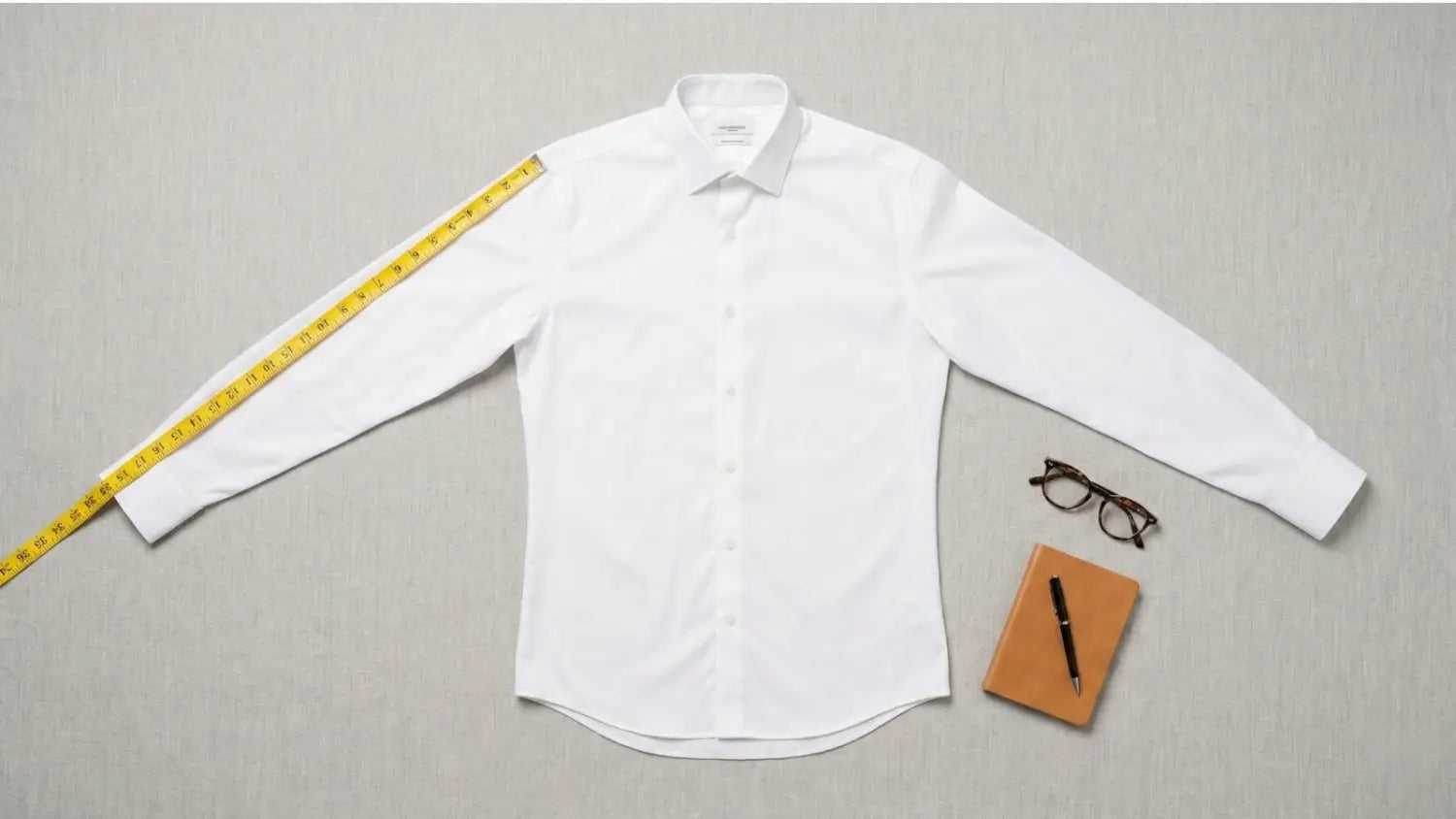
Getting the right sleeve length on a dress shirt is one of the easiest ways to look polished - and one of the most common things men get wrong. Whether you're ordering online or checking the fit of a shirt you already own, this guide walks you through exactly how to measure, what to watch out for, and how sleeve length connects to the rest of your shirt's fit. SAYKI recommends measuring a shirt that already fits you well as your reference, since copying a known good length is faster and more reliable than measuring your arm from scratch.
Contents
Tools You'll Need for Accurate Measurements
Before you start measuring, gather a few simple items. Having the right tools on hand makes the difference between a reliable number and a rough guess.
A quick note on what to wear while measuring: stick to a thin undershirt or a fitted T-shirt. Heavy sweaters or layered clothing will add bulk and throw off your numbers. You want the tape to sit as close to your natural body shape as possible.
Understanding Sleeve Length & Fit
Sleeve length on a dress shirt is not the same as your arm length. This is the single biggest point of confusion, and it trips up even experienced shoppers.

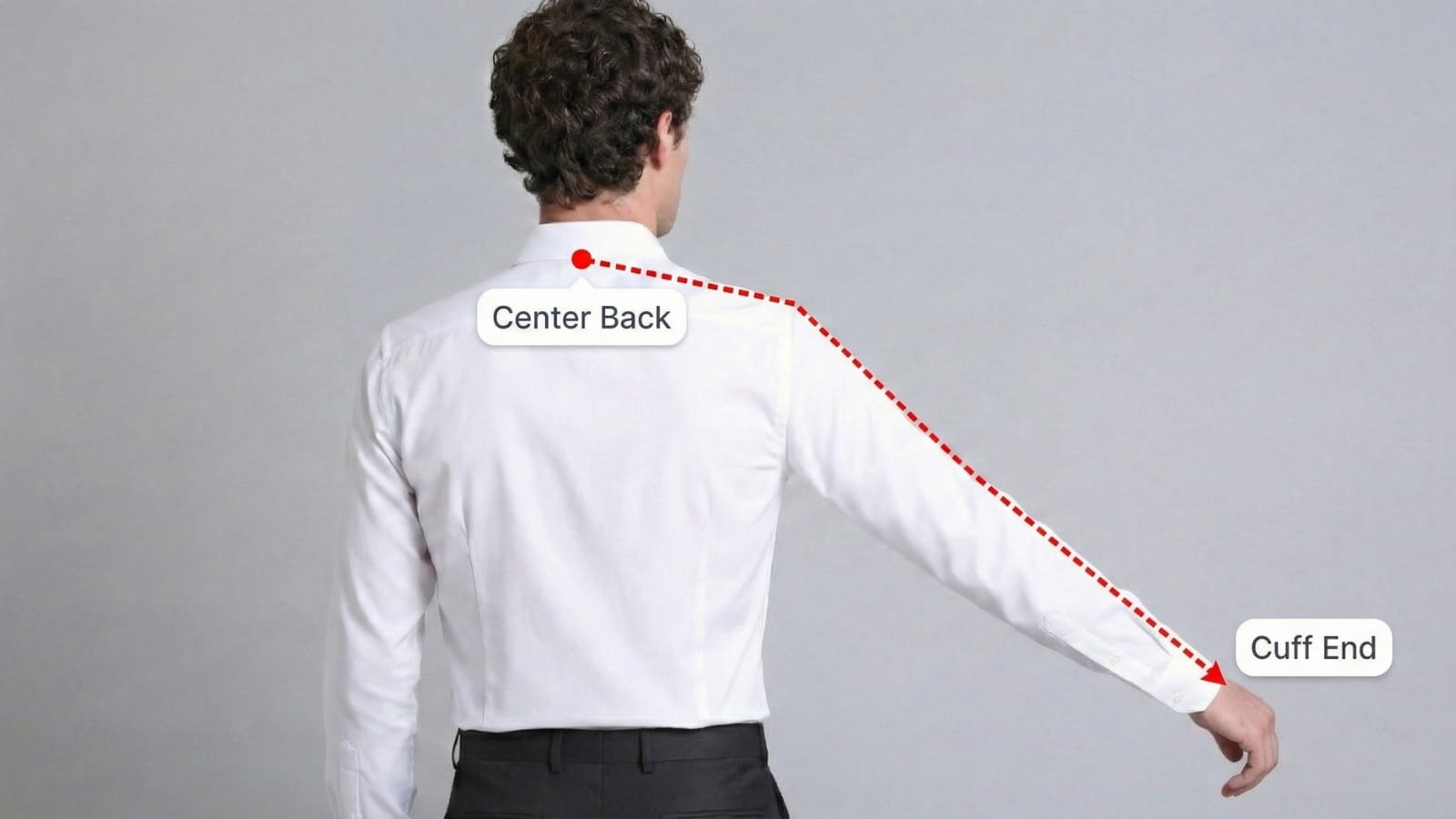
When shirt manufacturers list sleeve length, they're measuring from the center back of your neck, over the shoulder point, and down along the arm to the wrist. That means the measurement includes the distance across half of your upper back and your full arm. For most men, dress shirt sleeve lengths fall between 32 and 37 inches.
If you've ever seen a dress shirt label with something like "16/34-35," here's what those numbers mean. The first number (16) is the neck size in inches. The second set (34-35) is the sleeve length range. Some brands use a single number; others give a range to cover slight variations in fit.
The ideal sleeve length places your shirt cuff right where your wrist meets your hand. When you're standing with your arms relaxed at your sides, the cuff should just touch the base of your thumb without covering it. When paired with a suit jacket or blazer, roughly half an inch of shirt cuff should be visible beyond the jacket sleeve. This small detail makes a noticeable difference in how put-together you look.

Step-by-Step Guide: Measuring Your Sleeve Length
This method gives you the full sleeve measurement from center back to wrist - the standard used by most shirt brands. Ask your helper to hold the tape while you stand in a relaxed, natural posture. You'll measure in two stages: first the back-to-cuff line, then confirm the three key points from the side.
Part 1: The Full Sleeve Line (Center Back to Cuff)
Stand with your back to your helper and extend one arm slightly away from your body at a natural angle. Your helper will run the tape in one continuous line from the center of your upper back down to the end of your shirt cuff.
Part 2: Confirming the Three Key Points (Side View)
Now turn to the side so your helper can verify the three reference points that matter most: shoulder, elbow, and wrist. Stand naturally with your arm relaxed at your side.

Pro tip: Measure both arms. It's completely normal for one arm to be slightly longer than the other. If there's a difference, use the longer measurement when buying shirts off the rack and have the shorter sleeve adjusted if needed. Round up to the nearest half inch if you're between sizes - it's always easier to have a tailor shorten a sleeve than to add length.
Editor's Picks
Find Your Perfect Fit
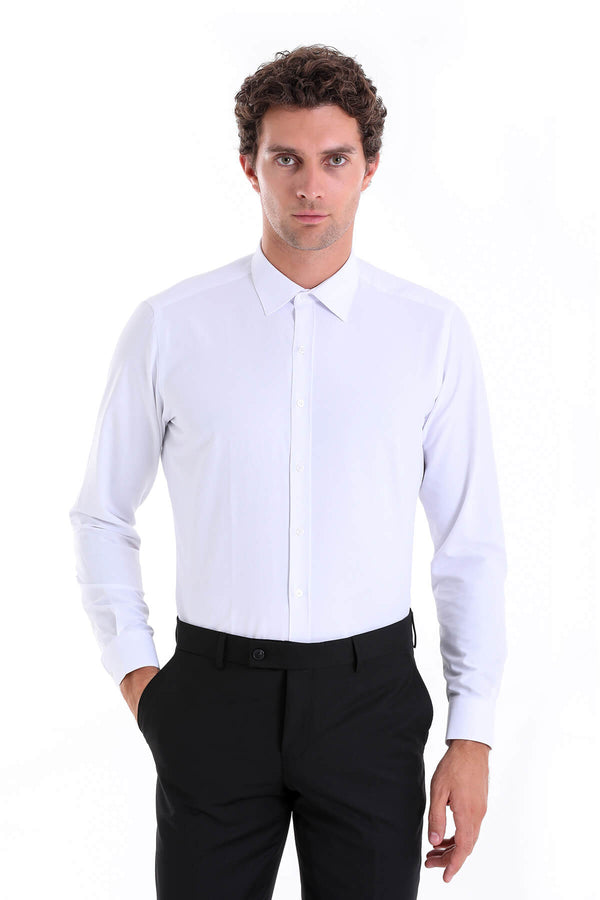
Browse our collection of dress shirts in slim, modern, and regular fits - all made with Italian fabrics and designed for a sharp, comfortable fit.
Shop Dress ShirtsCommon Measurement Mistakes & How to Avoid Them
Even a small error in measuring can lead to sleeves that bunch at the wrist or leave your arms exposed when you reach for something. Here are the most common mistakes and how to sidestep them.
← Scroll horizontally to see full table →
| Mistake | What Goes Wrong | The Fix |
|---|---|---|
| Measuring with a straight arm | You get a shorter reading because a fully extended arm pulls the tape taut across the elbow | Keep a slight, natural bend at the elbow while measuring |
| Starting at the shoulder instead of the neck | Your measurement is 5-8 inches too short and won't match standard shirt sizing | Always start at the center back of the neck (the spine) |
| Measuring over bulky clothing | Layers add 1-2 inches of false length and distort the tape path | Wear a thin undershirt or fitted T-shirt only |
| Letting the tape sag or twist | A loose tape gives an inaccurate reading, usually too long | Keep the tape snug against your body without pulling it tight |
| Measuring only one arm | You miss natural asymmetry and may end up with one sleeve that's too short | Measure both arms and use the longer number for off-the-rack purchases |
| Rounding down | Sleeves end up too short, especially after washing | Always round up to the nearest half inch |
One more thing worth mentioning: posture matters. Stand the way you normally stand. Pulling your shoulders back or puffing out your chest will change the measurement. The goal is to capture your body in its natural, everyday position.
How Sleeve Length Affects Overall Shirt Fit
Sleeve length doesn't exist in isolation. It works together with shoulder width, chest room, and cuff size to create the overall impression of a well-fitted shirt. Getting the sleeves right has a ripple effect on everything else.

Shirt fit type also plays a role. Slim-fit and modern-fit dress shirts tend to have a narrower sleeve that sits closer to the arm. Because there's less fabric, the sleeve may feel slightly shorter than the same measured length on a classic-fit shirt with a roomier cut. If you're between sizes in a slim fit, going up a half inch in sleeve length can give you extra comfort without affecting the tailored look.
Adjusting Sleeve Length with a Tailor
A good tailor can fix sleeve length in about 15 to 20 minutes. It's one of the simplest and most affordable alterations you can have done, and it makes a bigger visual impact than most people expect.

Shortening Sleeves
Shortening is the more common adjustment. The tailor removes the cuff, trims the sleeve fabric to the correct length, and reattaches the cuff. This keeps the original cuff style and proportions intact. Most tailors charge between $15 and $30 for this alteration, depending on the cuff type. Shirts with button cuffs are straightforward; French cuffs take a bit more work but are still a routine job.
Lengthening Sleeves
Adding length is trickier. A tailor can sometimes let out the existing hem allowance inside the cuff - usually about half an inch to an inch. Beyond that, there isn't enough fabric to work with on most ready-to-wear shirts. This is exactly why rounding up when you measure is a better strategy than rounding down. It's always easier to take fabric away than to add it.
When to Tailor vs. When to Exchange
If your sleeves are more than two inches off, you're better off exchanging the shirt for a different size rather than paying for a significant alteration. Minor adjustments of half an inch to an inch are where tailoring really shines - the shirt keeps its proportions and the fix is virtually invisible.
Can you measure sleeve length yourself?
You can, but it takes some extra effort. The easiest solo method is to measure a shirt that already fits you well. Lay it flat, button it up, and measure from the center of the collar seam (at the back) along the top of the shoulder and down the sleeve to the end of the cuff. If you want to measure your body directly, stand in front of a mirror with the tape starting at the center back of your neck. Hold the tape at your shoulder with one hand, then let it follow your arm down to the wrist. It's less precise than having someone help, but it gives you a solid ballpark number.
What if one arm is longer than the other?
This is more common than you'd think - most people have a slight difference between their left and right arm lengths. When buying off the rack, always go with the measurement from your longer arm. You can then have a tailor shorten the other sleeve by the difference, which is a quick and inexpensive fix. If the difference is less than a quarter inch, you likely won't notice it when wearing the shirt and no adjustment is needed.
Does fabric shrinkage affect sleeve length?
Yes, it can. Cotton shirts that haven't been pre-shrunk may lose up to half an inch in sleeve length after the first few washes, especially if dried on high heat. To minimize shrinkage, wash your dress shirts in cold water and hang them to dry or use a low-heat tumble setting. Pre-shrunk and wrinkle-free fabrics hold their measurements much more consistently over time. If you're concerned about shrinkage on a 100% cotton shirt, adding a quarter to half inch to your measured sleeve length gives you a comfortable buffer.
What is the correct dress shirt sleeve length?
A dress shirt sleeve should end where the base of your thumb meets your wrist, so that about a quarter to half an inch of cuff shows past your jacket sleeve when your arms hang naturally. Too short looks undersized and exposes too much wrist, while too long bunches over the hand and hides the cuff. When in doubt, aim for the wrist bone with the arm relaxed at your side.