


13 min read



Grey and brown is one of the most reliable color pairings in menswear, yet many men still hesitate to combine them. A grey suit with brown shoes strikes a balance between polish and personality that black shoes simply can't match. This guide walks you through the best shade combinations, accessory coordination, seasonal adjustments, and common mistakes to avoid so you can wear this pairing with confidence.
Contents
Matching Shades: Grey Suits & Brown Footwear
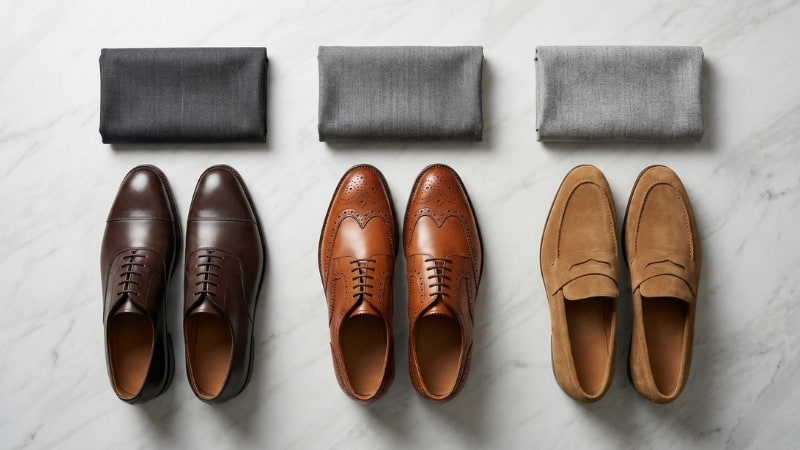
Not every shade of grey works equally well with every shade of brown. The key is contrast - you want enough difference between your suit and shoes so neither gets lost, but not so much that the combination looks mismatched. Here's how to pair the most common grey suit shades with the right brown tones.
A charcoal suit with dark brown oxfords is the safest starting point. The deep brown reads almost as formal as black but adds warmth that softens the overall look. As your suit gets lighter, your shoes can follow - a light grey suit with dark brown shoes can look bottom-heavy, while tan loafers with the same light grey suit feels natural and put together.
Medium grey is the most forgiving shade because it pairs well with nearly every brown tone. This is your go-to if you want one grey suit that works with multiple pairs of brown shoes.
Accessories: Belts, Socks & Ties
Getting the suit and shoes right is only half the equation. The accessories you choose either pull the outfit together or quietly undermine it. Here's how to handle each one.
Belts
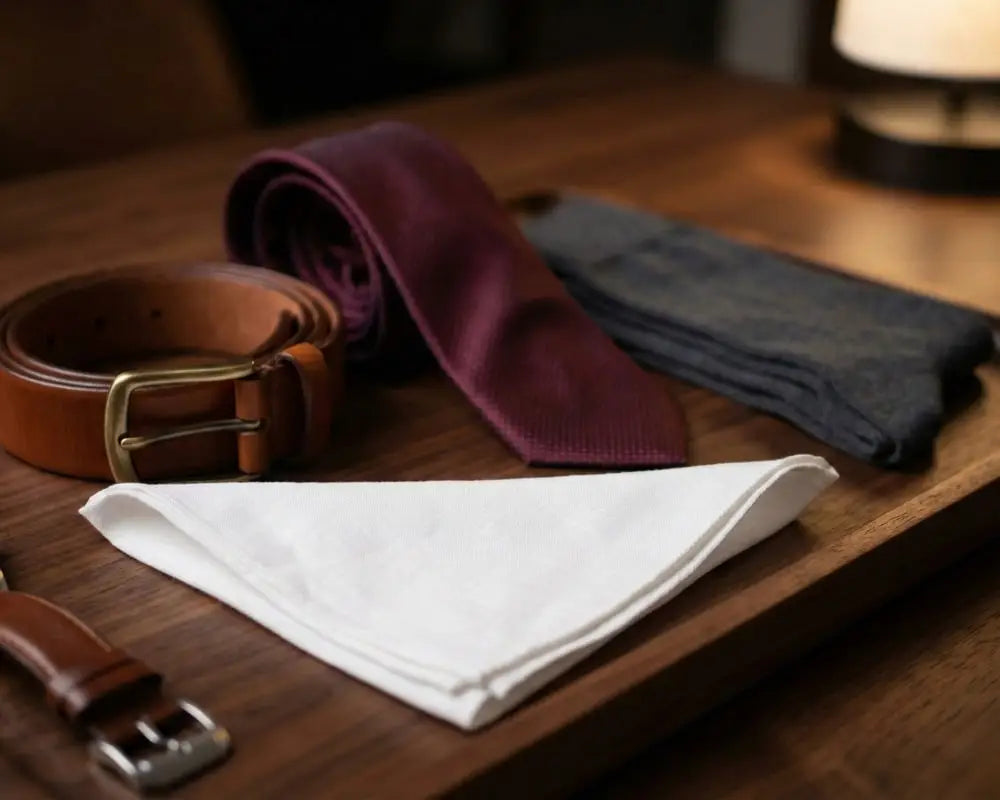
Your belt should be close in color and finish to your shoes. This doesn't mean an exact match - that's nearly impossible and not necessary - but they should clearly belong in the same color family. Dark brown shoes call for a dark brown belt. Cognac shoes pair with a cognac or medium brown belt. The leather texture matters too: a smooth leather belt works with dress shoes, while a pebbled or suede belt suits more casual footwear.
Socks
The simplest approach is to match your socks to your trousers rather than your shoes. Grey socks with a grey suit creates an unbroken line from trouser to shoe that makes your legs look longer and the outfit more polished. If you want to add personality, try socks in a complementary tone - burgundy, forest green, or muted mustard all work with the grey-and-brown palette without looking out of place.
Ties
A grey suit and brown shoes give you a wide range of tie options. Navy ties are the most reliable choice - the deep blue provides contrast against grey while harmonizing with brown. Burgundy and wine-colored ties pick up the warm tones in brown leather beautifully. Earthy greens, burnt orange, and terracotta shades also work well and lean slightly more casual. Avoid ties that match your shoes too closely; a brown tie with brown shoes can look like you're trying too hard to coordinate.
Pocket Squares and Watch Straps
A white linen pocket square works with virtually every grey suit and brown shoe combination. For more color, try a pocket square that picks up your tie color rather than your shoe color. If you wear a leather-strap watch, matching the strap to your shoe and belt color family ties the whole look together from wrist to foot.
Seasonal Guide to Grey & Brown
The grey-and-brown combination works year-round, but the specific shades, fabrics, and shoe types should shift with the seasons. What looks right in January will feel heavy in July, and vice versa.
The general rule is simple: as the weather gets warmer, both your suit and shoe shades should get lighter. Spring and summer call for open, bright combinations - think a light grey cotton suit with tan suede loafers. Fall and winter pull everything darker and richer - charcoal flannel with dark brown leather oxfords feels right when the temperature drops.
Fabric texture also matters. Suede shoes look natural in spring and fall because their matte surface matches the season's softer light. Polished leather carries more weight and works better in winter and for formal settings year-round.

Choosing the Right Brown Shoe Style
The shade of brown matters, but so does the shoe style. Each type of brown shoe carries a different level of formality, and picking the right one depends on where you're going and how dressed up the rest of your outfit is.
Oxford Shoes
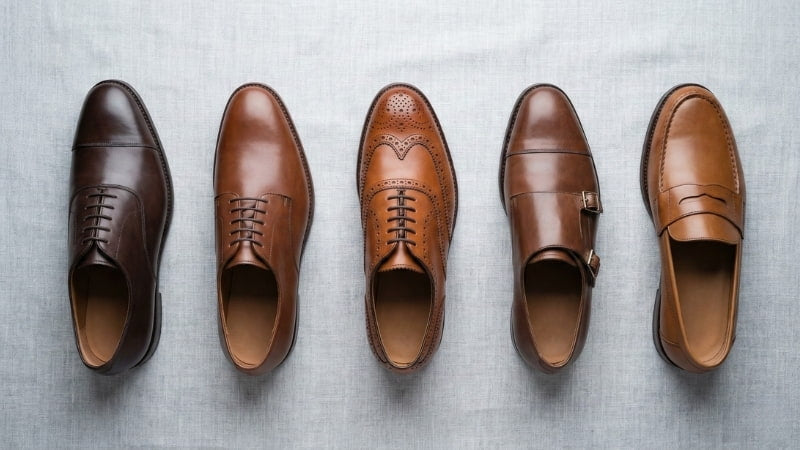
The Oxford is the most formal brown shoe you can wear with a grey suit. Its closed lacing system (where the eyelet tabs are stitched under the vamp) gives it a clean, streamlined look. A dark brown or cognac cap-toe Oxford is the single most versatile brown dress shoe you can own. It works for business, weddings, and any occasion where you'd normally reach for black shoes but want something warmer.
Derby Shoes
Derbies have an open lacing system that sits on top of the shoe rather than tucked underneath. This small difference gives them a slightly more relaxed feel compared to Oxfords, making them a good middle ground between formal and casual. A brown Derby with a grey suit works well for the office, smart casual dinners, and events where a full Oxford might feel stiff.
Brogues
Broguing - the decorative perforations punched along the seams and toe cap - adds visual texture to any brown shoe. Full brogues (wingtips) are the most casual, while quarter brogues keep things restrained. A cognac wingtip brogue with a medium grey suit is one of the most stylish combinations in menswear. It says you put thought into your outfit without overthinking it.
Monk Straps
Single and double monk strap shoes replace laces with one or two buckled straps across the instep. They sit between Oxfords and loafers on the formality scale and add a distinctive touch that stands out in a room full of lace-ups. Brown monk straps pair well with grey suits for creative office settings, evening events, and occasions where you want to look sharp without being conventional.
Loafers
Loafers are the most casual option for wearing brown shoes with a grey suit. Penny loafers and tassel loafers work best with lighter grey suits and unstructured blazers. In summer, you can wear them sockless with a light grey cotton suit for a relaxed Southern European look. For slightly more formal settings, a horsebit loafer in dark brown bridges the gap between casual and dressed up.
← Scroll horizontally to see full comparison →
| Shoe Style | Formality Level | Best Grey Suit Pairing | Best Setting |
|---|---|---|---|
| Cap-Toe Oxford | Most formal | Charcoal or dark grey | Business, weddings, formal events |
| Derby | Formal to smart casual | Medium grey | Office, dinners, day events |
| Wingtip Brogue | Smart casual | Medium to light grey | Creative offices, dates, receptions |
| Monk Strap | Semi-formal | Medium grey to charcoal | Evening events, cocktail parties |
| Loafer | Most casual | Light grey | Summer events, casual Fridays, travel |
Find Your Perfect Grey Suit
Browse our collection of grey suits in slim, modern, and regular fits - ready to pair with your favorite brown shoes.
Shop Grey SuitsTips for Formal vs. Casual Looks
The same grey suit and brown shoes can read as boardroom-ready or weekend-relaxed depending on how you style them. Here's how to push the combination in either direction.
Dressing It Up
For formal settings, keep everything sharp and tonal. Choose a charcoal or dark grey suit in a smooth worsted wool. Pair it with dark brown cap-toe Oxfords that have a high polish. Wear a crisp white dress shirt with a spread collar, a navy or burgundy silk tie, and a white pocket square. Your belt should match your shoes closely. Socks should match the trousers. Everything should be pressed, fitted, and intentional.
Keeping It Casual
To dress the combination down, swap the tie for an open collar and trade polished Oxfords for suede loafers or unlined Derbies. A light grey or medium grey suit in a textured fabric like linen, cotton, or hopsack immediately feels less corporate. Roll the jacket sleeves once if the fabric allows it. Go sockless or wear a patterned sock for personality. A knit polo or a fitted crew-neck tee under the jacket works well for weekend and evening events.
Mistakes to Avoid with Grey & Brown
Grey and brown is a forgiving combination, but there are a few ways to get it wrong. Watch out for these common missteps.
Mismatched Formality
Wearing beaten-up casual brown boots with a sharply tailored charcoal suit - or polished dark brown Oxfords with a wrinkled linen blazer - creates a disconnect. The formality of your shoes should match the formality of your suit. If one half of the outfit says "boardroom" and the other says "barbecue," the combination won't work no matter how good the colors look together.
Ignoring the Belt
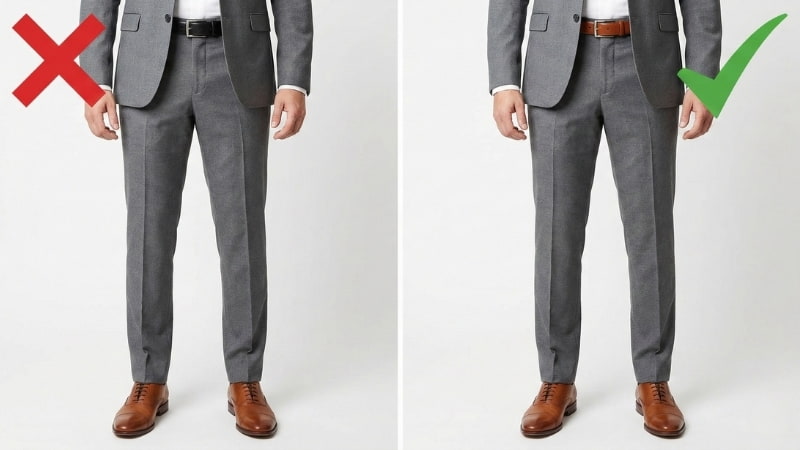
A black belt with brown shoes is one of the most noticeable mistakes in menswear. It breaks the visual connection between your waist and your feet and makes the outfit look unplanned. Always match your belt leather to your shoe leather. If you can't get close, wear a suit with side adjusters or suspenders and skip the belt entirely.
Going Too Matchy
Trying to make your belt, shoes, watch strap, and briefcase all the exact same shade of brown can look forced. Aim for the same color family rather than a pixel-perfect match. A slightly lighter belt with darker shoes, or a watch strap a shade warmer than your Oxfords, looks natural and intentional.
Wrong Shade Contrast
Very light tan shoes with a very dark charcoal suit can look jarring, as if the shoes belong to a completely different outfit. Similarly, espresso brown shoes with a very light grey suit can feel bottom-heavy. Keep the contrast moderate - if your suit is dark, your shoes should lean darker. If your suit is light, your shoes should lighten up too.
Worn or Unpolished Leather
Brown leather shows scuffs and wear more obviously than black. A pair of brown shoes that looked great six months ago can drag down an entire outfit if they're dried out, scuffed, and unpolished. Regular conditioning and polishing keeps brown leather looking rich rather than tired. This is especially true for lighter shades like tan and cognac, which show every mark.
Are brown shoes appropriate for charcoal suits?
Yes, brown shoes work well with charcoal suits - it's actually one of the strongest combinations in this pairing. The key is choosing the right shade: stick with darker browns like espresso, chocolate, or deep cognac. These tones provide enough contrast to stand out against charcoal while keeping the look grounded and professional. Avoid very light browns like tan or camel with charcoal, as the gap between the dark suit and pale shoes can look disconnected. A dark brown cap-toe Oxford or a burnished cognac monk strap are both excellent choices for a charcoal suit in business or formal settings.
Can you wear tan shoes with grey suits?
Tan shoes can absolutely work with grey suits, but the pairing is best suited to lighter grey shades and casual or semi-casual settings. A light grey cotton suit with tan suede loafers is a natural summer combination. Medium grey with tan can also work for creative offices or daytime events. Where tan shoes don't work as well is with dark charcoal suits or in formal business settings - the contrast is too strong and the lighter shoe reads as too casual for the occasion. If you want to wear tan shoes, keep the rest of the outfit relaxed to match their energy.
Should the belt match the shoes?
Your belt and shoes should coordinate but don't need to be an exact match. The goal is to have them in the same color family - dark brown with dark brown, cognac with cognac, tan with tan. An exact shade match is nearly impossible since different tanneries produce slightly different hues, and that's perfectly fine. What you want to avoid is a clear mismatch, like a reddish-brown belt with cool-toned chocolate shoes, or worse, a black belt with brown shoes. If your brown shoes lean warm (cognac, honey), pick a belt with similar warmth. If they're cooler (walnut, ash brown), go with a belt in the same range.
What tie colors complement this combo?
Navy is the top choice - it's the most versatile tie color with a grey suit and brown shoes because it adds depth without competing with the brown tones. Burgundy and wine reds are a close second, picking up the warmth of brown leather while creating a rich, confident look. Forest green and olive ties work well for a more earthy, autumn-ready feel. Burnt orange and terracotta are bolder options that lean casual. For patterns, a navy tie with small burgundy dots or a regimental stripe in navy and gold both tie the palette together. The main colors to avoid are bright red (too bold against grey), brown (too close to the shoes), and anything neon or overly saturated that clashes with the muted grey-and-brown palette.