


15 min read


The trench coat is one of the most enduring pieces in menswear. Born out of military necessity and refined into a wardrobe staple, it works across seasons, dress codes, and personal styles. This guide covers the trench coat's origins, its defining features, how to wear one well, and how it compares to other coats in your closet. SAYKI recommends a knee-length trench in a neutral tone as your first one, since that cut and color layer over almost anything from a suit to jeans.

Contents
History of the Trench Coat
The trench coat traces its origins to the early 1900s, when British military officers needed a lightweight, weatherproof alternative to the heavy wool greatcoats they wore in the field. Thomas Burberry and Aquascutum both developed gabardine-based outerwear around this time, and while each brand claims credit for the original design, both played a role in shaping what we now call the trench coat.
During World War I, the coat earned its name in the trenches of the Western Front. Officers wore it as a practical layer against rain, mud, and cold. Features like the storm flap, D-rings on the belt for attaching equipment, and epaulettes for displaying rank were all functional additions designed for combat conditions. The buckle cuffs kept wind and water out of the sleeves, and the back vent allowed ease of movement on horseback.
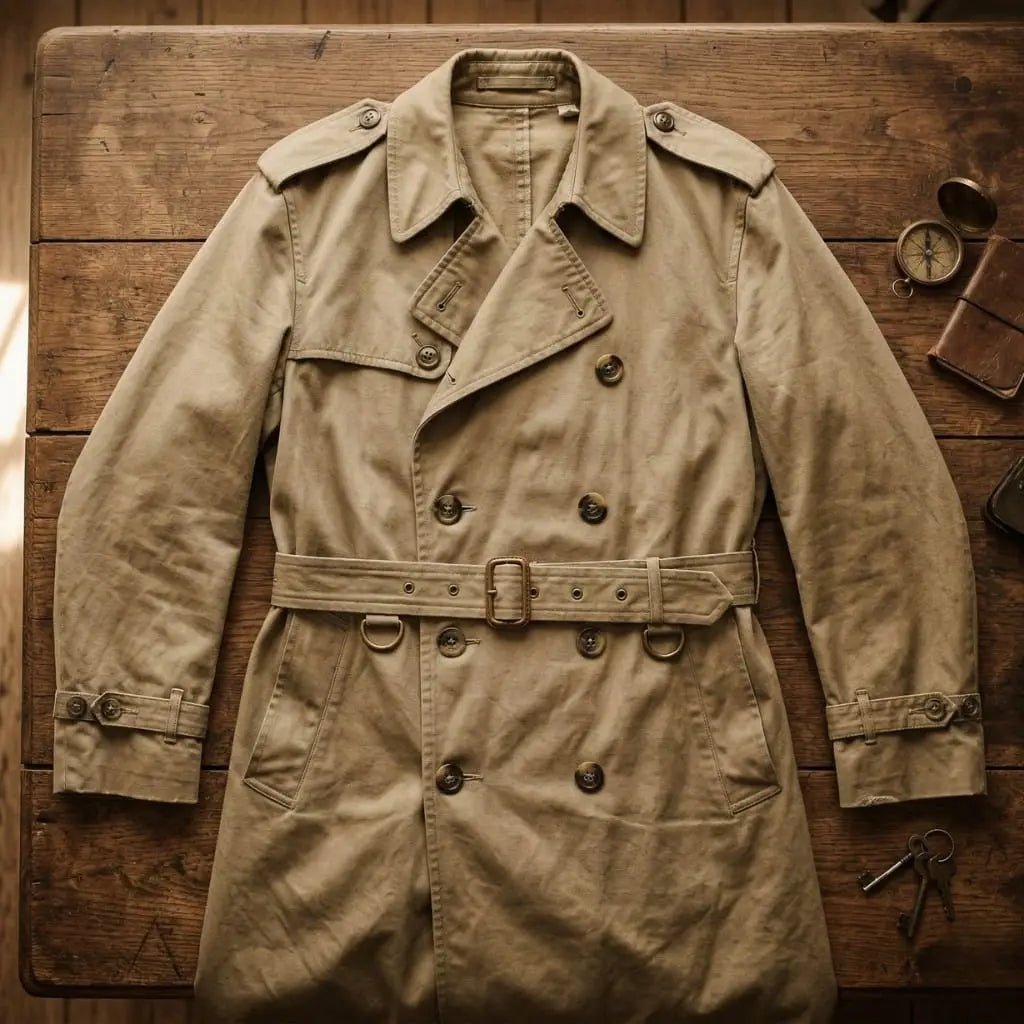
After the war, returning soldiers kept wearing their trench coats in civilian life. The design quickly caught on in broader menswear, and by the 1940s and 1950s, Hollywood had turned the trench coat into a symbol of mystery and sophistication. Humphrey Bogart in Casablanca and countless film noir detectives made the belted khaki coat an icon. That cultural association - smart, capable, slightly dramatic - still holds today.
Over the following decades, fashion houses adapted the trench for changing tastes. The silhouette slimmed down, new fabrics replaced traditional gabardine, and designers experimented with color and proportion. But the core design has remained remarkably stable. A trench coat bought in 2026 would still be recognizable to someone from 1918, which says everything about how well the original pattern works.
Key Features & Materials
What separates a trench coat from any other raincoat is its specific set of design details. Each element serves a purpose, and together they create a silhouette that's both functional and polished.
Traditional Gabardine
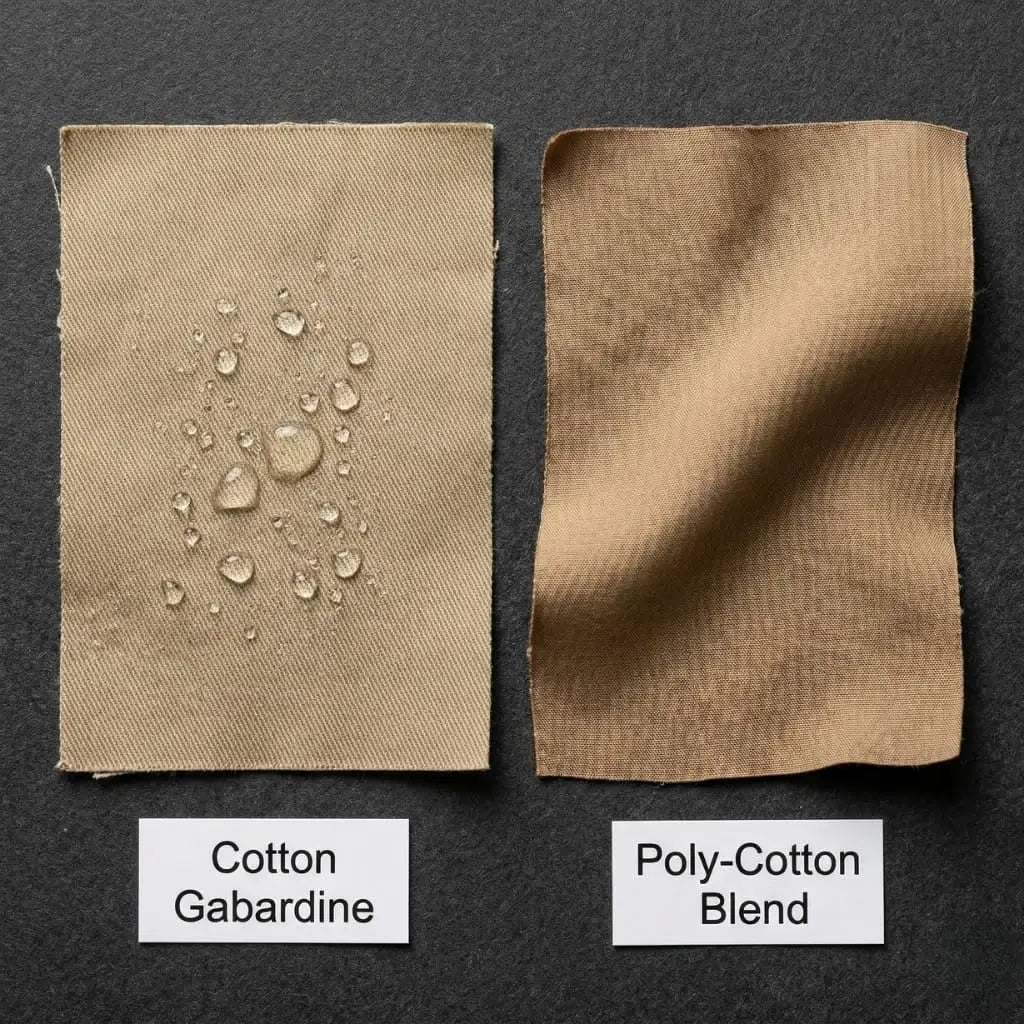
Cotton gabardine is the original trench coat fabric. Invented by Thomas Burberry in the 1870s, it's a tightly woven twill that resists water naturally through the density of the weave rather than a chemical coating. This makes gabardine breathable in a way that fully waterproofed synthetic fabrics are not. A gabardine trench coat will handle light to moderate rain well, but sustained heavy downpours will eventually soak through.
Modern Fabric Options
Today's trench coats come in a range of materials. Poly-cotton blends offer easier care and wrinkle resistance while keeping some of gabardine's breathability. Technical nylon and bonded fabrics provide better waterproofing for urban commuters who need genuine rain protection. Some modern versions use a lightweight wool blend that works better for cold weather but trades away water resistance. The fabric you choose should match how you plan to wear the coat - a dress trench for the office calls for gabardine or a fine blend, while a daily commuter coat benefits from something more technical.
Classic vs. Modern Trench Coats
The trench coat has evolved considerably from its military roots, and today you'll find versions that range from faithful reproductions to minimal reinterpretations. Understanding the differences helps you pick the right one for your style.
The Classic Trench
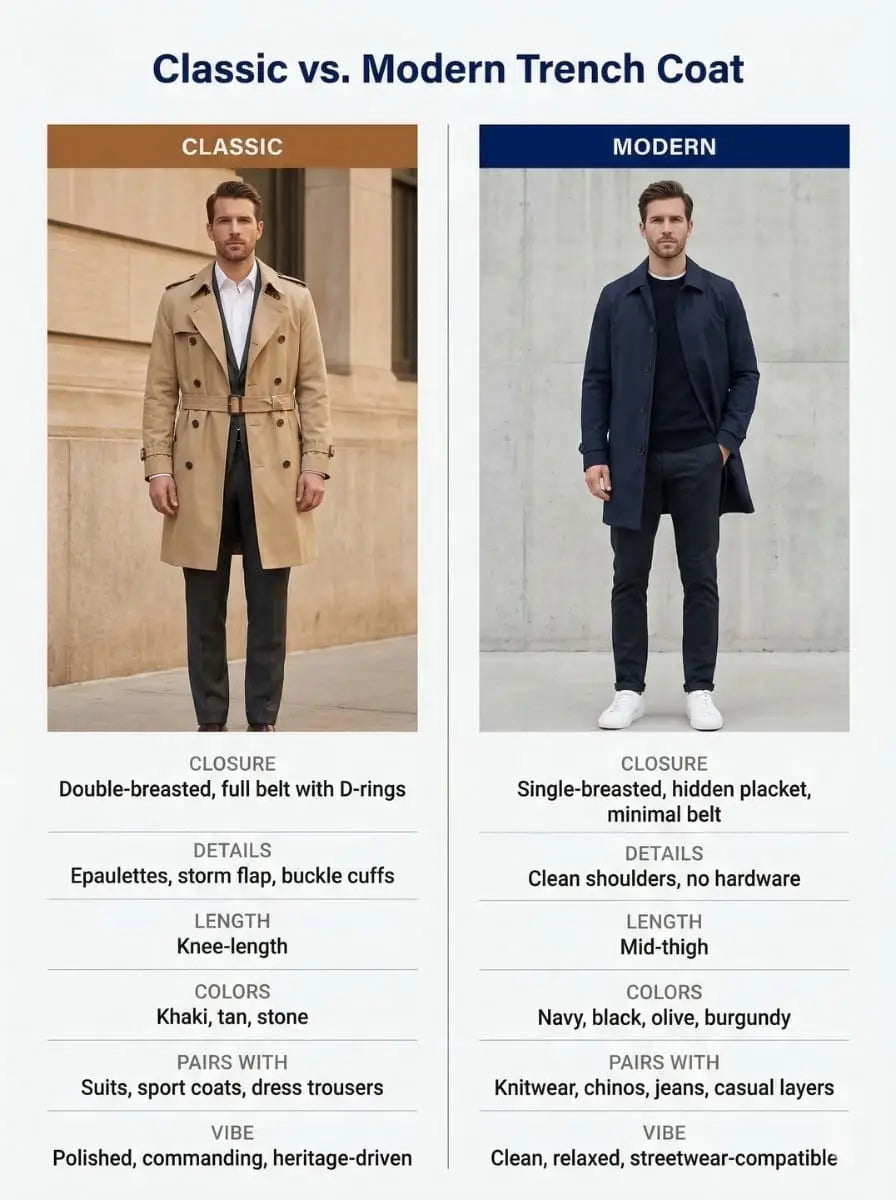
A classic trench coat sticks close to the original military pattern. It's double-breasted with a wide storm flap, full belt with D-rings, epaulettes, buckle cuffs, and a knee-length cut. The color is almost always khaki, tan, or stone. This version carries the most visual weight and formality. It looks best over tailored clothing - suits, sport coats, and dress trousers - and works as a finishing layer that pulls an outfit together.
The Modern Trench
Modern trench coats strip away some of the heritage details for a cleaner look. You might see a single-breasted closure, no epaulettes, a hidden placket covering the buttons, or a shorter length that hits mid-thigh. Colors expand beyond khaki to include navy, black, olive, and deep burgundy. The silhouette tends to be slimmer and less structured. These versions blend more naturally with casual and smart casual outfits, and they feel less "costume" for guys who aren't used to wearing a traditional trench.
Which One to Choose
If you're buying your first trench coat, a modern version in khaki or navy gives you the most flexibility. It works with everything from chinos and a crewneck to dress pants and a blazer, and the streamlined details keep it from feeling overly formal for daily wear. If you already own outerwear for casual settings and want a trench specifically for dressed-up occasions, the classic double-breasted version in tan or stone is the way to go.
How to Style a Trench Coat
A trench coat adapts to a wide range of outfits depending on how you wear it and what you layer underneath. Here are the combinations that work best across different dress codes.
With a Suit
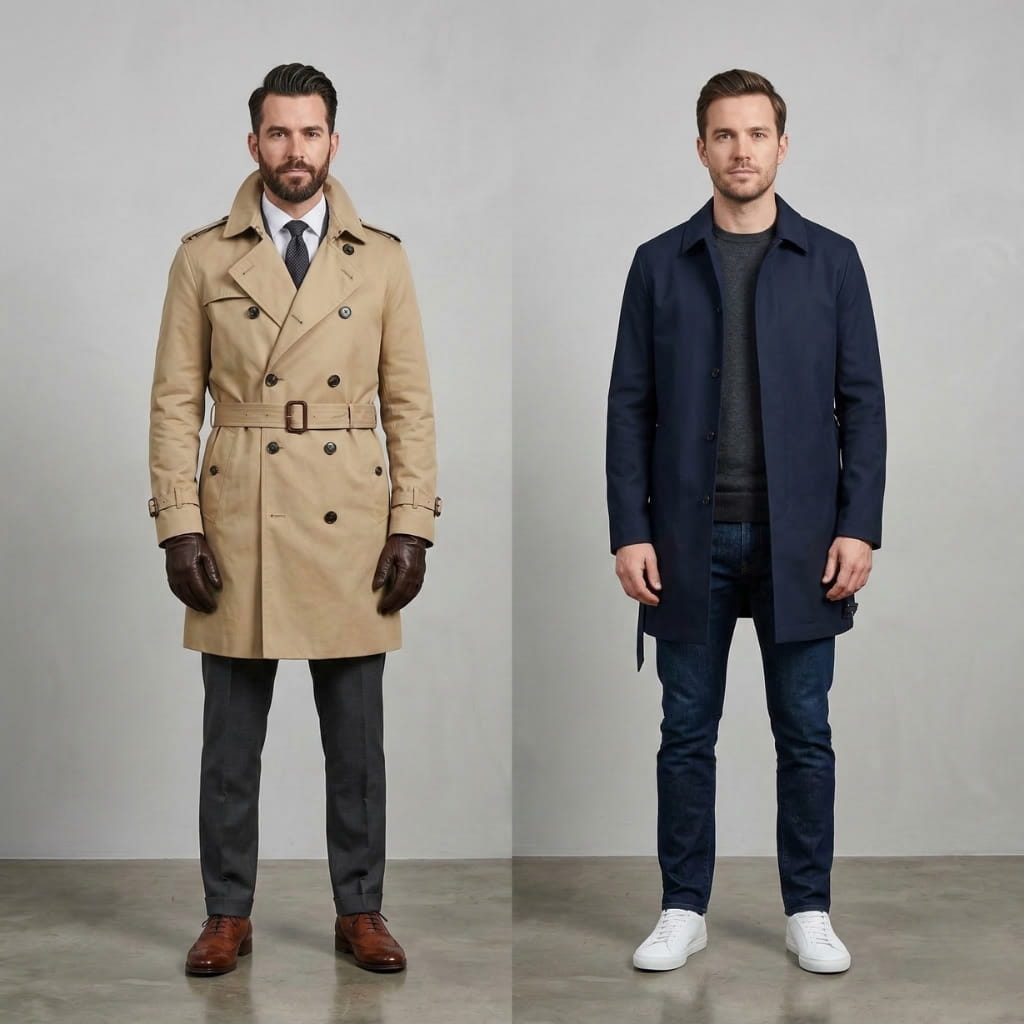
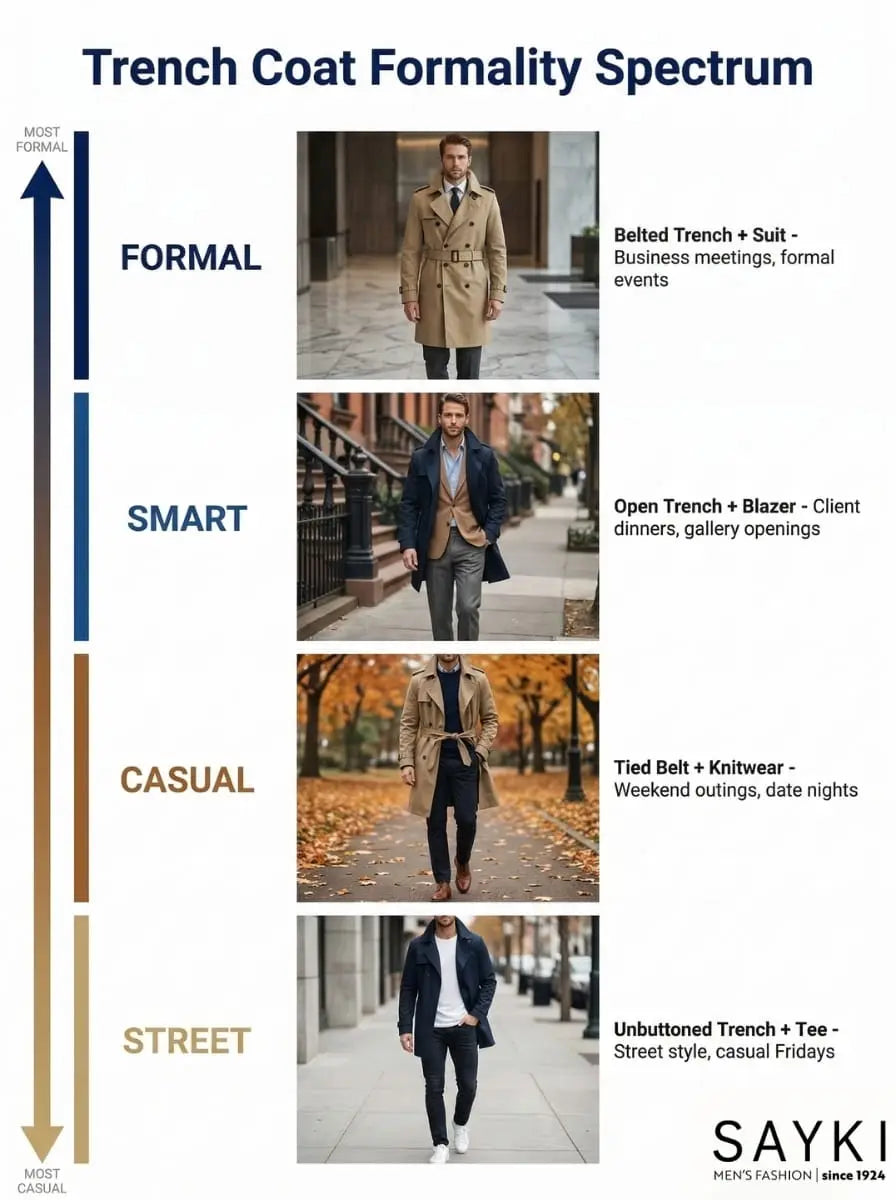
A trench coat over a suit is the most natural pairing and one of the sharpest looks in menswear. A knee-length trench in khaki or tan over a navy or charcoal suit reads as polished and intentional. Belt the coat for a structured silhouette, or leave it open for a more relaxed stride. The suit jacket should sit cleanly underneath without bunching at the shoulders - this is where proper sizing matters. Make sure the trench's shoulder seams align with your natural shoulder line.
With a Blazer
Pairing a trench coat with a blazer and dress trousers gives you a dressed-up look without the full formality of a suit. A navy trench over a tan blazer, or a khaki trench over a navy sport coat, creates strong color contrast. Add accessories like a knit tie or pocket square and you have an outfit that works for client dinners, gallery openings, and business events where suits feel too rigid.
Smart Casual
This is where the trench coat really shows its range. Layer it over a crewneck sweater and chinos, a turtleneck with wool trousers, or a button-down shirt with dark jeans. For these combinations, a modern trench with fewer military details tends to look more natural. Keep the belt tied casually rather than buckled, and leave the front unbuttoned to show the outfit underneath.
Casual
A trench coat can even work with fully casual outfits if the proportions are right. A mid-thigh trench over a plain T-shirt, slim jeans, and clean sneakers has a European street-style feel. The key is keeping everything else simple and well-fitted so the coat stays as the focal point rather than looking like you threw it on over whatever you were wearing.

Trench Coat vs. Peacoat vs. Overcoat
Each of these coats fills a different role in your wardrobe. Knowing their strengths helps you decide which one to reach for - or whether you need more than one.
← Scroll horizontally to see full comparison →
| Feature | Trench Coat | Peacoat | Overcoat |
|---|---|---|---|
| Primary Fabric | Cotton gabardine or poly-blend | Heavy wool (melton) | Wool, cashmere, or wool blend |
| Weather Strength | Rain and wind protection; lighter insulation | Cold and wind; minimal rain protection | Cold weather insulation; minimal rain protection |
| Typical Length | Mid-thigh to knee | Hip length | Mid-thigh to below knee |
| Closure | Double-breasted with belt | Double-breasted, no belt | Single or double-breasted, no belt |
| Formality Range | Smart casual to business formal | Casual to smart casual | Smart casual to black tie |
| Best Season | Spring and fall (year-round with layering) | Late fall and winter | Fall and winter |
| Best Pairing | Suits, blazers, smart casual layers | Jeans, chinos, casual shirts | Suits, dress trousers, formal wear |
| Care Level | Dry clean recommended; spot clean between | Machine washable (most wool blends) | Dry clean only; brush between wearings |
| Versatility | High - works across casual to business formal | Moderate - best in casual to smart casual range | Moderate - strongest in formal and business settings |
The trench coat is your best option when you need rain protection and a polished look. It's lighter than both the peacoat and overcoat, which makes it the natural choice for spring and fall when temperatures are mild but rain is likely. It also layers well over suits because of its longer cut and structured shoulders.
The peacoat is shorter, warmer, and more casual. It works best as an everyday cold-weather jacket paired with jeans, chinos, and casual shirts. Its hip length doesn't cover suit jackets well, so it's not the best choice for formal layering.
The overcoat is the most formal of the three. A full-length wool or cashmere overcoat over a suit is the gold standard for cold-weather dressing. It provides more warmth than a trench but offers no rain protection. If your wardrobe can only include one, consider your climate and how you dress most days. If you live somewhere rainy and mild, a trench coat covers more ground. If you face genuine cold, an overcoat or peacoat is more practical.
Build Your Outerwear Collection
Browse our full range of coats, from trench styles to wool overcoats, and find the right layer for every season.
Shop CoatsSeasonal Use & Weather Protection
One of the trench coat's biggest advantages is its year-round potential. With the right approach to layering and fabric choice, you can wear a trench coat in every season except the coldest winter weeks.
Rain Protection
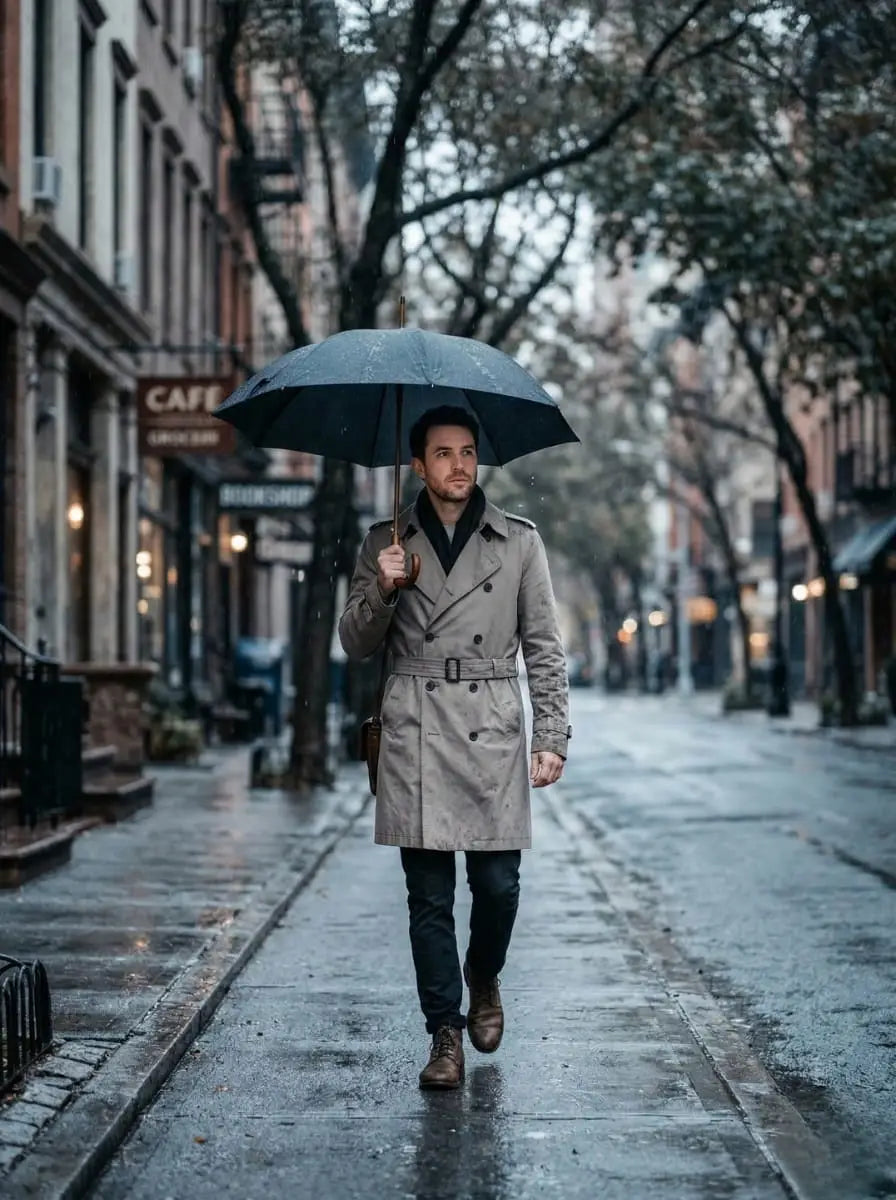
A traditional gabardine trench coat offers genuine water resistance for light to moderate rain. The tight weave of the fabric, combined with the storm flap and high collar, keeps you dry during a typical city commute or a walk across a parking lot. For sustained heavy rain, look for a trench with a water-repellent finish or a technical fabric shell. No trench coat is truly waterproof the way a rain jacket is, but the best ones handle real-world conditions without soaking through.
Wind and Temperature
The trench coat's belted waist, buckle cuffs, and throat latch all serve as wind barriers. When fully closed and belted, a trench coat blocks drafts surprisingly well for such a lightweight garment. Layering is where you control warmth - a thin sweater underneath works for 50-60°F days, while a suit jacket or heavy knit extends the range down to around 40°F. Below that, you're generally better off switching to a proper wool coat.
Caring for Your Trench Coat
A well-maintained trench coat can last for years. The specific care it needs depends on the fabric, but a few universal principles keep any trench looking sharp.
Cleaning
Most cotton gabardine trench coats should be dry cleaned rather than machine washed. The construction includes interfacing and structure that can break down in a home washer. Take your trench to a dry cleaner once or twice a season, or whenever it picks up visible stains. Between cleanings, spot-clean small marks with a damp cloth and mild soap. Poly-cotton blends are generally more forgiving and some can handle gentle machine washing - check the care label first.
Storage
Always hang your trench coat on a wide, padded hanger that supports the shoulders without distorting them. Wire hangers will create bumps in the shoulder line over time. Button or zip the coat closed before hanging to help it keep its shape. Store in a breathable garment bag during off-seasons - avoid plastic bags that trap moisture and can cause mildew. Keep it in a cool, dry closet away from direct sunlight, which can fade the fabric.
Maintaining the Belt
The belt takes more wear than any other part of the trench coat. If yours has a fabric belt, avoid overtightening it or pulling it through the buckle at a sharp angle, which weakens the material at the fold point. When hanging the coat, thread the belt loosely through the loops rather than letting it dangle, which can stretch the attachment points. Leather belts on premium trench coats benefit from occasional conditioning to prevent cracking.
Water Repellency
Over time, the water-repellent properties of a gabardine trench coat can diminish with wear and cleaning. You can restore some protection by having your dry cleaner apply a DWR (durable water repellent) treatment, or by using a spray-on fabric protector designed for cotton outerwear. Reapply after each dry cleaning for consistent performance.
Are trench coats waterproof?
Traditional trench coats are water-resistant, not fully waterproof. A gabardine trench will keep you dry in light to moderate rain for a reasonable amount of time, but it will eventually absorb water in a sustained downpour. The storm flap, high collar, and buckle cuffs all help redirect water away from your body. If you need serious waterproofing, look for a trench coat with a bonded membrane or a technical fabric shell. These modern versions sacrifice some of the classic gabardine drape but offer rain jacket-level protection in the trench coat silhouette.
Can trench coats be dressed down?
Absolutely. While the trench coat has formal roots, it works well in casual outfits. Pair a mid-length trench with a plain T-shirt, dark jeans, and white sneakers for an effortless street-style look. Choose a modern trench without heavy military details like epaulettes and D-rings if you plan to wear it casually most of the time. Leaving the coat unbuttoned with the belt tied loosely or removed altogether brings the formality down further. Navy and black trench coats tend to read more casual than the traditional khaki.
What lengths are available?
Trench coats come in three main lengths. Short trenches hit at mid-thigh and feel the most casual and modern - they're easy to move in and work well with jeans and sneakers. Standard or regular-length trenches fall just above or at the knee, which is the most traditional and versatile cut. Long trenches extend below the knee and carry the most formality and drama. The right length depends on your height and what you'll wear underneath. If you're layering over suits, a knee-length trench ensures the suit jacket is fully covered. For casual use, a mid-thigh version keeps things relaxed.
What color trench coat is most versatile?
Khaki and stone are the most versatile and the most traditional, working over nearly any outfit and reading as the classic trench look. Navy and dark olive are strong alternatives that feel a little more modern and lean slightly more casual. Black is the dressiest option. For a first trench that pairs with the widest range of clothing, a neutral khaki or stone is the safest pick.