


The white dinner jacket and the classic tuxedo are both formalwear icons, but they serve different occasions, climates, and dress codes. This guide breaks down what makes each one distinct, when to wear each, and how to style them with confidence so you walk into any formal event looking exactly right.

Contents
What Is a White Dinner Jacket?
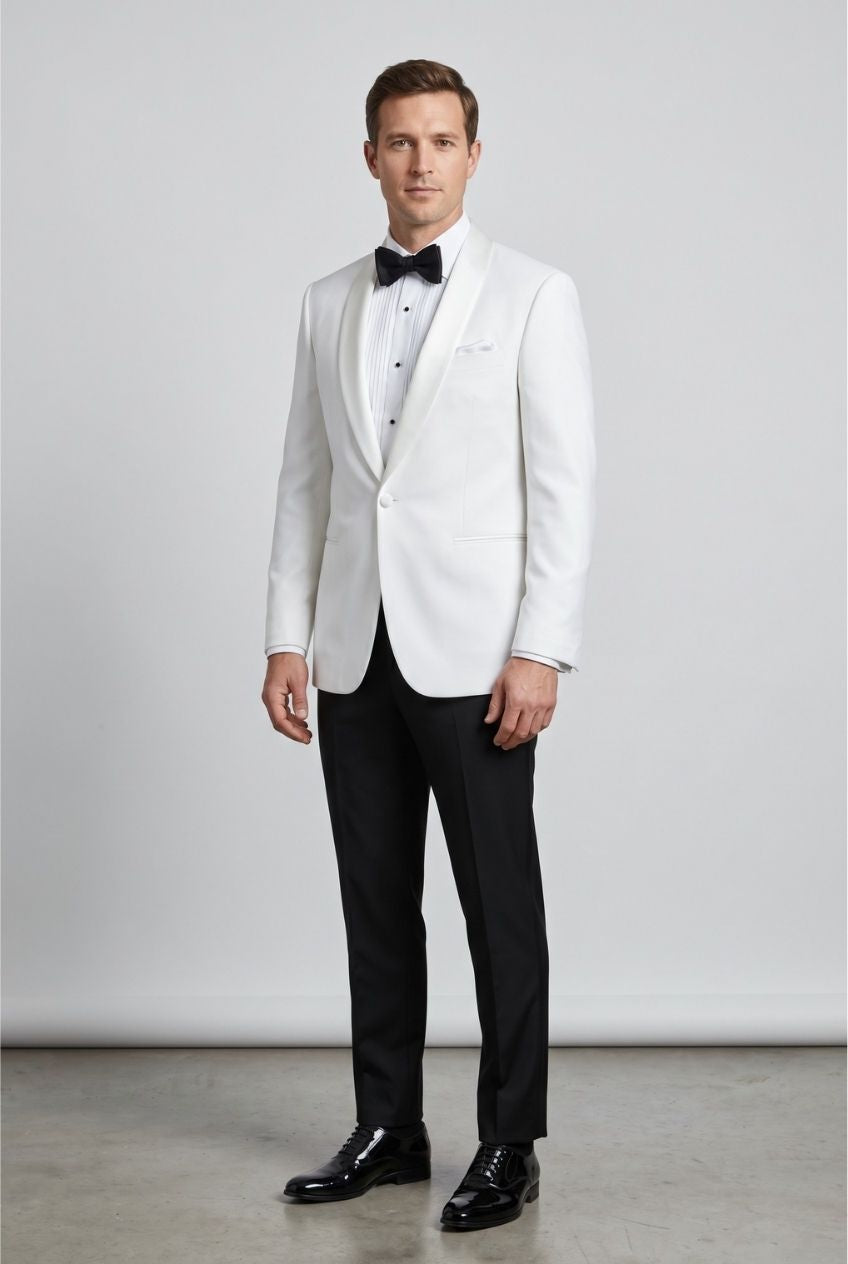
A white dinner jacket is a formal evening jacket cut from lightweight white, ivory, or cream-colored fabric, designed for warm-weather black-tie events. The garment traces back to 1865, when the Prince of Wales commissioned a tail-less evening jacket as a more relaxed alternative to white-tie tails. By the 1930s, lightweight white versions had emerged as the preferred choice for tropical climates and summer galas, gaining cultural cachet through films like Casablanca where Humphrey Bogart wore one in nearly every scene.
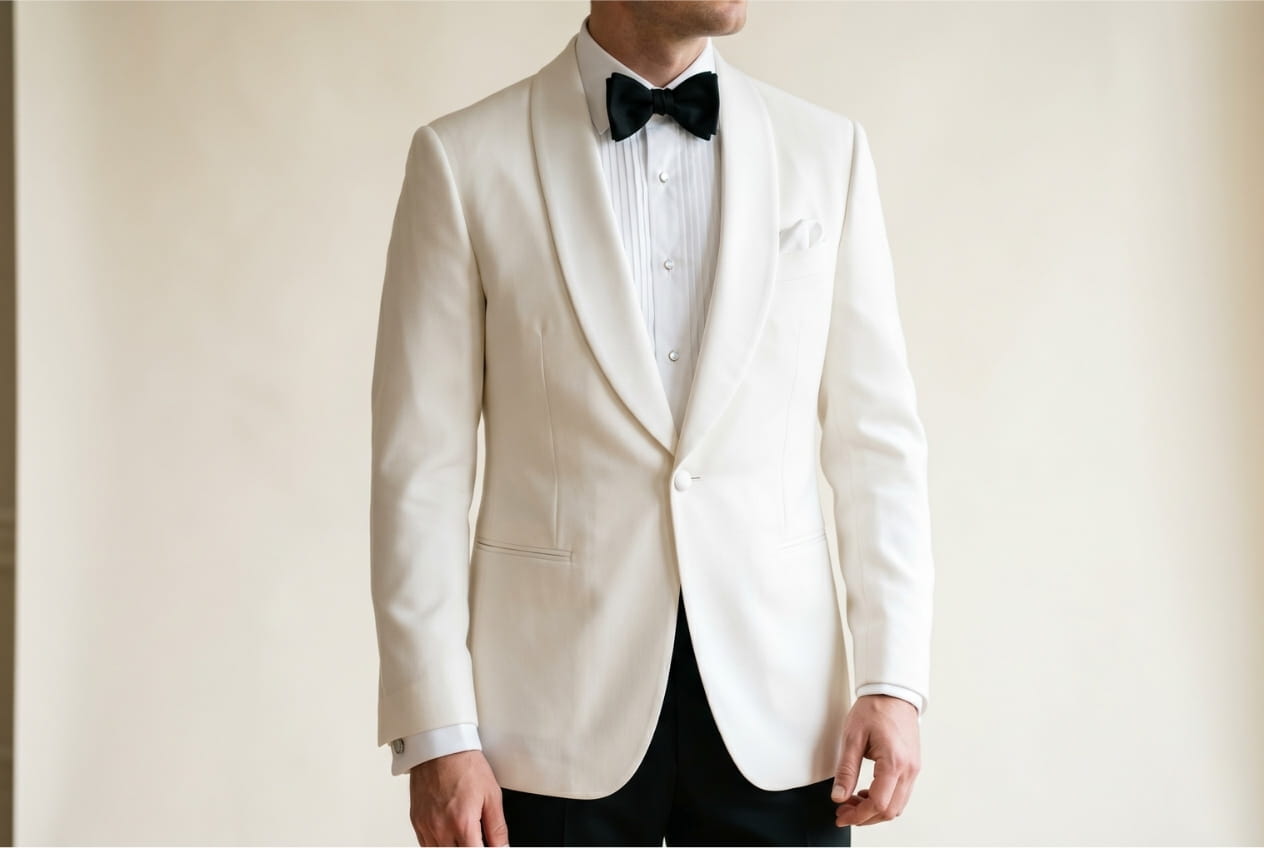
What separates a white dinner jacket from a regular white blazer is construction and detailing. The jacket typically features satin-faced shawl or peak lapels, a single button closure, and minimal pocket detail (jetted pockets rather than flap pockets). It is always paired with black tuxedo trousers, never with matching white pants outside of a white-tie context. The dress pants worn with a white dinner jacket usually skip the satin stripe found on full tuxedo trousers, creating a deliberate visual contrast between the bright jacket and the dark trousers.
Classic Variations: White, Ivory, and Cream
Not every "white" dinner jacket is the same shade. Pure white reads sharpest under cool natural light and works best for outdoor evening events, while ivory and cream pick up warmer artificial lighting more flatteringly and often photograph better in indoor venues. Cream tones lean slightly more vintage and pair particularly well with destination wedding settings, where the softer color complements warm sunset light. The cut also matters: shawl lapels feel more traditional and romantic, while peak lapels add modern sharpness. For most occasions, a classic white or ivory shawl-lapel jacket is the safest and most versatile choice.
What Is a Tuxedo?
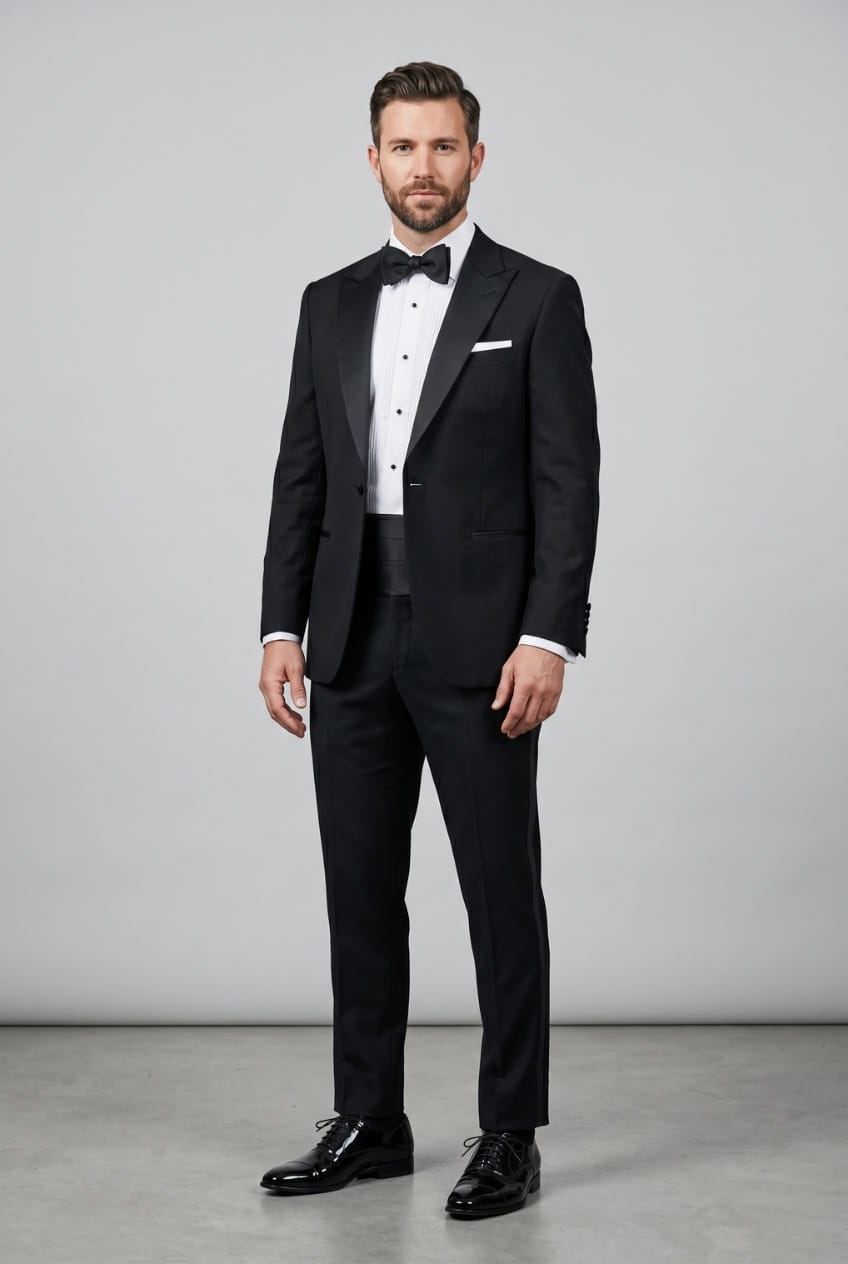
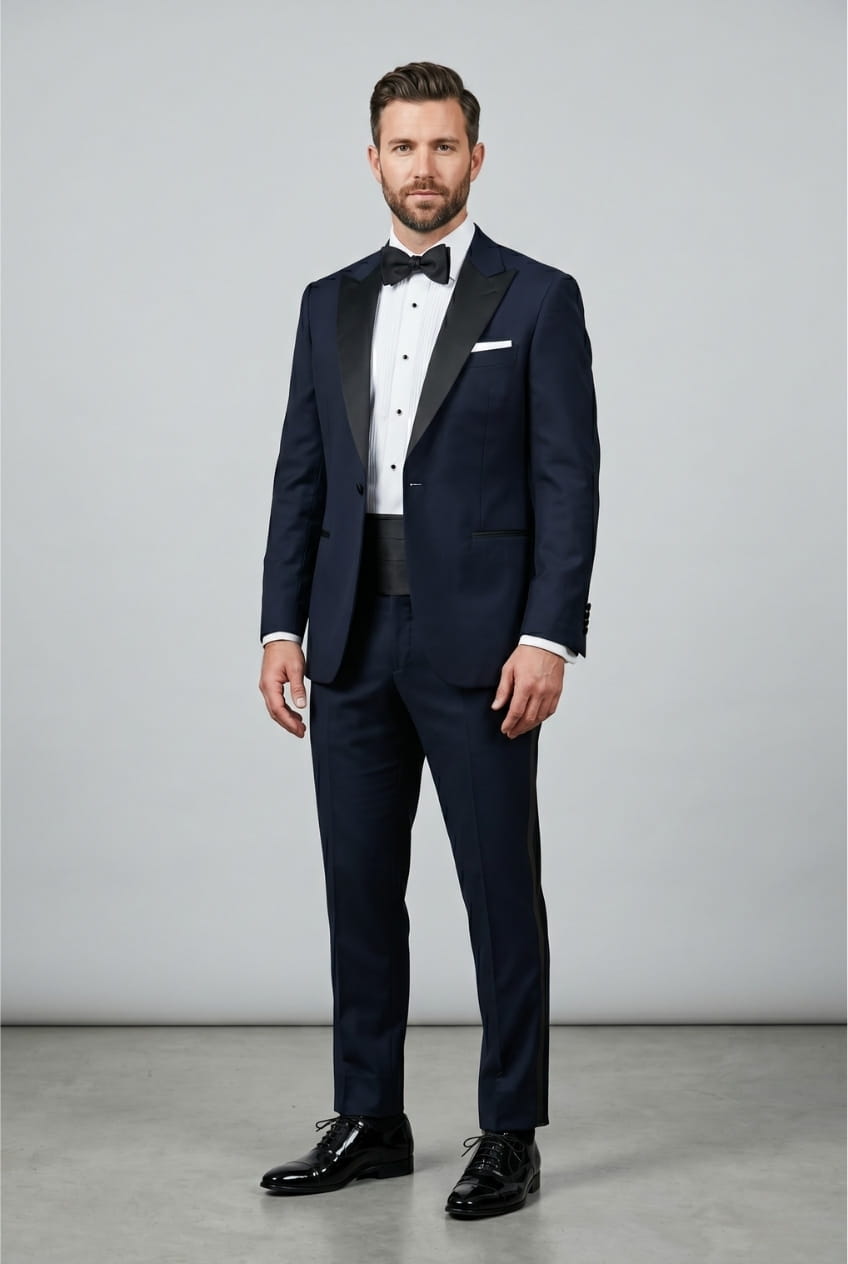
A tuxedo is the standard uniform of black-tie events. It consists of a matching jacket and trousers, both cut from the same fabric (almost always black or midnight blue wool), with satin-faced lapels on the jacket and a satin stripe running down the outside seam of each trouser leg. The traditional tuxedo is paired with a formal white shirt, a black bow tie, a black cummerbund or waistcoat, and black patent leather shoes.
The tuxedo originated in Tuxedo Park, New York, in the late 1880s, when American socialites returning from London's Savile Row brought back the British dinner jacket as a less rigid alternative to white-tie tails. Over the next century the dark version became the global standard for formal evening wear after 6 p.m. Today, when an invitation reads "black tie," a tuxedo is the expected default.

The tuxedo's defining details set it apart from a regular two- or three-piece suits. The satin lapels (shawl, peak, or notch), the satin pant stripe, the lack of a suit jacket pocket flap, covered buttons, and a formal pleated or bib-front shirt are all standard. Modern tuxedos may use slimmer cuts and lighter fabrics, but the satin-on-wool contrast remains the signature.
Differences Between Dinner Jackets & Tuxedos
Although the terms "dinner jacket" and "tuxedo" are often used interchangeably (and historically refer to the same garment in different countries), in modern American usage the white dinner jacket and the black tuxedo are treated as distinct outfits. The following table breaks down the key differences side by side.
← Scroll horizontally to see full comparison →
| Feature | White Dinner Jacket | Classic Tuxedo |
|---|---|---|
| Jacket Color | White, ivory, cream, or off-white | Black or midnight blue |
| Fabric Weight | Lightweight wool, linen blend, tropical weave | Mid-weight wool with satin facing |
| Lapels | Shawl or peak, satin-faced in white or matching tone | Shawl, peak, or notch in black satin |
| Trousers | Black tuxedo pants, usually without satin stripe | Matching black pants with satin stripe |
| Best Climate | Warm evenings (75°F and above) | Year-round, especially cooler indoor settings |
| Formality Level | Warm-weather black tie, black-tie optional | Traditional black tie |
| Pairs With | Black bow tie, white shirt, black shoes | Black bow tie, white shirt, cummerbund, patent shoes |
The most practical way to think about it: a tuxedo is the default for any formal event after dark, while a white dinner jacket is a seasonal and geographic variation reserved for warm weather, tropical destinations, and dress codes that allow some interpretation. Both occupy the same general formality tier, but they signal different occasions.

White dinner jackets are also more commonly worn as standalone statement pieces, similar to how a tailored white blazer is treated in less formal contexts. The styling rules for a white dinner jacket draw from formalwear tradition, but they share some flexibility with how blazers are worn in semi-formal settings.
Appropriate Occasions for Each
Knowing where each jacket belongs on the formality scale helps you read the invitation correctly and avoid showing up over- or under-dressed.
← Scroll horizontally to see full spectrum →
When the Classic Tuxedo Wins
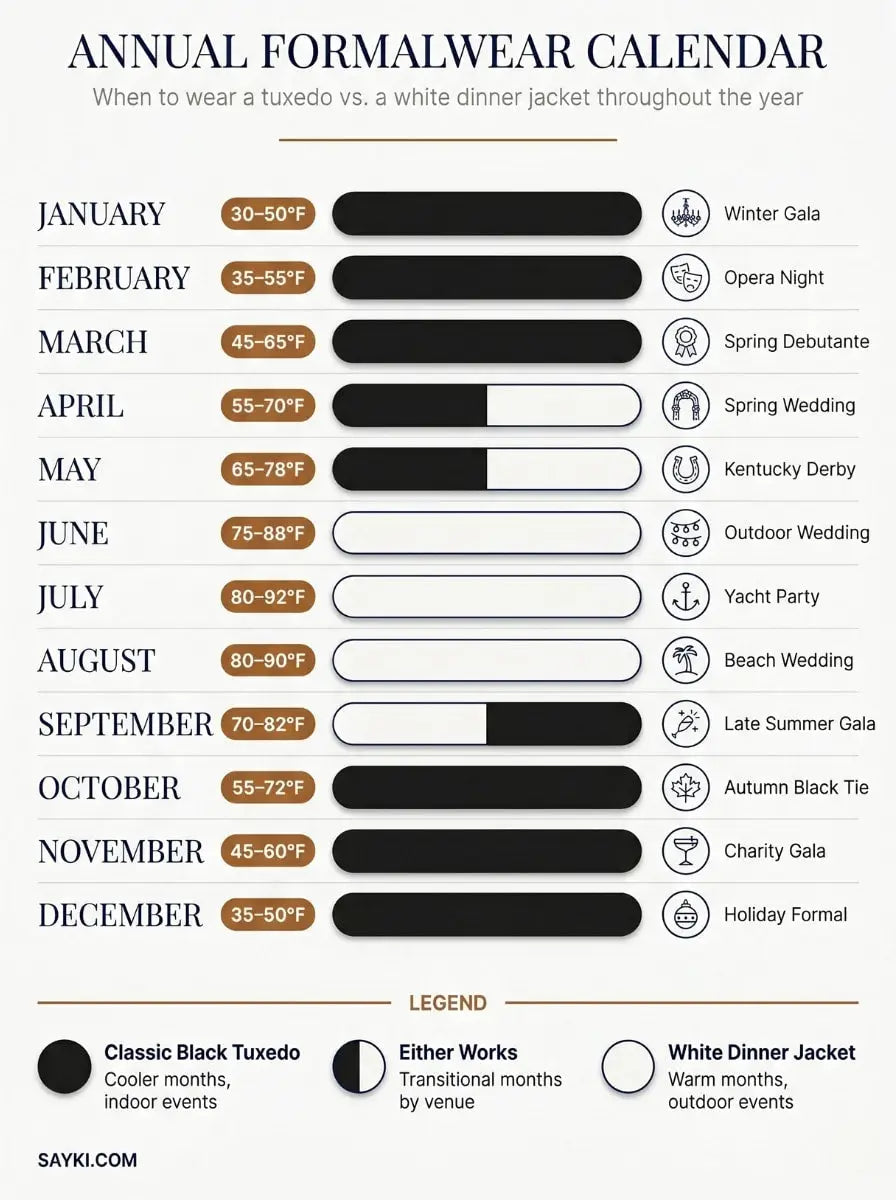
The classic black or midnight blue tuxedo is the safe and correct choice for any invitation that simply reads "black tie." Winter weddings, opera openings, embassy events, charity galas in indoor ballrooms, and formal awards ceremonies all call for a traditional tuxedo. Indoor lighting also plays a role: under warm chandelier light, dark formalwear photographs cleanly and reads as polished. White jackets can pick up yellow tones from the same lighting, making them better suited to cooler natural light or outdoor settings.
When a White Dinner Jacket Works
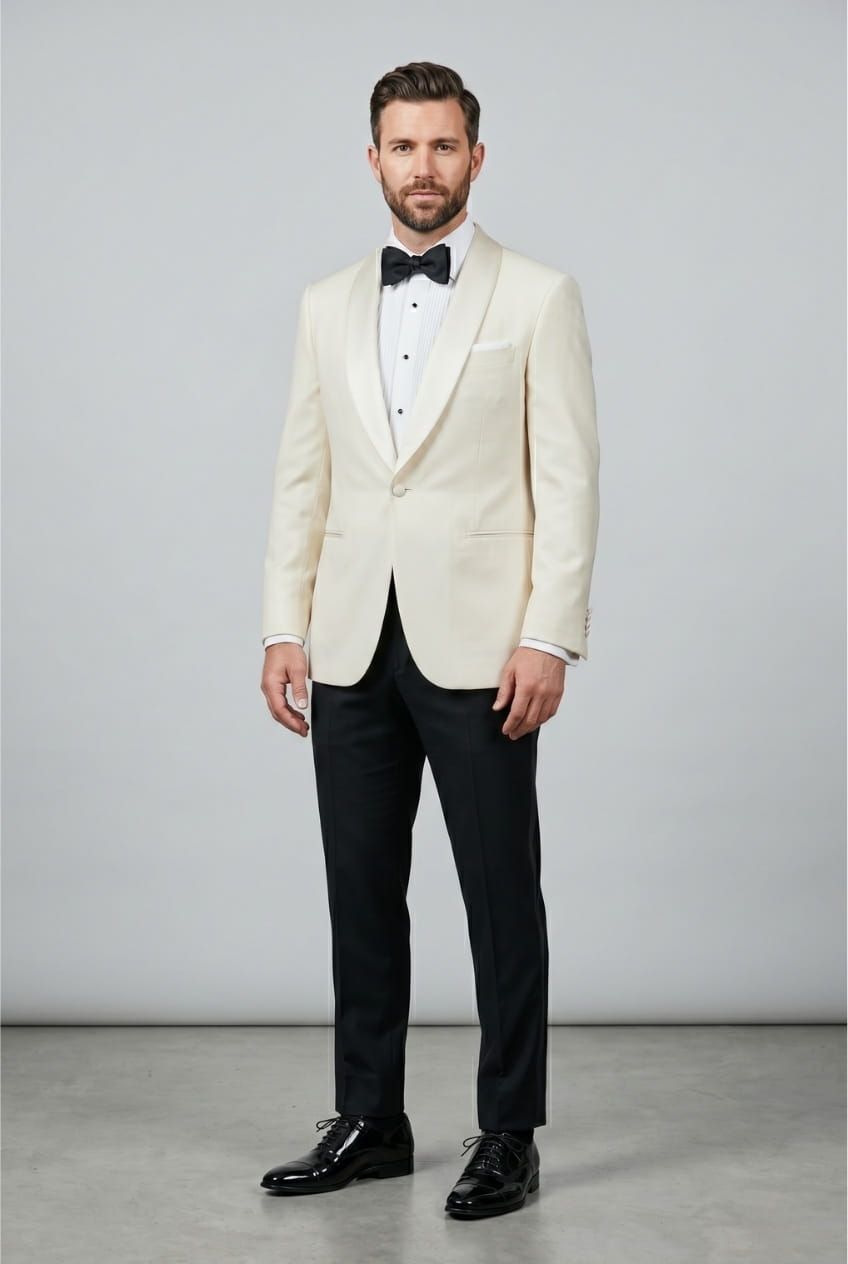
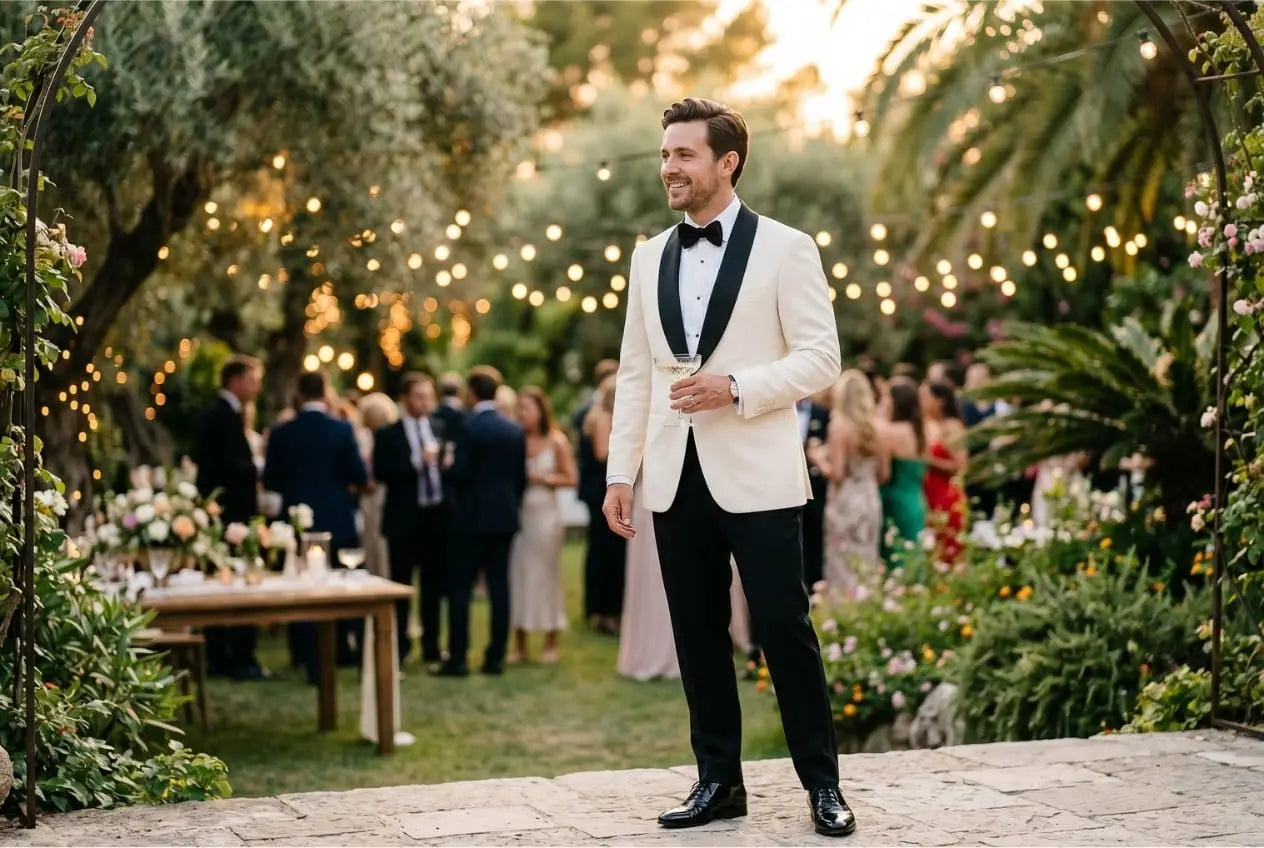
A white dinner jacket is the right choice when the invitation specifies "black-tie optional," "summer formal," "warm-weather black tie," or "tropical formal," especially when the event takes place between May and September. Outdoor weddings, beach galas, yacht parties, Mediterranean or Caribbean destination weddings, and resort-formal events all welcome the white dinner jacket. The bright color reflects heat, the lightweight fabric breathes in humidity, and the overall look matches the seasonal mood of summer formalwear.
When Either Works
For ambiguous dress codes (such as "creative black tie" or "festive formal") on a warm evening, either option can succeed. The deciding factors become the venue, the time of year, and how much you want to stand out. A room full of black tuxedos plus one well-tailored white dinner jacket can read as confidently dressed rather than out of place, provided the cut and accessories are correct.
One additional context where the white dinner jacket genuinely belongs is the American Southern formal tradition. From spring debutante balls to Kentucky Derby galas, white dinner jackets are not just acceptable but expected. The same applies to formal cruises and resort gatherings between May and September, where the dress code expectations track the seasonal calendar.
Styling Tips for White Dinner Jackets
A white dinner jacket is unforgiving because the eye is drawn straight to it. Fit, contrast, and proportion all matter more than they do with a dark tuxedo. The following guidelines will help you wear one with the polish it deserves.
Build the Contrast First
The foundation of the look is sharp contrast between the bright jacket and dark trousers. Pair the dinner jacket with true black formal trousers, never with navy or charcoal, since both will read as mismatched rather than intentional. Some traditional dinner jackets feature trousers without a satin stripe (a deliberate departure from the full tuxedo silhouette), while modern interpretations keep the stripe for added formality. Either approach works as long as the jacket and trouser fabrics complement each other.
Choose the Right Shirt
A white dinner jacket calls for a formal white shirt with French cuffs and either a pique-bib or pleated front. Avoid colored or patterned dress shirts, which compete with the bright jacket and dilute the formality. The shirt collar should be a turn-down (semi-spread or wing collar), and the cuffs should be linked rather than buttoned. A crisp white shirt is essential because anything off-white or cream will clash with the warmer white of the jacket itself.
Mind the Fit
White amplifies every fit flaw. The jacket should sit cleanly across the shoulders with no pulling at the buttons, the sleeves should expose roughly half an inch of shirt cuff, and the trousers should break just slightly at the shoe. Because the eye lingers on white longer than on black, even a small fit issue (a too-long sleeve, a pulled chest button) becomes immediately visible.
Choosing the Right Accessories
Accessories carry a white dinner jacket from costume to ensemble. Because the jacket itself is the focal point, every supporting piece should stay restrained and traditional.
The Bow Tie
A black self-tie bow tie is the standard for both a white dinner jacket and a classic tuxedo. The silk or grosgrain finish should match the lapel facing on the jacket. Pre-tied bow ties are acceptable but a self-tied bow has a slight imperfection that reads as more authentic in person. Avoid colored or patterned bow ties unless the dress code is explicitly creative black tie.
The Shirt and Studs
Formal tuxedo shirts with a pleated or pique-bib front and French cuffs are the standard. Mother-of-pearl studs and matching cufflinks are the most traditional choice, with onyx or sterling silver as alternatives for a slightly more modern look. Three to four studs typically replace the front buttons of the shirt, and they should be installed before the shirt is buttoned over them.
The Waist Covering
A black cummerbund worn with the pleats facing up is the traditional waist covering for both garments. A black silk or grosgrain waistcoat (low-cut and backless) is the more formal alternative, often preferred with peak-lapel jackets. Either piece should match the lapel finish. Skipping the waist covering entirely is increasingly common in modern styling, but the cleanest formal look includes one.
Shoes and Pocket Square
Black patent leather Oxfords or formal opera pumps are the traditional footwear. Highly polished cap-toe Oxfords work as an alternative if patent feels too formal. The pocket square should be a plain white linen or silk in a TV-fold or puff fold, never matching the bow tie or contrasting in color (a white-on-white pocket square paired with a white jacket creates layered texture without breaking the palette).

Complete Your Black-Tie Look
Explore SAYKI's collection of premium tuxedos, dinner jackets, and formal accessories crafted from Italian fabrics.
Shop TuxedosIs a dinner jacket less formal?
A white dinner jacket sits on the same formality tier as a classic black tuxedo, but in a different sub-category. Both are considered black-tie attire. The white dinner jacket is specifically a warm-weather and summer interpretation, while the black tuxedo is the year-round default. So a dinner jacket is not less formal in absolute terms, but it is more situational. It only fits certain events (warm-weather, outdoor, tropical, summer formal), whereas a black tuxedo works almost universally for any black-tie occasion. When in doubt at a strict black-tie event, the classic tuxedo is the safer call.
Can you wear black pants with a white dinner jacket?
Yes, black pants are the correct pairing for a white dinner jacket. Specifically, you want black formal trousers cut from the same wool as a tuxedo, not regular black dress pants. Most dinner jacket outfits use trousers without a satin stripe, although a stripe is acceptable and adds formality. Avoid pairing the white jacket with navy, charcoal, or any non-black trouser color. The deliberate contrast between bright white and pure black is what gives the outfit its formal identity. Matching white pants are only correct in a white-tie or themed setting.
Do you need a cummerbund?
A cummerbund is traditional but not strictly required with a modern white dinner jacket or tuxedo. The original purpose of the cummerbund was to cover the trouser waistband and create a clean horizontal line between the shirt and pants. If you skip the cummerbund, the alternative is a low-cut black waistcoat (also called a formal vest), which serves the same function with a more layered, structured look. Some modern dinner jacket outfits omit both entirely, particularly slimmer single-button styles where the closed jacket already hides the waistband. The most traditional and polished look still includes either a cummerbund or waistcoat, especially with peak-lapel jackets.
Can you wear a white dinner jacket to a wedding?
A white dinner jacket is an excellent choice for warm-weather weddings, particularly summer black-tie celebrations, destination weddings in tropical locations, and outdoor formal receptions. A few etiquette notes apply: as a guest, do not wear an all-white outfit (white shirt and white jacket are fine because the black trousers, bow tie, and shoes break up the palette). As a groom, a white dinner jacket can be a memorable choice that distinguishes you from the groomsmen in standard tuxedos. For traditional indoor church weddings, winter weddings, or weddings with strict black-tie dress codes, the classic black tuxedo remains the safer and more appropriate choice.