


Shopping for suits online means reading a lot of fit labels, and "classic fit" and "regular fit" are two of the most common. They sound interchangeable, but they describe different approaches to cut, proportion, and silhouette. This guide breaks down what each fit actually means, which body types they work best for, and how to decide between them.
Contents
Defining Classic Fit & Regular Fit
These two terms describe how the fabric is cut and the garment constructed - not how a specific suit happens to sit on your body. Understanding the construction differences helps you pick the right starting point before any tailoring.
What Is Classic Fit?
Classic fit is the original cut that all other suit fits descend from. Sometimes labeled "traditional fit" or "natural fit," it features a generous amount of fabric through the chest, shoulders, and midsection. The side seams run mostly straight with little to no taper at the waist, and the trouser legs maintain a wider, straighter line from hip to hem. Think of the silhouettes you see in mid-century style references - broader, boxier, and built around comfort rather than contour.
What Is Regular Fit?
Regular fit sits between classic fit and slim fit on the spectrum. It keeps enough room for comfortable movement but introduces moderate tapering at the waist in the jacket and a slightly narrower leg in the trousers. The shoulders are structured but not as padded as a classic cut, and the sleeves follow a gentle taper toward the wrist. Regular fit has become the default suit cut at most retailers because it works across a wide range of body types without requiring heavy alterations.
Comfort & Mobility Considerations
Fit directly affects how you feel throughout the day, especially when you are sitting at a desk, reaching across a conference table, or driving to a meeting. The difference between classic and regular fit comes down to where the fabric sits relative to your body and how much room you have to move without pulling or stretching the garment.
Classic fit wins on pure ease of movement. The extra fabric in the chest, arms, and torso means you can raise your arms, bend forward, or sit for hours without feeling any resistance from the jacket. The wider trouser legs give your knees and thighs room to move freely. If you spend long stretches seated or if you prefer your clothing to feel like it is barely there, classic fit delivers that experience.
Regular fit trades a small amount of that freedom for a cleaner line. The moderate taper at the waist and slightly narrower sleeves mean you will feel the suit on your body a bit more, but a well-sized regular fit should never restrict your range of motion. The trousers offer enough room in the seat and thigh for comfortable sitting, and the slight taper below the knee gives the leg a cleaner drape. For most men, regular fit provides the right balance - close enough to follow the body's shape while still allowing natural, unrestricted movement.
Fabric choice also plays a role here. A classic fit jacket in heavy wool can feel bulky because the generous cut holds more material, while that same classic fit in lightweight linen drapes softly and breathes well. Regular fit tends to feel consistent across different fabric weights because there is less excess material shifting around as you move.

Body Types Suited for Each Fit
No single fit works for every body. The right choice depends on your proportions, where you carry your weight, and whether you want your clothing to follow or float over your frame.
When Classic Fit Works Best
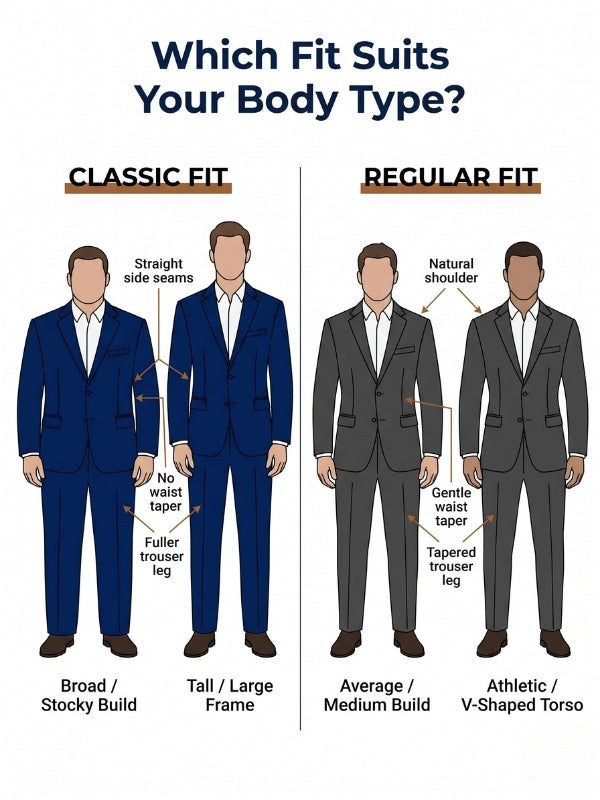
Classic fit is a strong choice for men with broader builds - wide shoulders, a fuller midsection, or a barrel chest. The generous cut accommodates a larger frame without pulling across the buttons or creating tension lines at the sides. Taller men also tend to wear classic fit well because the additional fabric length and width look proportional on a longer torso and legs. If you have a straight body shape with similar measurements at the chest, waist, and hips, classic fit maintains a clean line without the taper that can look odd on less defined waistlines.
When Regular Fit Works Best
Regular fit suits men with average to athletic builds - some definition at the shoulders and chest with a natural taper toward the waist. It flatters V-shaped torsos by following that line without exaggerating it, and it works well for men in the 5'8" to 6'1" range where the standard proportions of a regular fit align with their body length. If you fall between sizes or between body types, regular fit is usually the safer starting point because it offers enough room to tailor in either direction - take it in slightly for a sharper look or leave it as-is for everyday comfort.
How Each Fit Looks (Silhouette)
The visual impact of your suit depends largely on how the silhouette frames your body. Even a one-inch difference in the waist taper or shoulder width can change the overall impression from boardroom-ready to weekend casual.
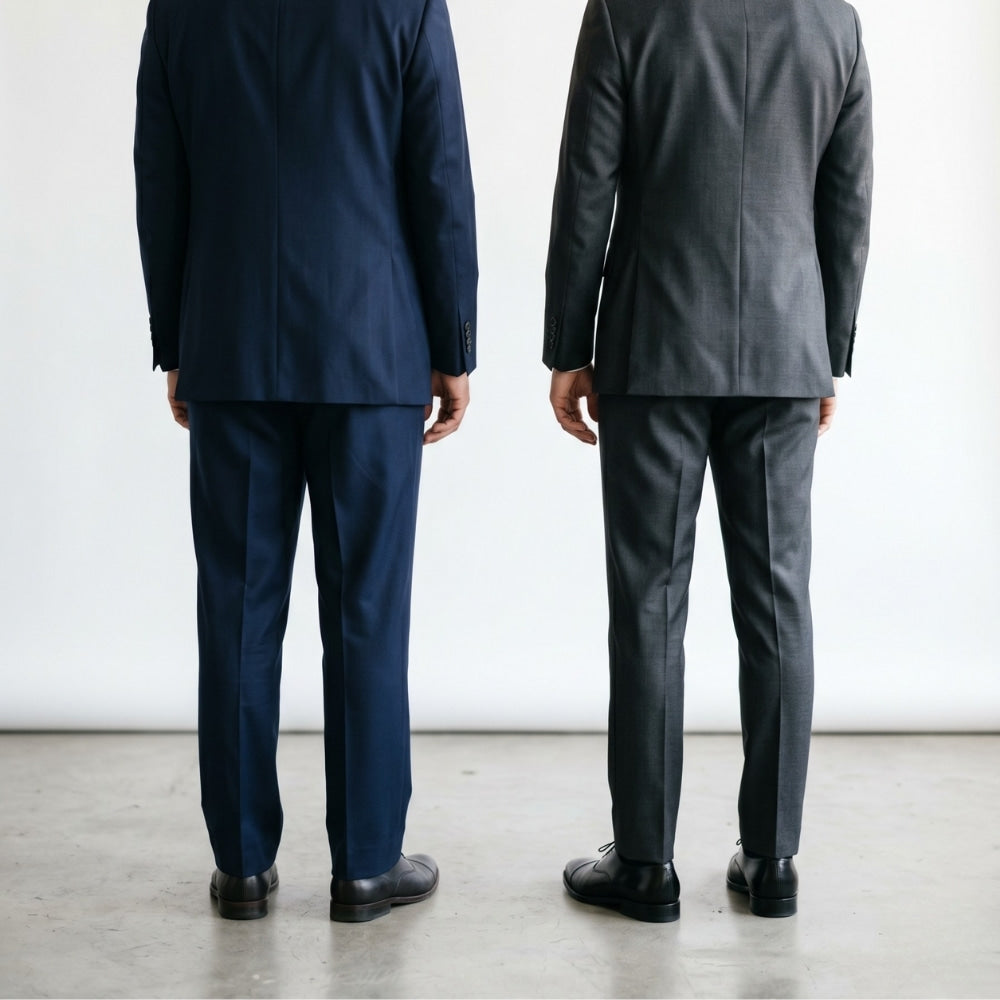
Classic fit creates a broader, more rectangular silhouette. The straight side seams, fuller chest, and wider pants legs produce an outline that is boxy but stable. This look conveys authority and ease. It reads as traditional, grounded, and unhurried. The jacket sits away from the body slightly, which softens the lines and gives the garment a draped quality rather than a sculpted one.
Regular fit produces a more defined, V-shaped silhouette. The waist taper draws the eye inward, the slightly narrower sleeves follow the arm more closely, and the trouser taper gives the leg a leaner profile. The overall effect is sharper and more contemporary without crossing into the territory of a tight, slim fit. This is the silhouette that photographs well, looks clean under a topcoat, and translates smoothly from office settings to evening events.
← Scroll horizontally to see full comparison →
| Feature | Classic Fit | Regular Fit |
|---|---|---|
| Overall Shape | Rectangular, boxy | Defined, slightly V-shaped |
| Shoulder Line | Extended, structured padding | Natural shoulder, moderate structure |
| Jacket Length | Longer - covers the seat fully | Slightly shorter - hits mid-seat |
| Lapel Width | Wider, more traditional proportions | Medium width, modern proportions |
| Trouser Profile | Straight leg, fuller thigh and knee | Gentle taper, cleaner line below knee |
| Visual Impression | Authoritative, traditional, relaxed | Sharp, balanced, contemporary |
Find Your Fit at SAYKI
Explore our suit collection - classic proportions, modern tailoring, and Italian fabrics at an accessible price point.
Shop SuitsChoosing Between Classic & Regular Fits
The right fit depends on three things: the occasion, your body type, and how you want the suit to feel when you are wearing it. Here is a practical framework for deciding.
Consider the Setting
Classic fit carries a more conservative, traditional tone. It is the natural choice for formal business environments, religious ceremonies, and occasions where understated authority matters more than fashion-forward styling. Regular fit reads as polished and modern, making it the better option for job interviews, client-facing meetings, weddings, and social events where you want to look put-together without appearing stiff.
Consider Your Wardrobe Needs
If you own one or two suits and need them to cover a wide range of situations, regular fit offers the most flexibility. It works equally well with a crisp dress shirt and tie or with a knit polo and no tie. Classic fit suits fill a specific role - formal business, traditional events, cold-weather layering - and they do it very well, but they are less adaptable for casual or semi-formal styling.
Consider Comfort Priorities
If comfort is your top priority and you dislike feeling any fabric contact against your body, classic fit is the clear winner. If you prefer a suit that follows your body's shape while still leaving room to breathe, regular fit gives you that balance. Neither should feel restrictive when properly sized - the key is getting the right size in the right fit rather than sizing up in a slimmer cut.
Tailoring Tips for Both Fits
No off-the-rack suit fits perfectly without some adjustment. Regardless of which fit you choose, a few strategic alterations can make a good suit look like it was made specifically for you.

Tailoring a Classic Fit
The most common alteration for a classic fit is taking in the waist of the jacket slightly. This adds just enough shape to prevent the suit from looking boxy while keeping the roomy, comfortable feel intact. Shortening the sleeves to show about half an inch of shirt cuff makes a major visual difference. On the trousers, hemming to the right length is the single most impactful change you can make - classic fit trousers often come long, and too much break at the ankle makes the whole suit look sloppy.
Tailoring a Regular Fit
Regular fit usually needs fewer adjustments since it already has some built-in shaping. Focus on the shoulders first - a tailor can adjust the shoulder seam only slightly, so this is the one measurement where you need the right size from the start. The jacket length, waist suppression, and sleeve length are all straightforward fixes. For the trousers, consider having the taper adjusted below the knee if you prefer a slightly slimmer line, or let the taper remain as-is for a clean, straight profile.
Can You Convert One Fit to Another?
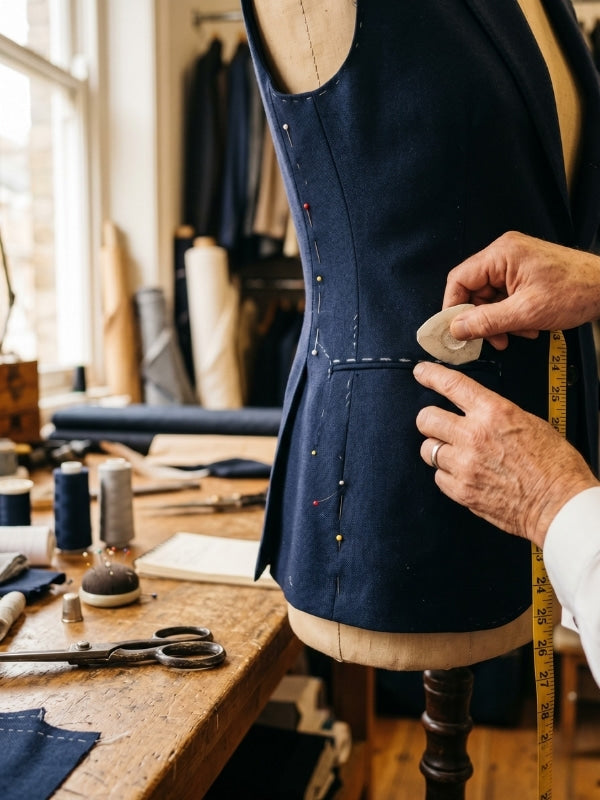
A tailor can bring a classic fit closer to a regular fit by taking in the sides, narrowing the sleeves, and tapering the trouser legs. Going the other direction - adding fabric to a regular fit to create a classic fit - is much harder because there simply is not enough seam allowance to let out. If you are between the two, buying classic fit and tailoring it down gives you more options than trying to add room to a regular fit.
Are classic fits outdated?
No. Classic fit remains a strong choice for formal business environments, conservative dress codes, and men who prefer a relaxed silhouette. The fit has evolved slightly over the decades - modern classic cuts tend to have a touch more shaping than their predecessors - but the core philosophy of comfort, generous proportions, and traditional elegance has not gone out of style. It is a matter of context rather than trend. A well-tailored classic fit suit looks intentional and polished, not dated.
Can regular fit be tailored to slim?
Yes, within reason. A skilled tailor can take in the jacket sides, narrow the sleeves, taper the trousers, and shorten the jacket length to bring a regular fit closer to a slim profile. The limiting factor is the shoulders - if the shoulder seams sit correctly, everything else can be adjusted. Starting with a regular fit and tailoring it slimmer is actually a popular approach because it gives the tailor more fabric to work with than starting with an already-slim garment.
Which fit is more formal?
Classic fit has traditionally been associated with more formal and conservative settings, particularly in industries like law, finance, and government. However, formality depends more on the fabric, color, and styling than on the fit alone. A navy regular fit suit in fine wool with a white dress shirt and silk tie reads just as formally as a classic fit in the same combination. Choose your fit based on comfort and body type, then adjust formality through your fabric and accessories.
Does fabric choice affect the fit?
Absolutely. Heavier fabrics like flannel and thick wool add bulk, which makes a classic fit appear even fuller and can make a regular fit feel slightly snugger than expected. Lighter fabrics like linen, cotton blends, and tropical-weight wool drape closer to the body and reduce the visual difference between classic and regular fits. Stretch-blended fabrics add flexibility regardless of the cut, giving both fits a slightly more forgiving feel. When trying a new fabric, consider sizing up if the material runs heavy or has no stretch.