


17 min read


You found the tuxedo, or you are about to, and now you are staring at your shoe collection wondering what actually works with black tie. The shoes are not an afterthought. They anchor the entire look, and the wrong pair can pull attention away from a perfectly tailored jacket. This guide is for the man who wants to get it right the first time, whether you are dressing for a wedding, prom, a gala, or any evening event where the code says "black tie."
What's inside
How to Choose the Right Shoes for Your Tuxedo
Here is what the rest of this guide covers, in short:
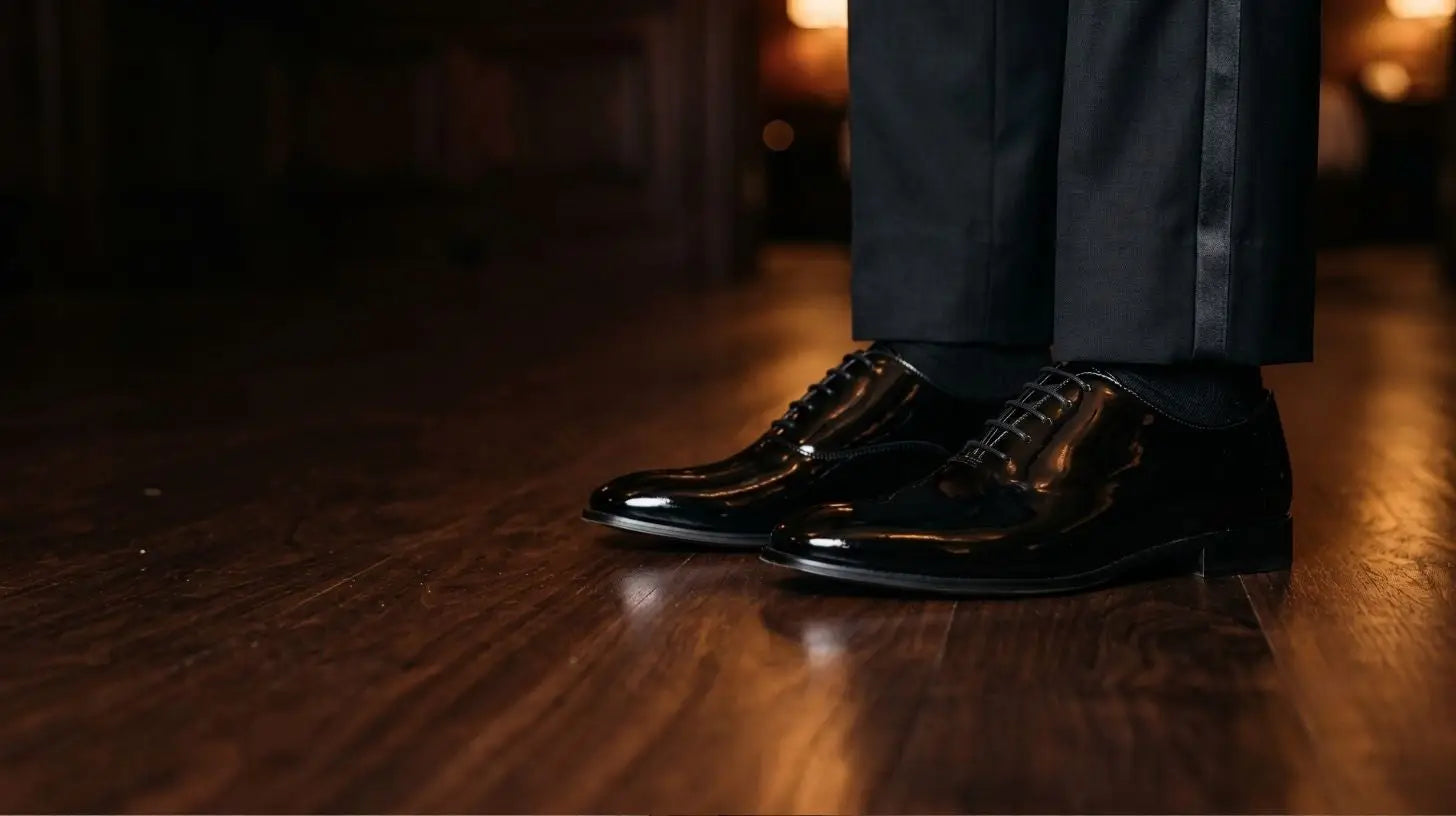
- Black patent leather Oxfords are the undisputed standard, and you will understand exactly why they still win every time.
- When a velvet slipper makes sense, and when it crosses the line into costume territory.
- The one shoe color that never belongs with a tuxedo, no matter what you have seen on social media.
- How to match shoe formality to an event's real dress code, from strict black tie to creative black tie optional.
- What to check for a comfortable fit if you will be on your feet for the ceremony, photos, and a long reception.
- How to budget for quality dress shoes that last well beyond a single night and work with suits too.
- The rental-shoe trap, and why owning even one good pair puts you ahead every time.
Whether you are buying your first tuxedo, standing up in a wedding party this season, or simply tired of rental shoes that never feel like your own, by the end you will know exactly which pair to reach for. Footwear is one piece of the wider black-tie picture; for the rest of the dress code, see our Black Tie Optional Dress Code Explained: Tux or Suit?
The High Cost of Getting Tuxedo Shoes Wrong
A sharp tuxedo can lose its edge the moment your shoes send the wrong signal. It is not about fashion snobbery; it is about visual balance. When the dress code calls for black tie, onlookers and photographers notice the details you might think are minor. The wrong leather, a clunky sole, or a stray brown hue can make an otherwise impeccable outfit look disconnected.
- You show up to a black-tie wedding in brown leather derbys. The warm tone clashes with the cool formality of a tuxedo. Fix: stick to black calfskin or patent leather, no exceptions for classic black tie.
- You wear square-toed dress shoes from a decade ago with a modern Slim Fit tuxedo. The silhouette dates the entire look. Fix: choose an almond or softly rounded toe that mirrors the clean lines of a contemporary tux.
- You invest in a tuxedo, maybe one that starts at $199.90, the same price as renting, but cut corners on footwear. Cheap corrected-grain leather scuffs easily and undercuts the premium feel of the jacket. Fix: use the money you save by owning your tux to buy one solid pair of well-made dress shoes.
- You rent shoes with the tuxedo and they pinch all night. Rental shoes are often broken in by dozens of strangers, not shaped to your foot. Fix: owning your own means a personalized fit and no last-minute limping through the first dance.
- You wear a heavy rubber sole to a formal indoor event. The athletic profile reads as casual even with a tux. Fix: a leather sole is quieter, sleeker, and always appropriate.
- You forget to check the heel height against your trouser break. Too much stacking or too short a hem disrupts the tuxedo's line. Fix: try shoes on with the trousers; the hem should just kiss the top of the shoe.
- You choose a shoe with perforations or broguing, even in black. Those details belong with daytime suits, not a dinner jacket. Fix: go for a plain-toe Oxford or a cap-toe without any decorative holes.
- You wear visible white athletic socks because "no one will see them." The camera flash and crossing your legs will reveal them. Fix: invest in over-the-calf black dress socks that stay up.
Getting the shoes right is the quickest way to make a tuxedo feel like it belongs to you, not borrowed from someone else. And when a quality tux can cost the same as a weekend rental, owning the full look, shoes included, stops feeling like a luxury and starts feeling like the obvious move.
A Step-by-Step Guide to Picking Tuxedo Shoes
It is easy to feel overwhelmed by all the options, opera pumps, patent Oxfords, velvet slippers, but breaking the choice into clear, ordered steps removes the guesswork.
Black patent Oxford
Plain-toe or cap-toe, mirror shine to match satin lapels. The safe harbor that never competes with the tux.
Opera pump
Low heel, silk bow, traditional evening shoe. Best with a satin-lapel tuxedo at a seated dinner.
Velvet slipper
Deep black or midnight blue, indoor evenings only. Skip bright embroidery unless the event is openly playful.
Polished calfskin Oxford
High-gloss black, doubles with a dark suit later. The versatile pick when you want one pair for many nights.
Step 1: Confirm the real dress code
Not every invitation that says "black tie" means exactly the same thing. If it says "Black Tie" with no modifiers, assume a strict traditional evening look: dinner jacket, formal trousers, and classic polished shoes. "Creative Black Tie" or "Black Tie Optional" gives you room to play with texture, a velvet slipper or a wholecut Oxford, but you still need formality. If the code is simply "Formal" after 6 p.m., you are safer with a tux and patent shoes than a dark suit and business Oxfords. Is this event indoors, at night, with a seated dinner? That is your bright line for patent leather.
Step 2: Choose the shoe style first
Style sets the mood before color or material does. Stick to these four timeless options and you cannot go wrong:
- Plain-toe Oxford: the most foolproof choice. A closed lace system creates a sleek, uninterrupted line. Wear this with any tuxedo fit, Slim, Regular, Dynamic, or Comfort, and you will look polished.
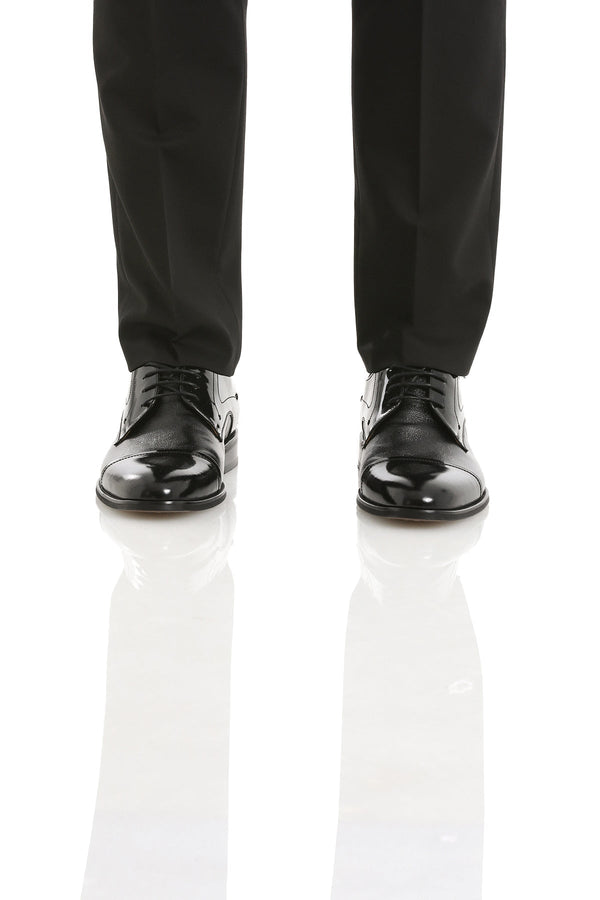
- Cap-toe Oxford: the same formal shape with an extra seam across the toe. It adds a fraction of visual interest without sacrificing formality.
- Opera pump: the traditional evening shoe with a low heel and a silk bow. It pairs best with a classic black-tie setting and a tuxedo that has satin lapels.
- Velvet slipper: ideal for creative black tie or a festive indoor reception. Look for a deep black or midnight blue; avoid bright embroidery unless the event is explicitly playful.
If you are uncertain, the plain-toe Oxford is your safe harbor. It never competes with the tuxedo; it completes it.
Step 3: Decide on the material
Material communicates formality instantly. Patent leather, with its mirror shine, is the gold standard for a strict black-tie event. It reflects light, which draws the eye down and creates a unified look with satin lapels. Polished calfskin works beautifully for black-tie optional or when you want a shoe you can also wear with a dark suit later; it must be shined to a high gloss. Velvet adds softness and is best reserved for indoor evening affairs where you want a touch of personality. Avoid suede with a tuxedo, even black suede reads as daytime or casual.
Step 4: Lock in the color
For a classic tuxedo, black is the only color that truly belongs. It anchors the dark formal palette and keeps the outfit cohesive. In creative black-tie settings, deep burgundy or midnight blue patent leather can work, but only when the rest of the look leans modern, think a shawl collar tux in Slim Fit with no bow tie. Quick check: will photographs be taken under warm or flash lighting? If yes, stick to pure black. It never distorts in a photo.
Step 5: Match toe shape to the era of your tuxedo
A classic tuxedo in Regular Fit or Comfort Fit often pairs well with a softly rounded toe. A trimmer Dynamic Fit or Slim Fit tuxedo, with narrower lapels, looks more deliberate with a subtly elongated almond toe. Avoid anything that looks like a chisel or a square box, those shapes fight the fluid line of a dinner jacket.
Step 6: Get the fit dead-on
Tuxedo shoes must fit correctly because you will be standing, dancing, and posing for hours. There should be about a thumb's width of space in front of your longest toe. The heel should not slip more than a quarter inch when you walk. Try them on with the same thin dress socks you will wear that night, a thicker sock can throw off the size by half a size. If you are between sizes, opt for the slightly snug fit in a leather that will give a little, rather than a loose fit that causes blisters. This matters even if you are wearing a tuxedo that fits you perfectly, shoes that pinch will still leave you uncomfortable.
Step 7: Plan the transition from ceremony to reception
Think about your real-world timeline. If you will be indoors the entire night, a leather sole is perfect. If you need to walk across cobblestone or gravel for photos, a thin rubber topy on the sole can add grip without being visible. Many men also pack a pair of dark, low-profile insoles in case their feet swell later. It is a tiny move that pays off.
Once you have worked through these steps, the decision stops feeling like a gamble and starts feeling like a checklist you can trust. From the lapel to the sole, everything is in harmony.
Own the Tuxedo, Then Choose the Shoes
Tuxedos starting at $199.90, the same as a rental, so your budget goes toward the footwear that finishes the look.
Shop TuxedosTuxedo Shoe Mistakes That Stand Out (and How to Sidestep Them)
Even style-conscious men slip up on formal footwear because the rules are specific and easy to miss in the rush of getting ready. Recognizing the pitfalls ahead of time turns potential embarrassment into quiet confidence.
- Wearing brown or tan dress shoes with a tuxedo. Brown clashes with the black-and-white palette of a dinner jacket. The fix: black only, no matter how high-end the brown leather is.
- Choosing a loafer without understanding its formality level. A polished leather tassel loafer is still too casual for strict black tie. The fix: if you want a slip-on, reach for a formal velvet slipper or a patent leather opera pump.
- Ignoring the sole profile. Thick, contrast-colored rubber soles scream utility and pull attention from the sleekness of the trousers. The fix: a thin leather sole or a leather sole with a discreet rubber inset.
- Wearing visible stitching or broguing. Even a black quarter-brogue Oxford introduces a casual, daytime detail. The fix: choose a plain-toe or cap-toe with zero perforations.
- Relying on heavily scuffed or worn patent leather. Patent leather shows every scratch and smudge under direct light. The fix: wipe with a damp cloth and buff with a patent-specific care product the night before.
- Forgetting that socks are part of the shoe decision. A flash of pale ankle skin or a sagging sock breaks the vertical line. The fix: over-the-calf black or midnight blue socks that stay in place even when you sit.
- Mismatching the shoe finish to the tuxedo's trim. If your tux has satin lapels, a mirror patent shoe ties the satin together; if the tux has a matte grosgrain lapel, a high-shine calfskin bridges the gap without overdoing it.
- Buying shoes that only work for one outfit. A flashy embroidered slipper is a fun one-off, but a classic black patent Oxford can be worn to multiple weddings, formal dinners, and with a tuxedo years later. The fix: buy for versatility if you are building a wardrobe.
Avoiding these mistakes is not about memorizing a long rulebook. It is about giving your tuxedo the foundation it deserves, so when someone notices your outfit, they notice the whole picture, not a misstep.
How to Keep Tuxedo Shoes Looking Fresh for Years
Owning a pair of formal shoes means protecting that sleek finish so they perform as well at your fifth event as they did at the first. A small care routine goes a long way and adds years to a well-made pair.
- Wipe patent leather with a damp, soft cloth after every wear. Dust and skin oils dull the shine quickly. Do not use cream polish on patent, it can cloud the finish. Instead, use a patent leather cleaner and a gentle buff.
- Condition smooth calfskin every few months with a neutral cream. This prevents cracking and keeps the leather supple. Apply sparingly, let it absorb, then brush with a horsehair brush for a soft luster.
- Store with cedar shoe trees. Insert them after the shoes have aired out for about twenty minutes. They wick moisture, maintain shape, and keep odors at bay. This is non-negotiable for dress shoes.
- Resole at the first sign of wear on the leather sole. When the stitching on the bottom starts to show or the sole gets thin near the toe, take them to a cobbler. A topy can extend the life, but a full resole keeps the shoe's original profile.
- Pack them in breathable dust bags when not in use. This shields patent leather from scuffs and calfskin from dust buildup. Avoid sealing them in plastic, trapped humidity breeds mildew.
- Buff before you wear, not after. A quick buff with a soft cloth right before you put them on revives the gloss without product buildup.
- Rotate your formal shoes if you attend multiple events in a short season. Letting them rest a full day between wears allows the leather to dry out completely, prolonging their life significantly.
A few minutes of attention after an event are all it takes to turn a pair of shoes from a one-season purchase into a lasting part of your formal wardrobe. When the shoes look new, the tuxedo beside them never looks out of place.
Building a Complete Black-Tie Look with SAYKI
Finding a tuxedo that looks high-end without draining your wallet used to be the hard part. SAYKI, the U.S. arm of the century-old Hatemoğlu family label, was built to solve that, so you can save your energy for details like shoes, accessories, and fit. Founded in 1924, the brand now operates nine stores across seven states, with a flagship at 375 Madison Avenue, New York, NY 10017.
Every tuxedo in the collection starts at $199.90, the same price as renting, except you walk away owning a garment tailored to one of four true fits: Slim Fit, Regular Fit, Dynamic Fit, and Comfort Fit. That price point frees up real budget for the right shoes. Instead of accepting whatever comes with a rental package, you can invest in a pair of well-made Oxfords or patent opera pumps that you will wear for years. For the full rundown on the jacket itself, start with our Complete Tuxedo Buying Guide for Men, and once the shoes are sorted, get the shirt right with our What Shirt to Wear with a Tuxedo: A 2026 Guide for Men.
If you are anywhere near New York City, the Madison Avenue team can walk you through tuxedo and lapel options in person. Additional full-price locations include Garden State Plaza in Paramus NJ, Westfield Montgomery Mall in Bethesda MD, Fashion Centre at Pentagon City in Arlington VA, and King of Prussia Mall in King of Prussia PA. For outlet pricing, you can find SAYKI at Woodbury Commons in Central Valley NY, Fashion Outlets of Chicago in Rosemont IL, Wrentham Village Premium Outlets in Wrentham MA, and Leesburg Premium Outlets in Leesburg VA. You can find your nearest location on our store locator. Wherever you visit, you will walk out with a tuxedo that fits, and then you can choose the shoes that make it yours.
Frequently Asked Questions
What shoes are traditionally worn with a tuxedo?
The most traditional choice is a black patent leather plain-toe Oxford. It delivers a mirror shine that matches the satin lapels and keeps the outfit formally coherent. A black cap-toe Oxford or an opera pump with a silk bow are equally correct. For creative black tie, a velvet slipper in black or midnight blue also works. The key is a closed lacing system or a sleek slip-on with zero casual detailing.
Can I wear loafers with a tuxedo?
Most loafers, especially penny loafers or driving mocs, are too casual and break the visual link to the tuxedo's satin trim. The exception is the formal velvet slipper, which is technically a loafer style but made of luxurious material and often finished with a subtle monogram or silk bow. If the dress code truly says "black tie," skip the standard leather loafer and reach for patent Oxfords or opera pumps instead.
Are brown dress shoes ever acceptable with a tuxedo?
In nearly all classic black-tie contexts, no. Brown leather, even a deep dark brown, introduces a warm tone that disrupts the monochromatic elegance of a tuxedo. Under very relaxed "black tie optional" or "creative black tie" settings with a midnight blue or patterned dinner jacket, a blackened burgundy patent might be explored, but plain brown should stay in your daytime suit wardrobe.
What's the difference between patent leather and calfskin for tuxedo shoes?
Patent leather has a high-gloss, lacquered finish that reflects light sharply; it is built for evening and was historically the default for formal court dress. Calfskin is a smooth, uncoated leather that can be polished to a high shine but will never reach the same mirror level. Calfskin offers more versatility because the same pair can transition to a dark suit during the day. If your event is strictly black tie and after 6 p.m., patent is the safer, sharper choice.
What is the difference between a tuxedo and a suit for prom?
A tuxedo almost always has satin or grosgrain details on the lapels, buttons, and pocket trim, while a suit relies on the same fabric throughout. For prom, a tux feels more formal and event-specific; a dark suit can be simpler and worn again more easily. The shoe rules differ too: a tux demands black patent or polished calf, whereas a navy or charcoal suit opens the door to dark brown Oxfords. If you are drawn to the full formal experience, a tuxedo from SAYKI, available from $199.90, gives you that prom-night impact without wasting money.
Should I wear socks with a tuxedo?
Yes, absolutely. Bare ankles break the clean line from trouser to shoe and stand out starkly in photographs. Choose black over-the-calf dress socks in a fine gauge, cotton or a cotton-silk blend. They should be long enough that no skin shows when you sit or cross your legs. Avoid ribbed athletic socks or any pattern that could be mistaken for a casual sock.
How should tuxedo shoes fit compared to regular dress shoes?
The fit principles are the same, but the stakes are higher because you will be standing and moving in them for a long evening. Aim for a snug heel with a bit of space in the toe box, about a thumbnail's length. Tuxedo shoes should not require a break-in period on the night of the event. If they feel tight during a try-on in thin dress socks, try a half-size up or a wider width. The goal is to forget you are wearing them so you can focus on the celebration.