


16 min read


Maybe there is a prom on your calendar, a black-tie wedding, a formal gala, or a job interview that has you staring into your closet. The dress code says "formal" or "black tie optional," but what does that mean for your outfit? The difference between a tuxedo and a suit is small in words and enormous in impression. This guide walks you through exactly when to reach for each, so you can read any dress code and know the answer instantly.
What's inside
You Have an Invitation. Now: Tuxedo or Suit?
Get it right and you look appropriate, confident, and put-together. Get it wrong and you might feel awkward the entire evening. Here is what to weigh before you choose:
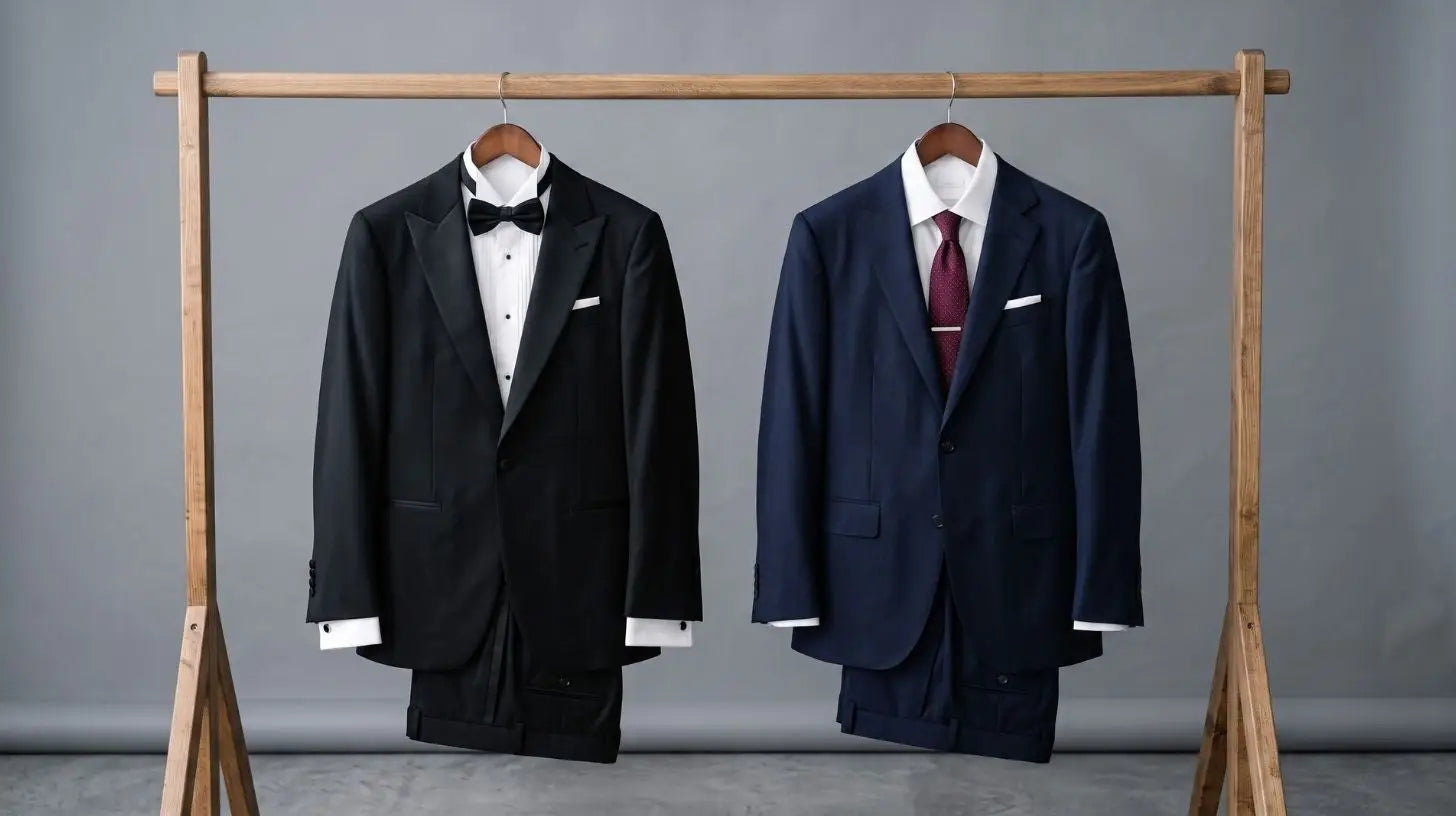
- The level of formality. A tuxedo is always more formal than a suit and belongs at black-tie events, galas, and formal evening weddings.
- Time of day matters. Tuxedos are strictly evening wear; suits can work from morning to night.
- Key visual differences. Satin or grosgrain lapel facings, a stripe down the trouser leg, and a bow tie signal "tuxedo." A suit lacks those details.
- Your role at the event. A groom, best man, or host may need a tuxedo even when guests wear suits, and the reverse can be true too.
- Buying instead of renting changes the math. You can own a tuxedo for the cost of a rental, which means you are never stuck renting again for future events.
- Fit shapes the entire look. Whether you prefer Slim Fit, Regular Fit, Dynamic Fit, or Comfort Fit, both a tuxedo and a suit need to follow your shoulders and waist cleanly.
If you are shopping for a wedding, prom, job interview, or formal party and want to stop guessing, this guide is for you. By the end, you will look at any dress code and know which direction to take. Once you have settled on a tuxedo, the shirt underneath is the next call, and our What Shirt to Wear with a Tuxedo: A 2026 Guide for Men covers collars, cuffs, and studs in full.
Why Wearing the Wrong One Can Undermine Your Entire Night
Show up in a regular business suit to a black-tie wedding, and you will be the only man not wearing satin lapels. That moment of realizing you are underdressed follows you from the reception line to the dance floor. On the other hand, stride into a job interview in a tuxedo and you might look like you misread the corporate culture entirely. The stakes are social, professional, and personal, and they are real.
- A black-tie invitation means a tuxedo is expected. Anything less, like a dark suit, reads as a mismatch and can make you feel like an outsider.
- Cocktail attire or "dress to impress" normally calls for a suit. A tuxedo here looks overdone and out of step with the room.
- Daytime ceremonies and afternoon weddings demand a suit. Tuxedos are evening-only by tradition; wearing one before 6 p.m. sends a confused message.
- Prom is one of the few teenage events where a tuxedo shines. A suit can work if the dress code is relaxed, but most high school proms lean formal, and a tuxedo keeps you in the spirit of the night.
- Job interviews and business meetings call for a suit, not a tuxedo. A well-fitting suit shows you understand professional boundaries without drawing attention to your clothes.
- The right choice can save you serious money long-term. Tuxedos at SAYKI start at $199.90, the same price as renting, which means you could own a garment you will wear for years rather than paying for a one-night loan.
- Wearing a tuxedo when you could wear a suit can feel like trying too hard. Dressing for the occasion means matching the energy of the event, not topping it.
- Photos last forever. Making the right call now means you will look back at wedding or prom pictures and see a man who got it exactly right.
You are about to reach a decision that costs nothing to get right and a lot of confidence to get wrong. Once you internalize a few simple rules, you will never hesitate again.
How to Decide in 7 Steps: Tuxedo or Suit for Your Specific Event
Between "black tie," "formal," "creative black tie," and "black tie optional," the dress code language can feel like a secret handshake. These steps cut through the noise.
Step 1: Start with the dress code, word for word
If the invitation says "black tie" or "white tie," a tuxedo is mandatory. "Black tie optional" or "formal" gives you room: a tuxedo is always correct, but a dark suit with a crisp shirt and tie will also work, especially if you are a guest rather than the host. For "cocktail attire" or "semi-formal," go with a suit, a tuxedo is too much. Check the exact phrasing before you do anything else.
Step 2: Look at the clock
Tuxedos belong to the evening. After 5 or 6 p.m. they are in their element. For daytime events, a morning wedding, a luncheon, an early-afternoon ceremony, a suit is the only proper choice. If the main celebration runs past sunset but starts at 3 p.m., a suit you can carry through the whole day is smarter than changing into a tux halfway.
Step 3: Consider the venue and season
A ballroom, an upscale hotel, or a historic estate often signals tuxedo territory. A garden, barn, or beach wedding almost always points to a suit or a more relaxed formal look. Fall and winter events favor darker, heavier fabrics for suits and tuxedos alike, while spring and summer invite lighter colors and breathable wools. Let the setting guide how formal you go.
Step 4: Define your role in the event
Are you a groom, a best man, the host, or a guest? Grooms and groomsmen typically wear tuxedos or matching selections dictated by the wedding party, and that trumps standard guest advice. If you are a guest and the code says "black tie optional," a dark suit is perfectly acceptable. But if you are the one being celebrated, own the moment with a tuxedo; the formal details signal that you understand the weight of the day.
Step 5: Choose the right color and fabric
A classic tuxedo comes in black or midnight blue, with satin or grosgrain lapels. A suit gives you more flexibility: navy, charcoal, and medium gray dominate, with options for patterns and textures. For a tuxedo, stick with the classics; black never fails, and midnight blue can look even sharper under artificial light. For a suit, let the season guide you, lightweight wool for summer weddings, heavier wool or tweed for winter affairs.
Step 6: Face the rent-versus-buy question early
Renting a tuxedo usually costs $150 to $250 for one night, and you return it with only memories. At SAYKI, tuxedo separates start at $199.90, the same ballpark as a rental, but you keep it. If you have prom this year and a wedding next year, buying pays for itself after the second wear and eliminates last-minute fitting panic. Suits, too, start at that same $199.90, making ownership a smarter move than renting even for a single job interview or wedding.
Step 7: Dial in your fit with intention
Once you know which garment you need, the cut has to work with your body. Try on fits in this order:
- Slim Fit: a tailored silhouette that follows the body closely; best for lean to athletic builds.
- Regular Fit: the classic standard; comfortable without being boxy, works on most frames.
- Dynamic Fit: a hybrid that gives more room in the chest and shoulders while keeping a shaped waist; ideal if you have an athletic build or broader torso.
- Comfort Fit: a more relaxed cut through the body; great if you prioritize ease of movement and a less tapered look.
By the time you have walked through these steps, the fog lifts. You will know not just what to wear, but why it is right, and that makes all the difference when you are standing in front of a mirror an hour before showtime.
Editor's Picks

One Decision, Then You Own It
Tuxedos and suits from $199.90, the same as a rental, tailored to your build and ready for the next invitation.
Shop TuxedosTuxedo vs Suit Mistakes That Stand Out in Photos (and How to Sidestep Them)
These missteps happen because well-intentioned advice gets mixed with tradition nobody explains. Once you see the list, you will spot them from across a room, and you will not make them yourself.
- Wearing a black business suit to a black-tie event. Without satin lapels and the trouser stripe, a black suit is still just a suit. It will look like you did not know the difference. If the dress code requires a tuxedo, wear a real one.
- Choosing a tuxedo for a daytime outdoor wedding. Satin details under the sun can appear glossy and out of place. Save the tux for evening celebrations; choose a well-cut suit for the afternoon.
- Mixing tuxedo pieces with suit separates. Tuxedo trousers with a stripe paired with a plain suit jacket never work. The whole outfit must be a tuxedo; otherwise the mismatched satin looks like a mistake.
- Forgetting the bow tie and cummerbund or waistcoat. A tuxedo wants a bow tie (self-tie looks far better than pre-tied) and a waist covering. Skipping these leaves the look unfinished and the waistband exposed.
- Wearing patent leather shoes with a suit. Patent leather is for tuxedos. With a suit it creates an unnatural shine clash. Keep your suit shoes calfskin or polished leather.
- Ignoring the lapel facing. A tuxedo lapel is satin or grosgrain; a suit lapel matches the jacket fabric. If you are trying to pass a black suit as a tuxedo, the lapel gives you away immediately.
- Over-accessorizing a tuxedo. Colorful vests, novelty ties, or loud pocket squares break the clean formality. A classic black or midnight blue tuxedo with a white shirt, black bow tie, and simple cufflinks looks timeless and intentional.
- Underestimating trouser details. Tuxedo trousers have a single stripe of satin or grosgrain down the outer seam; suit trousers do not. If your tuxedo trousers are plain, they are wrong.
Every mistake you avoid becomes a quiet point of confidence. When you know these details, you walk in feeling like you belong, not like you are hoping nobody notices. The shoe question alone trips up plenty of men, which is why we cover it fully in our What Shoes to Wear with a Tuxedo: Complete Guide.
How to Keep Your Suit or Tuxedo Looking Impeccable Over the Years
You have invested in a garment that will carry you through proms, weddings, and formal nights. Protect that sharp silhouette and the fine fabrics, and your suit or tuxedo will stay ready for every occasion.
- Brush after each wear with a soft garment brush. This lifts surface dust and lint before it settles into the fibers, especially important for wool suits and tuxedo jackets.
- Hang on a contoured wood hanger immediately. Wire or thin plastic hangers distort the shoulder shape. A broad-shouldered hanger preserves the jacket's structure.
- Limit dry cleaning to once a season or after visible soiling. Over-cleaning strips natural oils from wool and can cause sheen. Spot clean carefully and air out between wears instead.
- Store in a breathable garment bag, never plastic. Cotton or woven bags allow air circulation and prevent moisture buildup, which can lead to mildew or musty odors.
- Use a steamer, not a hot iron, on satin lapels and tuxedo stripes. Satin scorches easily. Steam from a distance to release wrinkles without damaging the delicate facing.
- Rotate your wears during a multi-day event. If you own two suits, alternate them to allow each 24 hours to rest and regain its shape. The fabric recovers from tension better this way.
- Inspect and re-secure buttons and linings yearly. Loose buttons and hanging lining threads are quick fixes now, but they become tears later.
A few minutes of care after each event adds years to the life of your garment. You will open your closet before the next big night and find it looking exactly the way you left it: ready.
Where to Own, Not Rent, a Tuxedo or Suit Without Overpaying
For too long, the advice was to rent for prom or a wedding because buying seemed out of reach. When a decent rental runs $200 and a new tuxedo starts at $199.90, the math flips. SAYKI changed that equation by offering classic menswear built on 100 years of craft at a price that competes head-to-head with rental chains.
The story starts in 1924, when the family behind SAYKI began making menswear in Turkey. Today, as the U.S. arm of Hatemoğlu, SAYKI operates nine stores across New York, New Jersey, Illinois, Maryland, Massachusetts, Virginia, and Pennsylvania, including a flagship at 375 Madison Avenue, New York, NY 10017, with the same third-generation commitment to fit and fabric. You can walk into any location, try on a tuxedo or suit, and compare Slim Fit, Regular Fit, Dynamic Fit, and Comfort Fit options without pressure. You can find your nearest store on our store locator.
Tuxedos and suits start at $199.90, which puts ownership at the same price point as a rental. That means you could buy a tuxedo for prom and wear it again to a wedding two years later, with no return deadline, no last-minute fitting stress, and a garment already tailored to you. For the full step-by-step on the tuxedo itself, see our Complete Tuxedo Buying Guide for Men.
Whether you are a student budgeting for prom, a professional refreshing your interview wardrobe, or a wedding guest who wants to stop renting every season, the numbers speak clearly: buying is no longer the expensive option, it is the smarter one.
Frequently Asked Questions
What is the difference between a tuxedo and a suit?
A tuxedo is distinguished by satin or grosgrain details: the lapel facing, buttons, and a stripe down the trouser leg. A suit jacket and trousers are made from the same fabric without those decorative accents. A tuxedo is worn with a bow tie, a formal white shirt (often with a wing or spread collar), and sometimes a cummerbund or waistcoat, while a suit pairs with a necktie and a standard dress shirt. They serve different levels of formality: tuxedo for black-tie events, suit for business, cocktail, and most weddings.
Should I wear a tuxedo or a suit to prom?
Prom leans formal, so a tuxedo is the traditional choice and keeps you aligned with most school dress expectations. If your prom's dress code is "black tie" or "formal," a tuxedo is the safest, most confident move. If the event is more "dressy casual," a dark suit with a crisp shirt and tie can work beautifully. Buying a tuxedo at the same price as renting (from $199.90) means you own it for future college formals and weddings, a smarter call for a high school student.
Is it cheaper to buy a tuxedo than to rent one?
It often can be. A typical prom or wedding rental runs $150 to $250 for a single night. At SAYKI, tuxedo separates start at $199.90, and you keep the garment. After just two wears, buying comes out ahead. You also avoid the time crunch of rental pickups and returns, and you can have minor alterations done for a better fit. For anyone who attends formal events more than once, buying is the more economical and practical choice.
Can I wear a black suit to a black tie event?
A black suit is still a suit, missing the satin lapel, trouser stripe, and formal accessories that define a tuxedo. If the invitation says "black tie," a tuxedo is expected, and a black suit will look out of place. In a pinch, a black suit might pass at a "black tie optional" event, but you will still be noticeably less formal than guests in tuxedos. When in doubt, own a tuxedo and you will never worry about underdressing again.
How should a tuxedo jacket fit compared to a suit jacket?
The fit principles are identical: the shoulder seam should end exactly at your shoulder bone, the jacket should button without pulling, and the sleeves should show a quarter to half inch of shirt cuff. The difference is stylistic. Tuxedo jackets often have a shawl or peak lapel, which can make the chest appear broader, so it is even more important that the shoulders and chest are not too tight. Raise your arms slightly to test; you should not feel restriction. Try Slim, Regular, Dynamic, or Comfort Fit to match your build.
Where can I buy a suit for under $200 that still looks quality?
SAYKI offers suits starting at $199.90 with the construction and finish you would expect from a brand making menswear since 1924. With stores in New York, New Jersey, Maryland, Virginia, Pennsylvania, Illinois, and Massachusetts, you can try on Slim, Regular, Dynamic, and Comfort fits in person. The $199.90 starting point matches or beats rental pricing, so you get a garment you own and can re-wear for interviews, weddings, and formal nights without stretching your budget.
What is the difference between a dinner jacket and a tuxedo?
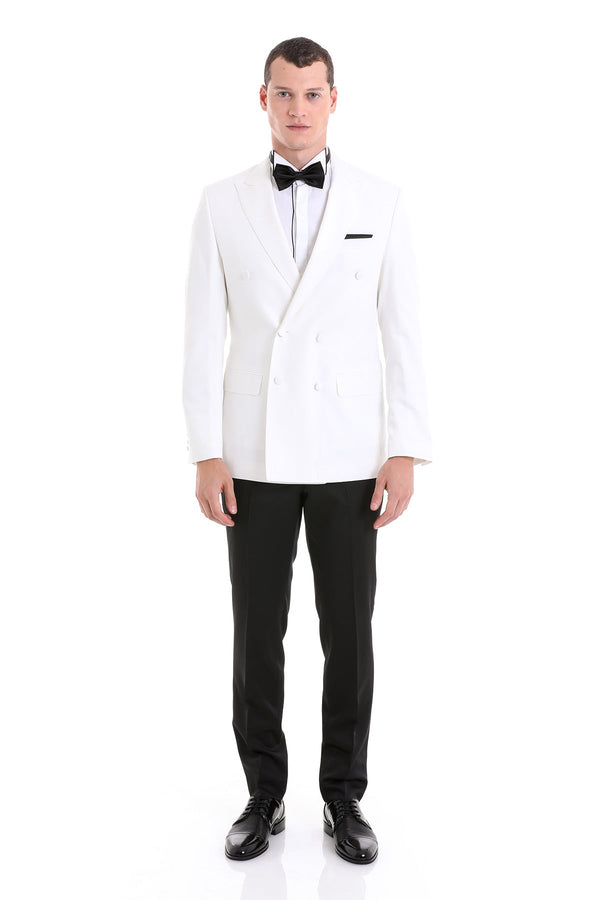
In American menswear, "dinner jacket" is often used interchangeably with a tuxedo jacket. Following British tradition, a dinner jacket can sometimes refer to an ivory or off-white formal jacket worn with black tuxedo trousers for warm-weather black tie. In practice, a tuxedo and a dinner jacket are the same category: a formal evening jacket with satin or grosgrain facings. For a black-tie event, get a black or midnight blue tuxedo first; an ivory dinner jacket is a stylish second piece later.